
Harris County Flood Control Requirements and Your Wastewater System: How Detention Design Affects Treatment Plant Siting
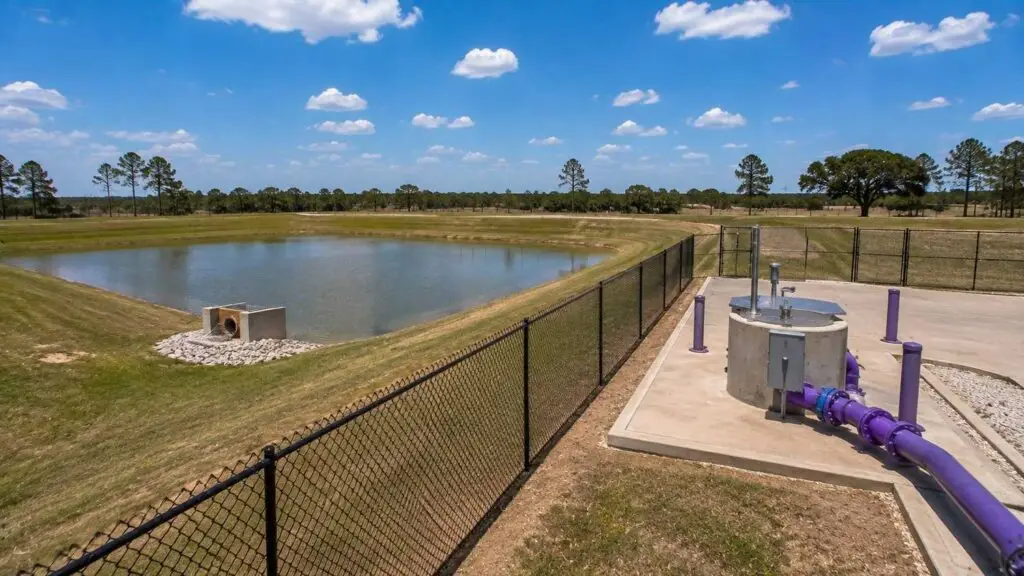
A Houston-area developer can have a wastewater treatment plant sized correctly, permitted appropriately, and budgeted realistically, and still end up relocating it midway through design because nobody checked what the Harris County Flood Control District’s detention requirements would do to the site’s usable footprint. Drainage and wastewater are treated as separate disciplines on too many project teams, handled by separate consultants who coordinate late if at all. In Harris County, where detention pond sizing, floodplain mapping, and drainage routing can consume a large share of a site’s developable area, that separation is exactly what produces the late-stage conflicts that force a treatment plant, lift station, or force main to move after the site plan is already substantially designed.
Water Reuse for Austin Area Golf Courses and HOA Irrigation: How Chapter 210 Creates a Revenue Stream

Most developers evaluating a private wastewater treatment plant think about disposal. Where does the treated effluent go, how much land does it require, and what does TCEQ demand before they’ll approve it. That framing misses the more interesting question for a master planned community with a golf course, an amenity lake, or acres of HOA maintained common area: treated effluent isn’t only a disposal problem to solve. Under Texas’s Chapter 210 rules, it’s an irrigation supply that would otherwise have to come from potable water, and in the right project, that substitution is worth planning for on its own merits, not just as a byproduct of solving a permitting requirement.