

Executive Briefing
Water Certainty Before Site Commitment: A Texas Data Center Developer's Guide
For a Texas data center campus, water belongs in the site decision before the land commitment becomes difficult to reverse. A promising utility...
Executive summary
For a Texas data center campus, water belongs in the site decision before the land commitment becomes difficult to reverse. A promising utility conversation, nearby wells and a cooling concept are starting points. The investment decision needs evidence that the planned campus can obtain suitable water, manage its wastewater and operate through the conditions that stress both systems.
We recommend moving through these gates before committing to a site:
- Define demand from the actual cooling concept, operating conditions and development phases.
- Establish the utility service path and investigate groundwater with separate checks of physical supply and the applicable authorization pathway.
- Evaluate reclaimed water, rainwater and condensate against their practical contribution and operating requirements.
- Document wastewater destinations and community commitments alongside the supply plan.
- Record the remaining conditions, their owners and the decision each condition could change.
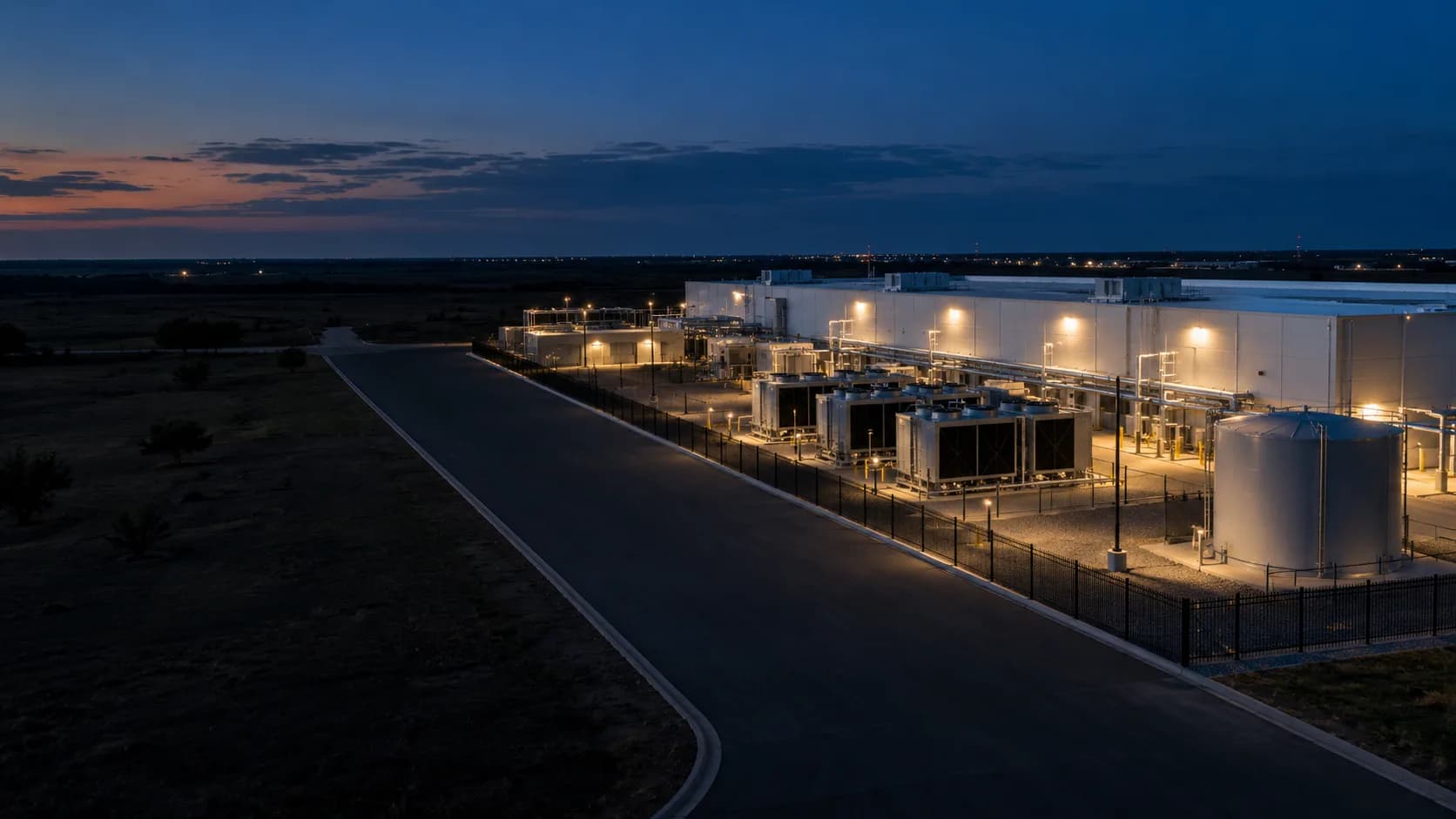
A closed internal cooling loop does not establish the whole campus water demand. External heat rejection may still consume water, depending on the equipment. The U.S. Department of Energy explains how cooling towers lose water through evaporation and blowdown even while water circulates through the system. That distinction belongs in the initial demand assessment. [1]
The objective is enough certainty for the commitment being made. Early screening can support a shortlist. A land closing, infrastructure agreement or tenant delivery promise needs stronger evidence, including a written service response, a defensible demand basis and an identified wastewater route.
This briefing addresses the water and wastewater decisions facing Texas campus developers and owner's representatives. Cooling equipment selection remains with the mechanical design team; we translate its operating assumptions into the supply, treatment, storage and wastewater questions that determine site feasibility. The principal risk is accepting a favorable answer that applies to a smaller campus, a different cooling configuration or a later delivery date than the investment assumes.
What the decision checklist covers
- The owner and designers share a dated demand basis for initial operation and intended buildout
- Internal circulation, external makeup, startup demands and wastewater are distinguished
- Peak operating conditions, treatment losses and unresolved tenant assumptions are visible
- Changes that require another supply review have a named decision owner
- Water and sewer service territories have been investigated separately
- The utility has received a formal inquiry describing the actual parcel and demand scenarios
- Its response distinguishes existing capability, required improvements and unresolved conditions
- Groundwater screening identifies data limitations and the further investigation needed
- Applicable district requirements, treatment needs and potential neighboring-user concerns are assigned for resolution
- Every proposed source has a defined use, availability basis and operational fallback
- Rainwater contribution is tested through dry periods rather than credited as constant supply
- Reuse streams are classified correctly before an authorization pathway is selected
- Sanitary wastewater, blowdown and treatment reject each have a documented proposed destination
- Off-site infrastructure, storage, residuals and ongoing operating duties are included in the site decision
- Public descriptions match the current design and distinguish confirmed conditions from proposals
- Drought responses and monitoring commitments can be delivered by the operating team
- Each unresolved condition has an owner, decision date and consequence for the next commitment
- The investment decision records whether to proceed, proceed subject to defined conditions, or defer the commitment pending evidence
The full briefing has the evidence with its sources, what MES has seen on projects like yours and the whole checklist. It is free: ask for it below and we email you a download link.
Free download
Get the full briefing
The full briefing is a PDF: the evidence with its sources, what MES has seen on projects like yours, and the whole decision checklist. We email you a link to it, and the link works for 7 days.
Talk to an engineer
Tell us about your project
An engineer reads it
Not a salesperson. Someone who can tell you whether the pathway is real.
You get a first answer
Your options, the agencies involved and the questions that decide cost and schedule.
You decide
No commitment to have the first call.
Prefer the phone? (214) 833-6748