
Blog
McKinney Utility Availability Study: What Developers Need Before Submitting a Plat in Collin County’s Fastest Growing City
A visible water line at your McKinney site does not confirm capacity. Learn what a utility availability study must cover before you submit a plat in Collin County.
Quick Answer
A utility availability study for a McKinney development confirms whether the city’s water and wastewater infrastructure serving a specific site has adequate capacity for the proposed development, at what pressure zone and line size, and whether any offsite extensions, upsizing, or lift station improvements will be required before the project can be served. This confirmation should happen before plat submittal, not during it, because McKinney’s platting review process expects utility service to be demonstrated as feasible, and a plat that runs into a utility capacity or infrastructure gap discovered during city review faces delay, redesign, or a requirement to fund offsite improvements that weren’t accounted for in the original project budget or lot layout. Given how quickly capacity conditions can change in a rapidly growing service area, even a nearby existing line should be confirmed for actual available capacity and adequacy for your specific project rather than assumed adequate simply because it exists.
Why McKinney’s Growth Rate Makes This Study Necessary
McKinney has been among the fastest growing cities in Texas for years running, and that growth has occurred across enough of the city’s service area that utility infrastructure originally sized for a smaller, less dense development pattern is now serving, or in some areas approaching the limits of serving, a substantially larger customer base than existed when portions of the system were designed and installed. This is not a criticism of the city’s utility planning, which has generally kept pace reasonably well given the growth rate involved, but it does mean that utility capacity in specific areas of the city can be meaningfully different from what a developer might assume based on general knowledge that McKinney has “good infrastructure” as a fast growing, well resourced municipality.
Capacity conditions in a specific pressure zone or sewer service area can also change over a relatively short period as approved developments in the pipeline consume capacity that was available when an earlier feasibility check was performed. A developer who confirmed utility availability for a site eighteen months ago, then returns to move forward with platting, should not assume that confirmation remains valid without checking again, since other approved projects in the same service area may have consumed capacity in the interim. This dynamic is specific to a fast growth environment like McKinney’s and is one of the more commonly overlooked risks in utility due diligence for the city’s development market.
Water Capacity and Pressure Zone Confirmation
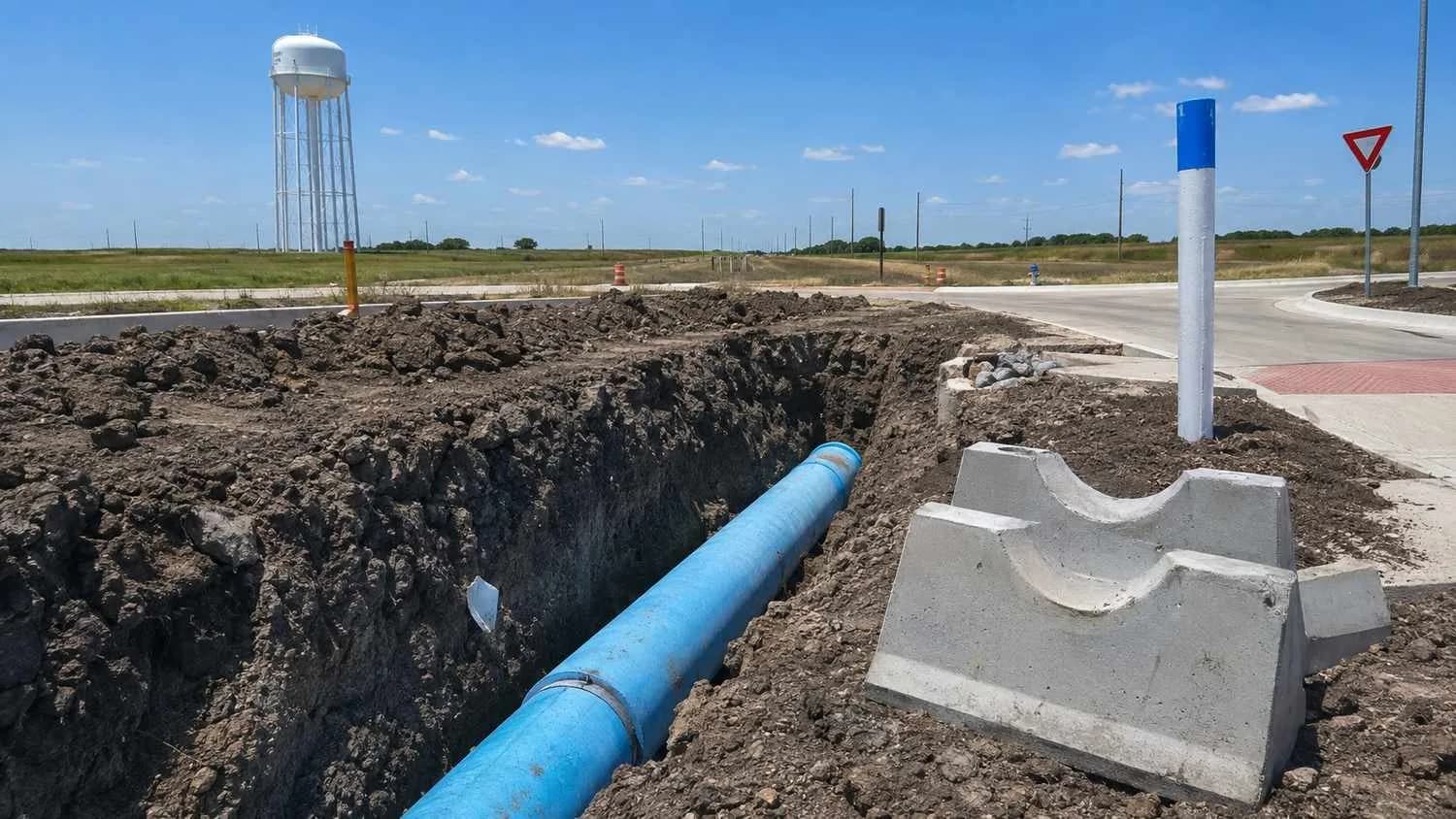
Confirming water availability for a McKinney site requires more than verifying that a water line exists nearby. The specific pressure zone serving the site determines the available system pressure, which affects both domestic water service adequacy and, critically, the fire flow the site can achieve, a requirement that directly affects plat and building permit approval since adequate fire flow is a life safety requirement the city will not waive. Some areas of McKinney, particularly at the edges of existing pressure zones or in areas served by older infrastructure not yet upgraded to current standards, can present fire flow challenges that aren’t apparent without a specific hydraulic evaluation of the site’s actual pressure zone and the line sizes feeding it.
Existing line size is a related but distinct question from pressure zone, since a site can sit within a pressure zone with adequate system pressure generally but still face a capacity constraint if the specific line serving the site is undersized for the additional demand a new development would add, particularly for larger subdivisions, commercial developments, or mixed use projects with substantial water demand relative to what a smaller line was originally sized to carry. Confirming both the pressure zone status and the specific line size and condition serving a site requires direct coordination with the City of McKinney’s utility engineering staff, who can provide system information beyond what’s visible from as-built drawings or general utility maps alone.
Wastewater Capacity and Lift Station Constraints
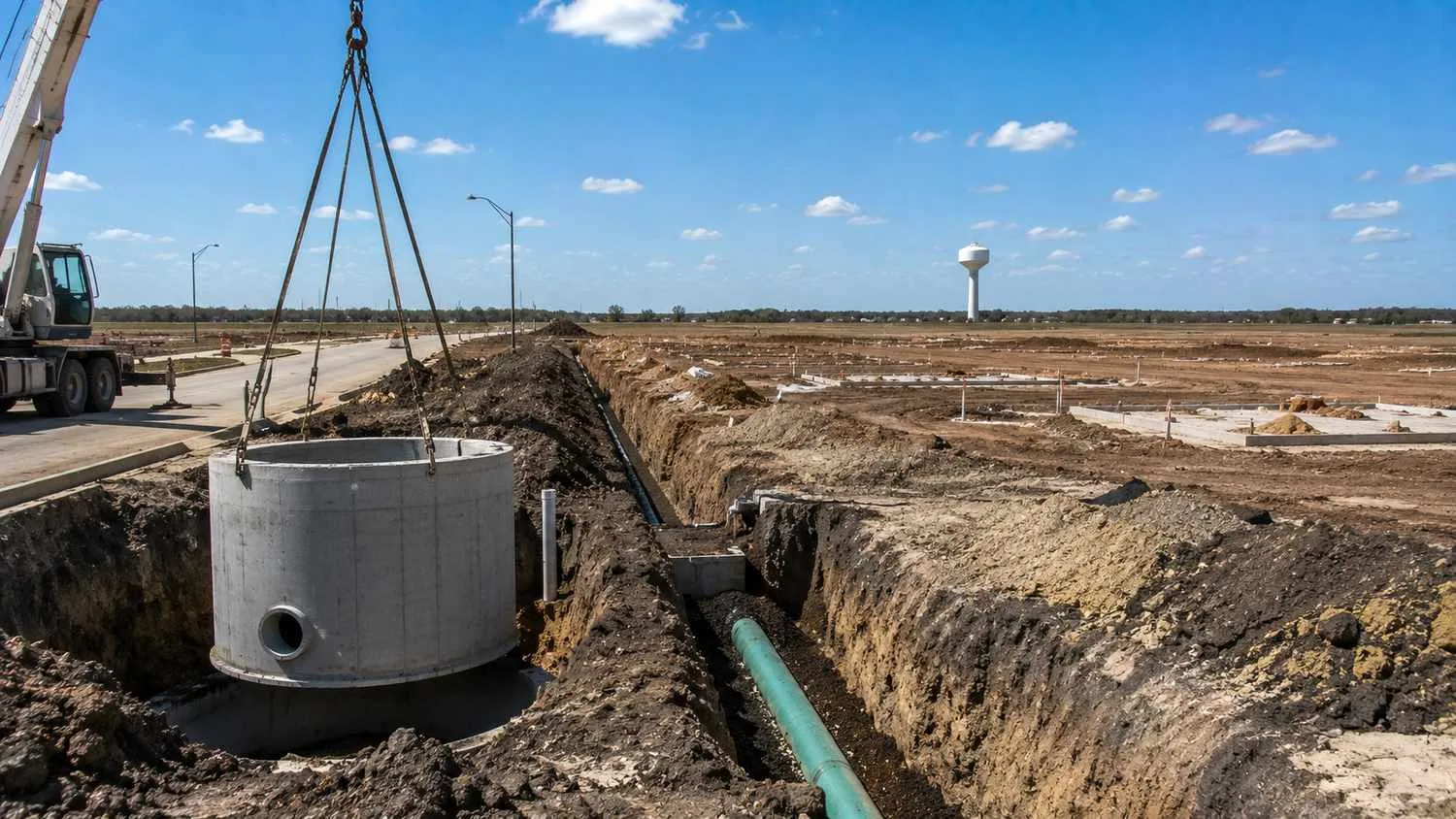
Wastewater capacity confirmation follows a similar logic, requiring verification of the specific sewer line size and available capacity in the segment serving a proposed development, and, where the site’s wastewater flow path depends on a lift station rather than gravity flow directly to a treatment facility, confirmation of that lift station’s available capacity as well. A lift station operating near its design capacity, whether due to the cumulative effect of already-approved upstream development or the station’s original design capacity being more modest than current growth patterns anticipated, can become the specific constraint that limits how much additional wastewater flow a new development can add to that service area, even if the gravity sewer lines feeding the lift station have adequate capacity on their own.
This is a common and sometimes underappreciated failure point in utility due diligence, since a developer’s site specific sewer line capacity check can look adequate while an upstream lift station serving that same sewer basin is actually the binding constraint on the development’s ability to connect. Confirming lift station capacity and any planned upgrades in the specific service area, not just the gravity line capacity directly serving the site, is an essential part of a complete wastewater availability study for any McKinney project relying on lift station-dependent service.
Offsite Extensions: What Happens When the Nearest Adequate Line Isn’t Actually Adjacent
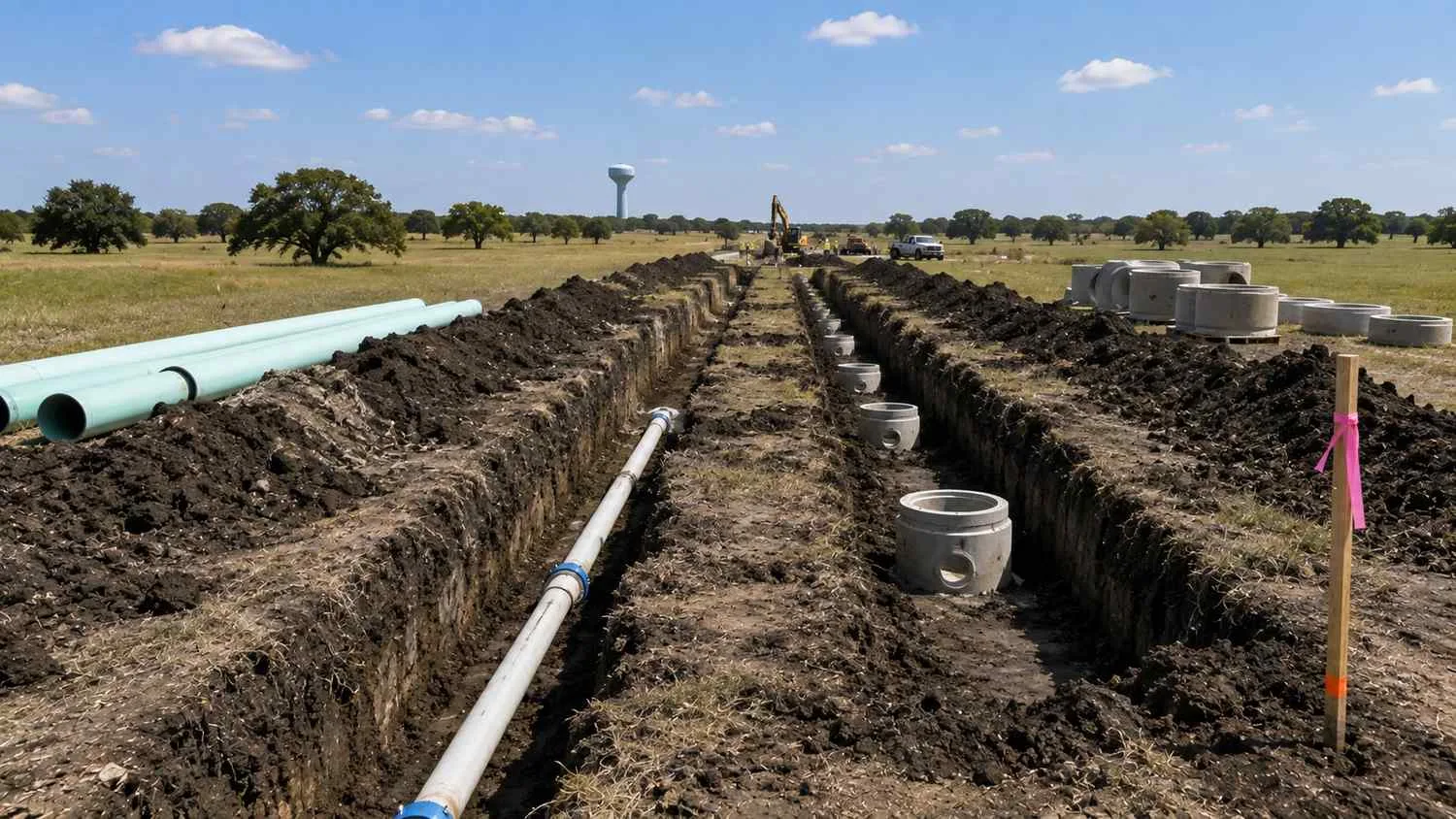
When a utility availability study reveals that the water or sewer line adjacent to a site doesn’t have adequate capacity, or that no line exists at all at the site’s frontage, the practical next question is how far the nearest adequately sized line actually is and what an offsite extension to reach it would cost. Offsite extension costs can be substantial, particularly when the extension needs to cross other parcels requiring easement acquisition, or when the extension needs to be significantly upsized beyond what the specific project alone would require, because McKinney’s utility standards or the city’s own capital improvement planning call for a larger line to serve future growth beyond just the immediate development.
Understanding whether an offsite extension is required, its likely routing, easement acquisition needs, and its probable cost should happen during the same due diligence phase as the core capacity confirmation, not as a separate discovery made later during civil engineering design, since offsite extension cost and feasibility can materially affect a project’s overall economics and, in some cases, its fundamental feasibility if the required extension is long enough or crosses enough unwilling parcels to become a significant obstacle.
Easements, Utility Conflicts, and Coordination With Existing Infrastructure
Beyond capacity confirmation, a thorough utility availability study should identify any existing utility easements crossing the proposed development site, since these easements can constrain where new infrastructure, buildings, or other site improvements can be placed, and should identify any potential conflicts between the development’s proposed utility infrastructure and existing utilities already in place, whether the city’s own water and sewer lines or other utilities such as gas, electric, or telecommunications infrastructure that may cross the same right-of-way or easement corridor the new development’s utilities need to occupy.
Coordination with McKinney’s utility engineering staff early in the planning process, before a specific utility layout is finalized in civil engineering design, allows these easement and conflict issues to be identified and addressed while the site plan still has flexibility to accommodate them, rather than discovering a conflict during construction plan review when the plat has already been approved based on a site plan that assumed a utility layout the actual field conditions can’t support without modification.
How Utility Limitations Affect Plat Approval Specifically
McKinney’s platting process, like most Texas municipalities, requires demonstration that adequate utility service is available or will be made available concurrent with development, and a plat application that doesn’t adequately address utility availability, or that proposes a utility strategy the city’s review identifies as inadequate given actual system capacity, will face review comments requiring resolution before the plat can move forward to approval. This can mean a delay while the developer and city work through the capacity issue, a requirement to fund specific offsite improvements as a condition of plat approval, or in some cases a revision to the plat’s lot count or density if the available utility capacity can’t support the originally proposed development intensity.
Performing the utility availability study before plat submittal, rather than submitting a plat based on assumed utility availability and addressing capacity issues only after they surface in city review comments, converts what could be a plat stalling discovery into a planning input that shapes the plat application from the outset, giving the developer the ability to design around a real capacity constraint rather than reacting to one after a submittal is already under review.
Lot Yield, Phasing, and Construction Cost Implications
The findings from a utility availability study can meaningfully affect a project’s lot yield if available capacity turns out to support a lower development intensity than originally planned, its phasing strategy if capacity is available now for an initial phase but requires a planned city capital improvement or a developer-funded upgrade before later phases can be served, and its overall construction cost budget if offsite extensions, lift station upgrades, or line upsizing beyond what a standard connection would require turn out to be necessary conditions of service.
Each of these effects is more manageable when identified during initial feasibility and due diligence, when the developer still has flexibility in site plan, phasing strategy, and financial modeling, than when discovered later in the process after specific commitments, whether a purchase closing, a finalized site plan, or a construction contract, have already been made based on an assumption about utility availability that the actual study findings don’t support.
Frequently Asked Questions
How early in our project timeline should we commission a utility availability study for a McKinney site?
A utility availability study should be performed during the initial due diligence period, ideally before a purchase contract’s due diligence period expires, so the findings can inform your acquisition decision, purchase price negotiation, or contract contingencies if the study reveals a significant capacity constraint or required offsite improvement. For sites already under your control, the study should be completed well before plat submittal, giving your civil engineering team adequate time to incorporate the findings into the site plan and utility layout rather than treating utility confirmation as a formality to check off just before submittal.If our utility availability study identifies a capacity constraint, does that mean our project isn’t feasible?
Not necessarily. A capacity constraint identified early is a planning input, not necessarily a project-ending finding, and there are often multiple paths to address it, including funding a specific offsite improvement or line upsizing as part of your project’s infrastructure budget, coordinating with the city on the timing of a planned capital improvement that would resolve the constraint, or in some cases adjusting your project’s phasing or density to match currently available capacity while planning for expanded capacity to serve later phases. The specific path forward depends on your project’s economics, timeline, and the nature of the constraint identified, which is exactly why performing this study early, while you still have flexibility to evaluate these options, matters more than the specific finding itself.Is a utility availability study something the City of McKinney will perform for us, or do we need to commission it independently?
The City of McKinney’s utility engineering staff can provide system information, including line sizes, pressure zone data, and general capacity information, when asked directly, and this coordination should absolutely be part of your due diligence process. However, translating that raw system information into a project specific feasibility conclusion, including hydraulic analysis confirming your specific development’s demand against available capacity and fire flow requirements, and identifying any offsite extension or improvement needs specific to your proposed development program, is engineering analysis that benefits from a qualified civil engineer’s involvement rather than relying solely on general information the city provides in response to an informal inquiry.Related Resources
- Approved Plans Aren’t Always Optimized Plans: The Difference Can Cost $15 Million
- Wastewater Capacity in Fort Worth’s ETJ: What Happens When the City Won’t Annex Your Development
- Land Application Permits in Texas: A Faster Path to Wastewater Approval for Developers
- Water Supply Planning for Master-Planned Communities in Tarrant County: What Developers Get Wrong
Confirming Utility Availability for a McKinney or Collin County Development?
MES works with McKinney area developers, land acquisition teams, and civil engineers to evaluate water and wastewater capacity, coordinate with city utility engineering staff, identify offsite extension and lift station constraints, and prepare stronger utility documentation before plat submittal.
We specialize in:
- Water and wastewater capacity confirmation and hydraulic analysis for McKinney and Collin County development sites
- Fire flow evaluation and pressure zone assessment for residential, commercial, and mixed use McKinney projects
- Lift station capacity confirmation and offsite extension feasibility analysis for growth corridor developments
- Easement and utility conflict identification supporting McKinney plat submittal and civil design coordination
- Service provider coordination with City of McKinney utility engineering staff during due diligence and planning
- Utility due diligence supporting lot yield, phasing, and construction cost planning for fast growth Collin County sites
Modern Engineering Solutions, McKinney, Texas. Contact: (214) 833-6748 or mod-eng.com
Keep reading
More to read.
Talk to an engineer
Tell us about your project.
An engineer reads it
Not a salesperson. Someone who can tell you whether the pathway is real.
You get a first answer
Your options, the agencies involved and the questions that decide cost and schedule.
You decide
No commitment to have the first call.
Prefer the phone? (214) 833-6748