
Blog
NTMWD Connection vs. Private Treatment: The McKinney Developer’s Guide to Choosing the Right Wastewater Path
NTMWD connection vs private treatment in McKinney: confirm city sewer capacity, extension needs and the TCEQ permit case before you close on land.
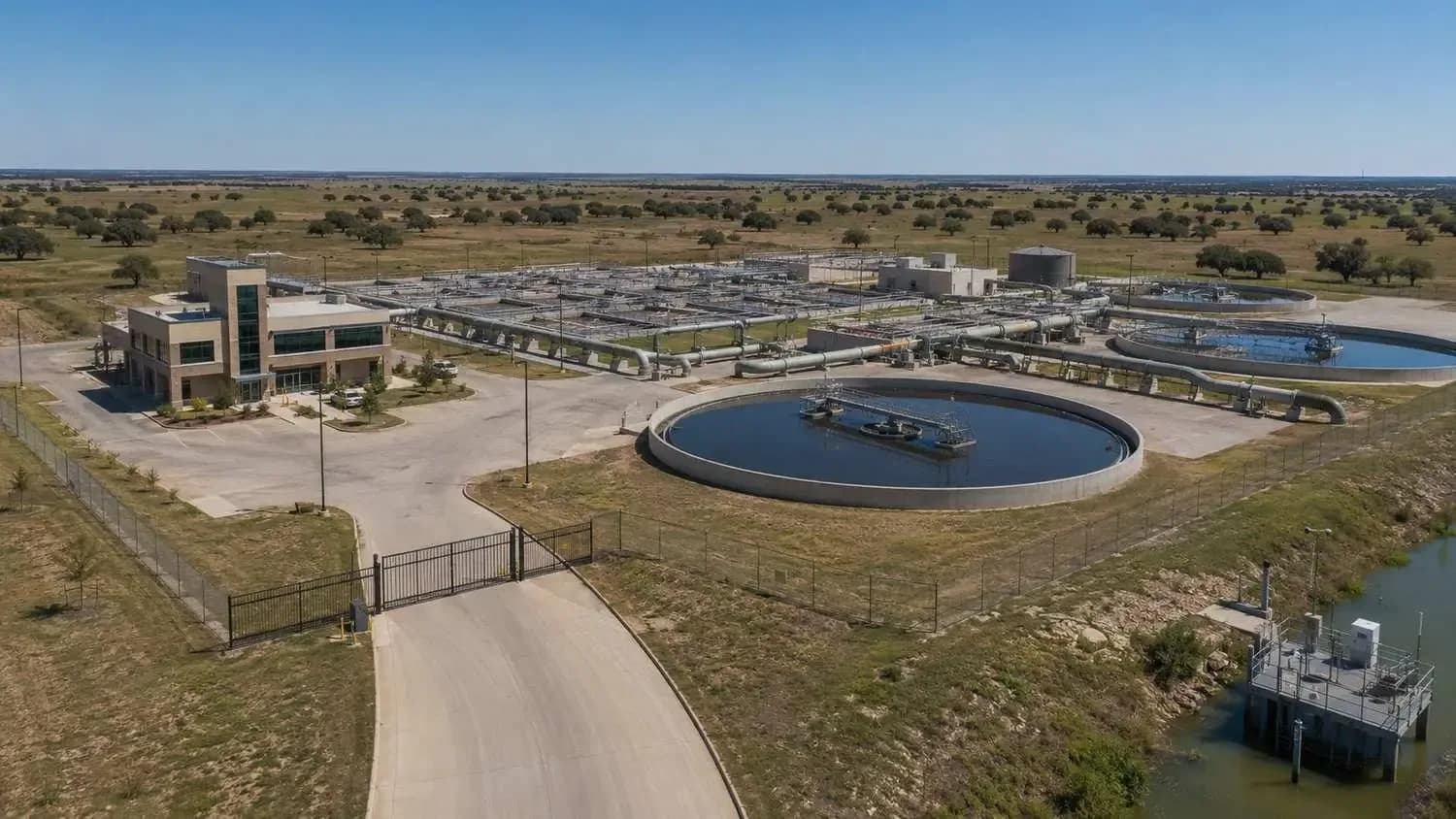
For most McKinney sites, connecting to public sewer beats building a plant, once you confirm it for your parcel. The NTMWD connection vs private treatment choice is really a question about the City of McKinney's sewer: NTMWD treats wastewater wholesale for McKinney and other cities, and your project ties into the city's collection system. If a main with capacity is within reach on your schedule, connect. If not, a private plant needs a TCEQ permit and a reason TCEQ will accept.
Can your McKinney site connect to NTMWD directly?
Not as a customer. You connect to the city's sewer, and the city's flow goes on to NTMWD's regional system.
NTMWD's wastewater system page says the district provides wholesale wastewater services to 24 communities and lists McKinney as a regional system member. Capacity has to exist in the city main nearest your site and in the regional system behind it, and approved projects may already have claimed part of both.
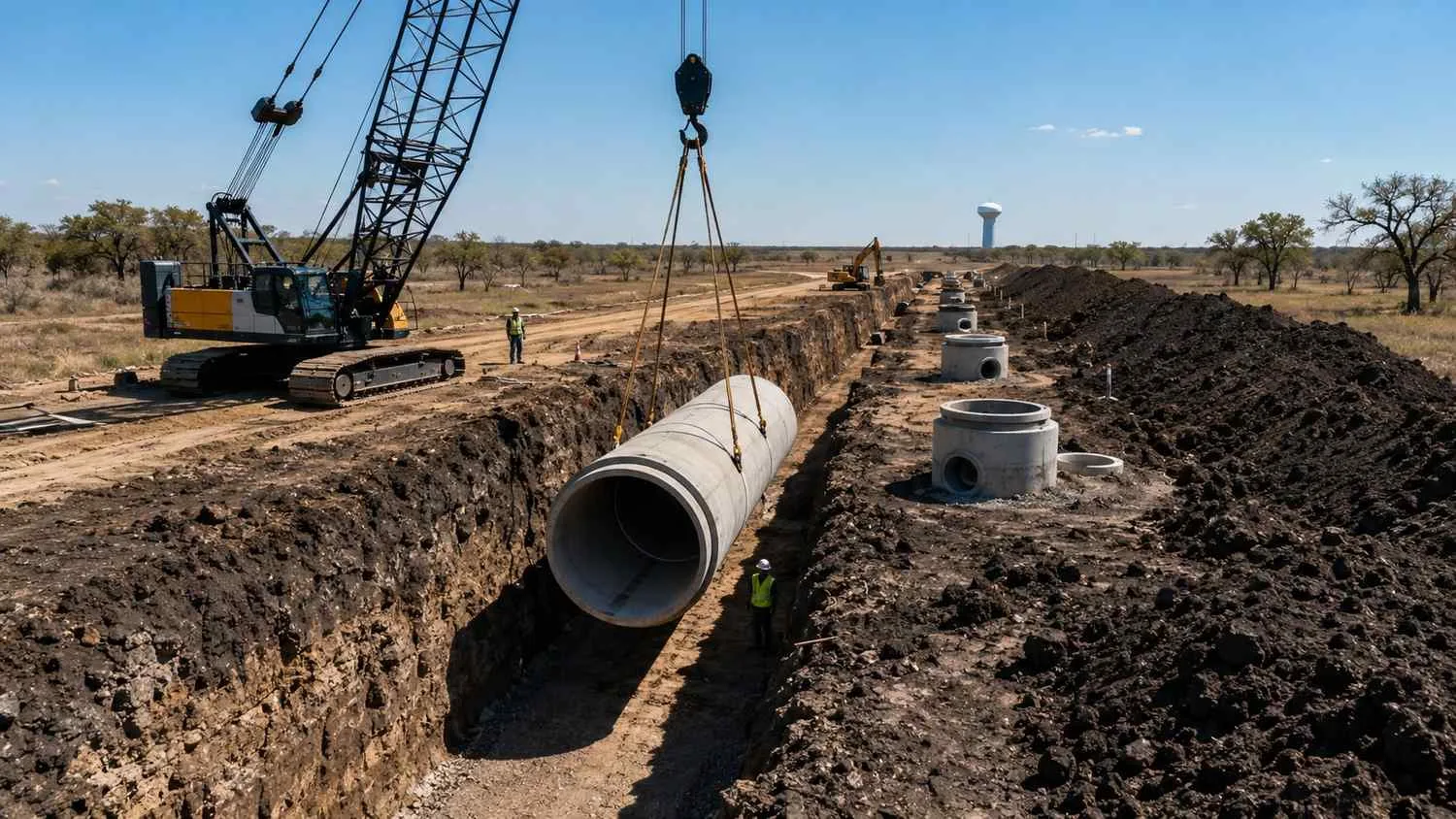
Plan on building the line, too. The city's water and wastewater engineering FAQ says most sewer main extensions are installed by developers as part of their projects.
How do you confirm sewer capacity before you close on land?
Ask the city's Engineering Department in writing during your feasibility period, and get the answer in writing.
McKinney's civil engineering development process guide says that department reviews public improvements inside city limits and in the extraterritorial jurisdiction (ETJ). Ask for:
- The nearest main that can take your flow, and its size
- Capacity left after flows committed to approved projects
- Whether you can reach it by gravity
- Planned capital projects that change the answer, and when
- Any oversizing, facility agreement or pro rata terms
Send your lot count, phasing and peak flow with it. A vague question gets a vague answer.
What drives the cost of a sewer extension?
Distance, grade, easements and oversizing. Each is a site question, not a regional one.
A short gravity line to an adequate main is one project. A long line with a lift station, a force main and easements across other owners' land is another. The same city guide says offsite extensions the subdivision ordinance requires may qualify for reimbursement or proration through a facility agreement, and offsite easements must be executed before the city releases a construction permit. Letters of permission from agencies such as NTMWD may also be required. A neighbor who won't sign is a schedule risk you cannot engineer around.
Add utility impact fees. McKinney's impact fee FAQ says they are authorized under Chapter 395 of the Texas Local Government Code and do not cover offsite collection lines an ordinance requires you to build, so plan for both. Timing matters as much as amount, as our post on impact fees and CIP timing in Collin County explains.
When does the extension need a lift station and force main?
When your site cannot drain by gravity to the receiving main.
Under 30 TAC §217.61, a lift station needs at least two pumps, and its firm pumping capacity must handle the peak flow. Under 30 TAC §217.63, it must prevent a discharge during a power failure, using generators, alternate power, storage or a combination, but never storage alone. Expect more design, review and construction time than a gravity tie-in.
When does private treatment make more sense?
When no system will serve your site on terms or a schedule the project can carry, and you are prepared to own a plant.
TCEQ's regionalization page explains that Texas Water Code §26.0282 lets the agency deny or alter a discharge permit based on need and the availability of regional systems. You identify permitted plants and collection systems within three miles and ask about capacity. If one can take your flow, you submit a cost comparison of connecting versus building and operating. A nearby system is not an automatic denial: TCEQ may approve where none is within three miles, service was requested and denied, an exception is justified on cost, affordable rates or other factors, or the applicant holds a certificate of convenience and necessity (CCN). Concerns raised in past permit actions included thin cost analysis and poor communication with nearby systems.
TCEQ's domestic wastewater permits page says a plant that discharges into water in the state needs a TPDES permit, and one that land applies effluent needs a Texas Land Application Permit (TLAP). Under 30 TAC §309.13, plant units stay out of the 100-year floodplain unless protected, and units other than anaerobic lagoons sit at least 150 feet from the nearest property line unless TCEQ approves a nuisance odor prevention request or legal restrictions bar homes in the buffer. A site feasibility study puts both paths side by side.
Can a private plant's effluent irrigate common areas?
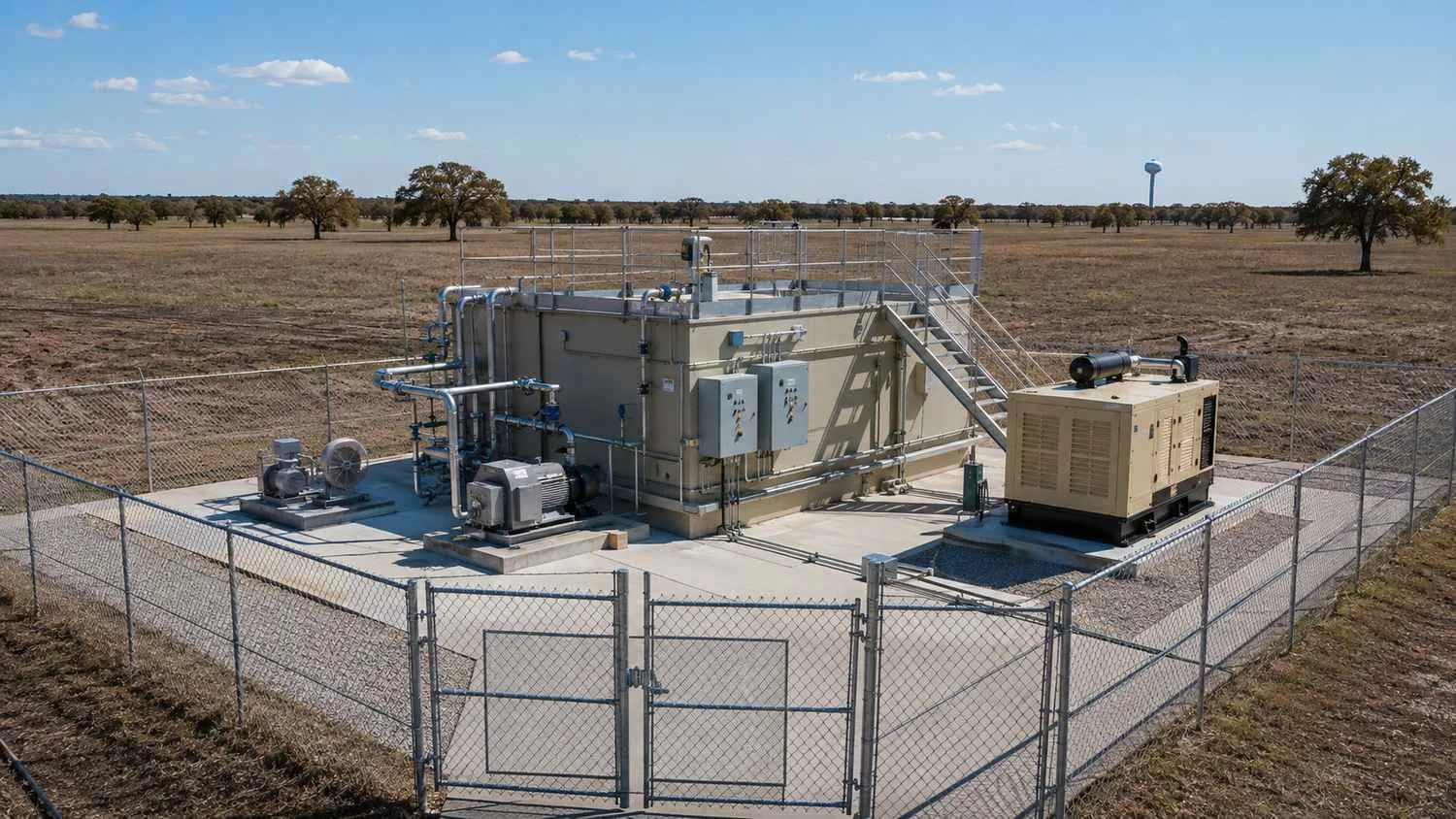
Yes, with TCEQ's written approval under 30 TAC Chapter 210.
Under 30 TAC §210.4, a reclaimed water provider must notify TCEQ and obtain written approval before supplying another user. 30 TAC §210.32 lists residential irrigation, public parks and golf courses with unrestricted public access as Type I uses. Subchapter E covers industrial reclaimed water, so it is not the path for a subdivision plant. Reuse lowers what you discharge; it does not replace the plant's permit.
Who owns and runs a private plant after the lots sell?
Whoever holds the permit, for as long as the plant runs. Decide before you file.
Under 30 TAC §30.350, the permit holder employs or contracts licensed operators or a registered operations company, and a licensed operator at the plant's level runs it at least five days a week. Under 16 TAC §24.225, a utility may not provide retail sewer service to the public without a CCN from the Public Utility Commission of Texas. For developers and builders, the usual options are to keep the plant and contract the operation, convey it to a utility, or put it under a district.
Can you start on a private plant and connect to city sewer later?
Yes, if you design for the switch from day one.
If a city trunk line arrives after your first phases, an interim plant can carry the early lots. Drain the collection system toward the future connection point and get the city's position on the tie-in in writing. Watch the permit's clock: under 30 TAC §305.126, at 75% of permitted flow for three consecutive months you start planning expansion, and at 90% you must obtain TCEQ authorization to start building more.
Are you ready to choose a wastewater path?
You are ready when you can answer yes to all six.
- Do you have the city's written answer on a main with capacity for your flow?
- Do you know whether the extension needs a lift station?
- Have you talked to every offsite easement owner?
- Have you priced the extension and impact fees against building and running a plant?
- If a plant is on the table, have you contacted every permitted system within three miles?
- Do you know who would hold the permit and operate the plant?
Six yeses mean you can commit. Any no comes first.
Ask your engineer: which path carries less schedule risk for phase one, and where would a plant and its buffer sit on the concept plan?
A note on limits: this is general education from state rules and City of McKinney and NTMWD guidance as published in October 2026. Your site, the city's written answers and your permit govern, and no article can promise a review outcome or a date.
Frequently asked questions
Does NTMWD sell sewer service to developers?
Its wastewater page describes wholesale service to cities and special utility districts and names no developers. In McKinney, you work through the city.
Can we pursue a private plant permit and a city connection at the same time?
Yes, and on a tight schedule it is often the safer plan. The TCEQ application needs your correspondence with nearby systems anyway. Budget for design on the path you drop.
I'm buying 80 acres in McKinney's ETJ and the nearest city sewer main is two miles away. What should I get from the city before my feasibility period ends?
A written answer on whether the city will serve the tract and on what terms, which main you would connect to and its remaining capacity, whether you need a lift station, and any planned project that brings a line closer.
I'm a Texas homebuilder planning a package plant for our first phase because the city trunk line is years out. Will TCEQ approve a plant when a city system is within three miles?
It can, but you have to show why connecting does not work. Ask each permitted system within three miles about capacity and keep the replies. If one can serve, submit the cost comparison. TCEQ may still approve when service is denied or an exception is justified.
How early should we file a TCEQ wastewater permit?
Early. TCEQ's permit steps page says to submit a complete application at least 330 days before the proposed discharge begins.
Related resources
- McKinney Utility Availability Study: What Developers Need Before Submitting a Plat in Collin County’s Fastest Growing City
- How to Evaluate Wastewater Utility Options Before You Close on Land (Connect, Build, or Wait)
- Building a Private WWTP in Texas: What Developers Need to Know Before They Commit
- Wastewater Engineering for McKinney Master Planned Communities: Sizing Treatment Systems for Phased Buildouts
Choosing between city sewer and a private plant in McKinney?
We're headquartered in McKinney. We ask the city for its capacity answer in writing, lay out the extension and price a private plant against it before you close on land.
Talk to Modern Engineering Solutions about your site, or call (214) 833-6748.
Keep reading
More to read.
Talk to an engineer
Tell us about your project.
An engineer reads it
Not a salesperson. Someone who can tell you whether the pathway is real.
You get a first answer
Your options, the agencies involved and the questions that decide cost and schedule.
You decide
No commitment to have the first call.
Prefer the phone? (214) 833-6748