Quick Answer
Fort Worth’s extraterritorial jurisdiction does not obligate the city to extend sewer service, annex the land, or prioritize infrastructure investment on any particular developer’s timeline. A tract within the ETJ may have no nearby sewer connection at all, may sit near a line with no available treatment capacity, or may be years ahead of the city’s own capital improvement plan for that corridor. When city sewer is not a realistic near-term option, developers have four main alternative paths to evaluate: an offsite sewer extension paired with a cost participation or reimbursement agreement, a private wastewater treatment plant permitted under TPDES or TLAP, formation of a Municipal Utility District to finance and govern infrastructure independently of the city, or a reclaimed water reuse strategy under Texas Chapter 210 integrated with a private treatment approach. Confirming which path is realistic, and at what cost and timeline, during due diligence rather than after closing is what protects a project’s lot yield, phasing plan, and financial model.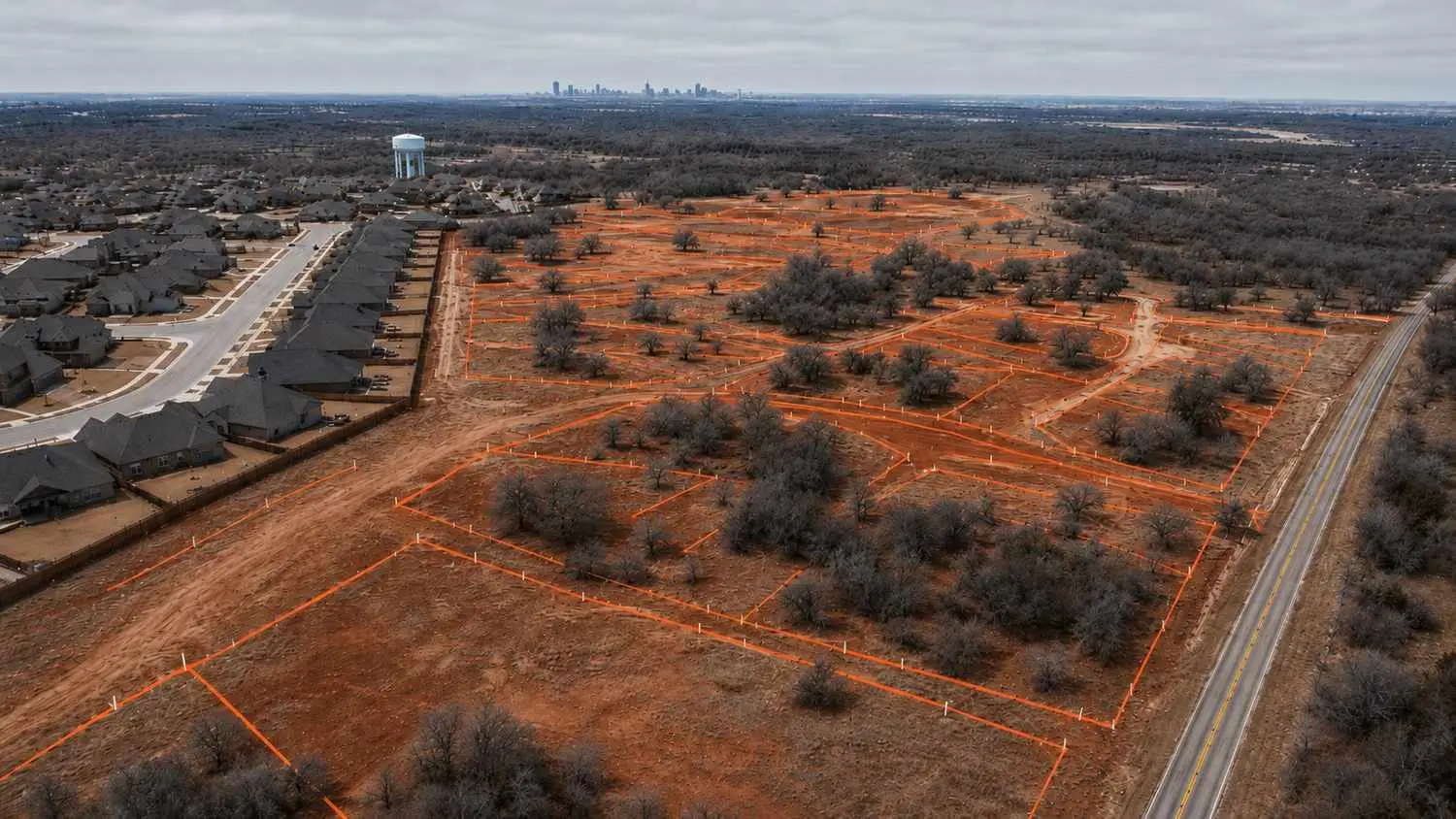
Why ETJ Status Creates Uncertainty Rather Than Certainty
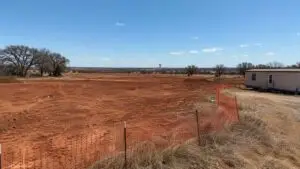
Extraterritorial jurisdiction is a legal buffer zone that gives a city certain regulatory authority over land use and subdivision standards in unincorporated areas surrounding its corporate limits, without making that land part of the city or entitling it to city services as a matter of right. Fort Worth’s ETJ exists to give the city planning influence over the land that will likely be annexed eventually, but “eventually” in municipal planning terms can mean anywhere from a few years to multiple decades, and a developer’s project timeline rarely aligns neatly with a city’s own annexation and capital planning cycle.
Fort Worth, like most Texas cities, prioritizes sewer infrastructure investment based on its own capital improvement plan, which reflects the city’s assessment of where growth is occurring, where existing infrastructure is failing or nearing capacity, and where the city’s own financial and bond capacity allows investment. A developer’s proposed master planned community, however well-conceived, is not automatically inserted into that plan just because the land sits within the ETJ boundary. In many cases, a developer proposing a large project in an ETJ growth corridor is effectively asking the city to accelerate infrastructure investment that was not previously scheduled for that area, and the city’s willingness and ability to do so depends on factors entirely outside the developer’s control, including the city’s current bond capacity, competing infrastructure priorities elsewhere in the ETJ, and the political and fiscal calculus of extending service to unincorporated land the city does not yet collect property tax revenue from.
The Annexation Question and Why It Complicates Service Planning
Fort Worth’s approach to annexation has evolved over the years in response to changes in Texas annexation law, which now requires voluntary annexation in most circumstances rather than the unilateral annexation authority cities held in earlier decades. This means Fort Worth generally cannot simply annex a developer’s land and extend service on its own initiative. Annexation, where it does occur, is typically negotiated, often tied to a development agreement in which the developer agrees to specific terms in exchange for the city’s commitment to provide service, sometimes including the developer funding some or all of the infrastructure the city would otherwise have needed to build with its own capital.
For a developer, this means annexation should not be treated as a background assumption that will simply happen if the project is large enough or successful enough. It is a negotiated outcome that requires direct engagement with the city, typically well before the development timeline requires service, and the terms of that negotiation, including what infrastructure costs the developer will bear, are project specific and should be evaluated as part of the same due diligence process used to evaluate every other infrastructure question on the site.
Confirming What Is Actually Available Before Assuming Anything
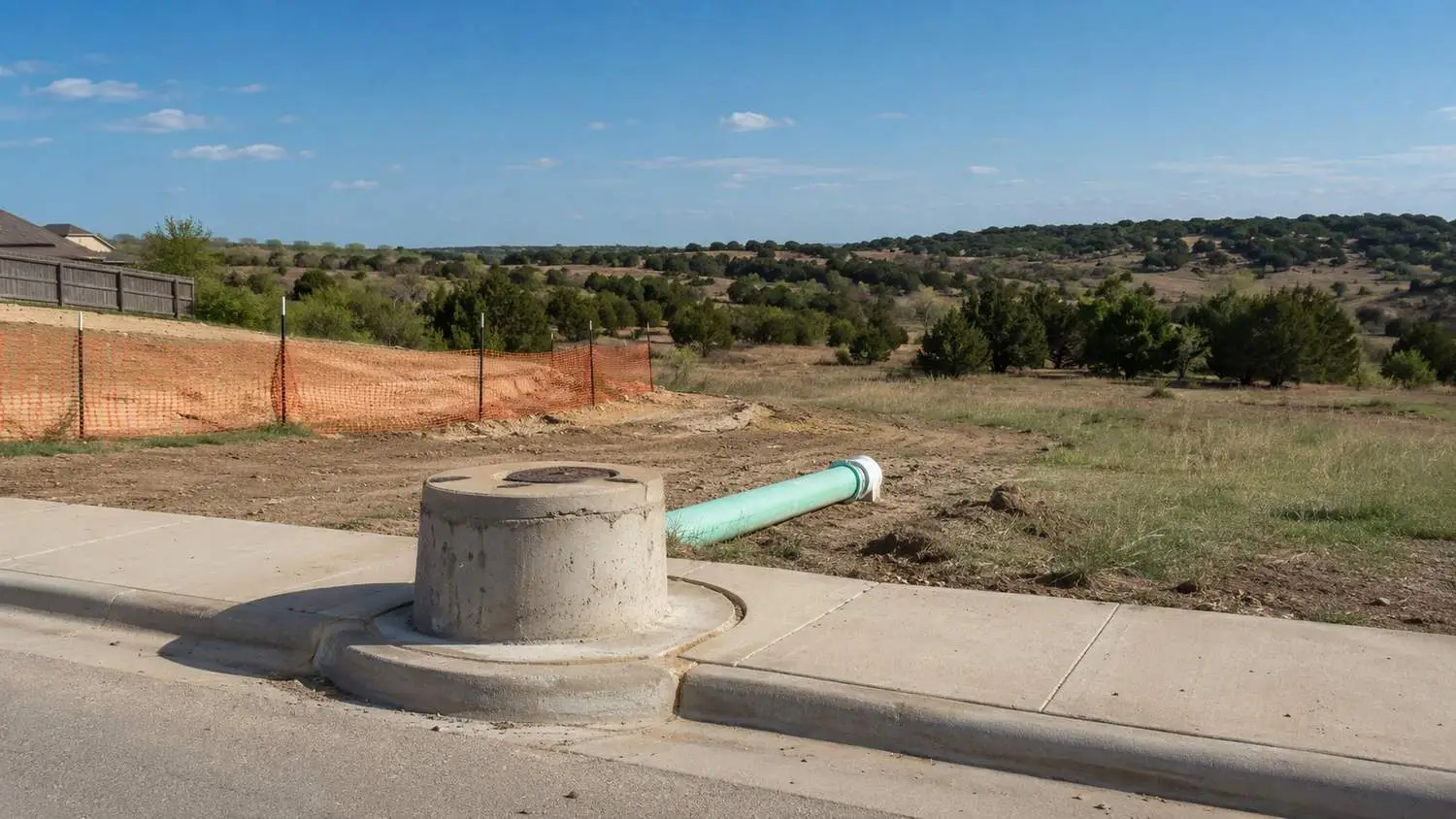
The starting point for wastewater due diligence on a Fort Worth ETJ site is a formal service availability inquiry submitted to the city’s water department, describing the specific development program, requesting confirmation of the nearest point of connection with available treatment capacity, the condition and capacity of any collection system infrastructure between that point and the project site, and the city’s current position on annexation or service extension for the specific location. This inquiry should be submitted early enough in the acquisition process that the response can still influence the purchase decision, not after the tract is already under a hard money contract with a closing date the response might not accommodate.
The city’s response will fall into roughly three categories, each with different implications for the project. The city may confirm that service is available with adequate capacity at a reasonable connection distance, in which case the wastewater strategy is straightforward and the remaining due diligence focuses on confirming the specific extension cost and timeline. The city may indicate that service could be extended but only as part of a negotiated development agreement involving specific infrastructure contributions or annexation terms, in which case the developer needs to evaluate whether those terms are financially workable for the project. Or the city may indicate that service is not planned for that area within any timeframe relevant to the project, in which case the developer needs to shift immediately to evaluating private infrastructure alternatives rather than continuing to hold out hope for a city solution that is not coming.
Offsite Sewer Extension: Distance, Lift Stations, and Force Main Routing
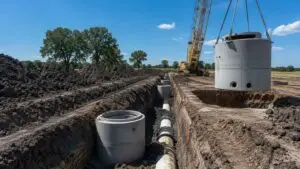
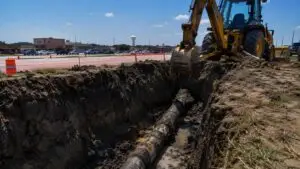
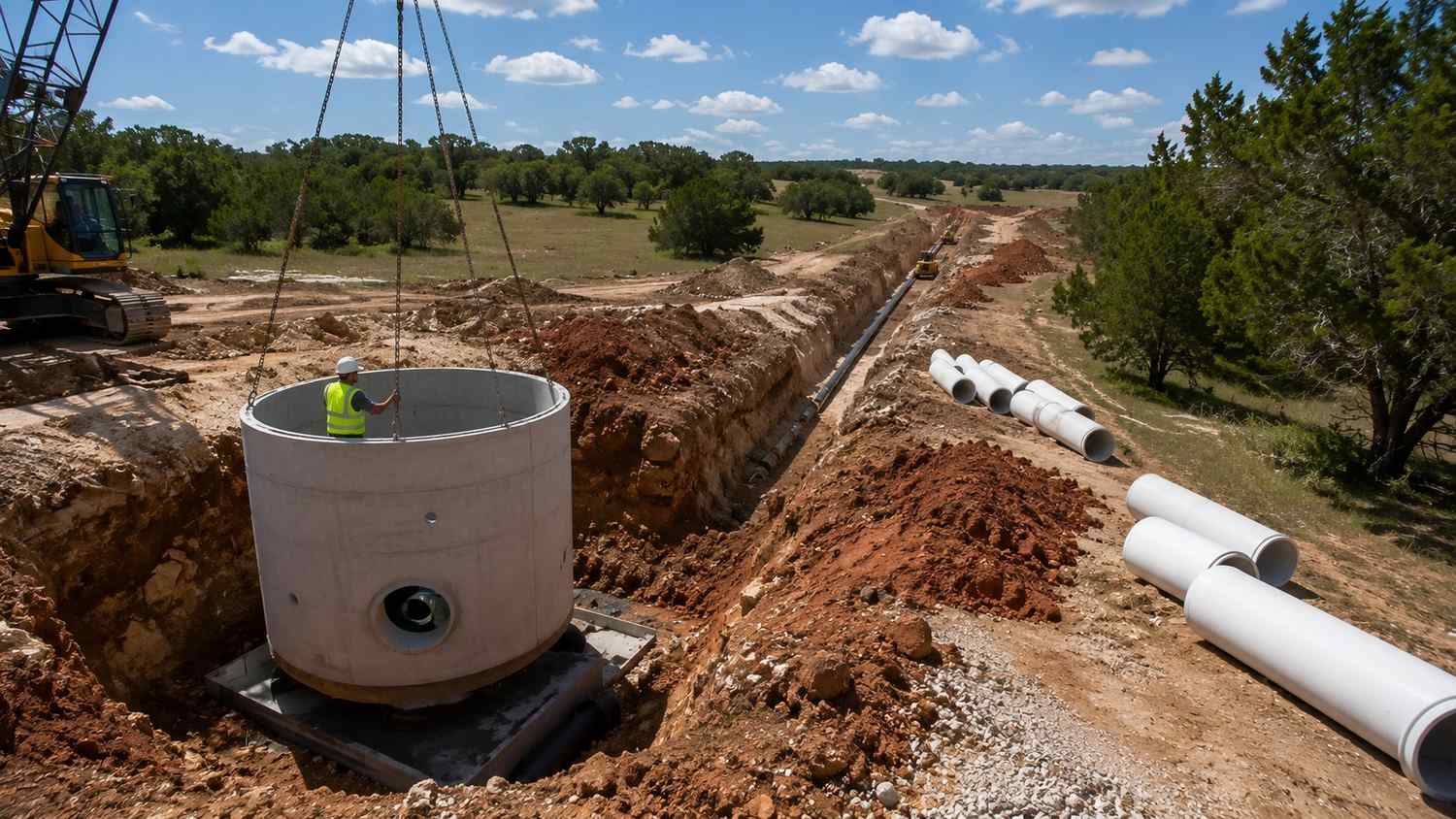
When city sewer service is theoretically available but requires an offsite extension, the specific routing and infrastructure required to reach the site drives both cost and timeline. Gravity sewer extensions require maintaining adequate slope across the full distance, and in areas of Fort Worth’s ETJ with rolling terrain, achieving gravity flow over an extended distance can require the connecting trunk line to be substantially deeper than a straightforward extension would suggest, which increases both construction cost and complexity. Where gravity flow is not practical over the required distance, a lift station becomes necessary, introducing a pump station with its own capital cost, force main routing to the point of gravity connection, and long-term operational responsibility that must be assigned to the developer, a homeowners association, a MUD, or the city depending on the specific arrangement negotiated.
Force main routing decisions affect not just construction cost but easement requirements, since a force main crossing intervening properties to reach the point of connection requires easement acquisition from each affected owner, following the same pattern of schedule risk associated with easement negotiation described for other Dallas-Fort Worth area utility extension projects. Developers should map the likely force main or gravity sewer routing and identify the specific parcels that would require easements as part of the initial feasibility evaluation, well before the extension design is finalized, so that easement negotiation can begin in parallel with design rather than after design is complete.
Private Wastewater Treatment: TPDES, TLAP, and the Land Yield Tradeoff
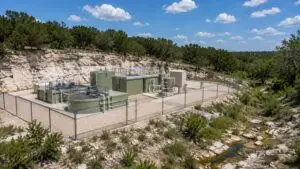
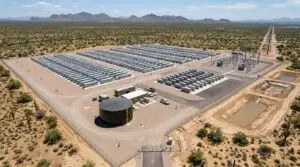
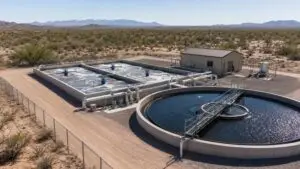
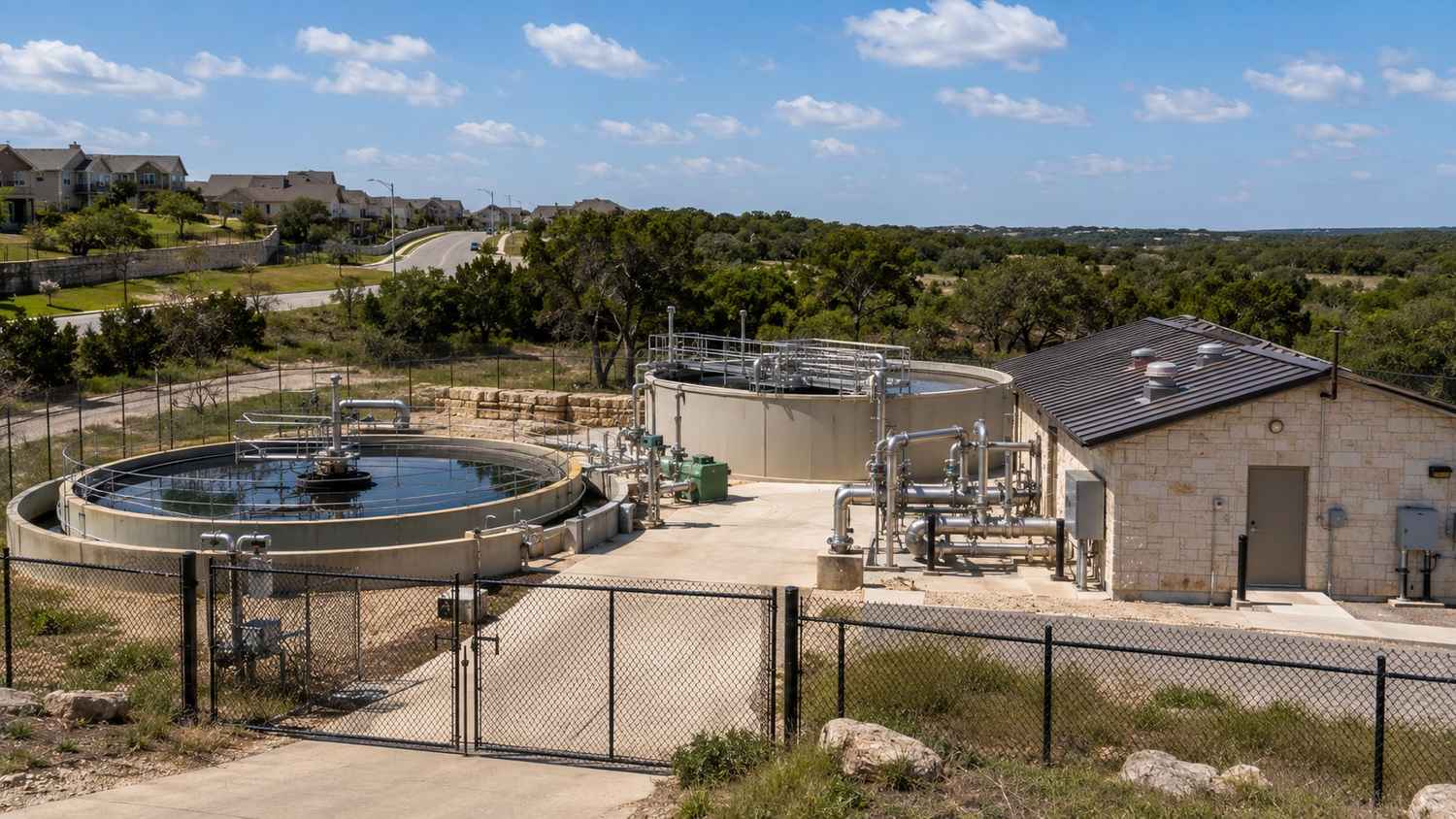
When public sewer extension is not feasible on a workable timeline or cost basis, a private wastewater treatment plant becomes the primary alternative, permitted through TCEQ under either a TPDES permit for discharge to a receiving water body or a TLAP permit for land application disposal. As with other Texas ETJ and rural development contexts, the choice between these two permit types depends heavily on the specific site’s receiving water availability and land area for disposal fields, with a TLAP system consuming developable acreage for irrigation disposal that directly affects the project’s achievable lot yield, and a TPDES system avoiding that land consumption while generally requiring more sophisticated treatment technology and a suitable receiving water with adequate assimilative capacity.
For Fort Worth ETJ developments, the treatment plant’s long-term ownership and operation is a planning question that should be resolved concurrently with the permit type selection. A private treatment plant serving a subdivision needs an entity responsible for its operation, compliance, and eventual capital replacement across a multi-decade operating life that will extend well beyond the developer’s own involvement in the project, which is the primary reason MUD formation is so frequently paired with private treatment plant strategies in Texas ETJ development.
MUD Formation as the Governance Structure for Long Term Infrastructure
Municipal Utility District formation gives a Fort Worth ETJ development a governance and financing structure that can own and operate a private treatment plant, issue tax exempt bonds to fund infrastructure construction, and levy property taxes on homes built within the district to fund ongoing operation, maintenance, and eventual capital replacement of the treatment plant and collection system long after the original developer has completed sales and moved on to other projects. This structure is particularly relevant in ETJ contexts where city service is not a near term option, since it provides a durable long term solution that does not depend on the city ever extending service or annexing the property.
MUD formation requires either legislative approval or TCEQ approval depending on the specific circumstances and is a multi-year process involving coordination with TCEQ, potentially the Texas Legislature, and bond counsel and underwriters who structure the district’s financing. Developers evaluating this path for a Fort Worth ETJ project should build the MUD formation and bond issuance timeline into their overall project schedule from the earliest planning stages, since the financing the MUD structure provides is often a prerequisite for the treatment plant construction itself, not a parallel track that can simply catch up later.
Reclaimed Water Integration Where Reuse Demand Exists
For Fort Worth ETJ subdivisions with substantial common area landscaping, golf course components, or park systems, integrating Chapter 210 reclaimed water reuse into a private treatment plant strategy can reduce both the community’s potable water demand and the treatment plant’s disposal burden simultaneously. Where a TLAP permit is being pursued, reclaimed water reuse for irrigation can serve as part of the land application disposal strategy, potentially reducing the dedicated disposal acreage that would otherwise be required, which partially offsets the lot yield impact that a TLAP system would otherwise create. This integration should be evaluated during initial treatment plant design, since retrofitting a reuse capability into an already designed and constructed facility is significantly more expensive than incorporating it into the original design.
Frequently Asked Questions
We’re evaluating an ETJ tract that Fort Worth has indicated it has no plans to serve within the next decade. Does that mean the land isn’t developable?
No, but it means the development strategy needs to be built around private infrastructure rather than an assumption of future city service. A private wastewater treatment plant under a TPDES or TLAP permit, potentially paired with MUD formation for long term governance and financing, can support a fully developable subdivision independent of the city’s own service timeline. The land remains developable; the infrastructure strategy and the associated capital cost and land yield implications simply need to be built around private rather than municipal solutions, and that difference should be reflected honestly in the land’s underwriting and purchase price negotiation rather than discovered after closing.
How much does MUD formation typically add to a Fort Worth ETJ project’s timeline?
MUD formation and initial bond issuance for a Texas development typically takes twelve to twenty four months from initial petition through the first bond sale, depending on whether legislative approval is required, the complexity of the district’s boundaries and infrastructure plan, and the efficiency of coordination with TCEQ and bond counsel. This timeline should be initiated as early as possible in the overall project schedule, ideally concurrent with initial land use entitlement work, since the treatment plant construction and much of the site infrastructure construction typically depend on the capital the MUD’s bond issuance provides.
If Fort Worth eventually extends sewer service to our area after we’ve already built a private treatment plant, can we transition to city service later?
In many cases yes, though the transition requires coordination with both TCEQ and the city and should ideally be anticipated in the original private treatment plant’s design and permit structure. Some developers structure their private treatment plant with an anticipated operational life tied to the realistic timeline for city service extension, and negotiate transition terms with the city as part of an eventual annexation or service agreement. This is a matter that benefits from early conversation with the city’s planning and utilities staff about their own long term intentions for the corridor, even when city service is not available in the near term, since understanding the city’s own long range plan helps inform whether your private system should be designed for eventual decommissioning or for a longer independent operating life.
Related Resources
- Dallas Subdivision Wastewater Planning: When City Sewer Isn’t an Option in ETJ Growth Areas
- Land Application Permits in Texas: A Faster Path to Wastewater Approval for Developers
- Biosolids Land Application from Private Wastewater Treatment Facilities in Texas
- Hydraulic Modeling for Dallas High Rise Developments: Why Pressure Zone Design Matters More Than You Think
- Water Supply Planning for Master Planned Communities in Tarrant County: What Developers Get Wrong
Evaluating Wastewater Strategy for a Fort Worth ETJ Development?
MES works with developers, landowners, acquisition teams, and civil engineers evaluating Fort Worth ETJ growth corridors, rural land tracts, and master planned community sites to confirm sewer service availability, evaluate annexation and development agreement options, compare private treatment plant strategies under TPDES and TLAP permits, assess MUD formation feasibility, and identify wastewater risks before they affect closing decisions, lot yield, or project financing.
We specialize in:
- Sewer service availability due diligence and annexation coordination for Fort Worth ETJ development sites
- Private wastewater treatment plant design and TPDES or TLAP permit application support for Texas ETJ subdivisions
- Offsite sewer extension feasibility, lift station design, and force main routing for Fort Worth area growth corridors
- Municipal Utility District formation coordination and long term infrastructure governance planning
- Chapter 210 reclaimed water reuse integration with private treatment plant disposal strategy
- Wastewater feasibility and lot yield impact analysis for Fort Worth ETJ master planned community due diligence
Modern Engineering Solutions, DFW, Texas. Contact: (214) 833-6748 or mod-eng.com