
Blog
When are we when are we planning on submitting it for a permit?
A Texas wastewater permit submittal date is set by decisions, not paperwork, so learn what must be settled before the application goes to TCEQ for review.
You set the submittal date, and you set it on decisions, not paperwork. A Texas wastewater permit submittal goes in only after the pathway, the flow and storage numbers, the three-mile review and the permit holder are settled. Other articles cover pre-closing diligence and agency review time. This one is about the date itself, and the conditions behind it.
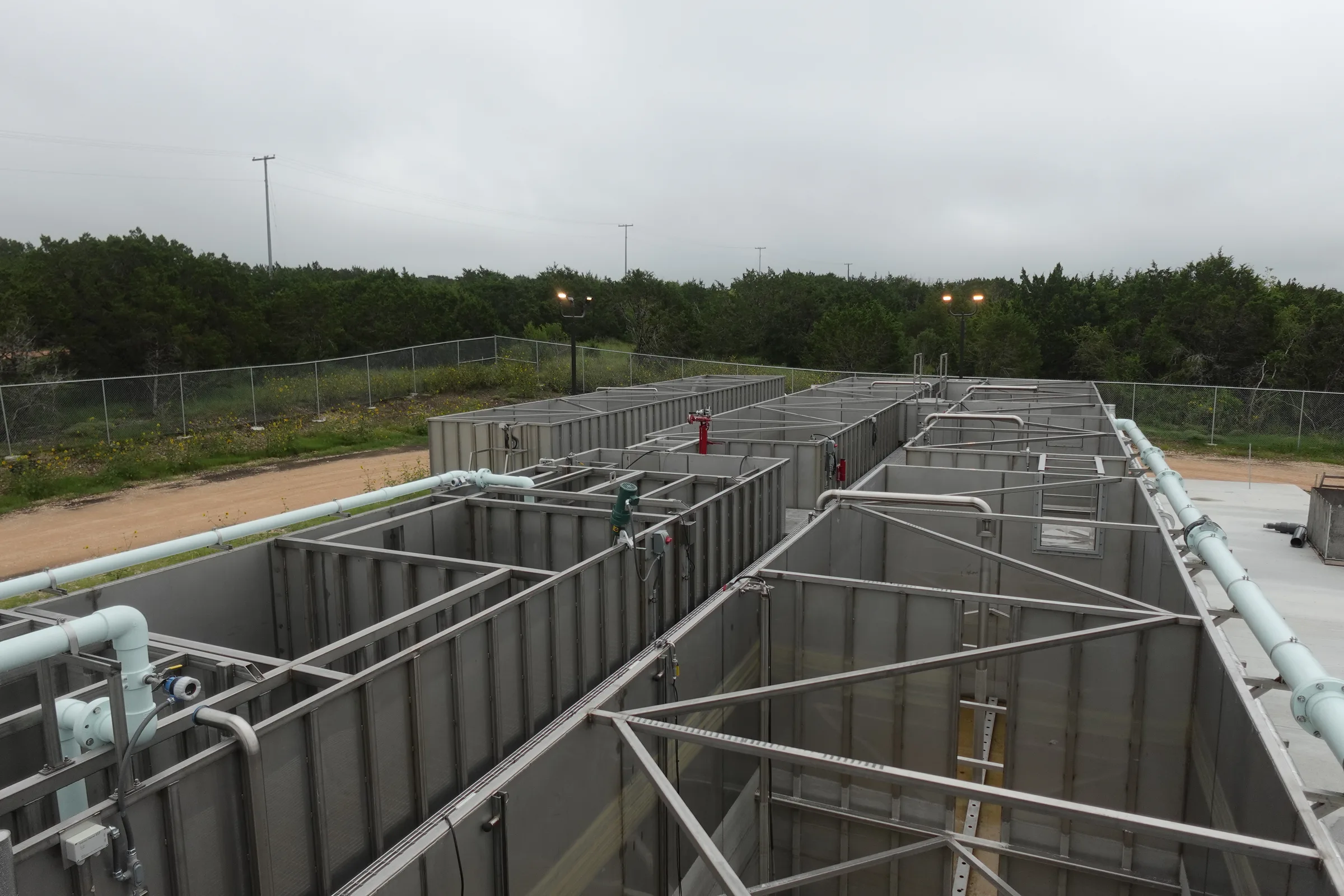
What actually sets the wastewater permit submittal date?
The date is set backward from the last decision that changes the application. Working forward from the day you want to file is how dates slip.
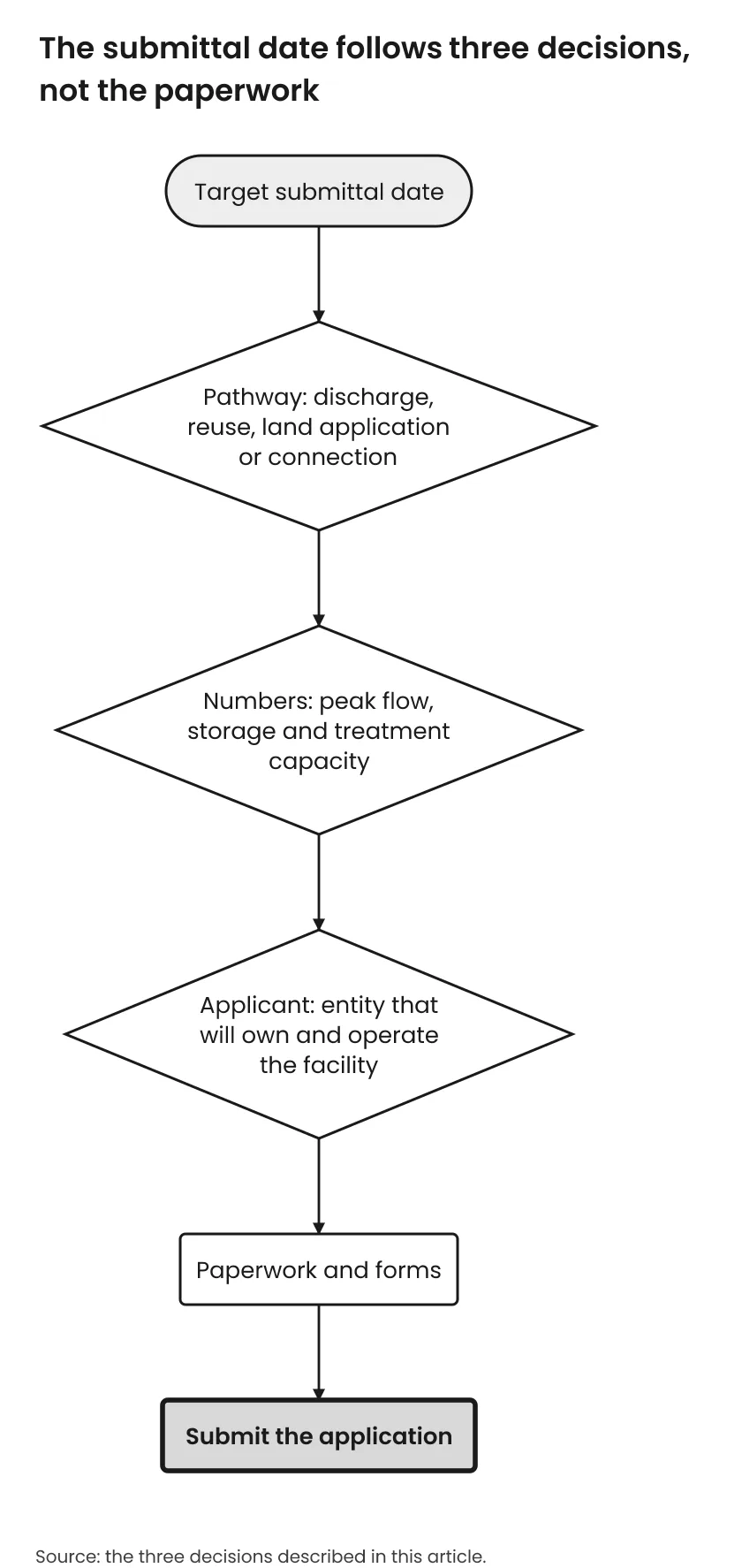
Three decisions change what you file:
- The pathway: surface water discharge, reuse or land application, or a connection to an existing plant.
- The numbers the application will state: peak flow, storage and treatment capacity.
- The applicant: the entity that will own and operate the permitted facility.
Close those three and the paperwork becomes the short part. The calendar time lives in the decisions, not the forms.
Why does the date keep moving on the way to a filing?
A submittal date is a statement about decisions, so it moves when the deal moves. That is normal, and it is manageable when the assumptions are written down.
Four things move it most often:
- Lot counts change after a takedown.
- A phase gets deferred.
- Land under contract gains or loses acreage.
- A city answers a sewer request with a capacity problem instead of a number.
Any of those can change the pathway or the capacity the application states, and the date moves with it.
The useful answer is conditional: this is the date if the pathway is discharge and the flow is the current number.
Written down with its assumptions named, a change is visible while it is still cheap. Held in someone's head, it shows up as a surprise.
Where the answer sits with a city utility or a district board, the date waits on that answer.
Which pathway is the project on, and who decides it?
The pathway is the first decision because it sets which application you file and who reviews it. Two projects with the same lot count can file completely different applications.
A surface water discharge is one route. Reuse or land application is a second. A connection to an existing plant is a third, with a different application behind it.
This is a business decision as much as a technical one. It decides what gets built, what gets operated for the life of the project, and which agency you answer to.
If you are one of the developers and builders who buys land before the utility question is answered, this is the decision that costs the most to get wrong.
What is the three-mile review, and does it change the route?
The review is a required part of the application for a new discharge permit or certain major amendments, and its result can decide whether the discharge route survives.
TCEQ's rule basis for the three-mile review (opens in a new tab) is Texas Water Code 26.0282, which lets the agency deny or alter a discharge permit based on need and on regional systems.
An applicant for a new permit, or certain major amendments, must review a three-mile area around the proposed facility. The purpose is to find a wastewater treatment plant or sewer collection lines it could use.
The applicant contacts those owners to ask about capacity and willingness to expand. If a plant has capacity and its owner is willing, the applicant submits a cost analysis of connecting versus building.
That work is phone calls and letters, and it produces a record. Start it early.
A plant with room and a willing owner can change the project for the better. A documented no capacity, no interest answer is what supports the discharge route you file.
Is the application complete without TCEQ form 20971?
No. TCEQ-20971, the Supplemental Permit Information Form, is required for all TPDES wastewater permit applications. TCEQ's wastewater permit forms (opens in a new tab) list it in the Water category with an edition date of August 1, 2023.
Confirm the current edition and its instructions when you file, because forms get revised.
One form is not the package. A missing form is the easiest problem to avoid and the most annoying one to find after the package is out the door.
Who should be the applicant on the permit?
The applicant should be the entity that will own and operate the permitted facility, and that gets decided before the filing. When someone asks when we are submitting, the real question is often who we is.
If a district or a utility will own the plant, the agreement that creates that ownership is part of the path to a submittal. If the developer holds the permit and transfers it, say so up front, so the application, the plans and the district's financing name the same party.
MES has done civil site work for Texas developers in Collin, Ellis and Williamson counties.
What else is on the filing calendar?
Local permits sit on their own submittal calendar. Collin County is one example.
Collin County's development permit requirement (opens in a new tab) is broad: anyone planning any type of residential or commercial project that disturbs ground or adds footprint on a parcel of land in the unincorporated county must apply for a permit through the county's Citizen Self-Service Portal.
List each local submittal next to the TCEQ filing, with its own owner and a date.
Is the project ready to set a submittal date?
Use this checklist before anyone puts a date in a pro forma. Each item is a yes or no.
- The pathway is chosen and written down: discharge, reuse, land application, or a connection.
- The peak flow, storage and treatment capacity the application will state are fixed numbers, not a range.
- Where the filing is a new permit or a major amendment, the three-mile area has been reviewed, the owners contacted, and the correspondence is on file.
- The applicant is named and matches the entity that will own and operate the facility.
- The current edition of every required form, including TCEQ-20971, is confirmed.
- The county and local submittals on the same calendar are listed, each with an owner and a date.
Ready only when every answer is yes, with item 3 counted where it applies. One no is the item that sets the date, so name it in writing before anyone promises a date.
Bring a short agenda to your engineer or project team: which pathway is on the table, what numbers the filing will state, who holds the permit, and what the three-mile review found.
This article covers how a Texas developer sets and holds a wastewater permit submittal date. It is general education, not a project-specific design, and it promises nothing about an agency's review or its timing. Your pathway, your flows and your local requirements decide the actual date.
Frequently asked questions
Can MES give me a TCEQ review timeline before we file?
No. MES commits its own production dates in writing and never promises an agency's. The submittal date is one you can underwrite; once the package goes in, the review calendar belongs to TCEQ.
What is TCEQ form 20971?
The Supplemental Permit Information Form. TCEQ's form list shows it in the Water category, and it is required for all TPDES wastewater permit applications.
I'm a Texas developer closing on land outside the city limits next month. Should we file the wastewater permit before or after closing?
Do the work that decides the filing before the money goes hard, even when the submittal itself comes later. The pathway, the nearby plant capacity and the entity that will hold the permit are all pre-closing questions. Filing first and answering later is how a project ends up carrying land it cannot serve.
I manage development for a Texas builder and our engineer keeps moving the submittal date. What should I ask for so I know the date is real?
Ask for the conditions behind it in writing: the pathway, the flow and storage numbers, the status of the three-mile review, and the named applicant. A date without those is a hope. A date with them listed, and the open item flagged, is something you can take to a lender.
Does the three-mile review apply to every wastewater permit application?
No. TCEQ's rule basis describes it for a new permit or certain major amendments. Whether your filing triggers it depends on the filing, so confirm that with the agency before you count the work as done.
Setting a Wastewater Permit Submittal Date You Can Underwrite?
MES settles the pathway, the capacity numbers and the permit holder before an application goes in, so the submittal date is a decision you can underwrite instead of a guess.
We specialize in:
- Wastewater treatment and collection design
- Permitting and agency submittals
- Reuse and land application evaluation
- Lift station and force main design
- Utility feasibility and capacity review
- Site civil and land development
Ask for the first step: pre-acquisition utility screen. A written answer on CCN status, capacity, discharge location and rights, pathway, cost range and permit calendar (15 business days). Ask for it here.
Modern Engineering Solutions, McKinney, Texas. Contact: (214) 833-6748 or mod-eng.com
Keep reading
More to read
What we do
On this page
- What actually sets the wastewater permit submittal date?
- Why does the date keep moving on the way to a filing?
- Which pathway is the project on, and who decides it?
- What is the three-mile review, and does it change the route?
- Is the application complete without TCEQ form 20971?
- Who should be the applicant on the permit?
- What else is on the filing calendar?
- Is the project ready to set a submittal date?
- Frequently asked questions
- Setting a Wastewater Permit Submittal Date You Can Underwrite?
Planning a project?
Talk to an engineerTalk to an engineer
Tell us about your project
An engineer reads it
Not a salesperson. Someone who can tell you whether the pathway is real.
You get a first answer
Your options, the agencies involved and the questions that decide cost and schedule.
You decide
No commitment to have the first call.
Prefer the phone? (214) 833-6748