
Blog
Moving Dirt in Texas Without TCEQ Stormwater Coverage: The State Gate Your City Approval Does Not Clear
You need more than a city OK before you move dirt in Texas: you need Construction General Permit coverage from TCEQ, in place before soil disturbance starts, with the right owner and contractor both listed as operators. A plat approval, a utility release or a contractor's promise to handle the SWPPP does not clear that state gate. On our recent 2026-11-12 show, Mike Rosel walked through which coverage applies, who holds it, and where the coverage date belongs on your schedule so equipment does not sit while nobody owns the stormwater piece.
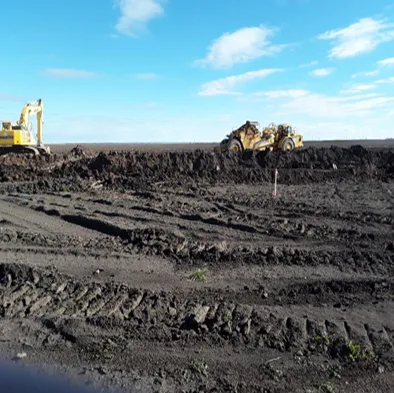
What does it take to get stormwater coverage before the excavator shows up?
A city or county approval is not the same as stormwater coverage. TCEQ authorizations sit beside those approvals as a separate state gate, and a city OK does not mean you are covered under the Texas construction general permit, TXR150000.
The trap is treating the city's OK as the last gating item. The city can redtag you, and coverage is still a completely separate one.
Timing is the part people miss: coverage must be in place before any soil disturbance starts, not after the first rain and a report of mud on the road.
This permit covers construction stormwater only. It does not cover things like wastewater treatment plant permit discharges.
Is your site a small-site or large-site under the permit?
You classify the site by the total acreage you will disturb, and that acreage includes the larger common plan of the development, not just your one phase. The permit has a small-site tier and a large-site tier, and you read the acreage lines in the permit text on air rather than quoting them from memory.
The two tiers carry different obligations. Large sites need a Notice of Intent plus a SWPPP.
Small sites have their own posting and SWPPP duties. Do not treat the two as interchangeable.
One phase of a bigger subdivision is not judged by itself. If your work is part of a larger plan, count it as a whole.
If your work does not disturb soil, sits outside the permit's threshold and is not part of the larger plan, check the permit before assuming it applies.
Getting the classification and the SWPPP to match your grading plan is where we start: SWPPPs and erosion and sediment control plans in Texas.
Who is the permit operator, the owner or the contractor?
The permit looks at who controls the plans and specs and who controls the day-to-day work on site. On many jobs, the owner can be both, but check this rather than assume.
Owner and contractor can both be operators: one controls the plan, the other has daily site control, and often it is both.
A contractor's SWPPP does not settle whether you as the owner also need coverage. On one recent call, a Texas developer said they were not doing anything until the city told them okay, which is the right instinct, except the stormwater piece still has to be checked and held in the owner's or contractor's name.
Why does a late start hurt the owner more than the contractor?
Crews, equipment and survey stakes may look like progress, but if coverage is not in place, you are not supposed to be starting. That is the bottleneck nobody put a date on.
Picture a platted subdivision phase, the contractor mobilizes, and on day one someone asks for the SWPPP and the coverage confirmation. The owner assumed the contractor filed it; the contractor assumed the owner did. The equipment sits while it gets sorted out, and equipment rental is expensive.
If the crew and equipment are mobilized but cannot work, expect the contractor to bill you for that.
A late start hits your carry first: land interest, the lender's draw schedule and lot delivery dates.
On top of that come standby charges for an idle crew under contract, TCEQ findings that eat time, and rework from a SWPPP written after grading that does not match the controls on the ground.
Disturbing soil without coverage is a TCEQ compliance issue, and you do not want to find that out afterwards. The fee to prepare a SWPPP is one line; lost schedule days are a different line.
One delay we see is slow reviews and approvals: 10 of the 35 developers we spoke to this year said that strained their schedules and budgets. Under a construction general permit, the coverage has to be in place before the first cut, so check whether your site needs this coverage before moving dirt.
What should be on your schedule this week?
Put a date on stormwater coverage and make it a week or two before your mobilization date. Then finish the three supporting pieces.
Classify your disturbed acreage, counting the larger common plan, so you know which tier applies.
Name every operator next to the coverage date, so the plan-control role and the daily site-control role are both owned.
Get a SWPPP that matches your grading plan, rather than one written to catch up after the fact.
If you are a developer in Texas and a site is ready to grade, we can sit down with the plan and the schedule and make those dates line up before equipment moves: developers and builders. You can also leave a comment on the show or reach out at mikeod-ng.com, the address Mike gave for this show.
Watch the full episode
The full episode is on YouTube: https://www.youtube.com/watch?v=UOiL9TOZm-k (opens in a new tab)
Frequently asked questions
Does a city permit approval mean I have TCEQ stormwater coverage?
No. City and county approvals are separate from TCEQ's Construction General Permit. Coverage under TXR150000 has to be in place before soil disturbance starts, and a city OK does not confirm it.
Which sites need a Notice of Intent and SWPPP?
Mike walked through a small-site tier and a large-site tier and read the acreage lines in the permit text on the show. The large sites need a Notice of Intent plus a SWPPP; small sites have their own posting and SWPPP duties. He advised reading the permit text for the exact acreage lines rather than quoting them from memory.
Can I phase my subdivision to stay under the threshold?
Only if the phases do not count together as a larger common plan. One phase of a bigger subdivision is not judged by itself, and smaller phases that add up to a bigger plan can leave you liable. Check the total disturbed acreage including the larger plan.
I am a developer in a rural Texas county outside city limits, and my contractor says he will handle the SWPPP, so do I still need to worry about TCEQ coverage?
Yes, look into it. A contractor's SWPPP does not settle whether you as the owner also need coverage. The permit looks at who controls the plans and specs and who controls the day-to-day work on site, and owner and contractor can both be operators.
My subdivision phase is platted and my contractor is mobilizing equipment next week, but nobody told me when the stormwater coverage has to be filed, so what should I put on my schedule first?
Put a date on the stormwater coverage and set it a week or two before mobilization, then have your acreage classification and operator names ready and a SWPPP that matches your grading plan. If equipment mobilizes before coverage is in place, expect the standby cost to land on you.
What happens if grading starts before coverage is in place?
Disturbing soil without coverage is a TCEQ compliance issue. Beyond enforcement findings, a SWPPP written after grading often does not match the controls on the ground, so you may pay to have it redone while the schedule slips.
Related Resources
- Construction General Permit TXR150000: What Texas Developers Need to Know Before Moving Dirt
- Hydrostatic Test Water: What Texas Developers and Contractors Need to Know Before Discharge
- Impact Fees and CIP Timing: Why Phasing Costs Blindside Developers When the Capital Improvement Plan Schedule Does Not Match Their Build Out
- Data Center Water Supply in Texas: How to Build a Water Plan That Holds Up
Texas site ready to grade, but stormwater coverage is not dated yet?
We help Texas developers classify disturbed acreage, line up construction stormwater coverage ahead of mobilization, and prepare a SWPPP that matches the grading plan. Let's check the coverage date against your schedule before the equipment moves.
We specialize in:
- Stormwater pollution prevention planning
- Construction stormwater coverage and NOI support
- Erosion and sediment control plans
- Construction administration
- Site civil engineering for land development
- Water and wastewater engineering
Modern Engineering Solutions, McKinney, Texas. Contact: (214) 833-6748 or mod-eng.com
Keep reading
More to read
- Who can do a water and wastewater serviceability study for a property near Austin, Texas?
- Who does water and sewer engineering for new commercial developments in Arizona?
- Who does water and sewer engineering for new developments on the Colorado Front Range?
- Fire flow for a Texas commercial building with no hydrant nearby
What we do
On this page
- What does it take to get stormwater coverage before the excavator shows up?
- Is your site a small-site or large-site under the permit?
- Who is the permit operator, the owner or the contractor?
- Why does a late start hurt the owner more than the contractor?
- What should be on your schedule this week?
- Watch the full episode
- Frequently asked questions
- Related Resources
- Texas site ready to grade, but stormwater coverage is not dated yet?
Planning a project?
Get a feasibility reviewTalk to an engineer
Tell us about your project
An engineer reads it
Not a salesperson. Someone who can tell you whether the pathway is real.
You get a first answer
Your options, the agencies involved and the questions that decide cost and schedule.
You decide
No commitment to have the first call.
Prefer the phone? (214) 833-6748