Quick Answer
Chapter 210 of the Texas Administrative Code establishes the water quality and use requirements for reclaimed water, treated wastewater effluent that has been processed to a standard suitable for irrigation and other non potable uses. For Austin area developments with a golf course, HOA maintained common areas, amenity lakes, parks, greenbelts, or landscaped medians, reclaimed water can supply some or all of that irrigation demand instead of drawing from the development’s potable water system, reducing potable water costs, supporting drought resilient landscaping when outdoor watering restrictions apply to potable supply but not to reclaimed water, and in some cases functioning as part or all of a TLAP permitted treatment plant’s land application disposal strategy. Realizing this value requires planning the reuse system, storage, distribution piping, user agreements, and TCEQ coordination alongside the treatment plant design from the outset, not retrofitting reuse capability into a facility that was designed only around disposal.
From Disposal Problem to Reuse Asset
A private wastewater treatment plant serving a master planned community has to put its treated effluent somewhere, whether that’s a TPDES permitted discharge to a receiving water body or a TLAP permitted land application system. Both paths require the developer to solve a disposal problem as a condition of the permit. Chapter 210 reuse changes the framing of that same effluent stream by treating it as a supply source for a demand that already exists on nearly every master planned community site: irrigation.
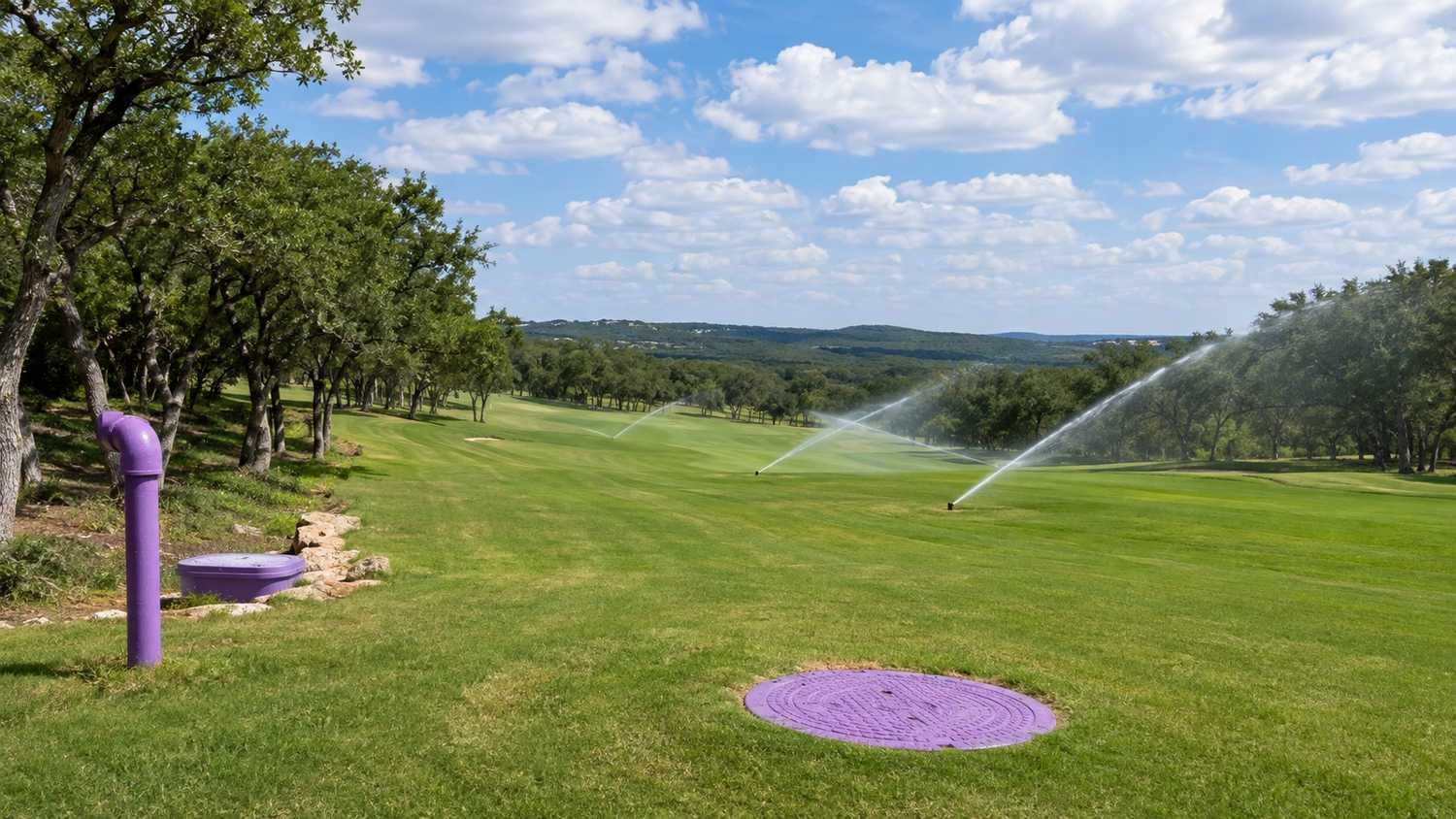
Golf courses, HOA common areas, amenity lakes that need makeup water, parks, greenbelts, and landscaped medians all require a consistent water supply, and in a typical development that demand is met with potable water, purchased at potable water rates, drawn from a supply the utility has sized and priced for drinking water use. Reclaimed water, treated to the appropriate Chapter 210 standard, can meet that same irrigation demand without competing for potable water capacity, which is valuable to the local utility as well as the development, since it reduces the peak demand the utility’s potable system has to support during Central Texas’s hot, dry summer irrigation season, exactly when potable water systems are under the most stress.
Chapter 210 Water Quality Standards and What They Mean for System Design
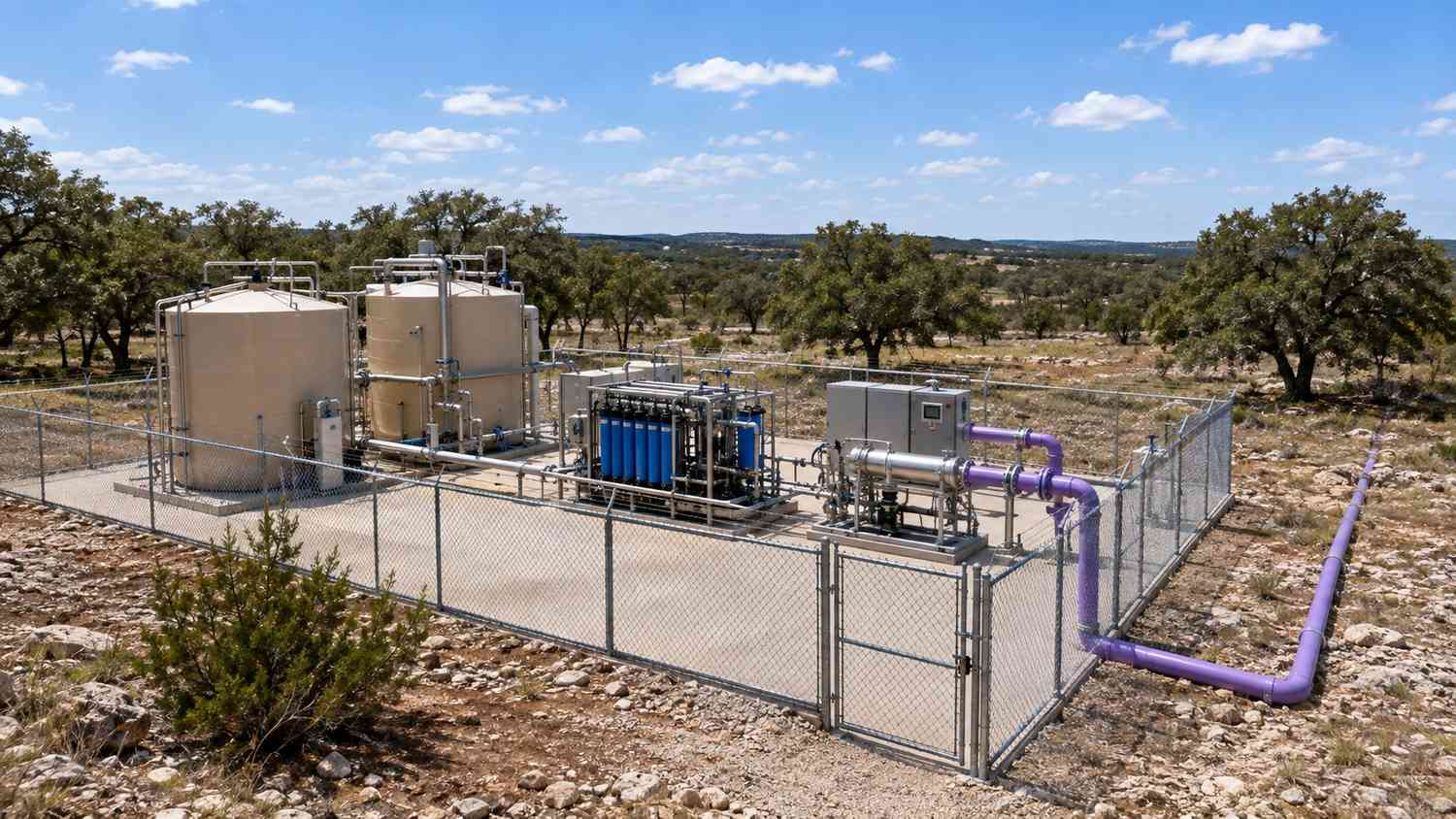
Chapter 210 establishes two types of reclaimed water, distinguished by the level of treatment applied and the corresponding restrictions on use and public access. Type I reclaimed water is treated to a higher standard, including disinfection to a specific bacteriological limit, and is authorized for uses with a higher potential for human contact, including irrigation of golf courses, parks, and other areas where the public may have direct exposure to irrigation spray or ponded water. Type II reclaimed water is treated to a somewhat lower standard and is restricted to uses with more limited public access and contact potential, such as irrigation of restricted access agricultural or industrial sites.
For most Austin area master planned community applications, golf course irrigation, HOA common area irrigation, and amenity lake makeup water, the use and public access profile generally requires Type I reclaimed water, given that residents, golfers, and the general public will have regular access to and contact with these irrigated areas. This means the treatment plant serving the development needs to include the additional treatment steps required to reliably achieve Type I quality, which is a design decision that should be made early in the treatment plant’s engineering, since retrofitting additional treatment capacity into a plant originally designed only to meet TLAP or TPDES effluent limits, without Type I reclaimed water quality in mind, is a significantly more expensive proposition than designing for it from the start.
Sizing the Reuse System: Irrigation Demand and Seasonal Water Balance
The practical value of a Chapter 210 reuse system depends on matching the reclaimed water supply, which is driven by the community’s wastewater generation and is relatively steady across the year, against irrigation demand, which is highly seasonal, peaking during hot, dry summer months and dropping to a small fraction of peak demand during winter. This seasonal mismatch between a steady effluent supply and a seasonal irrigation demand is the central water balance challenge in reuse system design, and it directly determines how much of the development’s irrigation demand a reuse system can realistically offset and what storage capacity is needed to manage the imbalance.
During peak summer irrigation demand, a reuse system may need more reclaimed water than the treatment plant is currently generating, particularly during a development’s early phases when occupied unit count and corresponding wastewater flow are still low relative to the full build out irrigation demand from a golf course and mature common area landscaping. During winter months, the treatment plant continues generating effluent at a relatively steady rate while irrigation demand drops sharply, creating a surplus that needs either storage capacity, an alternative disposal method for the surplus, or a demand base broad enough to absorb it, such as combining golf course, HOA, and other irrigation demand into a single reuse system large enough to smooth out some of the seasonal variation.
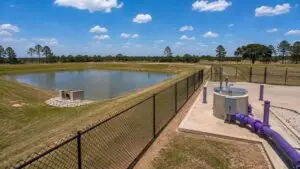
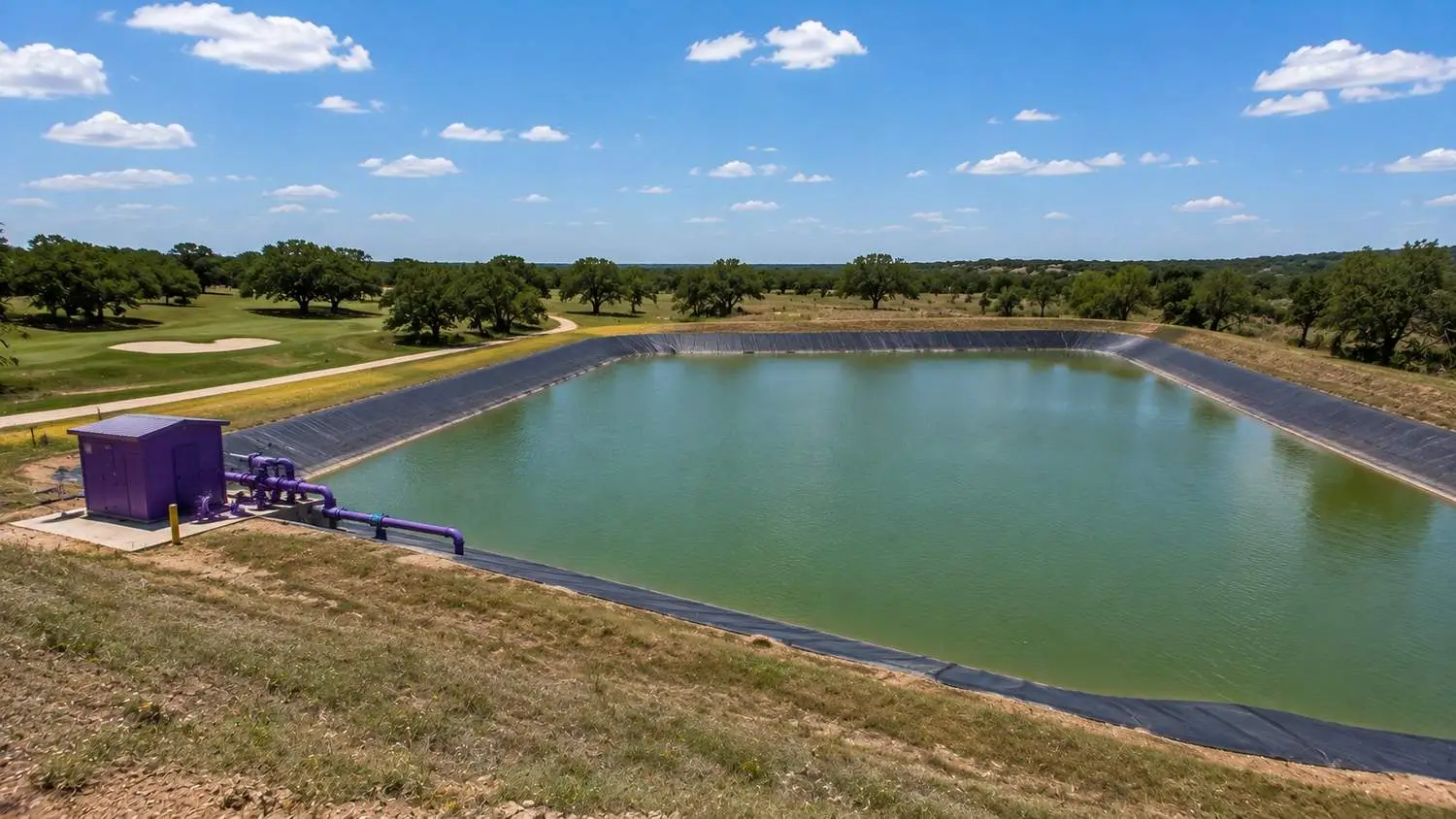
Storage, typically an irrigation pond or lined storage reservoir sized to hold several days to a few weeks of reclaimed water production, is the most common engineering solution to bridge the gap between steady supply and variable demand, and sizing that storage correctly requires a detailed seasonal water balance analysis specific to the development’s actual irrigation acreage, landscape type, and local evapotranspiration and rainfall patterns, not a generic storage allowance borrowed from a different project’s design.
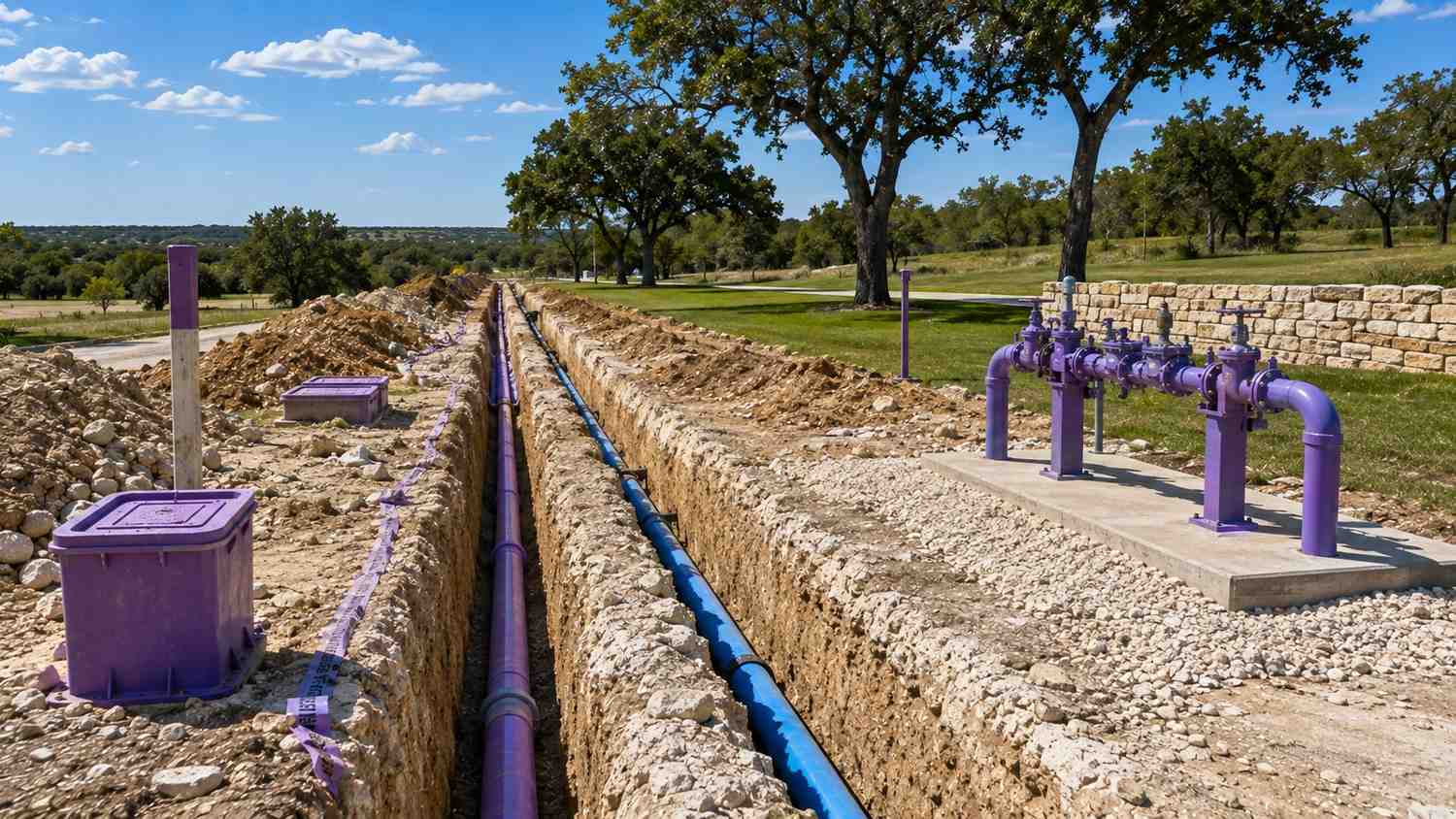
Purple Pipe Distribution and Cross-Connection Control
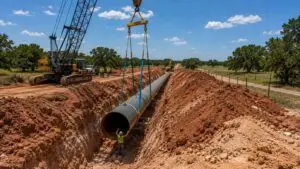
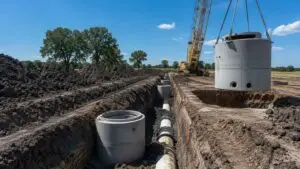
Reclaimed water distribution infrastructure is required by TCEQ regulations to be physically distinguishable from potable water infrastructure to prevent cross connection and accidental consumption, which in practice means dedicated purple colored pipe, valves, and appurtenances used exclusively for the reclaimed water distribution system, entirely separate from the development’s potable water distribution network. This separate distribution system represents a real capital cost that needs to be included in the reuse system’s overall cost benefit evaluation, since the development needs a complete parallel piping network reaching every irrigation point the reuse system will serve, golf course irrigation heads, HOA common area irrigation systems, amenity lake makeup connections, and any other approved reuse points.
Cross connection control requirements extend beyond just pipe color to include specific TCEQ mandated signage at all reclaimed water use areas and access points warning the public that the water is not intended for drinking, backflow prevention devices protecting against any potential cross connection with the potable system, and in many jurisdictions, periodic cross connection control inspections to verify the two systems remain properly separated over the life of the development. Designing this distribution system concurrently with the development’s potable water and irrigation system planning, rather than as an afterthought once the treatment plant design is finalized, allows the purple pipe network to be installed efficiently alongside other utility infrastructure during initial site development rather than requiring retrofit installation later.
User Agreements, Access Control, and Long Term Operational Responsibility
A Chapter 210 reuse system serving multiple end users within a master planned community, a golf course operator, an HOA, and potentially a municipal parks department for a public greenbelt or park area, requires a clear contractual framework establishing each user’s rights and responsibilities regarding the reclaimed water supply. This typically takes the form of a reclaimed water user agreement specifying the quantity and reliability of supply the user can expect, any usage restrictions or curtailment provisions during low flow periods, the user’s responsibility for onsite distribution and irrigation system maintenance beyond the point of delivery, and any cost-sharing or fee arrangement for the reclaimed water supplied.
For developments where the treatment plant and reuse system are governed by a Municipal Utility District, the MUD typically serves as the entity that owns and operates the reuse system and negotiates user agreements with the golf course operator, the HOA, and any other reuse customers, similar to the governance role a MUD plays for the treatment plant itself. This structure provides the same long term operational continuity benefit for the reuse system that it provides for the treatment plant, ensuring a single accountable entity manages reclaimed water quality monitoring, distribution system maintenance, and user agreement administration across the multi decade operating life of the development, independent of any individual developer’s involvement in the project after build out.
TCEQ Coordination and Monitoring Requirements
A Chapter 210 reclaimed water system requires TCEQ authorization as part of the overall wastewater treatment plant permit, whether TPDES or TLAP, with the reuse system’s specific treatment, distribution, and use provisions documented and approved as part of that permit or through an associated reclaimed water authorization. TCEQ’s review addresses the treatment process’s ability to reliably achieve the required reclaimed water quality standard, monitoring requirements to demonstrate ongoing compliance, and the specific use restrictions and access control measures the reuse system will implement.
Ongoing compliance monitoring is a defined operational responsibility once the system is in service, requiring the licensed operator responsible for the treatment plant to conduct the specific water quality sampling and reporting Chapter 210 requires for the reclaimed water quality classification the system is authorized to produce and distribute. This monitoring responsibility should be incorporated into the same operator planning discussed for the treatment plant generally, since it is an extension of the plant’s core operational compliance function rather than a separate activity requiring different staffing or expertise.
Financial and Operational Value: Making the Business Case
For a developer evaluating whether the additional capital cost of Type I treatment and a purple pipe distribution system is worth the investment, the business case rests on several factors that should be quantified specifically for the project rather than assumed generally. Reduced potable water purchase costs for the golf course and HOA common areas, calculated using realistic irrigation demand and current or projected potable water rates, is the most direct and quantifiable benefit. Reduced land application acreage requirement, where the reuse system offsets some or all of what would otherwise be a TLAP disposal field, converts what would be non-revenue-generating disposal acreage into either additional developable lot yield or reduced land dedication requirements, both of which have direct financial value.
Drought resilience is a less directly quantifiable but increasingly relevant value driver, since Central Texas municipalities and utility districts frequently impose outdoor watering restrictions on potable water use during drought conditions, restrictions that generally do not apply to reclaimed water irrigation. A golf course or HOA common area irrigated with reclaimed water can maintain normal irrigation practices during a drought stage that would otherwise force potable-irrigated landscaping into a curtailed watering schedule, protecting the amenity value that supports home sales and community reputation during exactly the conditions when that amenity value is most vulnerable.
Frequently Asked Questions
Does adding Chapter 210 reuse capability significantly increase our treatment plant’s construction cost?
Achieving Type I reclaimed water quality typically requires additional treatment steps beyond what a standard TLAP or TPDES permit would require on its own, most commonly additional filtration and disinfection capacity, which does add incremental capital cost to the treatment plant. The magnitude of that increase depends on the specific treatment technology already planned for the base permit requirement and how much additional capacity is needed to reliably achieve Type I standards. For most master planned communities with substantial irrigation demand from a golf course or extensive common areas, the potable water cost savings and land yield benefits described in this article are evaluated against that incremental treatment cost as part of a full project feasibility analysis, and many projects find the payback period justifies the additional investment, particularly when the reuse system also offsets TLAP disposal acreage that would otherwise reduce lot yield.
Can our HOA or golf course operator generate revenue by selling reclaimed water, or is this purely a cost-avoidance benefit?
In most master planned community structures, the reclaimed water reuse arrangement functions as a cost avoidance and cost recovery mechanism rather than a standalone revenue generating enterprise, since the golf course and HOA are typically paying a reclaimed water rate to the entity that owns and operates the treatment and distribution system, whether that’s a MUD, a private utility, or the developer directly, rather than that entity operating the reuse system at a profit margin comparable to a commercial water sales business. That said, the reclaimed water rate charged to end users can be structured to recover the reuse system’s capital and operating costs over time, which is itself a meaningful financial benefit for whichever entity holds long term responsibility for the treatment plant, since it converts what would otherwise be a pure disposal cost center into a cost recovering utility service.
How much storage capacity does a typical Austin area golf course reuse system need?
Storage sizing depends on the specific relationship between your treatment plant’s effluent generation rate and your golf course and common area irrigation demand across the full seasonal cycle, which requires a project specific water balance analysis rather than a general rule of thumb. Developments with a broader base of reuse demand, combining golf course, HOA common areas, and other irrigation uses into a single system, generally need proportionally less storage relative to their total reclaimed water production than a system serving a single narrow demand source, because a broader demand base smooths out some of the peak to peak variability any single use type would otherwise create. This is one of the specific engineering questions a seasonal water balance study should answer before storage facilities are sized and constructed.
Related Resources
- Land Application Permits in Texas: A Faster Path to Wastewater Approval for Developers
- Biosolids Land Application from Private Wastewater Treatment Facilities in Texas
- Wastewater Capacity in Fort Worth’s ETJ: What Happens When the City Won’t Annex Your Development
- Dallas Subdivision Wastewater Planning: When City Sewer Isn’t an Option in ETJ Growth Areas
Evaluating Chapter 210 Water Reuse for an Austin-Area Golf Course or Master Planned Community?
MES works with Austin-area developers, HOA boards, golf course operators, and utility districts to evaluate Chapter 210 reclaimed water feasibility, design Type I and Type II reuse systems, size seasonal storage, plan purple pipe distribution, coordinate user agreements, and secure TCEQ authorization that turns treated effluent into a functioning irrigation supply.
We specialize in:
- Chapter 210 reclaimed water feasibility analysis and treatment plant design for Austin area master planned communities
- Seasonal water balance studies sizing storage for golf course, HOA, and common area irrigation reuse systems
- Purple pipe distribution system design and cross connection control planning for reclaimed water networks
- Reclaimed water user agreement structuring for golf course operators, HOAs, and municipal reuse customers
- TCEQ coordination for Type I and Type II reclaimed water authorization integrated with TPDES and TLAP permits
- Long term reuse system operational planning and MUD governance coordination for Central Texas developments
Modern Engineering Solutions, Austin, Texas. Contact: (214) 833-6748 or mod-eng.com