
Blog
Types of Sewer Systems
The three types of sewer systems are sanitary, storm and combined. See how each works, how flow moves, and what serves a home with no sewer main.
There are three types of sewer systems, sorted by what they carry. A sanitary sewer takes wastewater from homes and businesses to a treatment plant. A storm sewer takes rain and snowmelt to a creek or river, often untreated. A combined sewer carries both in one underground pipe and can overflow in heavy rain. Texas design rules prohibit connecting storm and sanitary systems.
What are the main types of sewer systems?
Sanitary, storm and combined. The difference is what goes into the pipe, not how big or how deep it is.
EPA's definitions in 40 CFR 35.2005, written for its wastewater construction grants, draw the lines this way:
- Sanitary sewer: a conduit for liquid and water-carried wastes from residences, commercial buildings, industrial plants and institutions, with only minor amounts of ground, storm and surface water that are not let in on purpose.
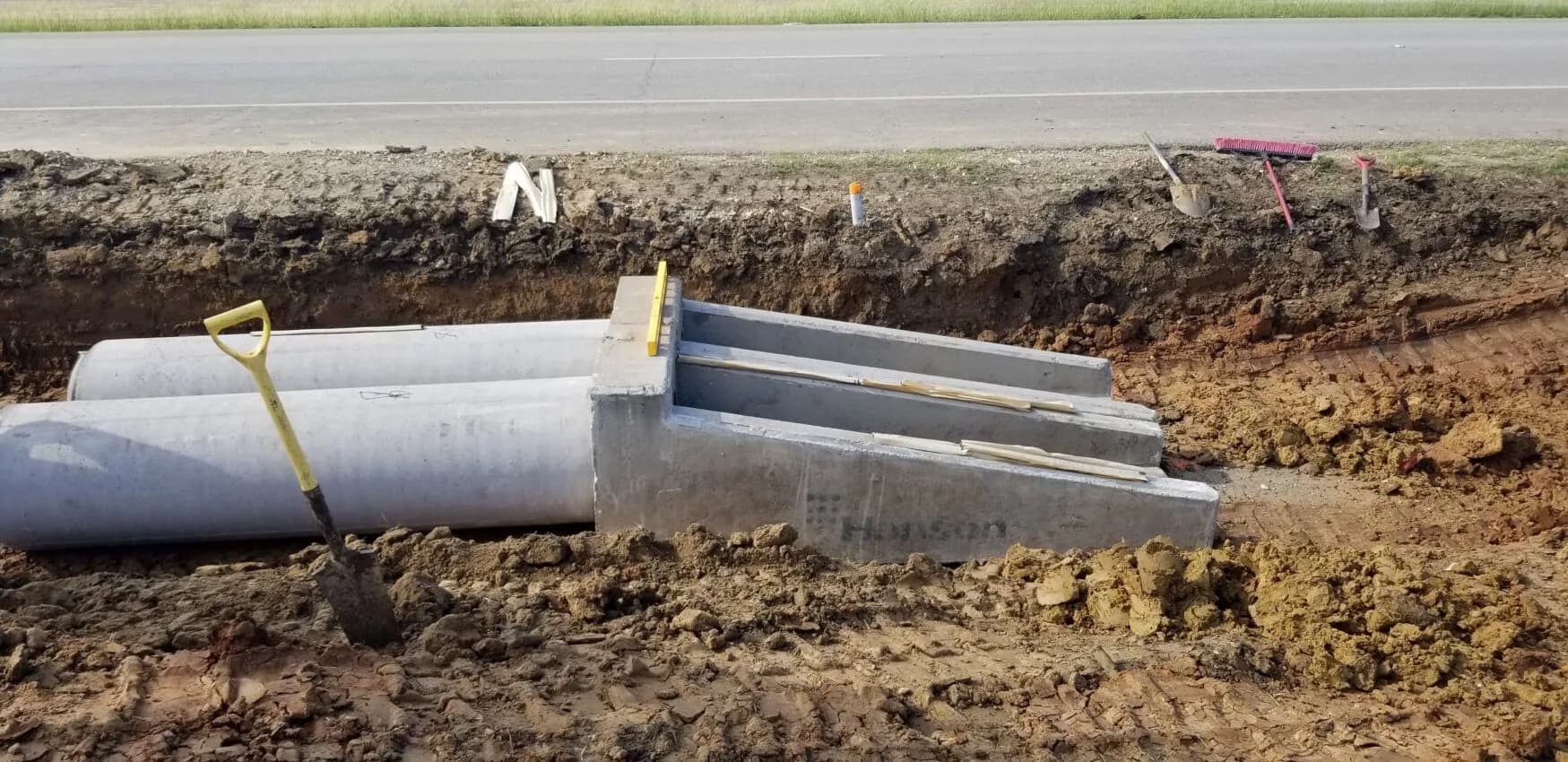
- Storm sewer: a sewer designed to carry only storm water, surface runoff, street wash water and drainage.
- Combined sewer: a sewer designed as both a sanitary sewer and a storm sewer.
Sewage is what flows in the pipe. Dictionary.com's entry for sewerage gives a system of sewers, so the types of sewerage systems are the same three.
What is a sanitary sewer?
An underground pipe network that carries wastewater from buildings to a treatment plant. In Texas it is called a collection system, and TCEQ sets its design rules.
TCEQ's definitions in 30 TAC §217.2 describe a collection system as the pipes, conduits, lift stations, force mains and other devices that move domestic wastewater to a treatment facility. The building lateral, the pipe that joins a building's plumbing to the collection pipe, is not part of the collection system under that rule.
A sanitary sewer is not built for rain. The EPA page on sanitary sewer overflows says these systems carry wastewater plus limited stormwater and infiltrated groundwater. It lists defects that let stormwater and groundwater overload the system as one cause of overflows, along with blockages, line breaks and power failures.
A plant that discharges treated wastewater to a creek needs a permit. In Texas that is a TPDES permit from TCEQ. Texas took over the federal NPDES program from EPA on September 14, 1998.
What is a storm sewer drainage system?
A separate network of inlets, pipes and channels that carries rain runoff away from streets and roofs. It often discharges to a creek or river with no treatment at all.
Federal rules count more than pipe. The definition of a municipal separate storm sewer in 40 CFR 122.26(b)(8) includes roads with drainage systems, municipal streets, catch basins, curbs, gutters, ditches, man-made channels and storm drains, owned or operated by a public body and not a combined sewer. A city's network of them is its MS4.
The EPA page on municipal stormwater notes that polluted runoff in these systems is often discharged untreated into local waters. That is why many cities need NPDES stormwater permits, and why only rain belongs in a storm drain.
What is a combined sewer system?
One pipe that carries sewage and stormwater together to the treatment plant. When a storm sends more runoff than the system can carry, untreated stormwater and wastewater flow into nearby waters.
Those spills are combined sewer overflows, and EPA's combined sewer overflow page places them under the NPDES permit program. EPA's map of CSO outfalls counts about 700 US communities with combined systems, mostly in the Northeast and around the Great Lakes.
Do not expect to design a new one in Texas. TCEQ's pipe design rule, 30 TAC §217.53, bans any connection between a stormwater collection system and a wastewater collection system in subsection (j)(5).
How do sewers move flow: gravity, force main or pressure?
Conventional sewers run by gravity, sloped so wastewater flows downhill with no pumps. Where the ground will not allow that, a lift station and force main or an alternative collection system takes over.
TCEQ splits the collection rules in 30 TAC Chapter 217 in two. Subchapter C covers gravity sewers, lift stations and force mains. A lift station raises wastewater to a higher elevation, and a force main is the pressure pipe leaving it.
Subchapter D covers alternative collection systems, with grinder pumps, septic tanks or vacuum valves spread through the system:
- Pressure sewers: pumps at each service connection pressurize the system.
- Small diameter effluent sewers: an interceptor tank holds back the solids, and the effluent flows on by gravity.
- Vacuum sewers: TCEQ classes them as non-conforming technology under §217.98.
EPA's pressure sewer fact sheet ties the pick to terrain, bedrock, high groundwater and housing density. Our comparison of gravity and pressure sewer systems walks through those tradeoffs.
What types of sewer systems serve homes?
A home either ties into a public or private sewer through a building lateral, or treats its own wastewater on site with a system such as a septic tank and drainfield.
Septic is common. An EPA SepticSmart Week release from September 2026 says more than one in five US homes relies on a septic system. In Texas these are on-site sewage facilities (OSSFs), and 30 TAC §285.3 requires a permit and an approved plan before one is built, altered or operated, unless an exception applies.
Some neighborhoods put a grinder pump or effluent pump at each house, which makes a pressure sewer. Under §217.90, one private grinder pump or septic tank effluent pump that discharges straight into a conventional system falls outside the alternative collection system rules.
What is the difference between a canal and a sewer?
A canal is an open, man-made channel. A sewer is a conduit, usually a buried pipe, built to carry wastewater or stormwater away.
The TxDOT Hydraulic Design Manual glossary defines a channel as an open conduit, natural or artificial, that carries moving water, and names canals and floodways as artificial channels. The line blurs on the storm side: the federal storm sewer definition above counts ditches and man-made channels as part of a city's storm sewer system.
What does a municipal sewer system include?
Collector mains, manholes, lift stations and force mains, interceptors, and the treatment plant at the end, with a building lateral feeding in from each property.
EPA's grant definitions describe the layers. Collector sewers take wastewater from private property. An interceptor sewer takes flow from the end of the collectors to the treatment plant or to another interceptor. Ownership varies. Texas utility rules in 16 TAC §24.3 count municipalities, political subdivisions, sewer service corporations and private companies as retail public utilities that can provide sewer service.
For utilities and municipalities running one, most of the work is keeping rain out of the sanitary side and keeping capacity ahead of growth. §217.53(j)(1) requires enough collection capacity to serve the estimated future population.
How do you check which sewer setup a site needs?
Find out who provides sewer service and where the nearest main is.
- Is the site inside a city, district or utility's sewer service area?
- Is a sanitary main close enough to reach?
- Can the lowest building drain to it by gravity?
- If there is no main, will the soils support an OSSF permit?
- Do roof and yard drains go to the storm system?
Yes to items 1, 2, 3 and 5 points to a standard gravity connection. Any other answer is a question for your engineer. A site feasibility study should settle capacity and pumping before you commit to the land.
A note on limits: this is general education from federal rules, Texas rules and EPA guidance as read in October 2026. Local codes and utility standards can add requirements, and your engineer and the reviewing agency have the final word.
Frequently asked questions
Can a storm drain connect to a sanitary sewer?
Not in a Texas collection system. 30 TAC §217.53(j)(5) prohibits it. EPA's definitions count roof leaders, yard drains and storm cross connections as inflow, water other than wastewater entering the sewer.
Who owns the sewer line between my house and the main?
That depends on your utility's rules. TCEQ treats the building lateral as separate from the collection system, so ask your utility where its responsibility ends.
I'm buying five acres outside city limits in Texas and there's no sewer main nearby. What are my options for the house?
Usually an OSSF, such as a septic tank and drainfield. Under 30 TAC §285.3 you need a permit and an approved plan, backed by a site evaluation. TCEQ issues it unless a local government is its authorized agent, so ask the county first.
I run public works for a small Texas city and our plant flow jumps every time it rains. Does that mean we have a combined sewer?
Not necessarily. A separate sanitary sewer still takes in rain and groundwater: infiltration of groundwater through defective pipes, joints and manholes, and inflow from roof leaders, yard drains, manhole covers and storm cross connections. Flow monitoring and inspection show where it gets in.
Related resources
- Combined Sewer vs. Separate Sanitary Systems in Older Texas Cities: Why Legacy Infrastructure Changes a Discharge Permit's Monitoring Burden
- Discharging to a Storm Drain vs. Sanitary Sewer: Why Texas Contractors Get It Wrong on Pipeline and Tank Projects
- Understanding Your Community's Wastewater Collection System
- OSSF vs. Centralized Sewer: Choosing Between Travis County Septic Permitting and TCEQ Wastewater Permits for Exurban Sites
Sorting out sewer service for a site or a system?
Whether you are connecting a development, choosing between gravity and pressure, or chasing rain out of a sanitary sewer, we help you pick the right system and design it to the state's rules.
Modern Engineering Solutions, McKinney, Texas, with offices in Golden, Colorado and San Jose, California. 525+ projects completed.
Talk to an engineer about your sewer system or call (214) 833-6748.
Keep reading
More to read.
Talk to an engineer
Tell us about your project.
An engineer reads it
Not a salesperson. Someone who can tell you whether the pathway is real.
You get a first answer
Your options, the agencies involved and the questions that decide cost and schedule.
You decide
No commitment to have the first call.
Prefer the phone? (214) 833-6748