
Blog
Hydrostatic Test Water: What Texas Developers and Contractors Need to Know Before Discharge
Hydrostatic test water in Texas falls under TCEQ general permit TXG670000, so plan the NOI, chlorine limit, notices and disposal route before the first test.
Quick answer
Hydrostatic test water in Texas is covered by TCEQ's general permit TXG670000, and most potable water projects can use it without filing anything. That does not mean no rules. The permit still sets a chlorine limit, sampling, rate control and two 48-hour notices.
Tests of vessels that held petroleum or natural gas substances need a notice of intent (NOI) unless the water is land applied. Pick the disposal route in preconstruction, not on test day.
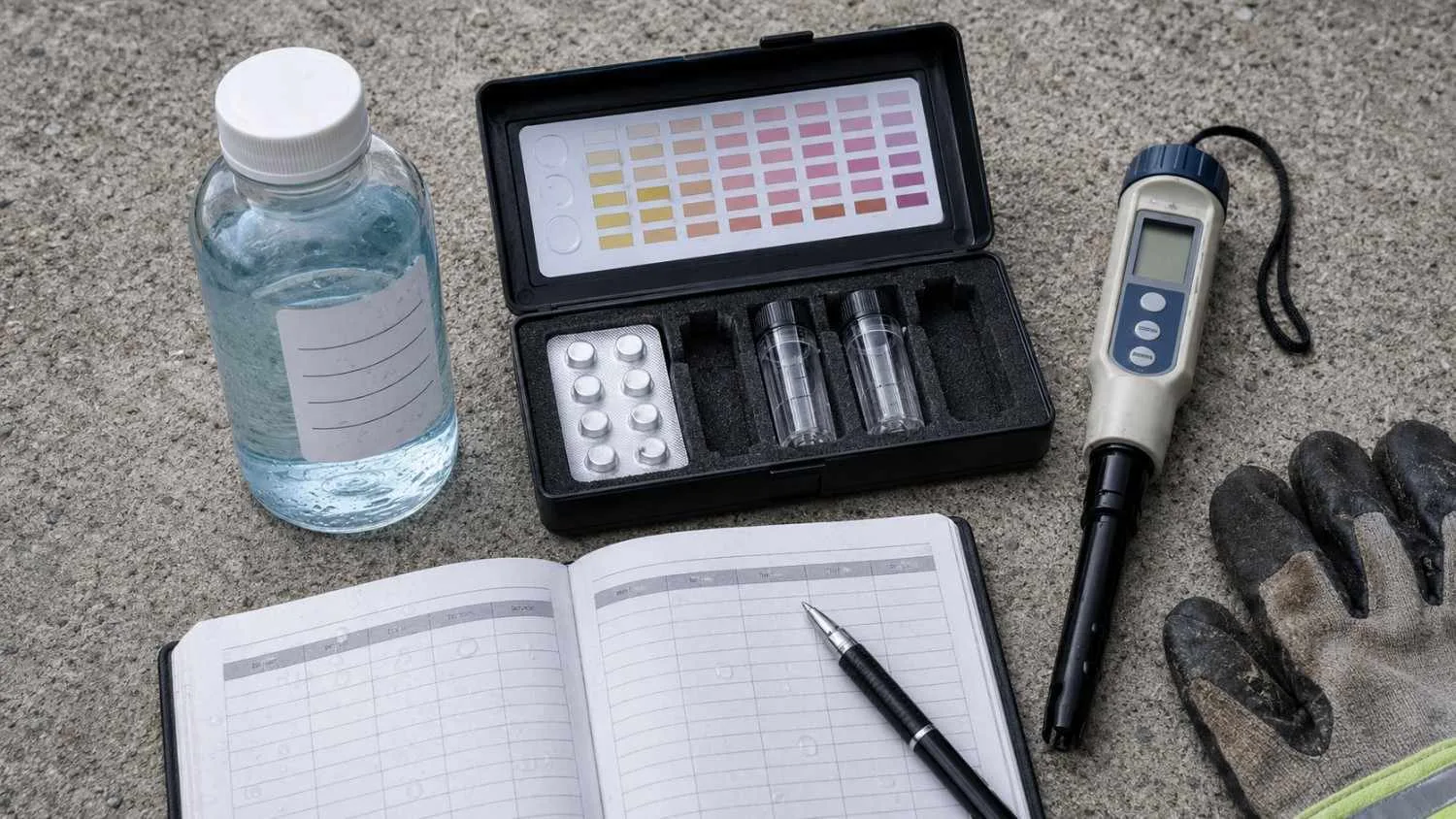
What is hydrostatic test water, and what is in it?
It is the water used to pressure test a new or repaired pipeline, main or tank before service. The system is filled, pressurized above operating pressure and held. If pressure holds, it passes. If not, the crew finds the leak, fixes it and tests again.
The volume adds up faster than people expect. A full pipe holds about 0.0408 gallons per foot for each square inch of diameter squared. A 12-inch main a half mile long (2,640 feet) holds about 15,500 gallons. A storage tank holds its full rated volume.
What the water carries depends on the vessel and the source. Potable water used to disinfect a new main may carry high residual chlorine. A rehabilitated line may carry sediment. A vessel that held petroleum products can carry hydrocarbons, and that changes everything about where the water can go.
Which permit covers hydrostatic test water in Texas?
TXG670000, not the construction stormwater permit. The current TPDES General Permit TXG670000 took effect April 5, 2025, and expires at midnight on April 5, 2030. It authorizes test water discharged into or adjacent to water in the state from four kinds of vessels (Part II, Section A):
- new vessels;
- existing vessels that held or moved raw or potable water;
- existing vessels that held only elemental gases;
- existing vessels that held petroleum or natural gas substances, or related waste.
The Construction General Permit, TXR150000, covers stormwater from the site and a short list of non-stormwater flows. That list includes potable waterline flushings, but excludes hyperchlorinated water unless it is dechlorinated first (TXR150000, Part II, Section A.3).
Land application of test water from oil and gas exploration and production stays with the Railroad Commission of Texas, not TCEQ (Part II, Section A).
Do I need to file a notice of intent?
Usually not for new vessels or water lines, but the conditions still apply. Under Part II, Section C.4, no NOI is needed for new vessels, vessels that held raw or potable water, or vessels that held only elemental gases, as long as the discharger meets every applicable condition.
Vessels that held petroleum or natural gas substances need an NOI unless the water is land applied under Part III, Section C. TCEQ's coverage steps page says NOIs go through TCEQ's online e-permitting system, and that a discharger to an MS4 also sends the operator a copy. Edwards Aquifer sites have extra steps (Part II, Section C.3).
What limits and conditions apply to the discharge?
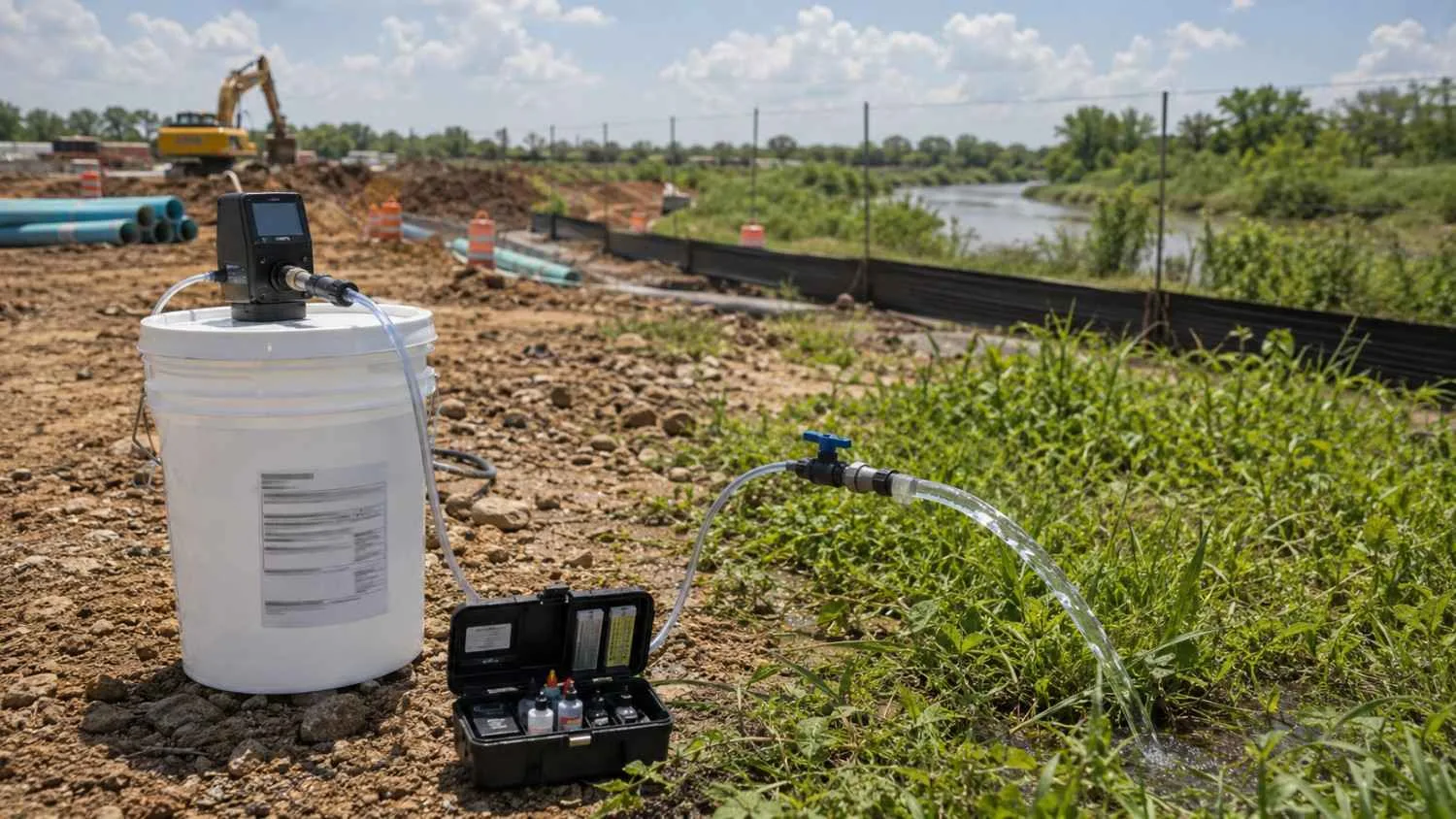
For potable water vessels, the main numeric limit is chlorine. If the water was hyperchlorinated for disinfection, total residual chlorine is limited to 0.10 mg/L daily maximum (Part III, Section A.1). Take one grab sample in the first hour, and a second of the last 10% if the discharge runs over an hour.
Petroleum and natural gas vessels add limits for total petroleum hydrocarbons, benzene, total BTEX, lead and pH (Part III, Section A.2). For every vessel type, Part III, Section B adds general requirements:
- discharge to a splash pad, paving or other surface that prevents erosion, with the rate controlled to prevent flooding and erosion (B.1);
- no discharge within 300 feet of a domestic drinking water intake, or within 500 feet of any water well (B.2 and B.3);
- no added chemicals except chlorine or tracer dyes (B.5);
- written notice to the TCEQ regional office at least 48 hours before discharge, and to the MS4 operator when the discharge starts inside an MS4 (B.13 and B.14).
Records are kept for three years (Part IV.9). If dechlorination is new to your crew, our post on chlorine neutralization before discharge covers the field step.
Where can the test water go?
You have more choices than the nearest ditch. TCEQ's TXG670000 fact sheet lists methods that need neither the general permit nor an individual permit (Section III.3):
- recycling or reuse with no discharge;
- pumping and hauling to an authorized disposal facility;
- discharge to a publicly owned treatment works (POTW), with the utility's approval;
- underground injection under 30 TAC Chapter 331;
- storage in aboveground tanks with no discharge.
Land application is allowed under the permit, with conditions in Part III, Section C. No application on frozen, saturated or ponded ground, or within 24 hours of a rain of 0.5 inch or more. No runoff or ponding, nothing within 500 feet of a water well, and vegetation kept in the area.
What is never covered by the general permit?
Some discharges need other authorization at any size. Part II, Section B excludes, among others, discharges prohibited by the Watershed Protection or Edwards Aquifer rules, new discharges of a pollutant of concern to an impaired water, and discharges that would harm a listed species.
It also excludes test water made from domestic wastewater or reclaimed water, pre-test cleaning water and pigging material, and PCBs. A discharge outside the permit needs an individual permit or another general permit before it happens (Part II, Section B.8).
Who is responsible on a construction project?
The permittee is whoever operates the discharge, and the specs should say who that is. On most jobs that is the contractor running the test. The owner and engineer of record set it up for success by writing the disposal method, dechlorination and records into the project specifications.
Without that, the decision lands on a Friday afternoon with a full pipe and a creek next door. With it, the crew knows the discharge point, the chlorine target and who sends the 48-hour notices before the first section is filled.
Limits of this article: this summarizes TXG670000 and its fact sheet as of October 2026 as general education. It is not a site determination. Local sewer and stormwater owners set their own terms, and where a discharge may fall outside the permit, confirm the path with TCEQ early.
Frequently asked questions
Does Texas require a permit to discharge hydrostatic test water?
A discharge into or adjacent to water in the state is covered by TXG670000. Many dischargers need no NOI, but all must meet its conditions. Hauling, reuse, aboveground storage or a POTW discharge needs no TCEQ discharge permit at all.
What is the chlorine limit for hydrostatic test water in Texas?
For hyperchlorinated water from new or potable water vessels, 0.10 mg/L total residual chlorine, daily maximum, under Part III, Section A.1.
Is land application of test water unregulated?
No. Part III, Section C sets conditions on weather, runoff, ponding, well distance and vegetation, though it sets no numeric effluent limits for land application.
I'm a developer with a new subdivision water system ready to test, and my contractor says no permit is needed. Is that right?
Partly. New potable water lines need no NOI under Part II, Section C.4, but the chlorine limit, sampling, rate control and 48-hour notices still apply. Ask the contractor to show the plan in writing.
I'm testing an existing steel line that used to carry diesel at a Texas terminal. What changes compared with a new water line?
Petroleum vessels need an NOI unless the water is land applied, face limits for TPH, benzene, BTEX, lead and pH, and have extra land application rules such as no application within 100 feet of surface water (Part III, Section C.4).
Related resources
- Discharging to a Storm Drain vs. Sanitary Sewer: Why Texas Contractors Get It Wrong on Pipeline and Tank Projects
- Does Test Water Volume Trigger a Different Permit Tier? What TXG670000 Actually Requires for Pipeline Tests
- Test Water Reuse Instead of Discharge: When Reusing Hydrostatic Test Water Saves Time and Money
- Hydrostatic Testing Records and the TCEQ Audit Trail: What Contractors Need Before an Inspector Shows Up
Need a test water plan before your pipeline or tank test?
We write hydrostatic test water discharge into the plans and specs, so the crew knows the route, the limits and the notices before the first section is filled.
We specialize in:
- Water and sewer utility design
- Hydrostatic test water discharge planning
- Specification language for test water, dechlorination and disposal
- Construction administration for Texas land development
- TPDES discharge permit applications
- SWPPPs and erosion and sediment control plans
Modern Engineering Solutions, McKinney, Texas. Contact: (214) 833-6748 or mod-eng.com
Talk to an engineer
Tell us about your project
An engineer reads it
Not a salesperson. Someone who can tell you whether the pathway is real.
You get a first answer
Your options, the agencies involved and the questions that decide cost and schedule.
You decide
No commitment to have the first call.
Prefer the phone? (214) 833-6748