Quick Answer
Wastewater engineering for a McKinney master planned community needs to address the full projected build out, including residential phases, commercial and mixed use components, schools, parks, and amenities, from the earliest planning stage, even though construction will unfold over many years and the treatment system serving early phases will look different from the system serving the completed community. This requires phased capacity planning, whether through a public sewer connection with confirmed capacity commitments that scale with the project’s growth, a private wastewater treatment plant designed with a defined expansion pathway, or some combination of the two, along with lift station and force main infrastructure sized to accommodate not just current flow but the specific future flow increases each subsequent phase will add. Developers who plan the wastewater strategy only for the phase currently under construction, without a credible engineering and permitting pathway to the phases beyond it, frequently find that their wastewater system becomes the constraint that dictates how fast the rest of the community can actually be built.
Why Master Planned Communities Need a Different Wastewater Planning Approach
A single phase subdivision or commercial development has a wastewater planning problem that, while still requiring careful engineering, is fundamentally simpler than a master planned community’s problem: project the flow for the development as designed, size the system for that flow, build it, and operate it. A master planned community spanning hundreds or thousands of acres and multiple development phases over many years has a wastewater demand that starts small, in the early phases, and grows substantially over the project’s life, often by an order of magnitude or more between the first phase’s flow and the completed community’s flow at full build out.
This growth trajectory creates a genuine engineering challenge that doesn’t exist for a single phase project: how do you size a wastewater treatment and collection system that performs adequately at low flow during early phases, without over building capacity the community won’t need for years, while also ensuring the system can expand efficiently to meet full build out demand without requiring a complete redesign or a stranded early investment once later phases come online. Getting this wrong in either direction carries real cost. Under sizing for the future forces expensive retrofits or a treatment strategy change mid project. Over sizing for the present ties up capital in capacity the early phases don’t need and may not even operate efficiently at the lower flows those early phases actually generate.
Design Flow Projections Across Multiple Phases
The foundation of a McKinney master planned community’s wastewater strategy is a set of flow projections that address each planned phase specifically, not just the community’s total build out flow as a single number. This means calculating projected gallons per day for the residential unit count, unit type mix, and any commercial or mixed use square footage planned for each specific phase, using appropriate design flow factors for each land use type, and then aggregating those phase specific projections into a cumulative flow curve showing how total wastewater generation is expected to grow as the community builds out over its planned timeline.
Peaking factors deserve specific attention in this phased projection, since the relationship between average daily flow and peak flow, the peak flow being the design condition that actually governs collection system pipe sizing and lift station capacity, can behave differently at low flow during early phases than it does at the higher flows a maturing community generates. Some treatment and collection system components perform less predictably at the unusually low flows a community’s very first phase generates, before enough population and non residential development exists to produce the more averaged, predictable flow pattern a larger, more built out system settles into, and this early phase peaking behavior should be specifically evaluated rather than assumed to follow the same peaking factor that would apply to the community at full build-out.
Comparing Public Sewer Connection Against a Private Treatment Strategy
For a McKinney master planned community, the fundamental wastewater strategy decision, connecting to the City of McKinney’s public sewer system versus developing a private wastewater treatment plant, follows the same core evaluation framework relevant to fast growth Collin County utility planning generally, but with the added complexity that a master planned community’s growth over many years means the answer that makes sense for phase one may not remain the best answer once the community reaches its middle or later phases.
A public sewer connection that has adequate confirmed capacity for a project’s early phases may not have a confirmed capacity commitment extending to the project’s full build out flow, particularly if the city’s own long term capital improvement planning hasn’t specifically accounted for a master planned community’s full eventual demand at the time early phase capacity was confirmed. Developers should specifically ask the city not just whether current capacity is adequate for the immediate phase under review, but whether the city’s planning has accounted for and can commit to serving the full projected build-out flow over the project’s anticipated timeline, and if not, what capital improvements or capacity expansion the city anticipates would need to occur, and on what timeline, to serve the project’s later phases.
Package Plant Strategies and Phased Private Treatment
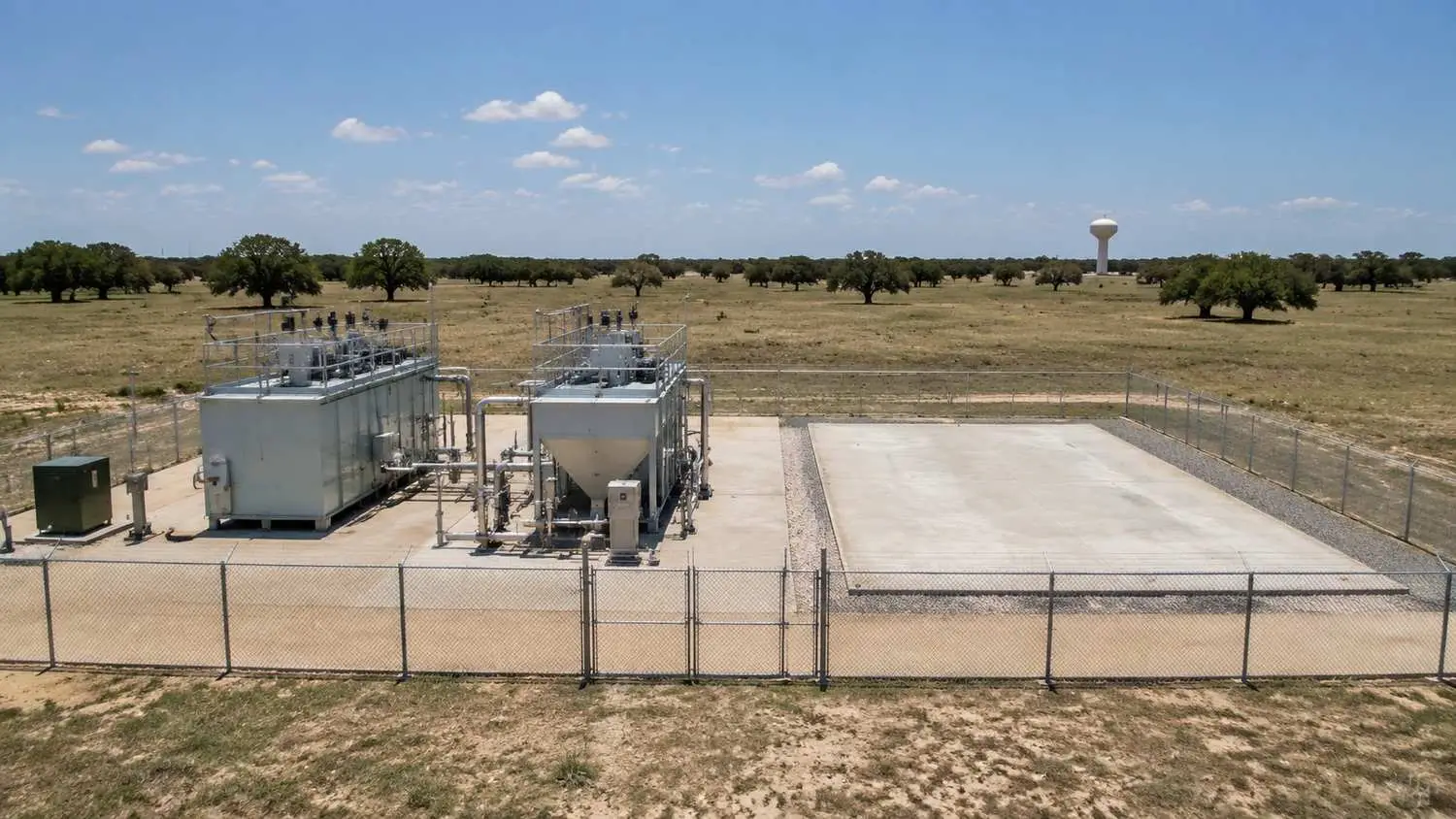
Where public sewer connection isn’t available or doesn’t have a credible path to serving the community’s full build-out demand, a private wastewater treatment plant strategy needs its own phased design approach, often using package plant technology for early phases, smaller, factory assembled treatment units that can be installed relatively quickly and cost-effectively to serve a community’s initial, lower flow, with a defined expansion or replacement pathway as flow grows toward the levels later phases will generate.
This phased private treatment approach requires the initial permitting and site planning to anticipate future expansion explicitly, reserving adequate land area for expanded treatment capacity, disposal or land application acreage, or reuse system infrastructure that later phases will require, and structuring the TCEQ permit itself, whether TPDES or TLAP, to accommodate a phased capacity increase without requiring an entirely new permit application each time the community reaches its next development phase. TCEQ’s permitting framework does allow for phased capacity within a single permit structure when the application is prepared with this phasing explicitly addressed from the outset, which is a meaningfully more efficient permitting posture than treating each phase’s capacity increase as requiring separate, sequential permit applications.
Lift Station and Force Main Sizing for Growing Demand
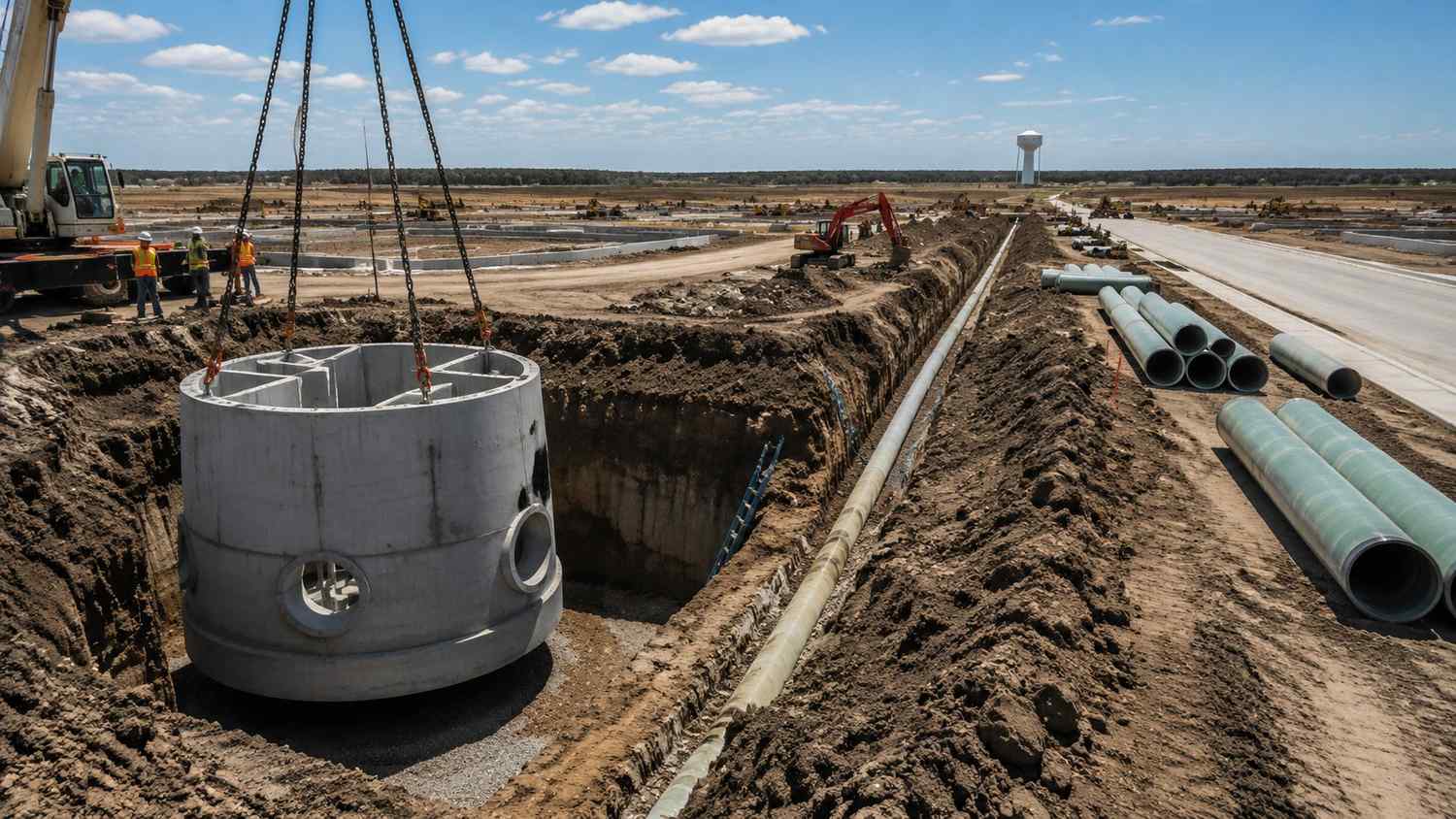
Lift stations and force mains serving a master planned community’s wastewater collection system face their own version of the phased sizing challenge, since a lift station sized precisely for phase one’s flow will be inadequate once several more phases come online, but a lift station sized for full build out flow from day one may operate inefficiently, running pumps well below their optimal operating range, during the community’s early years when actual flow is a small fraction of the station’s ultimate design capacity.
A common and effective approach is designing the lift station’s wet well and structural components, along with the force main, to accommodate full build out capacity from initial construction, since resizing a wet well or upsizing a force main after initial construction is considerably more disruptive and expensive than installing the larger structural components upfront, while initially installing pumps sized for the community’s early phase flow, with a defined and budgeted pump upgrade path as flow increases with subsequent phases. This approach captures the efficiency benefit of appropriately sized pumps at each stage of the community’s growth while avoiding the far more expensive prospect of reconstructing the wet well and force main itself as flow grows, since those components are the more expensive and disruptive elements to modify after initial construction is complete.
Reuse Opportunities Within a Phased Wastewater Strategy
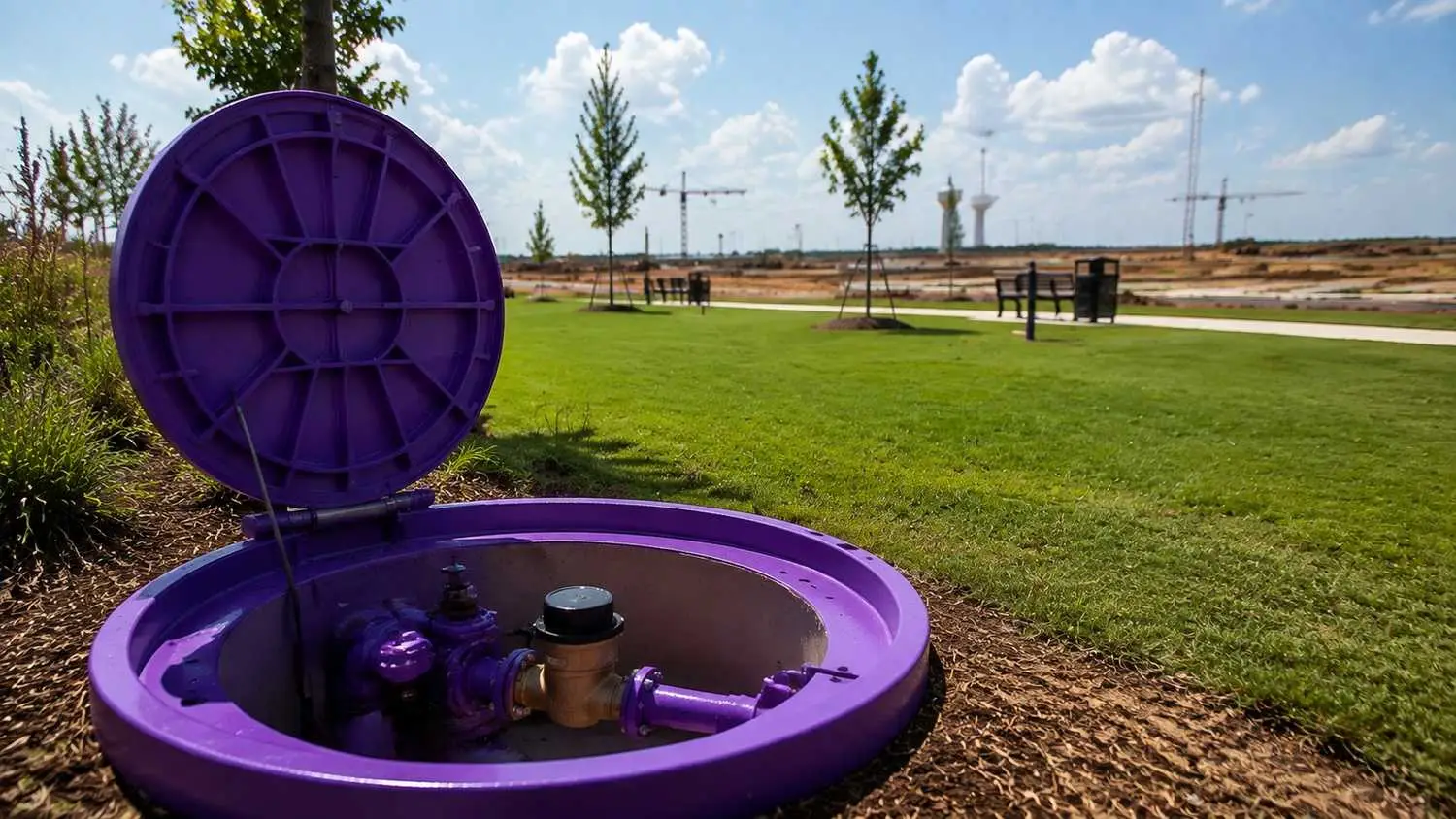
Master planned communities, particularly those with substantial common area landscaping, parks, or a golf course amenity, are well positioned to incorporate Chapter 210 reclaimed water reuse into their phased wastewater strategy, using treated effluent from either a private treatment plant or, where applicable, a public sewer system’s reuse water allocation, to offset irrigation demand that would otherwise draw from the community’s potable water system. Planning this reuse strategy alongside the phased treatment capacity planning, rather than as a separate consideration addressed later, allows the reuse system’s storage, distribution, and treatment quality requirements to be sized appropriately for each phase’s actual reclaimed water production and irrigation demand, following the same seasonal water balance principles relevant to reuse system design generally.
For a phased community, reuse system value tends to grow over time, since early phases generate less reclaimed water and typically have less mature landscaping and irrigation demand, while later phases, once the community’s amenities, common areas, and any golf course are fully established, generate both more reclaimed water supply and more irrigation demand to use it productively. Planning the reuse system’s phased expansion alongside the treatment plant’s own phased capacity growth ensures both systems mature together rather than one significantly outpacing the other’s development.
Long Term Infrastructure Ownership Across the Community’s Life
A master planned community’s wastewater infrastructure ownership and governance question, whether infrastructure remains developer owned, transitions to a MUD, or connects to and is ultimately owned by the City of McKinney, should be evaluated with the same phased-thinking lens applied to the technical capacity planning, since the governance structure that makes sense for a community’s early phases, when the developer retains maximum control and flexibility, may evolve as the community matures, the tax base grows, and a public governance structure becomes both feasible and, in many cases, preferable for the community’s long term residents and businesses.
Addressing this governance evolution explicitly during initial planning, rather than leaving it as an undefined question to be resolved whenever it eventually becomes urgent, allows the technical wastewater system design and the ownership and governance strategy to be coordinated from the outset, avoiding a scenario where a technically sound phased treatment system becomes entangled in a poorly planned ownership transition that creates its own delays and complications independent of the underlying engineering.
Frequently Asked Questions
How far into our master planned community’s build out should our initial wastewater engineering plan project flow and capacity needs?
Your initial wastewater engineering plan should address flow projections and capacity strategy for the community’s full anticipated build out, even if that build-out extends fifteen or more years into the future, because the treatment strategy, permitting approach, and infrastructure sizing decisions made for early phases directly affect how efficiently and cost-effectively the system can expand to serve later phases. This doesn’t mean every design detail for phase ten needs to be finalized before phase one breaks ground, but the overall strategic framework, including which entity will ultimately provide wastewater service and what capacity expansion pathway that strategy follows, should be established with the full build-out in mind from the beginning.
If we start with a private package plant for our early phases, can we transition to public sewer connection later if the city extends capacity to our area?
This transition is possible and is a strategy some McKinney area master planned communities pursue, but it requires the initial private treatment strategy to be structured with that eventual transition in mind, including coordination with the city about their own capital improvement planning and timeline for potentially extending adequate capacity to your area, and a clear understanding of how the existing private facility, and any TCEQ permit governing it, would be decommissioned or repurposed once public connection becomes available. This is a more complex decision than committing to either a purely private or purely public sewer strategy from the outset, but it can be the right approach when public capacity extension is a realistic possibility within your project’s build out timeline but isn’t currently available for your early phases.
How much does phased capacity planning actually save compared to just building for full build out capacity from day one?
The specific savings depend on your project’s phasing timeline, the difference between early phase and full build out flow, and the specific technology and infrastructure involved, but building full treatment capacity for a community’s ultimate build out flow before that flow actually exists ties up significant capital in unused capacity for years, and in some cases the treatment technology itself doesn’t perform well at a small fraction of its design capacity, creating operational problems in addition to the capital inefficiency. A properly phased approach, sizing structural components like wet wells and force mains for full build-out while phasing the actual treatment and pumping equipment to match each stage’s real flow, is generally the more capital-efficient strategy, though the specific comparison should be modeled for your project’s actual phasing and flow projections rather than assumed universally.
Related Resources
- McKinney Utility Availability Study: What Developers Need Before Submitting a Plat in Collin County’s Fastest Growing City
- Municipal Utility Districts in Houston Suburbs: When to Form One and When to Use a Developer Owned Treatment Plant Instead
- Water Reuse for Austin Area Golf Courses and HOA Irrigation: How Chapter 210 Creates a Revenue Stream
- Land Application Permits in Texas: A Faster Path to Wastewater Approval for Developers
Planning Wastewater Infrastructure for a McKinney or Collin County Master Planned Community?
MES works with McKinney area developers, land acquisition teams, and project directors to build phased flow projections, compare public sewer connection against private treatment strategies, size lift stations and force mains for future growth, prepare TCEQ ready permit documentation, and design wastewater systems that scale with your community’s build out instead of constraining it.
We specialize in:
- Phased flow projection development and design flow analysis for McKinney and Collin County master-planned communities
- Public sewer versus private treatment plant comparison for large acreage phased development projects
- Package plant sizing and phased expansion strategy for developer owned wastewater treatment facilities
- Lift station and force main design accommodating full build out capacity with phased pump and equipment upgrades
- TPDES and TLAP permitting strategy supporting phased capacity increases within a single permit structure
- Chapter 210 reuse system planning integrated with phased wastewater treatment capacity for community amenities
Modern Engineering Solutions, McKinney, Texas. Contact: (214) 833-6748 or mod-eng.com