
Blog
Who designs package wastewater treatment plants for new subdivisions in Texas?
A Texas-licensed engineer designs the package wastewater treatment plant a new subdivision needs, then seals the plans TCEQ reviews before construction.
The package wastewater treatment plant a Texas subdivision needs is designed by a Texas-licensed professional engineer, not by the manufacturer. That engineer sets the design basis, seals the plans, certifies they meet the state's design criteria, and carries the submittal through TCEQ review.
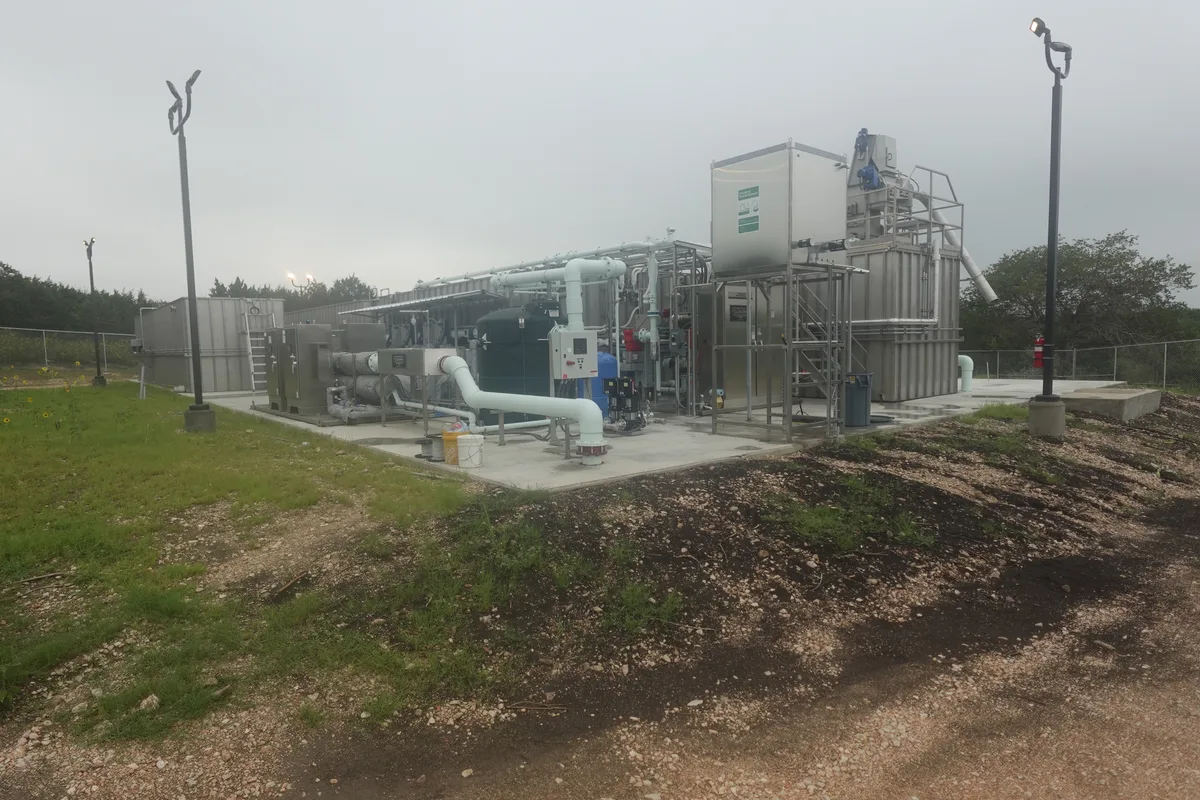
Who designs a package wastewater treatment plant for a Texas subdivision?
A Texas-licensed professional engineer at a firm registered with the Texas Board of Professional Engineers, and the manufacturer supplies a unit that engineer designs around. The plant arrives as a packaged treatment unit. What TCEQ reviews is the design around it: the collection system that feeds it, the emergency power for the treatment units, and the sealed plans.
TCEQ's rules cover construction or alteration of treatment facilities and treatment units, and TCEQ's wastewater design rules (opens in a new tab) require the design to protect public health and meet the water quality standards the agency sets.
The submittal carries the design firm's name, address and Texas Board of Professional Engineers firm registration number, which is the part a catalog sheet cannot supply. TCEQ's wastewater system design requirements (opens in a new tab) also call for a statement from a registered professional engineer in Texas certifying that the plans and specifications meet all design criteria.
For a new subdivision, the developer or builder needs the utility answer before the land closes, because the plant and its permit decide what the lots can be sold as.
What has to go to TCEQ before a package plant can be built?
A wastewater permit, then a summary transmittal letter for the plant project. Before constructing or altering a treatment facility, the facility must acquire a wastewater permit, and the summary transmittal letter goes to TCEQ with a copy to the appropriate regional office for each project under 30 TAC §217.6(d).
The letter is the first thing a reviewer sees, so it carries:
- The design firm's name, address and firm registration number, and the engineer's contact details
- The owner's name and mailing address, the county of the project location and the project name
- A Texas PE statement certifying the plans and specifications meet all design criteria
- Justification for every variance, with a statement that it will not threaten public health or the environment
- A location map, and a scope description that includes a lift station's name and coordinates where one is designed
- Emergency power provisions for the treatment units, and the design engineer's signature and seal
TCEQ does not accept plans and specifications by email. A flash drive of PDF copies goes in with the hard copy summary letter.
Behind that letter sits the engineering: a design basis, an engineering report and the sealed plans. Our preliminary engineering report and TCEQ design submittal work covers what each document has to hold.
Does a city ever review the package plant design instead of TCEQ?
Sometimes, and only for collection system projects, while the treatment facility plans still go to TCEQ. TCEQ may grant a city authority to review design plans and specifications of collection system projects and to issue approval or denial letters.
Where an approved municipality or the Texas Water Development Board has granted approval, the summary transmittal letter is not required under 30 TAC §§217.8 and 217.9. The grant covers collection systems, so plans and specifications for each treatment facility project still go to TCEQ and the regional office under 30 TAC §217.6(d).
When does TCEQ call the design in for a full technical review?
When TCEQ decides the project needs one, and the design engineer hears about it within 30 working days of receipt of the summary. TCEQ says the plans usually called in are for alternative collection systems, facilities with an unsatisfactory compliance history, and systems using innovative or nonconforming technology.
That technology list includes:
- Sequencing batch reactors
- Membrane bio-reactors
- Moving bed biofilm reactors
- Integrated fixed-film activated sludge
- Biological nutrient removal
- Aerobic granular sludge systems
- Fixed film bioreactors
- Odor control systems
Once the notice arrives, the engineer has 30 days to submit the complete plans and specifications, a complete engineering report, justification for every variance, and enough information to show the project complies with the rules.
What changes when the plant sits over the Edwards Aquifer recharge zone?
The submittal goes to a different office, and more of it goes in. Collection system projects over the recharge zone skip the summary letter but must send full plans and specifications to the Austin or San Antonio regional office. A treatment facility over the recharge zone sends plans and specifications to the water quality division at TCEQ's central office.
Does the end use of the treated water change the design?
It decides which Texas rules the design has to satisfy, so settle it before the plant layout. TWDB's guidance for wastewater engineering feasibility reports (opens in a new tab) lists the rules a Texas project is measured against, including 30 TAC Chapter 217 for design criteria for domestic wastewater systems and 30 TAC Chapter 210 for use of reclaimed water.
Can TCEQ deny the permit because a city plant is nearby?
Not automatically. TCEQ's wastewater regionalization policy (opens in a new tab) says the presence of a wastewater treatment facility or collection system within three miles of a proposed new or expanded facility is not an automatic basis to deny an application. It is TCEQ policy rather than a rule section, so expect to show the comparison you made.
Who designs the plant when a district or TWDB money pays for part of it?
The same Texas engineer, plus a feasibility report the funding agency can review. The TWDB guidance requires the engineering feasibility report to be sealed, signed and dated by the engineer responsible for the report, with the firm's registration number included. For a new treatment plant, a complete final engineering report goes in with the plans and specifications.
A TWDB approval does not remove the need for TCEQ permits, so the funding report and the state submittal run on the same design.
What has to be settled before the design goes to TCEQ?
Seven answers, and the design is ready only when every one is a yes.
- Is the design engineer a Texas PE at a firm registered with the Texas Board of Professional Engineers?
- Has the facility acquired its wastewater permit before construction?
- Is the summary transmittal letter going to TCEQ and the regional office, or is the project exempt because TWDB or an approved city has approved it?
- Are the plans sealed and written to the 30 TAC Chapter 217 design criteria?
- If the site is over the Edwards Aquifer recharge zone, are full plans going to the right office?
- If the plant uses innovative or nonconforming technology, is the engineering report ready in case TCEQ calls for a full technical review?
- Does the letter describe emergency power for the treatment units?
Ready means every answer is yes. A no is a decision to settle before the application goes in, not after.
Then put three questions to your design engineer: which permit the plant needs and why, who signs and seals the summary transmittal letter, and which TCEQ office the submittal goes to.
This is general education on how package plant design and review work in Texas, drawn from TCEQ's design requirements and plans pages, TCEQ's regionalization policy and TWDB's guidance for feasibility reports. Sites and utility boundaries are project specific, so confirm them with TCEQ and your engineer.
Frequently asked questions
Does a package plant need a Texas engineer to seal the plans?
Yes. The submittal requires the design engineer's signature and seal, plus a statement from a Texas PE certifying that the plans and specifications meet all design criteria.
Can the manufacturer design the unit for my site?
The manufacturer supplies the treatment unit. A Texas-licensed engineer designs the installation around it and signs the submittal TCEQ reviews.
Who reviews the design if the city has approval authority?
TCEQ can grant a city authority to review collection system design plans and issue approval or denial letters. Treatment facility plans still go to TCEQ.
When does TCEQ require a full technical review of the design?
TCEQ decides case by case. It usually calls in alternative collection systems, plants with an unsatisfactory compliance history, and innovative or nonconforming technology, and the engineer then has 30 days to submit complete plans and an engineering report.
Can TCEQ deny a permit because a city plant is nearby?
Not automatically. TCEQ's regionalization policy says a facility within three miles of a proposed new or expanded plant is not an automatic basis to deny an application.
What does the design engineer certify in the TCEQ submittal?
That the plans and specifications meet all design criteria, and that any requested variance will not threaten public health or the environment.
Related resources
- How to Size a Package Wastewater Treatment Plant for a New Texas Development
- Private Wastewater Treatment Plants in Texas: When Developers Need Their Own TPDES Permit
- Who designs wastewater lift stations for new developments in Texas?
Facing a subdivision that needs its own treatment plant?
We design package wastewater treatment plants for Texas subdivisions, settle the permit route before the plant layout is drawn, and carry the design through the TCEQ submittal.
Ask for the first step: pre-acquisition utility screen. A written answer on CCN status, capacity, discharge location and rights, pathway, cost range and permit calendar (15 business days). Ask for it here.
Keep reading
More to read
- Closing on Texas data center land before you have water and wastewater in writing
- Which engineers help industrial warehouse developers with water and sewer for sites in a Texas ETJ?
- Can we put an easement on national park land?
- A kiosk label or a vending machine label: the word that decides your permit schedule
What we do
On this page
- Who designs a package wastewater treatment plant for a Texas subdivision?
- What has to go to TCEQ before a package plant can be built?
- Does a city ever review the package plant design instead of TCEQ?
- When does TCEQ call the design in for a full technical review?
- What changes when the plant sits over the Edwards Aquifer recharge zone?
- Does the end use of the treated water change the design?
- Can TCEQ deny the permit because a city plant is nearby?
- Who designs the plant when a district or TWDB money pays for part of it?
- What has to be settled before the design goes to TCEQ?
- Frequently asked questions
- Related resources
- Facing a subdivision that needs its own treatment plant?
Planning a project?
Get a feasibility reviewTalk to an engineer
Tell us about your project
An engineer reads it
Not a salesperson. Someone who can tell you whether the pathway is real.
You get a first answer
Your options, the agencies involved and the questions that decide cost and schedule.
You decide
No commitment to have the first call.
Prefer the phone? (214) 833-6748