
Blog
Groundwater Reduction Plans: What the Harris Galveston Subsidence District Requires Before You Drill a Well
Houston area developers who drill a well without checking Groundwater Reduction Plan requirements face pumping limits and compliance surprises.
Quick Answer
The Harris Galveston Subsidence District regulates groundwater withdrawal within its jurisdiction through a district wide Groundwater Reduction Plan framework, which sets progressively increasing requirements for converting from groundwater to alternative water supply, primarily surface water, across defined regulatory areas and compliance timelines. Developers, MUD boards, and industrial users within the district’s jurisdiction need to confirm which regulatory area their specific site falls within, what percentage of alternative water supply that area currently requires, and what compliance timeline applies before assuming that drilling a well provides a straightforward or complete water supply answer. Because Groundwater Reduction Plan compliance directly affects well permitting, pumping limits, treatment needs, and the capital infrastructure required to deliver alternative supply, water supply strategy in this district needs to be integrated into MUD capital improvement planning and project feasibility analysis from the earliest planning stages, not addressed as a standalone permitting detail once other project decisions are already made.
Why Groundwater Is Regulated This Closely in the Houston Region
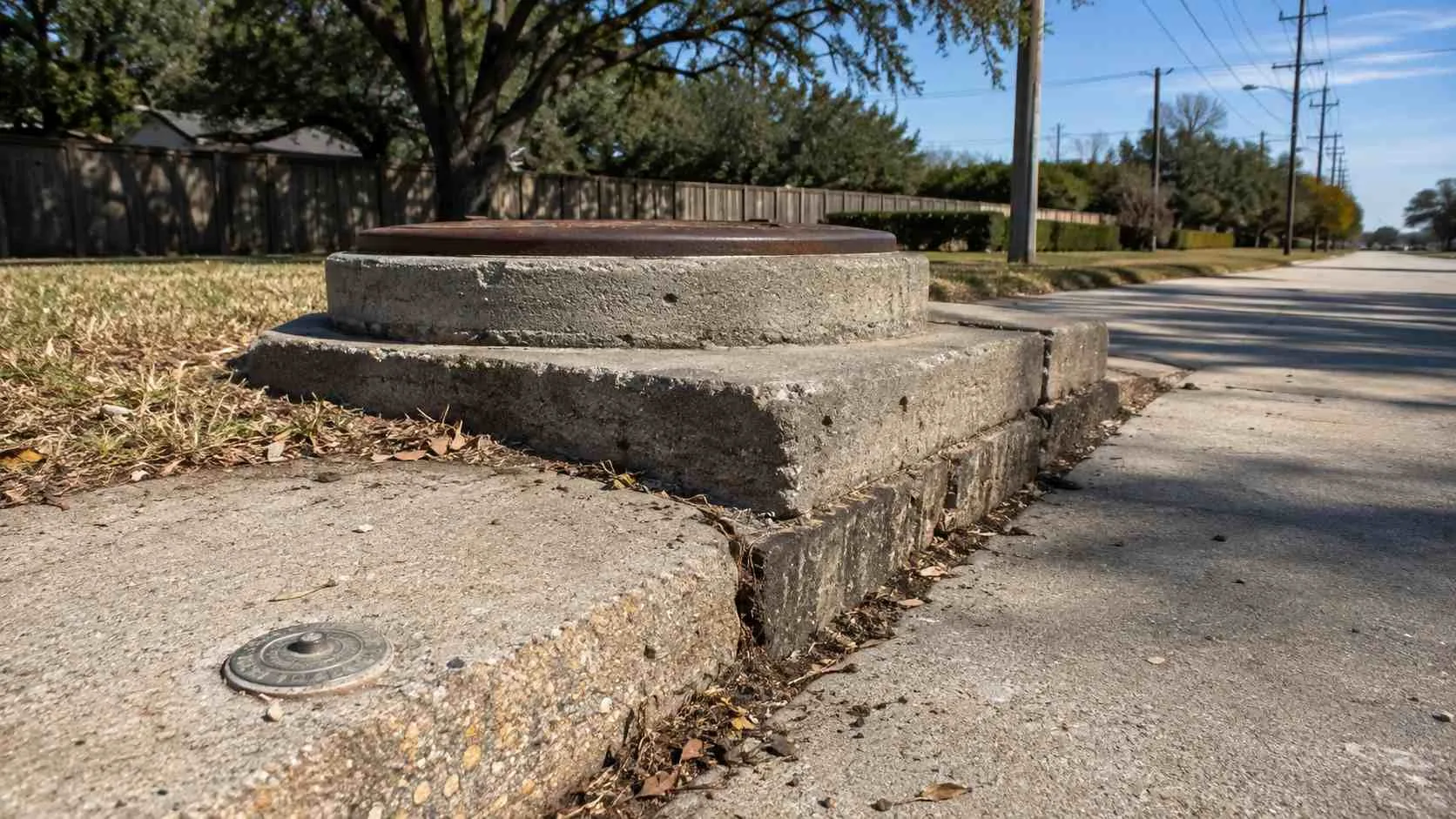
The Harris Galveston Subsidence District was created specifically in response to measurable land subsidence caused by decades of groundwater withdrawal across the Houston region, subsidence significant enough to permanently alter drainage patterns, increase flood risk in affected areas, and in some cases damage infrastructure and property. This history is the reason the district’s regulatory approach doesn’t function like a typical permit and pump groundwater framework found elsewhere in Texas. Instead, it requires regulated entities across defined geographic areas to systematically reduce their reliance on groundwater over time, shifting toward surface water and other alternative supply sources as a matter of regional policy, not case by case discretion.
For a developer or MUD board evaluating a growth project within district jurisdiction, this means groundwater availability isn’t simply a question of whether a well can be drilled and permitted. It’s a question of what percentage of the project’s total water demand can legally come from groundwater under the applicable Groundwater Reduction Plan requirement for that specific area, with the remainder needing to come from an alternative source regardless of whether groundwater is technically available and productive at the site.
What a Groundwater Reduction Plan Actually Requires
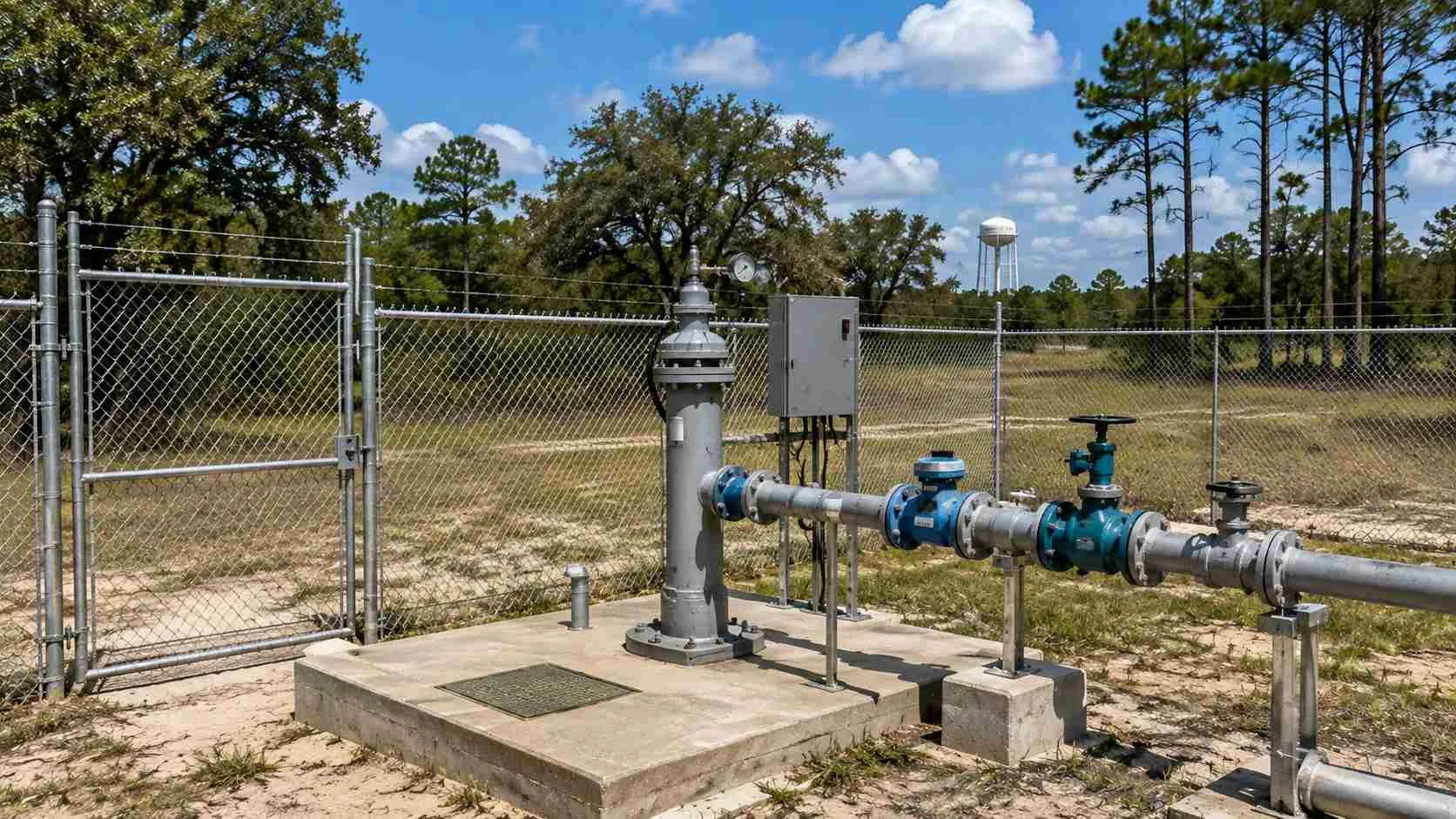
A Groundwater Reduction Plan is the district’s mechanism for managing this transition, typically organized by defined regulatory area, with each area assigned a specific alternative water supply percentage requirement that increases according to an established compliance schedule. A regulated entity, whether a MUD, a municipality, or in some cases a large industrial user, operating within a specific regulatory area needs to demonstrate that its water supply portfolio meets that area’s current required percentage of alternative, non groundwater supply, with the remaining permitted groundwater withdrawal subject to the district’s well permitting and pumping limit framework.
This structure means a MUD or developer’s groundwater supply strategy can’t be evaluated in isolation from the alternative supply side of the equation, since the district’s compliance requirement is defined as a ratio, not simply a groundwater volume, and confirming what specific alternative supply percentage applies to a specific project’s regulatory area, along with how that requirement is scheduled to change over the project’s anticipated development timeline, is a necessary early step rather than a detail to resolve once the project is already underway.
Alternative Water Supply and Surface Water Conversion
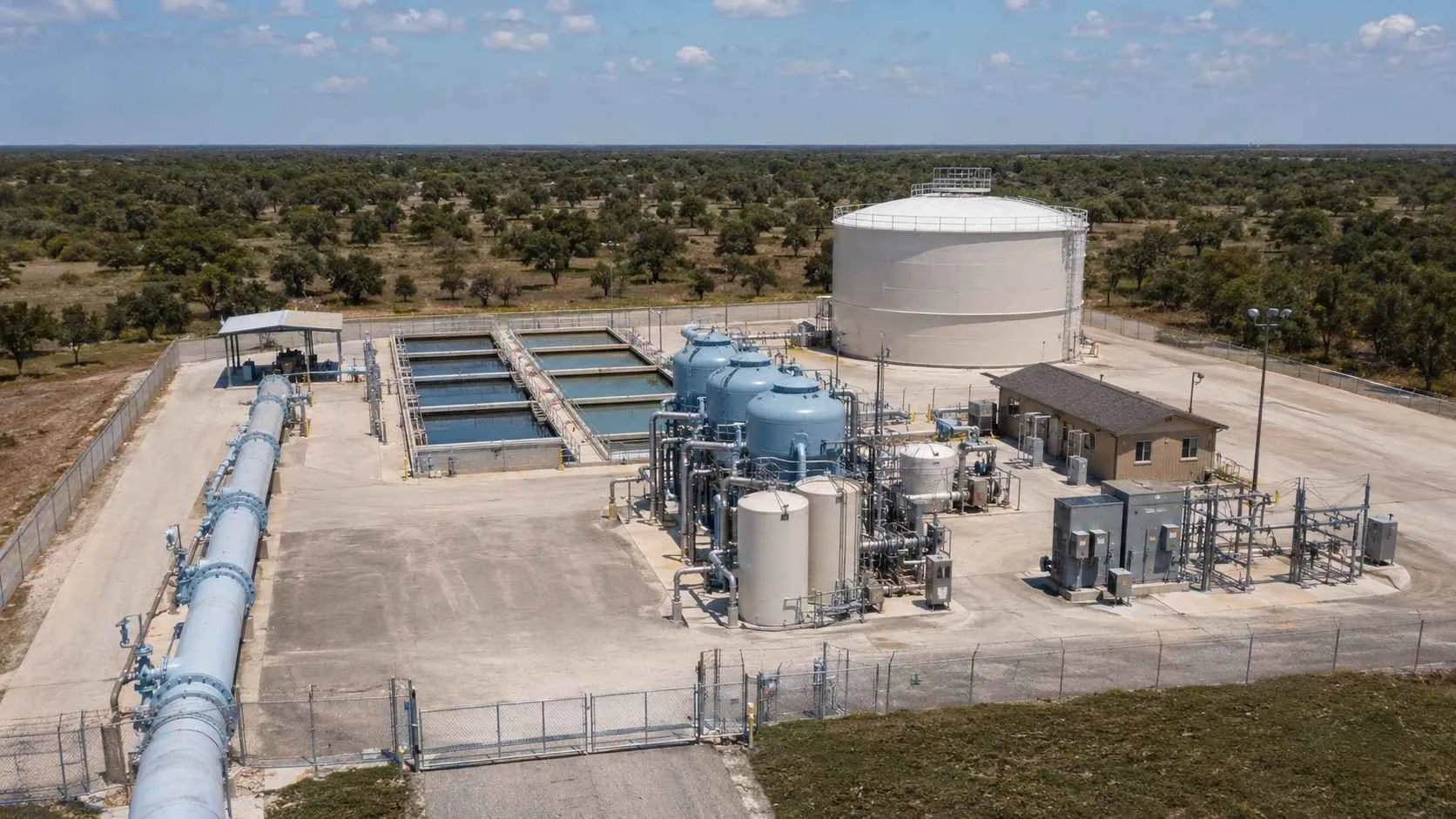
Alternative water supply under Harris-Galveston Subsidence District Groundwater Reduction Plans is most commonly achieved through surface water conversion, connecting to a surface water treatment and distribution system rather than relying on groundwater wells, and this conversion typically involves either connecting to an existing regional surface water provider’s system or participating in a broader surface water conversion infrastructure project serving multiple entities within the same regulatory area. Confirming what surface water conversion infrastructure currently exists, or is planned, serving your specific project’s location is a necessary parallel step to any groundwater well permitting evaluation, since your project’s actual compliant water supply strategy depends on both pieces working together, not on groundwater availability alone.
Where surface water conversion infrastructure isn’t yet built out to serve a specific growth area, a developer or MUD may need to evaluate participation in a planned regional conversion project, similar in principle to the kind of regional raw water supply planning coordination relevant to the Tarrant Regional Water District’s Integrated Pipeline Project in North Texas, adapted here to the Houston region’s surface water conversion framework and the specific timeline that infrastructure is expected to come online relative to the project’s own development schedule.
Well Permitting, Pumping Limits, and Compliance Timelines
Even where groundwater withdrawal remains permitted within a specific regulatory area’s compliance framework, actually obtaining a well permit through the district requires demonstrating that the proposed withdrawal fits within that area’s current permitted groundwater allowance, a pumping limit that’s directly tied to the area’s Groundwater Reduction Plan compliance percentage and that can change as the area’s compliance schedule advances toward higher alternative supply requirements over time. This means a well permit obtained today under a specific pumping allowance may face a reduced allowance in a future compliance period, and developers and MUD boards should evaluate their project’s water supply plan against not just the current permitted pumping limit but the anticipated schedule of future limit reductions relevant to their project’s full development timeline.
Confirming this compliance timeline early, and building anticipated future pumping limit reductions into the project’s long term water supply and capital planning, is the practical way to avoid a scenario where a water supply strategy adequate at initial permitting becomes inadequate partway through a phased project’s build-out as district compliance requirements tighten.
Water Demand Projections and MUD Capital Planning
For a MUD board or developer planning a phased growth project within district jurisdiction, water demand projections need to be evaluated against both the district’s current and anticipated future Groundwater Reduction Plan requirements, meaning the capital infrastructure plan needs to account for surface water conversion infrastructure, treatment capacity, and distribution system investment on a timeline that keeps pace with both the project’s own growth and the district’s compliance schedule. This is a meaningfully more complex capital planning exercise than a straightforward well based water supply plan would require, since it involves coordinating infrastructure investment timing with a regulatory compliance schedule that’s largely outside the MUD’s own control.
Integrating this Groundwater Reduction Plan compliance timeline into the MUD’s capital improvement plan from the outset, rather than treating surface water conversion as a future infrastructure need to be addressed only when a compliance deadline is imminent, gives the district and its board considerably more flexibility to plan financing, construction sequencing, and rate structure adjustments proactively rather than reactively.
What This Means for Project Feasibility and Long Term Reliability
The connection between Groundwater Reduction Plan compliance and project feasibility is direct. A project’s water supply cost and infrastructure needs depend on the specific alternative supply percentage its regulatory area requires, the availability and cost of surface water conversion infrastructure serving that area, and the compliance schedule’s trajectory over the project’s anticipated timeline, all of which should be evaluated during initial feasibility analysis rather than assumed to be a solvable detail once other project decisions, including land acquisition and pro forma development, are already committed. A project’s long term water supply reliability similarly depends on whether its supply portfolio is built to remain compliant as district requirements tighten over time, not just adequate under today’s requirements.
Frequently Asked Questions
How do we find out which specific regulatory area our project falls within and what alternative supply percentage currently applies?
This requires direct confirmation with the Harris Galveston Subsidence District, identifying your specific site’s regulatory area designation and that area’s current Groundwater Reduction Plan compliance requirement, since these designations and requirements are specific to defined geographic areas within the district and shouldn’t be assumed based on general awareness of the district’s overall regulatory approach.
If our area’s alternative supply requirement increases before our project’s later phases are built, do we need to retrofit our earlier phases’ water supply?
Generally, compliance is evaluated on an ongoing basis against the regulated entity’s total water supply portfolio, meaning an increasing area wide requirement can affect the overall compliance obligation for the full system, including infrastructure already serving earlier phases, which is exactly why long term capital planning should account for anticipated future compliance requirements rather than only the requirement in place at initial permitting.
Is surface water conversion always more expensive than continuing to rely on groundwater where it’s still permitted?
Not necessarily, and the actual cost comparison depends on your specific project’s location relative to existing surface water conversion infrastructure, the well permitting and pumping limit constraints applicable to your regulatory area, and your project’s long term development timeline relative to the district’s compliance schedule, making a direct, project specific cost comparison the reliable way to evaluate this rather than a general assumption in either direction.
Related Resources
- The Integrated Pipeline Project: What Tarrant Regional Water District’s Raw Water Supply Plan Means for Fast Growing Western Suburbs
- NTMWD Connection vs. Private Treatment: The McKinney Developer’s Guide to Choosing the Right Wastewater Path
- Land Application Permits in Texas: A Faster Path to Wastewater Approval for Developers
Evaluating Groundwater Reduction Plan Compliance for a Houston Area Development?
MES works with Houston-area developers, MUD boards, and industrial users to evaluate Groundwater Reduction Plan compliance requirements, coordinate well permitting and pumping limits, assess surface water conversion infrastructure needs, and integrate water supply strategy into long term capital improvement planning.
We specialize in:
- Groundwater Reduction Plan compliance evaluation for Harris Galveston Subsidence District regulatory areas
- Well permitting and pumping limit coordination for MUDs, developers, and industrial users
- Surface water conversion infrastructure feasibility and cost analysis for Houston area growth projects
- Water demand projection and long term compliance schedule integration for phased developments
- MUD capital improvement planning aligned with district compliance timelines
- Alternative water supply strategy comparison for projects facing groundwater conversion requirements
Modern Engineering Solutions, Houston, Texas. Contact: (214) 833-6748 or mod-eng.com
Keep reading
More to read.
Talk to an engineer
Tell us about your project.
An engineer reads it
Not a salesperson. Someone who can tell you whether the pathway is real.
You get a first answer
Your options, the agencies involved and the questions that decide cost and schedule.
You decide
No commitment to have the first call.
Prefer the phone? (214) 833-6748