
Blog
The Design Mistake That Turns a 210E Authorization Into a TCEQ Violation
A 210E approval is not the finish line. See how undersized storage, compressed setbacks, and missing signage turn an approved system into a TCEQ violation.
Quick Answer
A 210E authorization is not a one time approval you file away. TCEQ approved a specific design, a specific reuse area, specific storage volume, specific setbacks, and specific operational controls, and the system has to keep matching that approved plan through construction and every day of operation after that. Violations happen when the built system drifts from the approved plan, undersized storage that cannot hold effluent during wet weather, a reuse area that is smaller than what was calculated, setbacks that got compressed during construction, missing signage or backflow protection that turns a reuse system into a cross connection risk, or actual flow that exceeds what the reuse area and storage were ever sized to handle. None of these show up as violations at approval. They show up months or years later, when a wet season overwhelms undersized storage or a cross-connection inspection finds missing backflow protection, and by then the fix costs far more than getting the design and construction right the first time would have.
Why Approval Is the Beginning of the Compliance Obligation, Not the End
Developers and engineering teams sometimes treat a 210E authorization the way they would treat a building permit, a document you get once and then move on from. That framing misses what the authorization actually is. TCEQ approved a specific reuse plan built around specific numbers, design flow, reuse area acreage, storage volume, and effluent quality targets for the reuse category, and every one of those numbers has to hold up in the field, not just on the application drawings.
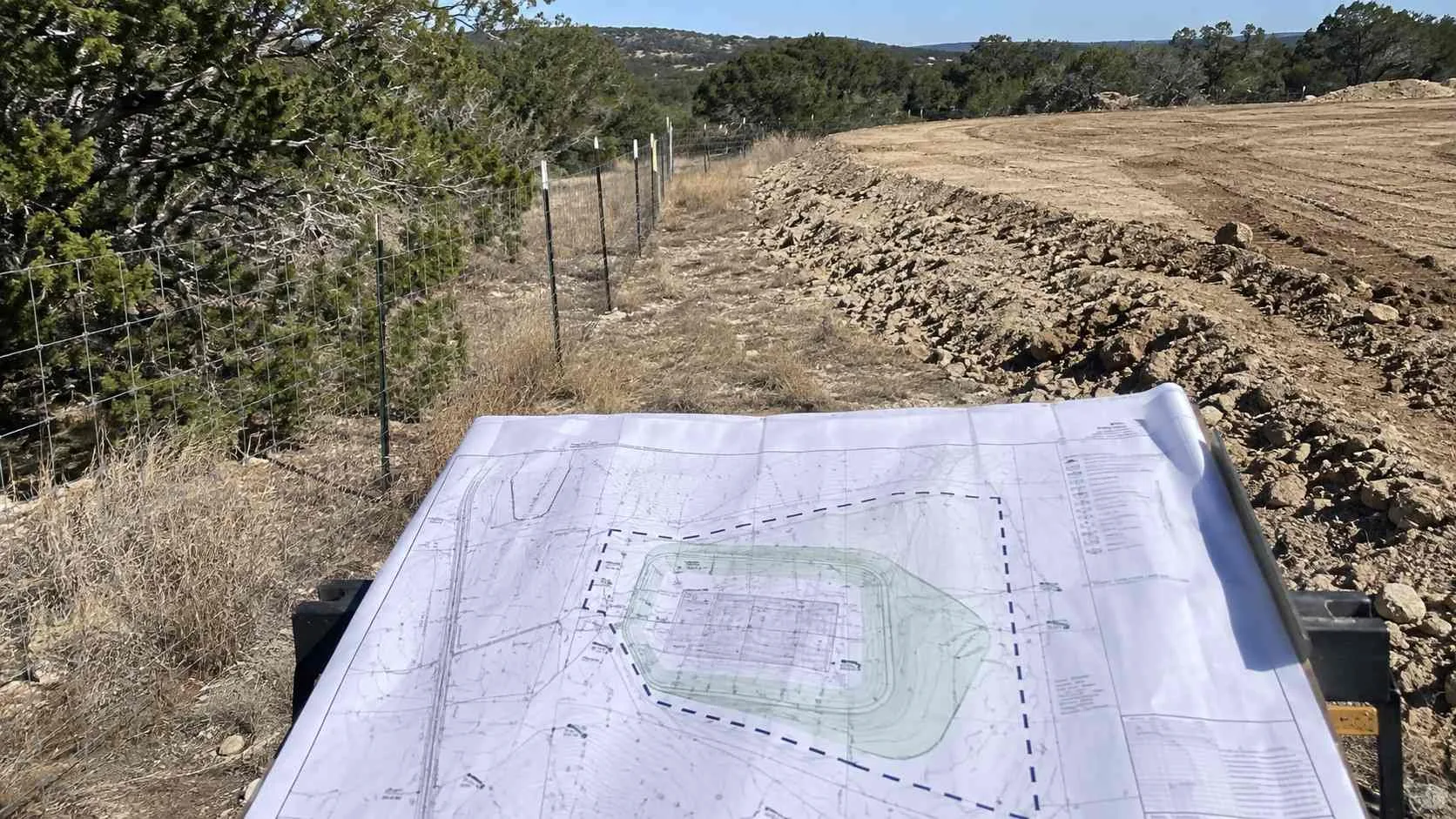
This distinction matters most during construction, when field conditions push contractors toward shortcuts that look minor but change what actually gets built relative to what TCEQ approved. A reuse area that gets clipped by a few acres because of an unexpected easement or grading issue is not a minor field adjustment, it is a departure from the approved design flow to reuse area ratio, and Central Texas agricultural reuse generally supporting around two thousand gallons per day per acre means even a modest acreage reduction can push the system past what it can legally absorb. An authorization approved on paper with the right numbers becomes a violation risk the moment the built system no longer matches those numbers, regardless of how good the original engineering was.
Storage and Reuse Area Sizing Mistakes That Create Wet Weather Violations
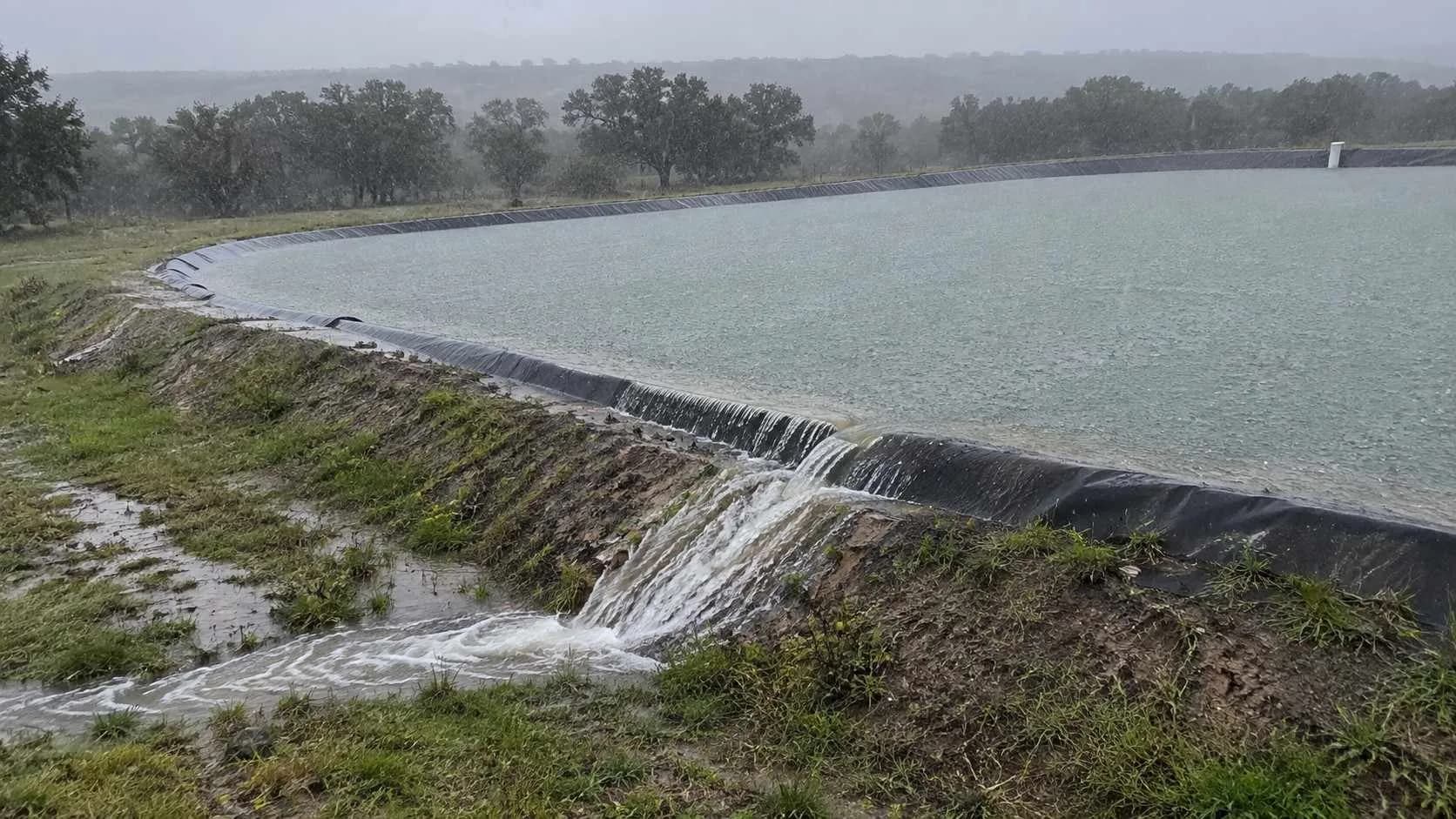
Undersized storage is the single most common mistake that turns an otherwise sound 210E system into a violation waiting for the right weather event. Storage exists to hold treated effluent during periods when reuse demand cannot absorb it, most often during extended wet weather when irrigation demand drops to nearly nothing while the treatment plant keeps producing effluent at a steady rate. A storage volume calculated against average conditions instead of realistic wet weather scenarios looks adequate on paper and fails the first time a multi week wet stretch actually happens.
When storage fills and the system has nowhere else to put treated effluent, the result is unauthorized discharge, overflow, or ponding on the reuse area, none of which match the approved plan and all of which can trigger a TCEQ violation regardless of how clean the treated effluent itself is. Reuse area calculations carry a parallel risk. An area sized against optimistic irrigation demand assumptions, without accounting for actual seasonal variation, ends up under absorbing flow during exactly the periods storage is supposed to cover. Getting both numbers right requires modeling realistic seasonal demand swings against the specific reuse category, not applying a generic annual average that hides the wet weather scenario that actually causes violations.
Setbacks, Signage, and Cross Connection Controls That Get Compressed During Construction
Setback distances from water wells, property lines, and habitable structures are approved as specific numbers, and construction crews working around unexpected site constraints sometimes compress those distances without anyone flagging that the built condition no longer matches the approved plan. A treatment plant or reuse area that ends up closer to a well or property line than what TCEQ approved is a design mismatch that a routine inspection can catch, and by then the fix means either a physical relocation or a new application amendment, both of which cost far more than confirming the setback during construction layout would have.
Signage and public access controls carry a different kind of risk because they are often treated as an afterthought item rather than a compliance requirement. Reclaimed water systems require signage and access controls specifically because the water is treated to a standard for its approved reuse, not to potable standards, and the public or site workers need a clear, visible way to know that. Missing or inadequate signage at a reuse area that borders a public access point creates exactly the kind of nuisance and safety exposure that turns a routine site visit into a violation finding.
Cross connection control is the mistake with the highest consequence relative to how often it gets under designed. Backflow protection exists to prevent reclaimed water from ever connecting, even accidentally, to a potable water system, and a missing or improperly installed backflow device is not a paperwork gap, it is a direct public health risk that TCEQ and local health authorities treat with real seriousness. Incorrect pipe labeling compounds this risk because a reclaimed water line that is not clearly and consistently marked as non-potable increases the odds that a future contractor, maintenance worker, or even the site’s own operator makes a connection error that a clearly labeled system would have prevented.
Operational Gaps That Turn a Well Designed System Into a Compliance Problem Anyway
A system can be designed correctly and still generate violations if the operational side never gets built out to match the design. Incomplete O&M planning leaves an operator without clear procedures for what to do when storage approaches capacity, when effluent quality sampling shows a result trending toward the reuse category’s limit, or when a piece of equipment needs maintenance that affects treatment performance. Certified operator contracts for a system of this type typically run three thousand to seven thousand dollars a month, and that cost only buys compliance protection if the operator actually has the access, the documentation, and the authority to respond to problems before they become violations.
Unverified effluent quality is a quieter version of the same problem. A treatment process that was designed to meet the reuse category’s quality standard still has to be sampled and confirmed against that standard on an ongoing basis, and a gap in sampling discipline means the system could be drifting out of compliance for months before anyone notices. Inadequate operator access, whether from a gate that is not properly maintained, a monitoring point that is difficult to reach, or a site layout that was not built with maintenance access in mind, turns routine operational tasks into deferred maintenance, and deferred maintenance on a reclaimed water system eventually shows up as a violation rather than a symptom that gets addressed early.
How These Mistakes Actually Turn Into TCEQ Violations and Forced Redesigns
Each of these gaps, undersized storage, a compressed reuse area, missing signage, absent backflow protection, incomplete O&M planning, tends to stay invisible until a specific triggering event exposes it. A wet weather event exposes undersized storage. A cross connection inspection exposes missing backflow protection. A complaint about odor or overspray near a property line exposes a reuse area that was never sized correctly for the site’s real conditions. By the time TCEQ is involved, the developer or operator is not dealing with a design review comment, they are dealing with a violation finding, which carries its own consequences and often forces a redesign under a compressed timeline instead of the original engineering schedule.
We build storage volume, reuse area sizing, and setback verification into the design phase specifically to prevent this sequence, the same approach we used on the authorization for a mixed-use data center development in San Marcos, Hays County, a one million gallon per day system where reuse area and design flow were sized together from the start rather than approved separately and reconciled later. Preventing a violation is cheaper and faster than responding to one, and the difference almost always comes down to whether the built system was actually checked against the approved plan during construction, not just at the application stage.
Frequently Asked Questions
What is the most common design mistake that leads to a 210E violation?
Undersized storage is the most common root cause, because it looks adequate against average conditions and fails specifically during wet weather stretches when irrigation demand drops and the treatment plant keeps producing effluent that has nowhere to go. Reuse area sizing that does not account for realistic seasonal demand variation is a close second.
How is storage volume actually calculated to avoid this problem?
Storage has to be sized against realistic wet weather and seasonal low demand scenarios for the specific reuse category, not an annual average. The reuse area’s absorption capacity, generally around two thousand gallons per day per acre for Central Texas agricultural reuse, and the storage volume have to be evaluated together, since an undersized reuse area increases how much storage the system actually needs to cover demand gaps.
Can a project lose its 210E authorization if the built system does not match the approved plan?
A built system that departs meaningfully from the approved design, whether through a smaller reuse area, compressed setbacks, or insufficient storage, creates a compliance gap that can trigger a TCEQ violation finding and may require a formal amendment or redesign to bring the system back into alignment with what was actually approved.
What operational gaps create violations even when the physical design was correct?
Incomplete O&M planning, inconsistent effluent quality sampling, and inadequate operator access to monitoring points or storage controls all create violation risk independent of the physical design. A well designed system still needs an operator with clear procedures and real site access to stay in compliance day to day.
How does MES prevent these design mistakes from turning into violations?
We verify storage volume against realistic wet weather scenarios, confirm reuse area sizing against actual design flow, check setback compliance during construction layout, and build O&M planning into the design phase rather than leaving it for the operator to figure out after startup. On projects like the San Marcos data center development, that upfront verification is what kept the built system matched to the approved plan.
Related Resources
- 210E Vs TPDES Discharge Permit: A Side by Side Comparison
- What Is a 210E Authorization and How Can It Save Your Texas Development Project?
- Backup Discharge Permit After Your 210E Is Operational
- 210E Public Notice Requirements in Texas
Worried Your 210E System Might Drift Out of Compliance?
If your project is under construction or already operating under a 210E authorization, MES can check the built system against the approved plan before a wet weather event or an inspection finds the gap for you.
We specialize in:
- Storage volume verification against realistic wet weather scenarios
- Reuse area and setback confirmation during and after construction
- Cross connection control and signage review for reclaimed water systems
- O&M plan development matched to the specific authorization requirements
- Effluent quality sampling program review for ongoing compliance
Modern Engineering Solutions, McKinney, Texas. Contact: (214) 833-6748 or mod-eng.com
Keep reading
More to read.
Talk to an engineer
Tell us about your project.
An engineer reads it
Not a salesperson. Someone who can tell you whether the pathway is real.
You get a first answer
Your options, the agencies involved and the questions that decide cost and schedule.
You decide
No commitment to have the first call.
Prefer the phone? (214) 833-6748