
Blog
Pretreatment Equipment Sizing for Texas Facilities Facing New Local Limits
A Texas facility can go out of compliance without changing a thing. See why tightened POTW local limits leave pretreatment equipment undersized overnight.
Quick Answer
POTW local limits are the specific pollutant discharge thresholds a Texas Publicly Owned Treatment Works sets for facilities in its service area, covering parameters like pH, BOD, TSS, COD, FOG, metals, ammonia, temperature, and toxic organics, and they exist because each treatment plant has its own capacity, its own treatment process, and its own receiving stream discharge permit that the industrial dischargers upstream have to stay within. When a POTW revises these limits, or starts enforcing existing limits more strictly, a facility’s existing pretreatment equipment can become undersized even with zero change in production, because the equipment was likely sized to the limits and conditions in place when it was installed, not to whatever the city decides years later. Proper sizing for new limits requires actual wastewater characterization, a real production schedule, peak discharge conditions rather than averages, and the current permit’s exact pollutant loading requirements, not a vendor’s standard equipment recommendation. Facilities facing new local limits should get this analysis done before buying equipment or submitting a revised discharge plan, since undersized equipment bought under time pressure tends to need replacing again within a few years.
What Local Limits Actually Are and Why They Move
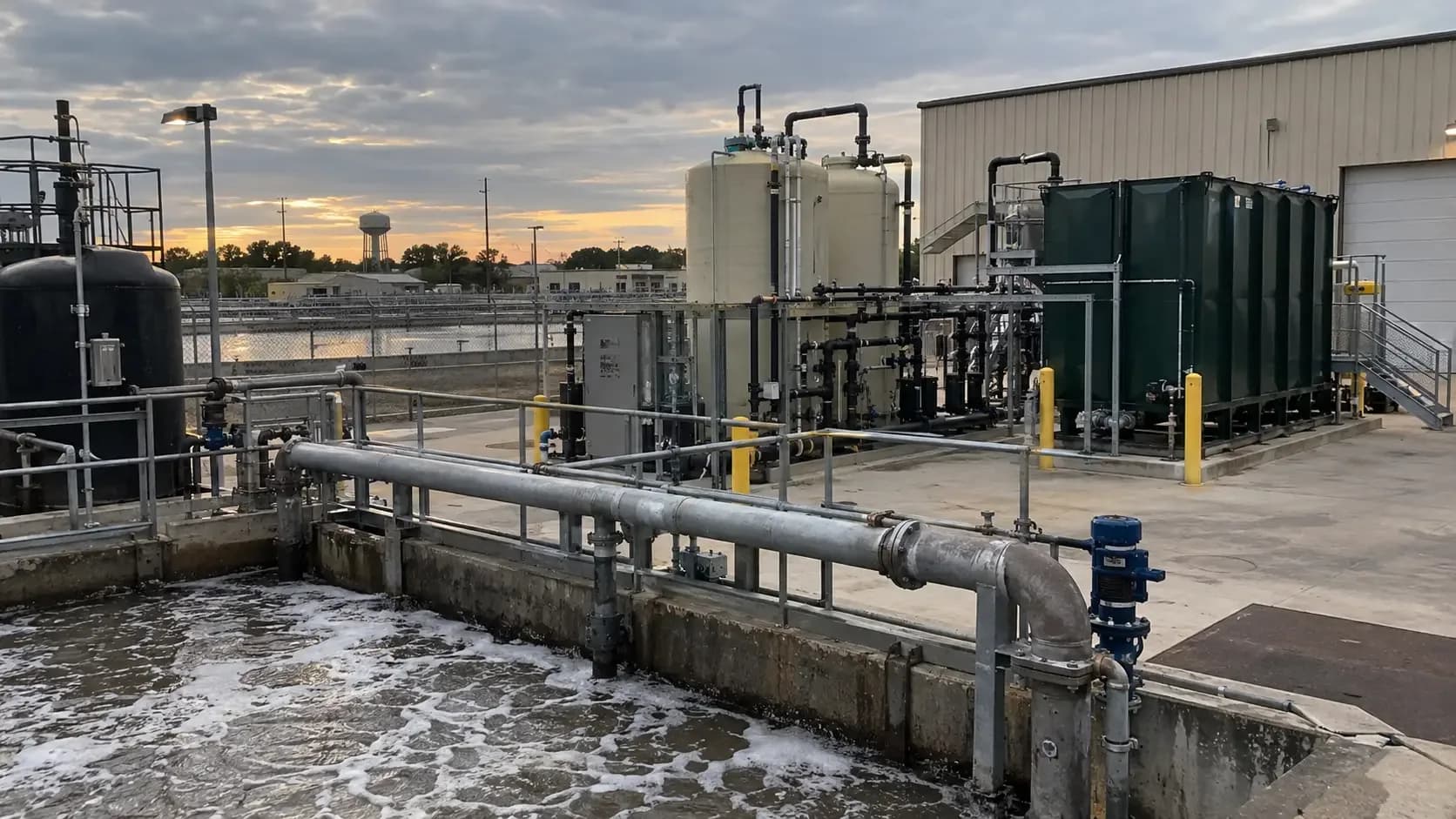
A Texas POTW sets local limits to keep the combined discharge from every industrial user in its service area within what the treatment plant can actually process, and within what the plant’s own discharge permit to the receiving stream allows. These limits typically cover pH, BOD, TSS, COD, FOG, metals, ammonia, temperature, and any toxic organics or other pollutants specific to that plant’s industrial user base and receiving water conditions.
Local limits aren’t set once and left alone. A POTW periodically reevaluates its limits based on updated treatment plant capacity, changes in its own discharge permit from TCEQ, new industrial users added to its service area, or a reassessment of how much pollutant loading the plant can actually absorb from all its industrial dischargers combined. Any of these can result in tighter numeric limits, more strictly enforced existing limits, or new parameters added that weren’t previously regulated at that facility’s connection. None of this requires the individual facility to have changed anything about its own operation.
Why an Unchanged Facility Can Suddenly Be Out of Compliance
This is the part that frustrates plant managers the most: production hasn’t changed, the process hasn’t changed, and the facility is still discharging exactly what it always has, but the pretreatment system that handled that discharge comfortably under the old limits no longer clears the new ones. The reason almost always traces back to how the original system was sized, and a handful of specific gaps show up again and again.
Under-sized equalization tanks were often built to smooth out flow variability under the old limits’ margin, and that margin disappears when the limit itself tightens, even though the facility’s actual peak-to-average flow ratio hasn’t changed at all. pH systems that can’t handle peak flows were frequently sized against average conditions rather than the actual peak discharge events that drive most real world excursions, a gap that was tolerable under looser limits and isn’t under tighter ones.
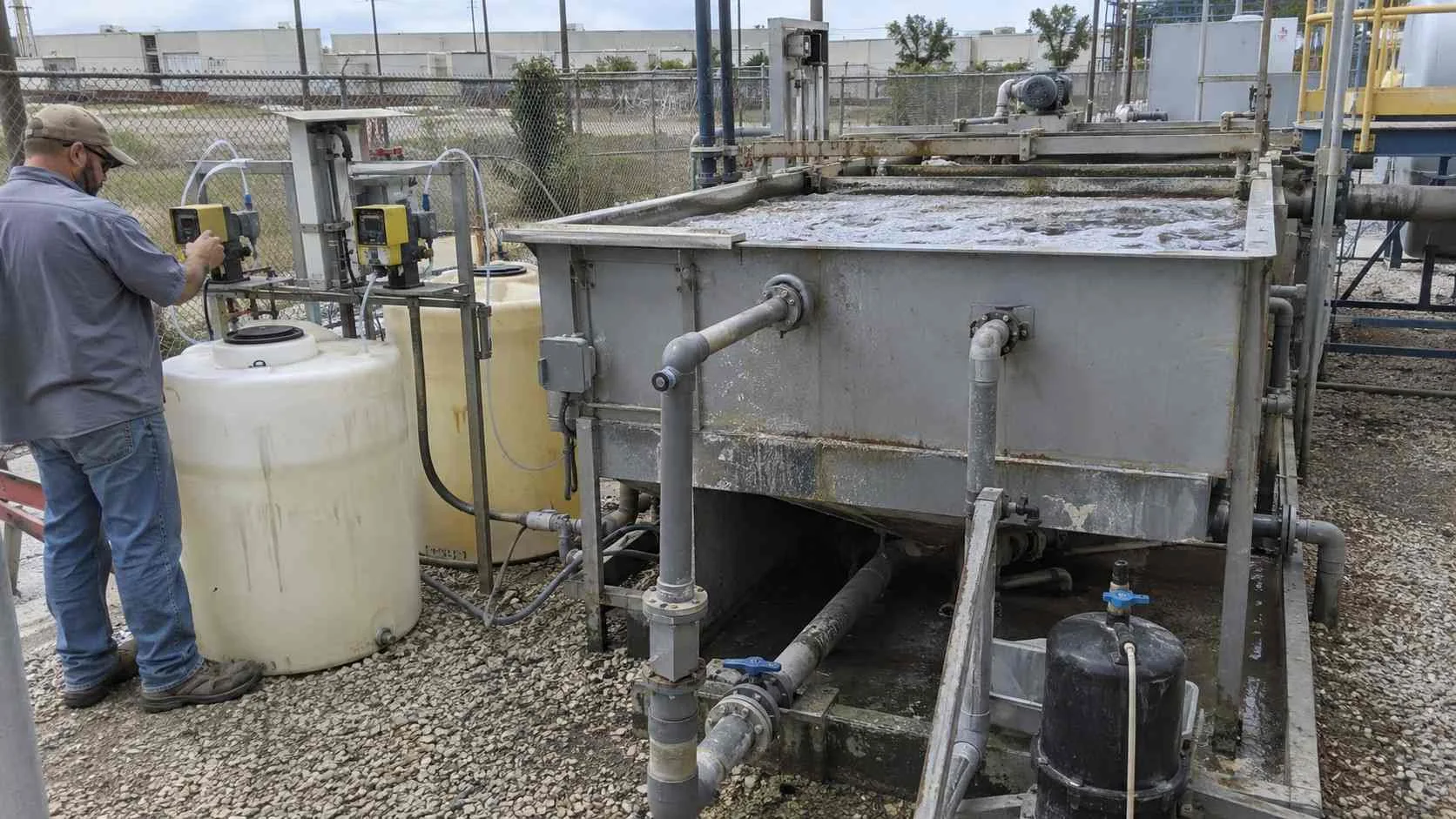
DAF systems designed from vendor assumptions are a particularly common problem, since a dissolved air flotation system sized off a vendor’s standard design curve, rather than the facility’s actual measured wastewater characteristics, can perform adequately under generous limits while falling short under stricter ones. Missing flow monitoring means a facility often doesn’t have reliable data on its own actual peak conditions, which makes it hard to even diagnose why the existing system is suddenly failing to comply.
Inadequate sampling points compound this problem by making it difficult to generate the data needed to demonstrate compliance or to properly evaluate what upgrade is actually needed. Chemical feed limitations in pH or precipitation systems, meaning dosing pumps or chemical storage sized for the original design loading, can become a bottleneck once tighter limits require more aggressive or more consistent treatment. Sludge handling constraints show up when tighter removal requirements generate more solids than the original dewatering or disposal system was built to handle. And poor control automation, meaning a system that relies on manual adjustment rather than automated response to changing conditions, tends to produce the inconsistent performance that shows up as an exceedance under limits with less margin for error.
Sizing Equipment Against Reality, Not Assumptions
The facilities that respond well to new local limits do one thing differently from the ones that end up buying equipment twice: they size the new system against actual data rather than an educated guess.
Actual wastewater characterization replaces assumption with measurement, meaning real sampling across enough production cycles to capture how the facility’s discharge actually varies, not just what it averages. Production schedule matters directly, since a facility running three shifts with continuous discharge has a very different sizing problem than one running a single shift with batch discharges concentrated into a few hours. Peak discharge conditions, not average conditions, are what pretreatment equipment actually has to handle without failing, and a system sized only to the average will struggle exactly when it matters most.
Pollutant loading, expressed as mass rather than concentration alone, ties flow and concentration together into the number that actually determines whether a system is adequately sized. Local limits and the discharge permit conditions currently in effect, not the ones that were in effect when the last system was installed, set the actual target the new equipment has to meet, with reasonable margin rather than a bare minimum. And POTW review expectations, meaning what the specific city’s pretreatment coordinator will actually want to see in a resizing analysis or a revised discharge plan, shape how the technical package needs to be documented and presented.
The Engineering Toolkit for Meeting Tighter Limits
Once the actual data is in hand, the engineering response usually draws from a fairly standard toolkit, matched to whatever parameter is actually driving the compliance gap. Flow equalization, sized against real peak to average ratios rather than the prior system’s assumptions, smooths out the variability that causes intermittent exceedances. pH adjustment systems sized with adequate chemical feed capacity and response time handle both routine variation and the occasional excursion without falling behind.
Screening and oil water separation address solids and free oil ahead of more sensitive downstream treatment steps. Dissolved air flotation, sized against the facility’s actual measured FOG and solids loading rather than a vendor’s generic curve, handles the fats, oils, grease, and fine solids that a lot of tightened local limits specifically target. Filtration provides a polishing step where TSS limits have tightened beyond what upstream treatment alone can reliably achieve. Chemical precipitation addresses metals where local limits have tightened on that parameter specifically, and the sludge handling system downstream needs to be sized for whatever additional solids volume the tightened treatment process actually generates, not just the original system’s output.
Automated sampling and flow monitoring, built into the redesign rather than added as an afterthought, give the facility the ongoing data it needs both to run the new system correctly and to demonstrate compliance during future POTW reviews. Control system improvements, particularly automating pH adjustment and equalization response rather than relying on manual monitoring, are often what actually closes the gap between a system that performs well most of the time and one that performs reliably enough to consistently meet a tighter limit.
Frequently Asked Questions
How do new POTW local limits affect existing industrial facilities?
A facility’s existing pretreatment equipment can become undersized when local limits tighten, even without any change in the facility’s own production or process. The equipment was likely sized against the limits and margin in place when it was installed, and a tighter limit removes that margin, which is why an unchanged facility can suddenly find itself out of compliance.
What wastewater data is needed before sizing pretreatment equipment?
Actual wastewater characterization from real sampling, a clear picture of the facility’s production schedule and how discharge timing relates to it, and peak discharge conditions rather than averages. Pollutant loading, expressed as mass and tied to actual flow, is what the sizing calculation should be built around, not concentration data alone.
Why is a vendor quote not enough to confirm pretreatment design capacity?
A vendor’s standard equipment recommendation is usually built from generic design assumptions or a manufacturer’s typical application, not from a specific facility’s actual measured wastewater characteristics and peak discharge conditions. Equipment sized this way can perform fine under generous limits and still fall short once local limits tighten, which is a common reason facilities end up replacing equipment they thought was already correctly sized.
Can pretreatment equipment be phased as production grows?
In many cases, yes, if the initial design anticipates future capacity needs and physical space for expansion from the start. Phasing works well when the underlying system, tank layout, chemical feed capacity, control architecture, is designed with growth in mind. It works poorly when a facility tries to retrofit capacity onto a system that was never designed to expand, which usually costs more than building the added capacity in from the beginning.
What should I look for in an engineering firm before upgrading pretreatment equipment?
Look for a firm that starts with actual wastewater characterization rather than a vendor catalog, understands the specific local limits and permit conditions your POTW has set, and designs equipment sized against your facility’s real peak conditions and production schedule. A firm that skips the characterization step and sizes equipment from assumptions is the most common reason facilities end up undersized and back at square one within a few years.
Related Resources
- Approved Plans Aren’t Always Optimized Plans. The Difference Can Cost $1.5 Million
- Texas Wastewater Pretreatment Permits: What Industrial Facilities Discharging to a POTW Must Know
- How TCEQ Sets Effluent Limits: Understanding Receiving Water Quality Standards and Permit Conditions
- Why Your Site Civil Engineer Isn’t the Right Person to Lead TCEQ Permitting
Don’t Size Pretreatment Equipment Off a Vendor Catalog
Buying equipment against an educated guess is how facilities end up replacing the same system twice within a few years. Before buying equipment, responding to new local limits, or submitting a revised discharge plan, MES helps Texas industrial facilities characterize their actual wastewater, size pretreatment systems against real peak conditions and current permit terms, and coordinate directly with POTW staff to confirm the design will hold up under review.
We specialize in:
- Wastewater characterization and peak discharge analysis for pretreatment sizing
- Equalization, pH adjustment, and DAF system design sized to actual facility data
- Chemical precipitation and sludge handling system evaluation for tightened metals limits
- Flow monitoring and automated sampling system design and integration
- POTW coordination for local limit interpretation and revised discharge plan review
- Phased pretreatment system design supporting future production growth
Modern Engineering Solutions, McKinney, Texas. Contact: (214) 833-6748 or mod-eng.com
Keep reading
More to read.
Talk to an engineer
Tell us about your project.
An engineer reads it
Not a salesperson. Someone who can tell you whether the pathway is real.
You get a first answer
Your options, the agencies involved and the questions that decide cost and schedule.
You decide
No commitment to have the first call.
Prefer the phone? (214) 833-6748