
Blog
The 90-Day Rule: What California Industrial Users Must Do Before Discharging to a Sewer
Installed equipment and a sewer connection do not mean a facility is authorized to discharge. See what California POTWs actually require before startup.
Quick Answer
California industrial facilities discharging process wastewater to a sanitary sewer operate under the federal Clean Water Act’s General Pretreatment Regulations at 40 CFR Part 403, administered locally by the city or sanitation district that owns the treatment plant, known as the Publicly Owned Treatment Works or POTW. Before discharge begins, most industrial users have to notify the POTW, complete an industrial wastewater questionnaire, characterize their wastewater, and in many cases obtain a discharge permit or control mechanism from the POTW’s pretreatment program. Users subject to federal categorical pretreatment standards, categorical industrial users or CIUs, face an additional requirement commonly called the ninety day rule: a compliance report due within ninety days of starting discharge or reaching their final compliance date, certifying the facility actually meets the technology based standards for its industrial category. Missing any piece of this sequence, the pre-discharge notification, the permit, or the post-startup compliance report, creates a real risk that a facility with installed equipment and a production schedule still cannot legally discharge, or discharges without authorization and faces enforcement for it.
Why “Ready to Discharge” and “Authorized to Discharge” Are Different Questions
Industrial users planning a new facility or a new production line tend to treat sewer discharge as an infrastructure question, is the pipe connected, is the pretreatment equipment installed, rather than a regulatory question with its own independent timeline. Those are genuinely separate tracks. The infrastructure track is about physical readiness. The regulatory track is about whether the POTW’s control authority has actually reviewed and authorized this specific discharge, and that review does not happen automatically just because a building permit was issued or a connection fee was paid.
Every POTW operating under an EPA approved pretreatment program has its own local limits, its own permit or control mechanism process, and its own timeline for reviewing new industrial dischargers, all built on top of the federal baseline in 40 CFR Part 403. A facility that assumes a generic understanding of “industrial pretreatment” covers them is skipping the step where they confirm what their specific POTW actually requires, and that gap is where startup schedules get derailed, usually discovered only when someone calls the sewer agency to ask about actually opening the valve.
What Happens Before Discharge: Notification, Questionnaires, and Characterization
The pre discharge sequence starts with notifying the POTW that an industrial discharge is coming, well before equipment is running. Most POTWs require new or significantly changed industrial users to complete an industrial wastewater questionnaire, a detailed disclosure of the facility’s processes, chemicals used, expected flow, and wastewater characteristics, so the control authority can determine what category of industrial user the facility falls into and what requirements apply. This questionnaire is not a formality, it is the document the POTW uses to decide whether the facility is a significant industrial user, subject to added monitoring and reporting duties, or a categorical industrial user, subject to the federal technology based standards specific to that industry.
Wastewater characterization follows from that determination. A facility may need to sample and report actual or representative wastewater characteristics, flow, concentration of pollutants relevant to its industry, before the POTW will issue a permit or control mechanism authorizing discharge. For facilities subject to categorical pretreatment standards, this characterization work overlaps with the baseline monitoring report required under 40 CFR 403.12(b), which documents current or projected discharge characteristics against the specific categorical standard the facility must meet. Getting this data collected and submitted takes real lead time, sampling has to happen, results have to be analyzed, and the POTW has to review the submission, none of which can be compressed into the week before a planned production start date.
Significant Industrial User and Categorical Industrial User Review
Whether a facility gets classified as a significant industrial user, an SIU, or a categorical industrial user, a CIU, changes what happens next and how much scrutiny the discharge receives. SIU status generally applies to facilities discharging meaningful volumes of process wastewater or contributing a meaningful share of the POTW’s treatment capacity, and it typically comes with self-monitoring and periodic reporting obligations even without a categorical standard attached. CIU status applies specifically to facilities in industries EPA has set national technology based standards for, and it carries additional, more prescriptive reporting requirements layered on top of whatever the POTW requires locally.
A facility does not get to self select which category applies. The POTW’s control authority makes that determination based on the industrial wastewater questionnaire and characterization data, and the determination drives everything downstream, what permit conditions apply, what monitoring frequency is required, and critically, whether the ninety day compliance report requirement applies at all. A facility assuming it is a simple SIU when its industrial process actually falls under a categorical standard is heading toward a compliance gap it does not know exists yet.
The 90 Day Rule Itself: What It Actually Requires and When
The ninety day rule specifically refers to the compliance report categorical industrial users must submit under 40 CFR 403.12(d), due within ninety days after the facility begins discharging or after its final compliance date with the applicable categorical pretreatment standard, whichever applies. This report has to certify, with supporting sampling data, that the facility’s discharge actually meets the numeric limits its categorical standard requires, not just that pretreatment equipment has been installed and is theoretically capable of meeting them. It is a performance certification, not a construction completion notice.
This means the ninety day clock starts running the moment discharge actually begins, whether or not every other piece of the facility’s compliance picture is fully resolved. A facility that starts discharging before its permit or control mechanism is finalized, assuming the paperwork will catch up, is running that ninety day clock against a baseline that may not even be settled yet, a genuinely bad position to be in if the sampling data comes back showing a limit exceedance the facility did not know applied to it. The practical implication is that the ninety day compliance report is not the first regulatory deadline in this process, it is closer to the last one, arriving after notification, characterization, permitting, and startup have all already happened, which is exactly why treating it as the only deadline that matters is a mistake.
Pretreatment Equipment Startup and the Gap Between Installed and Authorized
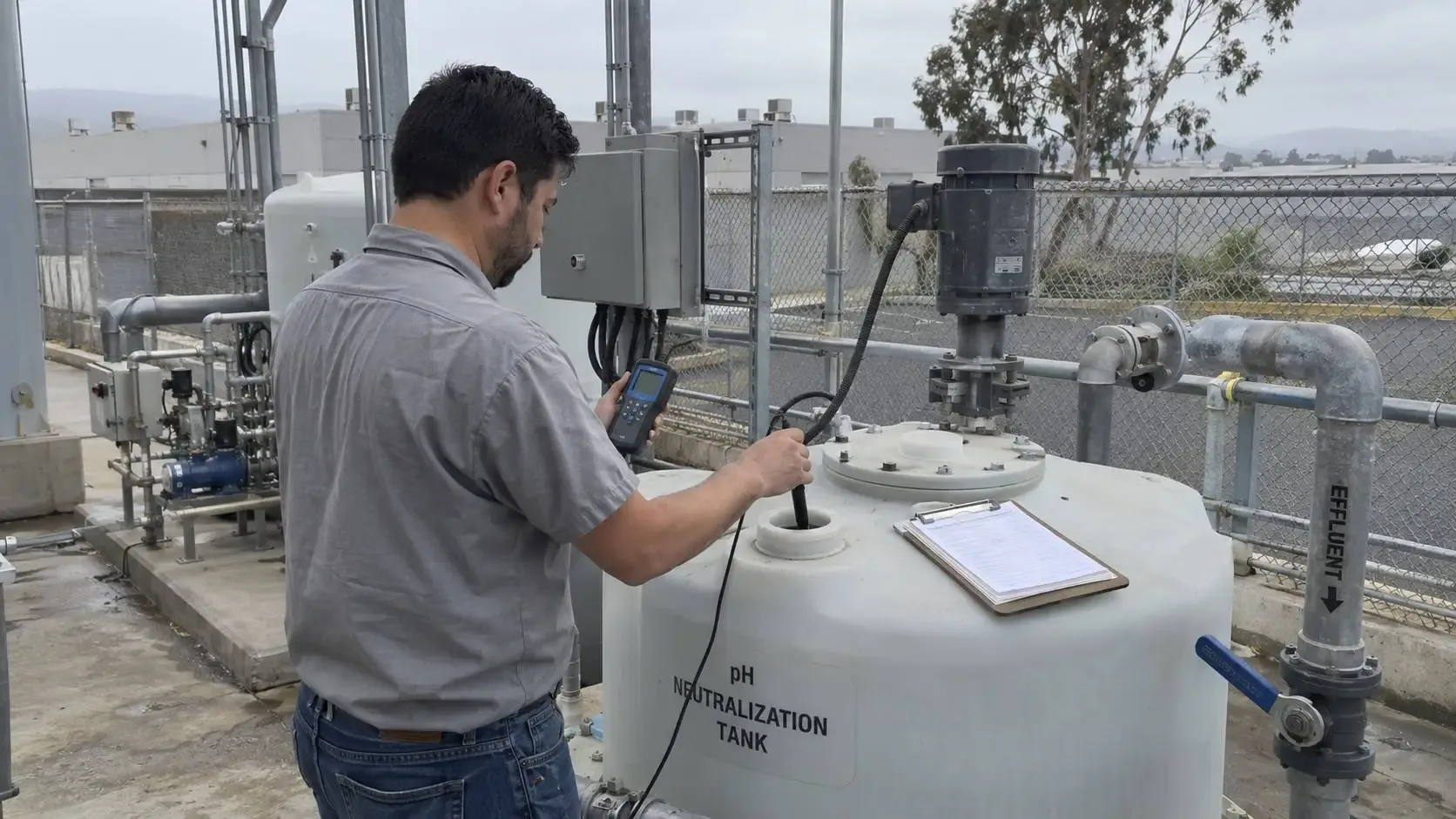
Pretreatment equipment, whatever form it takes for a given industrial process, oil water separators, pH neutralization systems, metals removal, has to be not just installed but demonstrated to perform against the standard the facility is subject to, and that demonstration is part of what the compliance reporting sequence is actually verifying. A facility that installs pretreatment equipment on schedule but has not confirmed its performance against actual production conditions is assuming the equipment works rather than proving it, and the ninety day compliance report is where that assumption gets tested with real sampling data, on a deadline that does not extend just because commissioning took longer than planned.
This is also where production schedules and regulatory approval most visibly collide. A facility with equipment installed, a production date on the calendar, and a POTW that has not yet issued the permit or control mechanism authorizing discharge has a legal problem, not a paperwork inconvenience. Discharging without an authorized permit or control mechanism, even briefly, even with functioning pretreatment equipment, is an unauthorized discharge that most POTWs treat as an enforcement matter, and it puts the facility in the position of having created its own compliance history problem before it has even completed its first authorized reporting cycle.
Getting the Sequence Right Before Equipment Startup, Not After
The facilities that avoid this collision start the POTW notification and questionnaire process as soon as the industrial use is defined, well before construction finishes, not after equipment is installed and a startup date is set. That means engaging with the specific POTW’s pretreatment program early enough to get the SIU or CIU determination made, complete the required characterization and baseline monitoring documentation, and receive the permit or control mechanism before the facility needs to actually discharge, with enough buffer that the ninety day compliance report deadline lands on a facility that is already operating under a settled, authorized baseline rather than one still waiting on paperwork.
Every POTW’s specific submission requirements, forms, and review timeline differ, which means the right first step on any project involving industrial discharge to a California sewer is confirming directly with that specific control authority what their process actually requires, rather than assuming a generic pretreatment framework applies uniformly across every city and sanitation district in the state. Getting that confirmation early is the difference between a startup date that holds and one that gets pushed while an unresolved permit application sits in a POTW’s review queue.
Frequently Asked Questions
What has to be submitted to a POTW before an industrial facility can discharge process wastewater?
Most POTWs require an industrial wastewater questionnaire disclosing the facility’s processes and expected discharge characteristics, followed by wastewater characterization or sampling data, and in many cases a permit or control mechanism authorizing the discharge. Categorical industrial users additionally submit a baseline monitoring report under 40 CFR 403.12(b) before discharge and a compliance report within ninety days after discharge begins.
When should a facility notify its POTW about a planned industrial discharge?
As early as the industrial use and expected wastewater characteristics are defined, well before construction or equipment installation is complete. POTW review, classification, and permitting take real time, and starting the process only once a production date is set risks a legal gap between physical readiness and regulatory authorization.
What happens if a facility misses the ninety day compliance report deadline?
The facility is out of compliance with its categorical pretreatment standard’s reporting requirements, which most POTWs treat as an enforcement matter independent of whether the underlying discharge itself meets numeric limits. A missed report also creates a documentation gap that makes the facility’s actual compliance status harder to establish after the fact.
Is pretreatment equipment always required before discharging to a sewer in California?
It depends on the facility’s industrial category and the POTW’s local limits, not a blanket state requirement. A facility subject to a federal categorical pretreatment standard or one whose wastewater would otherwise exceed the POTW’s local discharge limits needs pretreatment sized to meet whichever standard applies, confirmed through the characterization and permitting process before startup.
How does MES support an industrial facility through this process before startup?
We help identify SIU or CIU status early based on the facility’s actual processes, coordinate wastewater characterization and baseline monitoring documentation with the specific POTW’s requirements, and size pretreatment equipment to the standard that actually applies, so the permit or control mechanism is in hand and the ninety day compliance report has real, defensible data behind it before the production schedule depends on it.
Related Resources
- The 330 Day Timeline: Why Texas Wastewater Permits Take Longer Than Developers Expect
- 210E Vs TPDES Discharge Permit: A Side by Side Comparison
- What TCEQ’s 30 TAC Chapter 210 Actually Requires for Effluent Quality Under a 210E Authorization
- The Design Mistake That Turns a 210E Authorization Into a TCEQ Violation
Planning an Industrial Discharge to a California Sewer?
If your facility is approaching startup and has not confirmed its SIU or CIU status, its permit or control mechanism status, or its pretreatment equipment performance against the applicable standard, MES can get that sequence moving before your production date depends on paperwork that isn’t finished.
We specialize in:
- SIU and CIU classification review based on your facility’s actual processes and discharge characteristics
- Wastewater characterization and baseline monitoring report preparation
- Pretreatment equipment sizing matched to your specific categorical or local discharge standard
- Coordination with your POTW’s control authority on permit or control mechanism requirements
- Ninety day compliance report preparation backed by real sampling data
Modern Engineering Solutions, San Jose, California. Contact: (214) 833-6748 or mod-eng.com
Keep reading
More to read.
Talk to an engineer
Tell us about your project.
An engineer reads it
Not a salesperson. Someone who can tell you whether the pathway is real.
You get a first answer
Your options, the agencies involved and the questions that decide cost and schedule.
You decide
No commitment to have the first call.
Prefer the phone? (214) 833-6748