
Blog
California Industrial Discharge Permits: What the Sewer Connection Process Really Looks Like
A finished sewer connection does not mean a facility can legally discharge. California treats these as two separate approvals with two separate timelines.
Quick Answer
Connecting to a local sewer system in California, physically tying a building’s plumbing into the municipal collection system, is a separate approval from being authorized to discharge industrial process wastewater into that sewer, and the difference between the two catches developers and plant managers off guard more often than almost any other permitting issue in industrial project delivery. A facility generating process wastewater beyond typical domestic sanitary flow, food processing rinse water, manufacturing process water, cooling tower blowdown, or any wastewater carrying pollutants beyond what a household discharge would contain, needs an industrial discharge permit from the local POTW, typically issued as a Significant Industrial User, SIU, permit where the facility’s flow or pollutant characteristics meet the federal and local thresholds that trigger that designation. That permit requires the POTW to review the facility’s proposed discharge against its local limits, pollutant concentration and loading restrictions set to protect the treatment plant’s processes and the receiving water it ultimately discharges to, and depending on what that review finds, the facility may need pretreatment equipment installed and operating before discharge can begin, along with an ongoing sampling and reporting plan. None of this happens automatically because a building is finished and a sewer line runs to it. A facility that assumes physical sewer connection equals discharge authorization is planning a production start date around a permitting timeline it has not actually confirmed.
Why Physical Connection and Discharge Authorization Are Different Questions
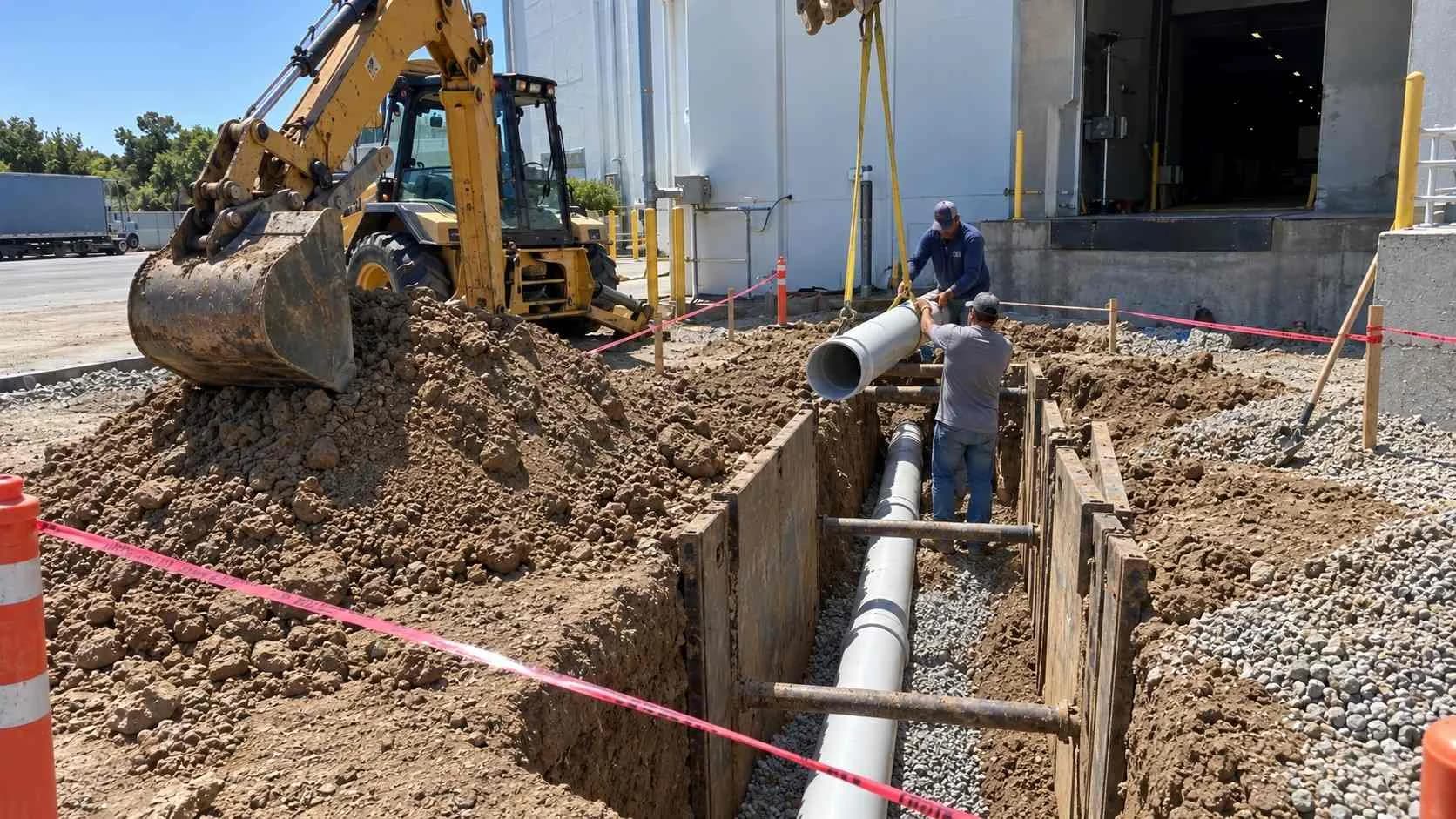
Sewer connection, in the most literal sense, is a utility and building permit question, does the facility’s plumbing physically tie into the municipal sewer system, sized correctly, with the right connection fees paid and the right inspections passed. This is largely an engineering and construction milestone, resolved through standard building department and public works processes that most developers are already familiar with from other utility connections.
Discharge authorization is a water quality regulatory question, administered by the POTW’s industrial pretreatment program under authority delegated from the federal Clean Water Act’s pretreatment regulations, and it asks a completely different question, is what this specific facility intends to actually put into the sewer, at the volume and pollutant concentration it will actually generate, something the POTW’s treatment plant and local limits can safely accommodate. A facility can pass every inspection required for physical connection and still not be authorized to discharge industrial wastewater, because that second question has not been answered yet, or has been answered with conditions the facility has not yet met.
What Actually Triggers Significant Industrial User Status and a Permit Requirement
Not every commercial or industrial facility connecting to a California sewer needs an SIU permit, the designation is triggered by specific flow and pollutant characteristics defined under federal pretreatment regulations and each POTW’s own local program, generally facilities discharging above a defined flow threshold, facilities subject to a federal categorical pretreatment standard for their specific industry, or facilities the POTW determines have reasonable potential to affect the treatment plant‘s operation or violate local limits even if they fall below the standard flow threshold. A food processor, a metal finishing operation, a chemical manufacturer, and a data center with substantial cooling tower blowdown can all end up designated as Significant Industrial Users, though through different pathways, categorical standards for some industries, flow or pollutant potential for others.
A facility uncertain whether it qualifies as an SIU needs that determination made early, directly with the local POTW’s pretreatment program, because the determination itself drives what permit application, sampling, and pretreatment requirements actually apply. A facility that assumes it falls below SIU thresholds without confirming that assumption with the POTW directly risks discovering the designation applies after all, at a point in the project timeline when responding to permit requirements takes considerably longer than it would have at the project’s outset.
Local Limits: The Standard the POTW Actually Reviews the Discharge Against
Every California POTW with an industrial pretreatment program maintains local limits, specific pollutant concentration and loading restrictions developed to protect the treatment plant’s biological and physical treatment processes from disruption, protect worker safety in the collection and treatment system, and ensure the plant’s effluent continues to meet its own NPDES permit limits for whatever receiving water it discharges to. These local limits are specific to each POTW, calculated based on that particular treatment plant’s capacity, its existing industrial discharger base, and the specific receiving water’s assimilative capacity, meaning a facility cannot assume the local limits that applied at a different location, even a similar facility type in a different California city, will match what a new POTW’s program actually requires.
A facility’s proposed discharge gets evaluated against these local limits as part of SIU permit review, and a discharge that would exceed one or more local limits without treatment cannot be authorized as proposed, full stop, regardless of how far along construction and equipment installation already are. This is why confirming the actual local limits early, and characterizing the facility’s expected discharge against them before finalizing a treatment or no-treatment assumption, is a genuinely load-bearing step in the project timeline, not a formality to complete once other design decisions are already locked in.
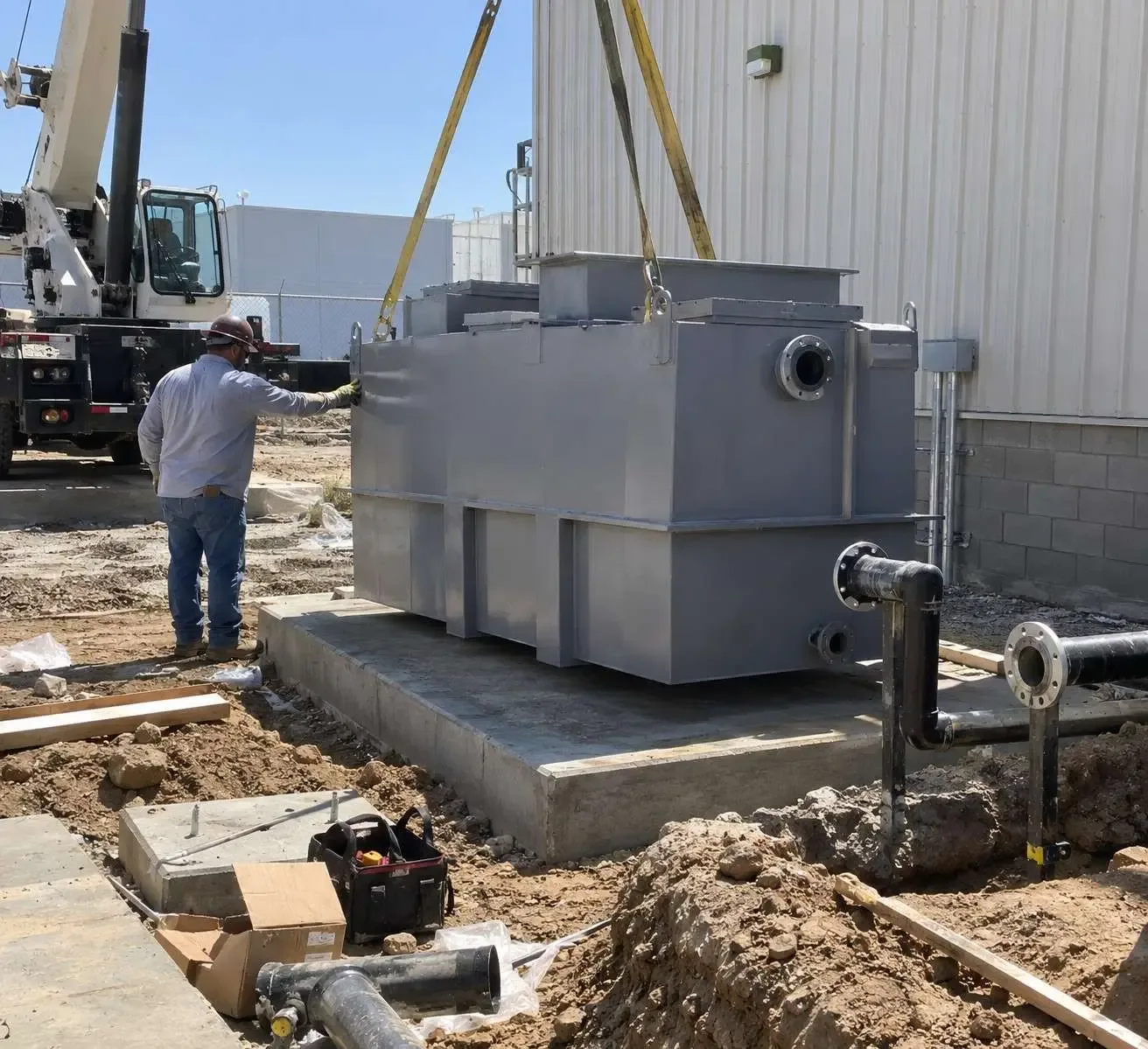
Pretreatment Equipment: What Happens When the Discharge Doesn’t Meet Local Limits As-Is
A facility whose characterized wastewater exceeds one or more local limits needs pretreatment, equipment and processes reducing pollutant concentrations to a level the local limits allow before the water reaches the sewer connection. This can range from relatively simple approaches, an oil and grease interceptor for a food service operation, to considerably more involved treatment systems for facilities with complex industrial process wastewater, and the specific pretreatment requirement depends entirely on what the facility’s actual discharge characterization shows relative to the specific local limits it needs to meet.
Pretreatment equipment has to be designed, procured, installed, and typically demonstrated as functioning correctly before the POTW will authorize discharge, which means pretreatment is not something that can be added after production starts if characterization later reveals it was needed all along. A facility that begins production, generates process wastewater, and only then discovers pretreatment is required has no legal path to discharge that wastewater in the interim, an operational problem with no fast solution, since pretreatment equipment procurement and installation takes real time that cannot be compressed simply because production is already underway and generating wastewater with nowhere authorized to go.
Sampling Plans and Ongoing Reporting: The Compliance Obligation That Continues After Startup
SIU permits typically require an ongoing sampling and reporting plan, periodic testing of the facility’s actual discharge to confirm continued compliance with local limits, reported to the POTW on a defined schedule. This is not a one-time startup requirement, it is a continuing operational obligation the facility carries for the life of its discharge, meaning the facility needs a real plan for who conducts sampling, how results get reported, and what happens if a sample shows an exceedance, before that scenario actually occurs rather than improvised in response to a first violation.
A facility that treats the sampling plan as a document to file and forget once the SIU permit is issued, without actually building the operational capability to execute it consistently, is setting up a compliance gap that surfaces eventually, typically at an inconvenient moment, an POTW inspection or an exceedance triggered by a process change that was never re-evaluated against the sampling plan’s assumptions.
Building the Discharge Authorization Timeline Into the Project Schedule From the Start
The industrial projects that avoid a startup delay are the ones that treat SIU determination, discharge characterization against local limits, pretreatment design where needed, and sampling plan development as parallel workstreams running alongside building design and construction, not as a permitting task that begins once the building is substantially complete. Confirming SIU status and characterizing expected discharge early enough to inform pretreatment equipment design, procurement, and installation timing, so that equipment is operational by the time production is ready to start rather than identified as a gap after production scheduling is already locked in, is the single biggest factor separating a facility that discharges on its intended startup date from one that sits fully built and unable to legally operate.
Frequently Asked Questions
Does connecting to a California sewer automatically authorize industrial wastewater discharge?
No. Physical sewer connection is a separate approval from discharge authorization. A facility generating industrial process wastewater needs review against the POTW’s local limits and, in most cases, an SIU permit before it can legally discharge that wastewater, regardless of whether the physical connection itself is complete.
How do I know if my facility needs an SIU permit?
SIU status is triggered by specific flow thresholds, applicable federal categorical pretreatment standards for certain industries, or a POTW determination that a facility’s discharge has reasonable potential to affect treatment plant operations or violate local limits. Confirming this directly with the local POTW’s pretreatment program, rather than assuming based on facility type alone, is the only reliable way to know.
What pretreatment equipment might my facility need before it can discharge?
It depends entirely on how the facility’s characterized wastewater compares to the specific POTW’s local limits, ranging from simple interceptors for facilities like food service operations to more involved treatment systems for complex industrial process wastewater. This cannot be determined without characterizing the actual expected discharge against the specific local limits that apply.
Can production start before an industrial discharge permit is issued?
Legally, no, if production generates wastewater the facility is not yet authorized to discharge. A facility with no authorized path to discharge process wastewater has no legal way to operate that generates it, which is why discharge authorization needs to be resolved before, not concurrent with, a planned production start date.
How does MES help avoid an industrial discharge permitting delay?
We confirm SIU status and characterize expected discharge against the specific local POTW’s limits early in project planning, design and coordinate procurement of any required pretreatment equipment on a timeline that aligns with construction and production scheduling, and build the sampling and reporting plan the facility needs to operate compliantly from its first day of authorized discharge.
Related Resources
- Significant Industrial User Designation: How a Texas Facility Gets Classified and What Changes
- Pretreatment Equipment Sizing for Texas Facilities Facing New Local Limits
- Self-Monitoring and Reporting Requirements for Texas Significant Industrial Users
- Enforcement Response Plans: How Texas POTWs Escalate Pretreatment Violations
Planning an Industrial Facility’s Sewer Discharge in California?
If your project’s production schedule assumes sewer connection means you’re ready to discharge, MES can confirm your SIU status, characterize your expected wastewater against the specific POTW’s local limits, and get pretreatment and sampling plans in place before startup, not after.
We specialize in:
- SIU status determination and POTW pretreatment program coordination
- Wastewater characterization against local limits specific to your discharging POTW
- Pretreatment equipment design and procurement timeline alignment with construction
- Sampling and reporting plan development for ongoing compliance
- SIU permit application preparation and submission
Modern Engineering Solutions, San Jose, California. Contact: (214) 833-6748 or mod-eng.com
Keep reading
More to read.
Talk to an engineer
Tell us about your project.
An engineer reads it
Not a salesperson. Someone who can tell you whether the pathway is real.
You get a first answer
Your options, the agencies involved and the questions that decide cost and schedule.
You decide
No commitment to have the first call.
Prefer the phone? (214) 833-6748