
Blog
Local Sewer Connection vs. State Permit: When a California SIU Permit Is the Faster Path
A sewer connection is often the fastest path to discharge in California, but it is not automatic. See when an SIU permit actually beats NPDES or a WDR.
Quick Answer
California industrial facilities generally have three regulatory paths for wastewater, an NPDES permit for direct discharge to a surface water, a Waste Discharge Requirement, a WDR, for discharge to land, or a local sewer connection under an industrial discharge or Significant Industrial User, SIU, permit issued by the local Publicly Owned Treatment Works, POTW, under its EPA-delegated pretreatment program. Of the three, a sewer connection with an SIU permit is often the fastest path to startup because it skips the state-level NPDES or WDR application and review process entirely, relying instead on the local POTW’s own permitting timeline. That speed advantage is real, but it is not automatic and it is not unconditional. The POTW still has to have available sewer capacity, the facility’s discharge still has to meet local limits and, if applicable, federal categorical pretreatment standards, and the facility may still need pretreatment equipment, ongoing sampling, and surcharge payments for the flow and pollutant loading it contributes. A facility that assumes sewer connection means no meaningful permitting timeline discovers otherwise when the POTW flags a capacity constraint or a local limit its wastewater does not meet.
Why Three Different Discharge Paths Exist in the First Place
NPDES, WDR, and local sewer connection under an SIU permit are not three versions of the same requirement with different processing speeds, they regulate three different discharge destinations. An NPDES permit, issued under the Clean Water Act and administered in California by the State and Regional Water Boards, authorizes direct discharge to a surface water, a stream, river, or other water of the state, and it requires the discharger to meet effluent limits protective of that specific receiving water. A WDR, issued under the state Porter Cologne Act, authorizes discharge to land, groundwater recharge, or land application, and it evaluates soil, groundwater, and site specific conditions the way we described for parcels without sewer access.
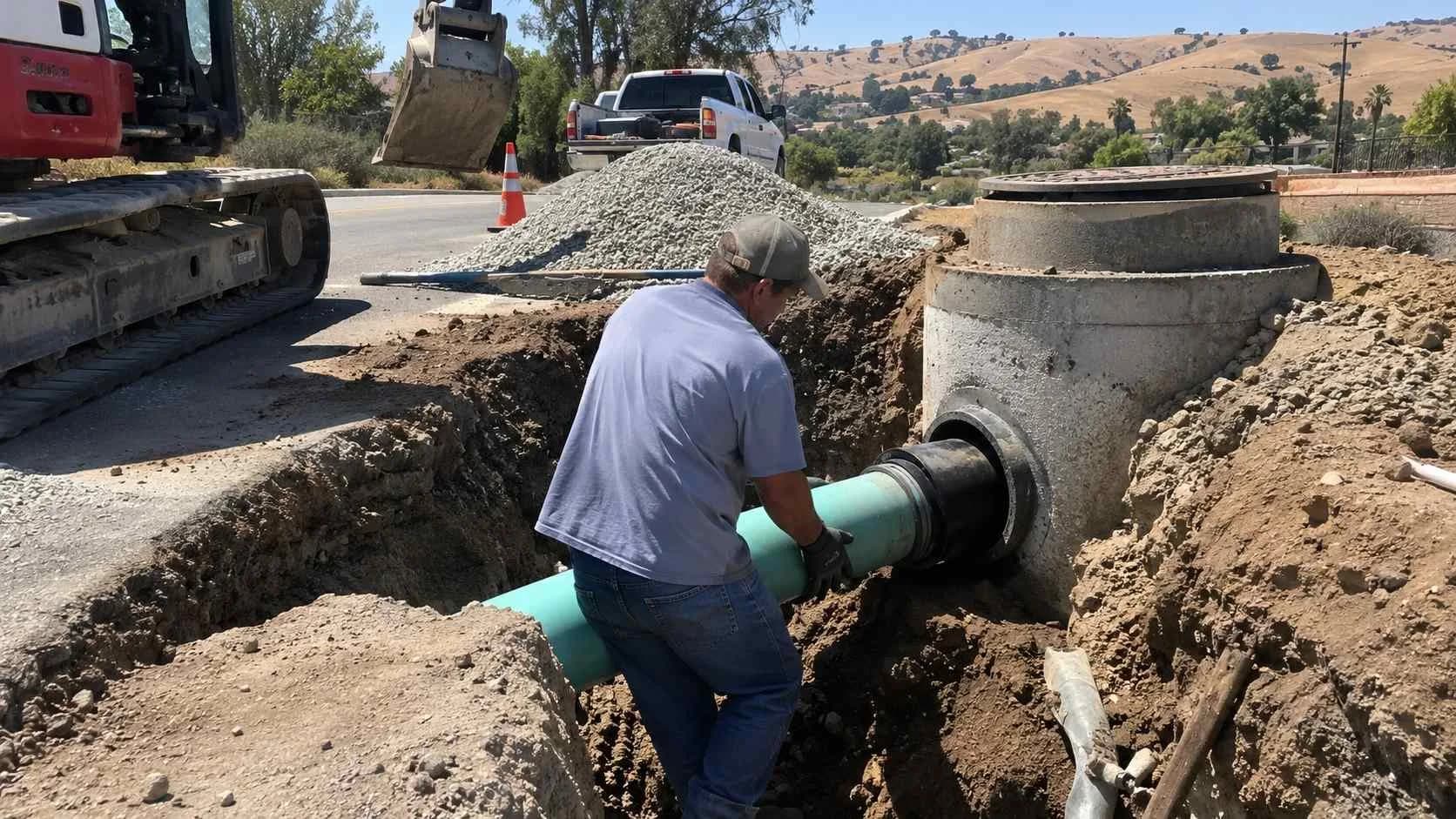
A sewer connection avoids both of those state level review processes because the facility is not discharging directly to a surface water or to land at all, it is discharging to a sewer system that carries the wastewater to a POTW for treatment before that treated effluent is eventually discharged under the POTW’s own NPDES permit. That is why the local pretreatment program, not a state permit, governs the facility’s discharge in this scenario, and why the review sits with the POTW’s control authority rather than the Regional Water Board. Understanding which of the three destinations actually applies to a given project is the first decision that determines everything about the permitting timeline that follows.
Why Sewer Connection Is Often, But Not Always, the Faster Path
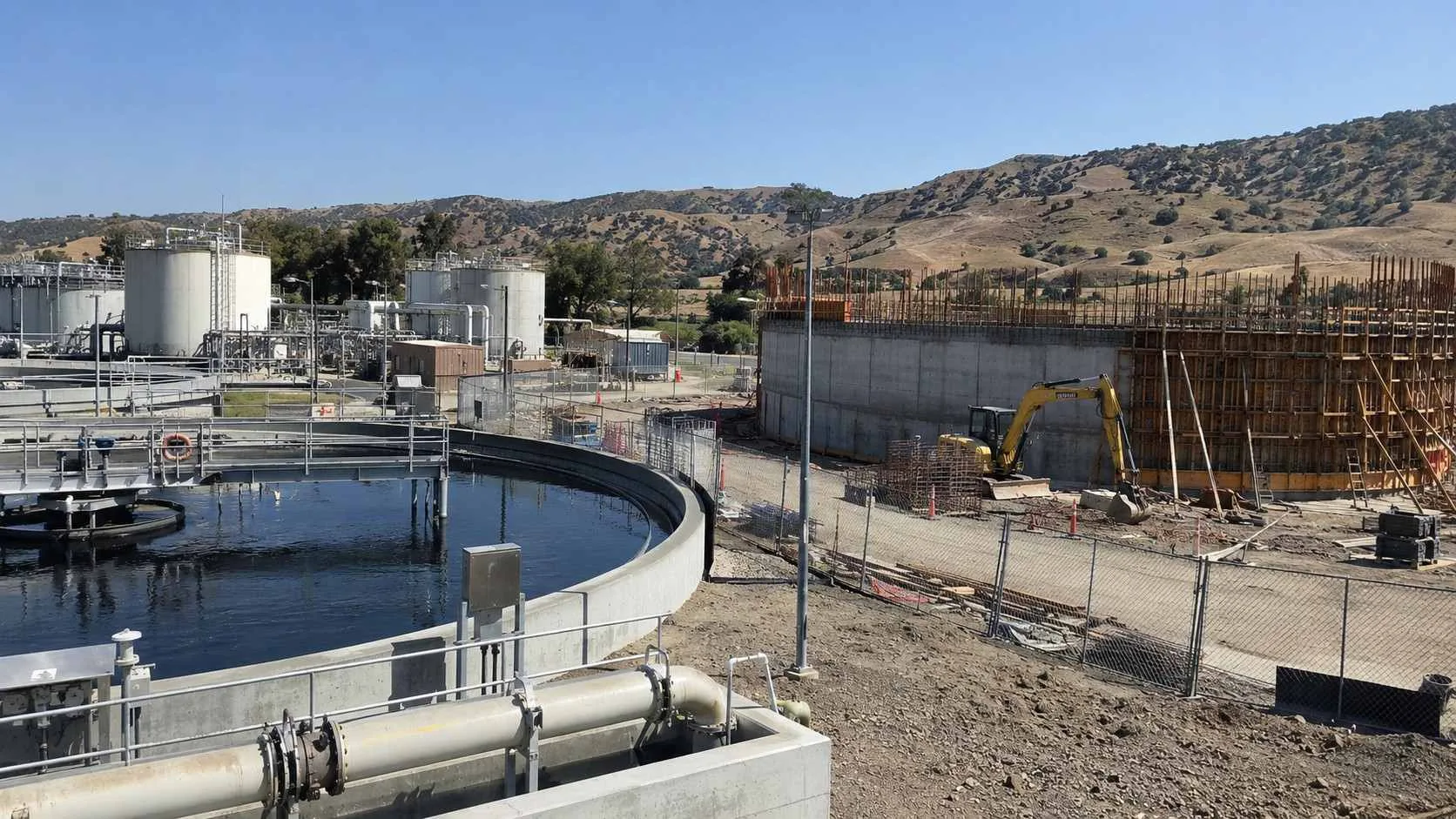
The core reason a sewer connection tends to move faster is that the POTW’s pretreatment program review, notification, questionnaire, characterization, and permit issuance, is generally a shorter process than a full NPDES application with its own effluent limit modeling against a receiving stream, or a WDR review with its own hydrogeologic and soil suitability analysis. A facility discharging to sewer is relying on the POTW’s already permitted treatment capacity rather than building or permitting its own path to final discharge, which removes an entire layer of state level technical review from the facility’s own critical path.
This speed advantage depends on real conditions holding true, though. The POTW has to have sewer capacity, both hydraulic capacity in the collection system and treatment capacity at the plant, to accept the facility’s projected flow without requiring capital improvements first. A facility proposing a large flow increase in an area where the local sewer system is already near capacity can face a genuinely longer timeline than a comparable NPDES or WDR path, because the POTW may need to evaluate capacity upgrades, capacity fees, or in some cases decline to accept new significant industrial flow until infrastructure catches up. Confirming actual available capacity with the specific POTW, not assuming it based on the presence of a nearby sewer line, is the first real diligence step, not a formality.
What a Sewer Connection Still Requires: Local Limits, Pretreatment, and SIU Status
A sewer connection is not an unregulated path, it replaces one set of requirements with another. Every POTW sets local limits, discharge concentration limits for specific pollutants calculated to protect the POTW’s own treatment process and its NPDES permit compliance, and a facility’s wastewater has to meet those local limits regardless of whether a federal categorical pretreatment standard also applies. A facility whose process wastewater exceeds local limits for a specific pollutant needs pretreatment equipment sized to meet that limit before discharge, and sizing that equipment correctly requires the same wastewater characterization work described for the pre discharge notification and questionnaire process at any POTW.
SIU status specifically applies to facilities meeting certain flow or pollutant contribution thresholds, or facilities subject to a federal categorical pretreatment standard for their industry, and SIU status brings added monitoring, self reporting, and inspection obligations beyond what a smaller, non significant industrial discharger faces. A facility does not choose whether it is an SIU, the POTW’s control authority determines that based on the industrial wastewater questionnaire and characterization data, the same determination process described in evaluating the ninety day compliance report requirement for categorical users. Surcharges, additional fees the POTW charges industrial users whose flow or pollutant loading exceeds typical domestic wastewater characteristics, are a separate ongoing cost that applies independent of whether SIU status attaches, and facilities that do not model surcharge cost into their operating budget are underestimating the real cost of the sewer path even when it is genuinely the faster permitting route.
When the State Permit Path Still Applies Despite Sewer Availability
A nearby sewer line does not automatically mean sewer connection is the right or even available path. Some POTWs decline to accept certain industrial waste streams entirely, particularly wastewater with characteristics that are difficult or costly for the POTW’s treatment process to handle, regardless of whether the facility is willing to pretreat to a high standard. In those cases, the facility is pushed toward an NPDES or WDR path not because it is faster or slower, but because the POTW is simply not a viable destination for that specific discharge.
Distance and cost of extending a sewer connection to the facility’s actual location is the other practical constraint that can make a state permit path more attractive even when sewer service exists somewhere in the area. A facility located far from the nearest sewer main may face extension costs and timelines that exceed what an NPDES or WDR process would cost, at which point the comparison is not about permitting speed alone but about total project cost and schedule across infrastructure and permitting combined. Evaluating both dimensions together, not permitting timeline in isolation, is what actually determines the faster overall path for a specific site.
Comparing the Real Cost and Timeline Across All Three Paths
The honest comparison between sewer connection, NPDES, and WDR requires looking at total cost and schedule, not just the state permit review timeline in isolation. A sewer connection avoids state-level permitting review but adds connection fees, capacity fees if applicable, ongoing surcharges, and pretreatment equipment cost sized to local limits. An NPDES permit avoids sewer connection and surcharge costs entirely but requires a longer state-level review process and its own effluent limit compliance obligations tied to a receiving stream. A WDR sits in its own category entirely, tied to land disposal feasibility the way we described for sites without sewer access, and is rarely a faster path than sewer connection when sewer is genuinely available and has capacity.
For most industrial facilities with sewer access and adequate local capacity, the sewer connection path remains the faster route to startup, but “faster” has to be measured against a realistic accounting of the POTW’s own questionnaire, characterization, and permit issuance timeline, not against an assumption that connecting to an existing line requires no meaningful review at all. Facilities that model this comparison early, before committing to a site or a production schedule, are the ones that avoid discovering a capacity constraint or a local limit exceedance after equipment is already ordered.
Frequently Asked Questions
When is a local sewer connection actually faster than pursuing a state NPDES or WDR permit?
When the POTW has confirmed available hydraulic and treatment capacity for the facility’s projected flow, and the facility’s wastewater characteristics can reasonably meet local limits with feasible pretreatment. Under those conditions, POTW pretreatment program review is typically shorter than a full NPDES or WDR state-level review.
What does an SIU permit actually require beyond a basic sewer connection?
SIU status brings added monitoring and self reporting obligations, periodic sampling requirements, and inspection access for the POTW’s control authority, on top of whatever local limits and pretreatment requirements apply to any industrial discharger. Facilities subject to a federal categorical pretreatment standard face additional reporting layered on top of SIU obligations.
Does connecting to a sewer mean a facility does not need pretreatment equipment?
Not necessarily. A facility still has to meet the POTW’s local limits for its specific pollutants, and if its untreated wastewater would exceed those limits, pretreatment equipment sized to meet them is required before discharge, regardless of the fact that final treatment happens at the POTW rather than onsite.
When does a state permit path still apply even if a sewer line is nearby?
When the POTW declines to accept the specific waste stream, when sewer capacity is unavailable without costly infrastructure upgrades, or when the distance and cost of extending a connection to the facility’s actual location exceeds what an NPDES or WDR path would cost on a total project basis.
How does MES help a facility decide between sewer connection and a state permit path?
We evaluate the specific POTW’s capacity and local limits against the facility’s projected discharge, size pretreatment equipment to whichever standard actually applies, and compare total cost and schedule across sewer connection, NPDES, and WDR paths before the facility commits to a site or production timeline based on an assumption about which path is faster.
Related Resources
- The 90 Day Rule: What California Industrial Users Must Do Before Discharging to a Sewer
- Permitting Land Application: Choosing Between WDRs and Recycled Water Rules
- 210E Vs TPDES Discharge Permit: A Side by Side Comparison
- The 330 Day Timeline: Why Texas Wastewater Permits Take Longer Than Developers Expect
Comparing Sewer Connection Against a State Discharge Permit?
If your facility has sewer access nearby and has not confirmed actual POTW capacity, local limits, or SIU status, MES can run that comparison against an NPDES or WDR path before your production schedule assumes one is faster than it actually is.
We specialize in:
- POTW capacity and local limits verification for your specific discharge
- SIU status determination and pretreatment sizing to the correct standard
- NPDES and WDR feasibility comparison when sewer access is uncertain or costly
- Total cost and schedule modeling across all three discharge paths
- Wastewater characterization and questionnaire preparation for POTW submission
Modern Engineering Solutions, San Jose, California. Contact: (214) 833-6748 or mod-eng.com
Keep reading
More to read.
Talk to an engineer
Tell us about your project.
An engineer reads it
Not a salesperson. Someone who can tell you whether the pathway is real.
You get a first answer
Your options, the agencies involved and the questions that decide cost and schedule.
You decide
No commitment to have the first call.
Prefer the phone? (214) 833-6748