
Blog
Why Does My Community Have Brown Water?
Brown tap water usually means iron or manganese from old mains or the source, and here is what causes it, when to worry and how utilities fix it.
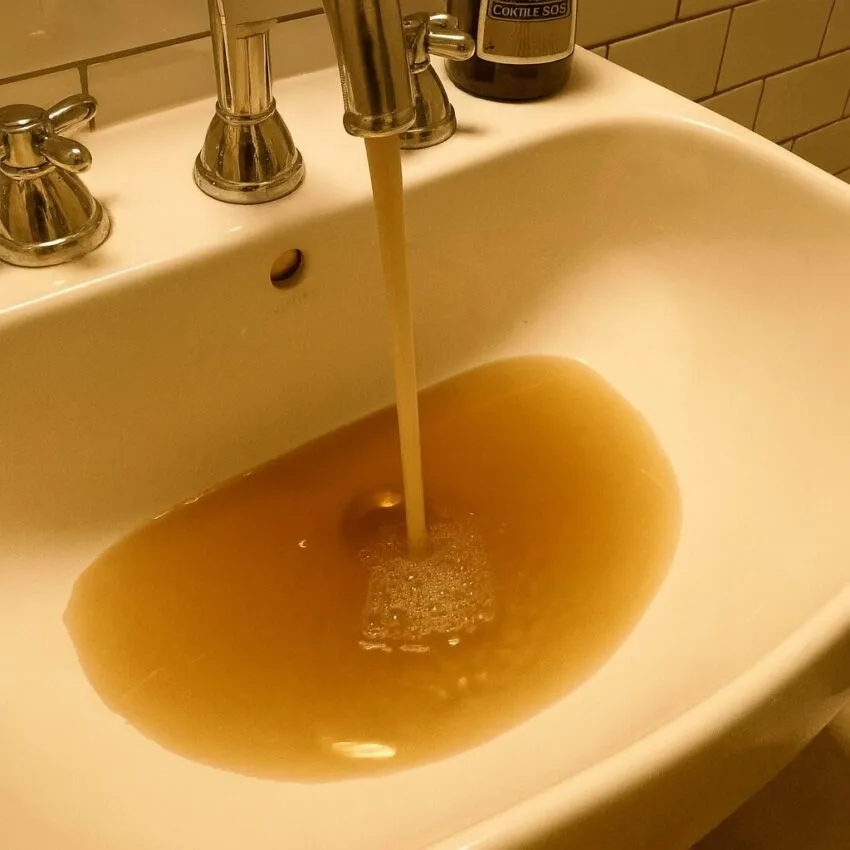
Your community has brown water because iron or manganese is reaching the tap, either as rust and scale knocked loose inside old water mains or as metals in the source water that turn into particles after treatment. Brown tap water usually shows up right after a main break, hydrant use, flushing or a sudden pressure change. Most of the time it is a nuisance rather than a health threat, but brown water that keeps coming back needs more than flushing.
What causes brown water in a community water system?
Iron and manganese, from one of two places: the pipes or the source. Which one you have decides the fix.
How do old water mains turn water brown?
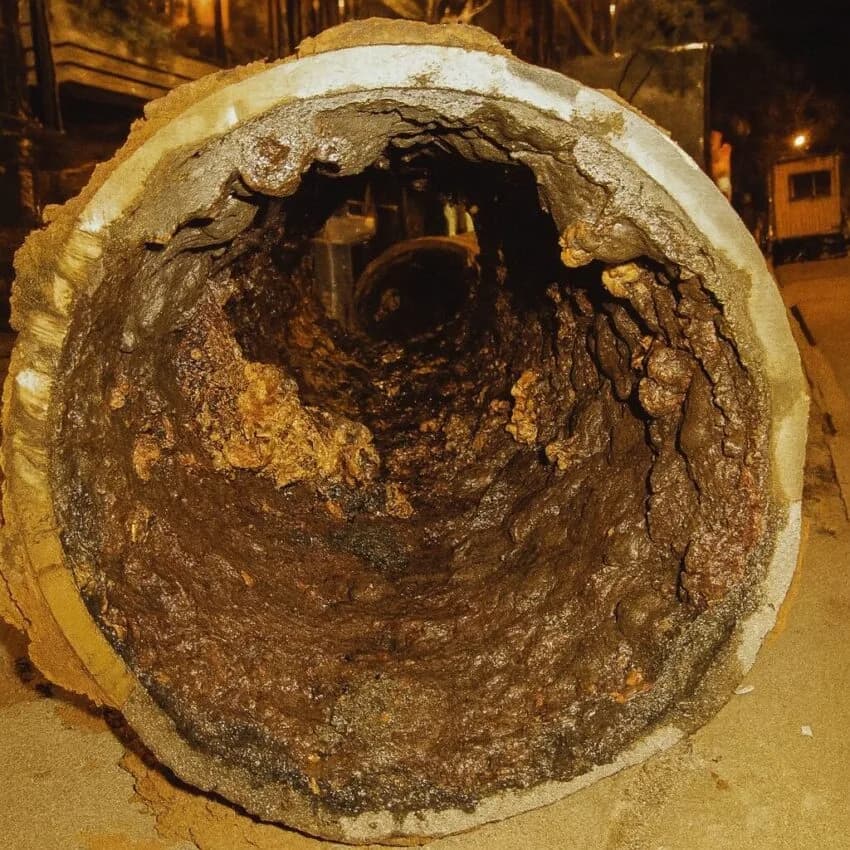
Unlined iron pipe corrodes, and the rust builds up as scale on the pipe wall. Under steady flow most of it stays put. Change the flow and it moves. EPA's corrosion control treatment guidance for water systems (March 2016, updated) says high water velocity can mobilize loosely adherent scale, and it traces pressure transients to valves closed for maintenance, valves slamming shut, power outages and pump starts and stops. After repairs such as a main break, air in the lines can scour deposits on the way to the tap.
That is why brown water so often follows a fire, a hydrant test or a main repair: the flow jumps and loose scale rides it to the next open tap.
How does the source water turn brown?
The same EPA guidance says iron and manganese are present in many groundwater sources and in the lower depths of some thermally stratified lakes and reservoirs. Dissolved, they are invisible. Chlorine and dissolved oxygen oxidize them into particles that cause what EPA calls black and red water complaints. Raising pH speeds that up, so raising pH for lead and copper control can bring red or black water complaints.
Why do dead ends and quiet streets get it worst?
Water that sits gets older. EPA's guidance says water age from low use can lower pH and cost you the free chlorine residual, which can make corrosion worse. TCEQ's distribution design rule, 30 TAC §290.44(d)(5) and (6), pushes against this: valves and blowoffs to flush the system, effective circulation with a minimum of dead ends, and flush valves with discharge piping on dead-end mains. They govern new Texas water distribution design and make a good yardstick for older systems.
How can you tell where the brown water is coming from?
Timing, color and who else has it point to the pipe, the source or the building.
- Sudden and neighborhood-wide after a main break, fire or hydrant work: disturbed scale in the mains.
- The same streets over and over: old mains, dead ends or low-use areas where water sits.
- Rusty water and reddish or orange stains: iron, per EPA's secondary drinking water standards.
- Black or dark brown water with black stains: manganese, by the same EPA list.
- Clear from the tap, brown after it stands: dissolved iron oxidizing, which the Minnesota Department of Health's guide to iron in well water calls clear-water iron.
- Only one building, or only the hot tap: check that building's plumbing and water heater before blaming the main.
Is brown tap water safe to drink?
Usually it is an aesthetic problem, not a health one. Manganese and lead are the two reasons not to wave it off.
EPA's secondary standards set iron at 0.3 mg/L, manganese at 0.05 mg/L and color at 15 color units. EPA does not enforce them and says these contaminants are not considered a health risk at those levels.
Manganese has a health number too. EPA's 2004 drinking water health advisory for manganese sets a lifetime advisory of 0.3 mg/L against potential neurological effects and a ten-day advisory of 1 mg/L, but for infants younger than 6 months it advises 0.3 mg/L even for ten days.
Then there is lead. EPA's corrosion guidance reports that iron and manganese rich scale can capture lead released upstream and hold it as a long-term source, and that disturbed scale can release lead and copper. If lead service lines remain, ask about lead too.
For residents: call the utility first; it knows whether a break, fire or flushing is underway. Clear the line with cold taps; running hot water pulls the discolored water into the heater. Hold the laundry, since iron and manganese stain. Mixing infant formula with another water source until the tap runs clear is a sensible precaution.
What should a water utility do about recurring brown water?
Treat every complaint as data, find where complaints cluster, and fix the cause there. Flushing alone treats the symptom.
Start with the log. TCEQ's operating rule, 30 TAC §290.46, already requires Texas systems to record the date, location and nature of water quality complaints and the results of each investigation. Map them and the problem areas show up.
Flush on purpose. Section 290.46(l) requires dead-end mains flushed monthly, and mains flushed as needed when customers complain or disinfectant residuals drop. A planned one-way sequence, from clean pipe toward dirty pipe, removes more than opening hydrants at random.
Treat the source if the source is the problem. EPA's guidance names two standard approaches: remove iron and manganese at the plant, commonly by aeration or chlorination followed by filtration, or sequester them. It prefers removal where possible and warns that sequestering agents such as polyphosphates may cut red and black water complaints but may also raise lead and copper at the tap.
Slow the corrosion. EPA notes that corrosion inhibitors, mostly phosphate based, also protect iron pipe, and that starting one or changing pH can bring temporary red water as old scale sloughs off. Run any chemistry change through a corrosion control review.
Then fix the pipe the data points to: rank mains by complaint history, age and material, loop dead ends where streets allow, and replace unlined iron where failures repeat. A calibrated hydraulic model shows where water sits. One small example is a mobile home park waterline replacement; more is on our page for utilities and municipalities.
Is your system ready to stop chasing brown water calls?
Answer yes or no. Two or more no answers mean you are still guessing; get the data before you pick a fix.
- Do you log every water quality complaint with the date, location and what the customer saw?
- Can you map those complaints against mains, valves, hydrants and dead ends?
- Do you know the material and rough age of the mains in your worst areas?
- Do you have recent iron and manganese results from each source and from problem taps?
- Do you flush on a written plan?
- Do you know whether lead service lines remain where the brown water shows up?
Then ask your engineer: is the color coming from the pipe or the source? Which mains fail first and hurt the most customers? What would a chemistry change do to lead, copper and the scale already in the pipes?
A note on limits: this is general education from public sources, current as of October 2026. Texas rules apply only in Texas, and your engineer, lab results and state drinking water program have the final word.
Frequently asked questions
Does the EPA require utilities to fix brown water?
Not directly. EPA does not enforce its iron, manganese and color levels, and the federal secondary standards rule, 40 CFR 143.3, lets states set higher or lower ones. Texas's secondary constituent rule, 30 TAC §290.118, makes an exceedance a violation to disclose to new customers and in the annual Consumer Confidence Report, and bars using such water for public drinking water without the TCEQ executive director's written approval.
Can a system pass its iron tests and still have brown water?
Yes. In Texas, Section 290.118 requires sampling each groundwater source once every three years, and each surface water source annually, at the entry point to the distribution system. That sample sees what leaves the well or plant, not the scale already in the mains.
I manage a small water supply corporation in Texas, and the same few streets call in brown water every couple of weeks. Where should we start?
Map the complaint records you already keep. If the calls sit on dead ends, confirm the monthly flushing is happening and ask whether those lines can be looped. Then sample iron and manganese at the entry point and at the problem taps to separate pipe from source.
I'm on the board of a small Colorado mountain town, and parents are asking whether the brown water after hydrant testing is safe for their kids. What can we honestly tell them?
That EPA covers iron under its secondary standards for nuisance chemicals, set for color, staining and taste, and that its manganese advisory is stricter for infants younger than 6 months. Then get data: ask your utility to sample iron, manganese and, where lead service lines remain, lead during the next event.
Related resources
- Aging Infrastructure and Regulatory Changes in Small Water Systems
- Managing Colorado’s Aging Water Infrastructure Using Key Strategies
- Why EPANET Is the First Choice for Water Network Modeling
- Optimizing Small Water Treatment Plants Tips and Tricks for Rural Providers
Brown water calls coming from the same streets?
Send us your complaint log, a system map and your latest iron and manganese results. We will help you sort pipe from source and turn it into a ranked list of fixes your board can act on.
Modern Engineering Solutions, McKinney, Texas, with offices in Golden, Colorado and San Jose, California. 525+ projects completed.
Talk to an engineer about your water system or call (214) 833-6748.
Keep reading
More to read.
Talk to an engineer
Tell us about your project.
An engineer reads it
Not a salesperson. Someone who can tell you whether the pathway is real.
You get a first answer
Your options, the agencies involved and the questions that decide cost and schedule.
You decide
No commitment to have the first call.
Prefer the phone? (214) 833-6748