
Blog
Coastal Water Authority Raw Water Contracts: What Industrial Users in the Houston Ship Channel Need to Know
A CWA raw water contract is just the start. Treatment, reuse, and wastewater discharge strategy must be planned together before site selection is locked in.
Quick Answer
Coastal Water Authority raw water contracts establish the terms under which industrial users in the Houston Ship Channel and surrounding coastal industrial corridor can draw untreated raw water for cooling, process, fire protection, and other industrial uses, and these contracts define contracted capacity, delivery terms, and cost structure that a facility’s engineering team needs to evaluate against actual projected water demand across every use category the facility requires, not just an aggregate estimate. Because raw water delivered under a CWA contract requires treatment before most industrial uses and generates wastewater that requires its own discharge or reuse strategy, raw water contract planning cannot be separated from treatment infrastructure design, wastewater permitting, and reuse evaluation, and all of these pieces affect site selection, capital budgeting, and expansion strategy well before a facility reaches construction. Industrial users evaluating a new or expanded Ship Channel facility should coordinate raw water contract capacity, treatment infrastructure needs, and wastewater strategy as a single integrated planning exercise during initial site and process evaluation, not as sequential steps addressed one at a time as the project moves forward.Why Raw Water Supply Is a Site Selection Issue, Not Just a Procurement Detail
A Houston Ship Channel site’s proximity to Coastal Water Authority raw water infrastructure and the availability of adequate contracted capacity at that location directly affects whether a specific parcel can actually support the water demand a proposed industrial facility requires, making raw water availability and contract feasibility a site selection criterion on par with rail access, pipeline connectivity, or road infrastructure rather than a downstream procurement task to resolve once a site is already selected. A facility that selects a site based primarily on other logistics criteria and only later evaluates raw water availability risks discovering that the site’s actual raw water access requires more extensive intake or connection infrastructure, or carries more constrained contracted capacity, than a site evaluated with raw water access as a primary criterion from the outset would have presented.
Contract Capacity and Matching Supply to Actual Industrial Process Demand
Determining the contracted raw water capacity a facility actually needs requires a detailed accounting of every water-consuming process within the facility, including cooling water demand, which for many Ship Channel petrochemical and manufacturing operations represents the largest single water use category, process water demand specific to the facility’s manufacturing operations, and fire water demand sized to meet the facility’s fire protection system requirements under applicable code and insurance underwriting standards. Underestimating any of these categories when negotiating contracted capacity with Coastal Water Authority can leave a facility without adequate raw water access to support full operations, while overestimating capacity can mean paying for contracted volume the facility never actually uses, making an accurate, process specific demand projection a necessary input to contract negotiation rather than a rough estimate refined later.

Treatment Requirements Between Raw Water Delivery and Actual Use
Raw water delivered under a Coastal Water Authority contract is untreated, meaning a facility receiving this water needs its own treatment infrastructure appropriate to each specific use, since cooling water, process water, and any potable or near potable use within the facility each carry different treatment requirements, and a single treatment approach rarely serves all of a facility’s raw water use categories adequately. Designing this treatment infrastructure requires confirming the raw water’s actual quality characteristics as delivered to the specific facility location, since water quality can vary somewhat depending on source and delivery point, and sizing treatment capacity to the facility’s full projected demand across all use categories rather than an average or aggregate estimate that might understate peak treatment demand during periods of maximum facility operation.
Cooling Water, Fire Water, and Reuse as Interconnected Design Decisions
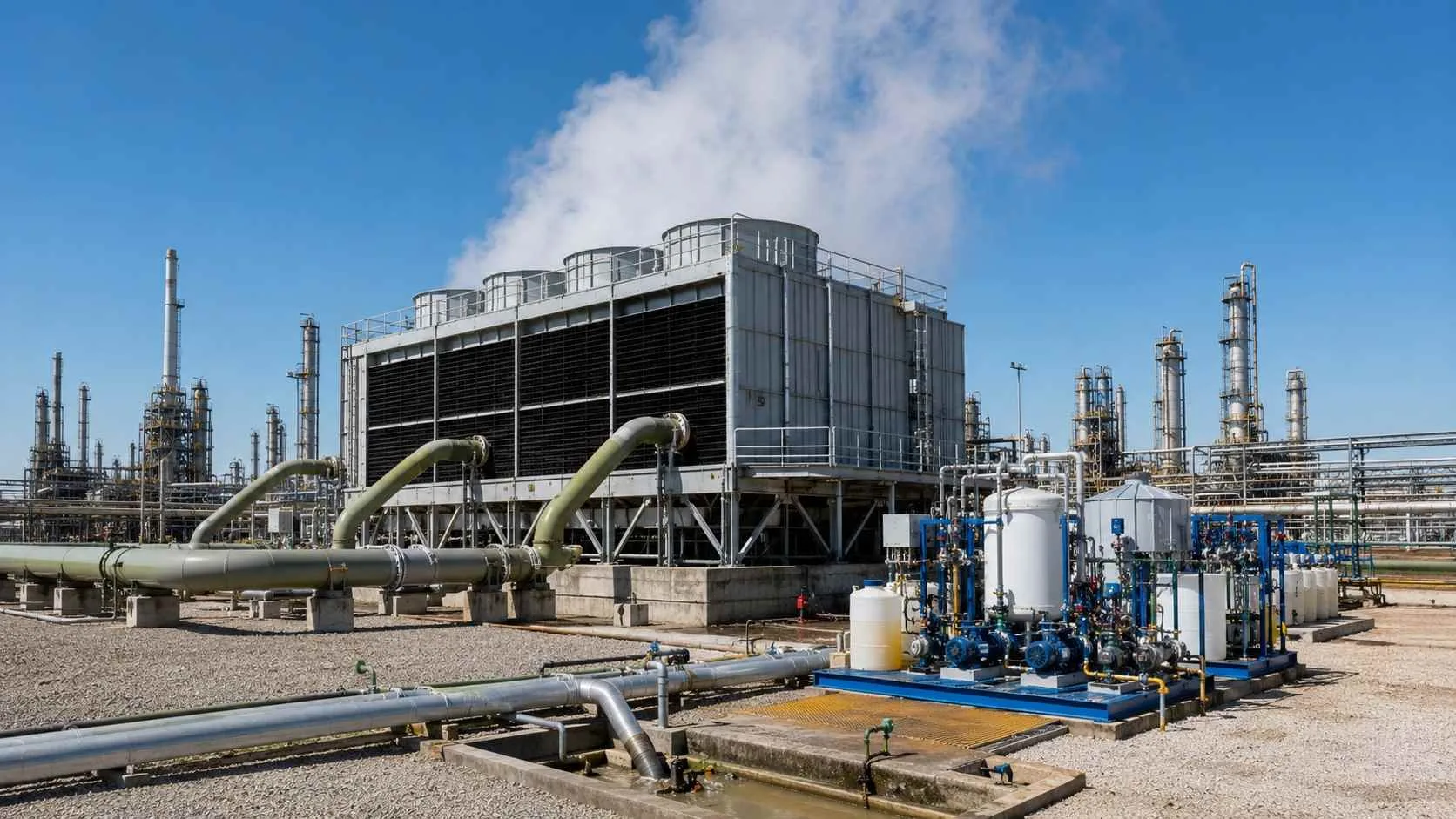
Cooling water systems, particularly recirculating cooling systems common in Ship Channel industrial facilities, can be designed to reduce overall raw water demand through reuse and cycles of concentration optimization, and evaluating this reuse potential during initial process design, rather than defaulting to a once through or minimally optimized cooling water approach, can meaningfully reduce a facility’s total contracted raw water capacity need and associated long term utility cost. Fire water demand, while typically a smaller portion of total facility water use than cooling or process water, still requires dedicated storage and delivery infrastructure sized to code required flow and duration, and this fire water storage and delivery system needs to be integrated into the facility’s overall raw water and treated water infrastructure plan rather than designed as an entirely separate system disconnected from the facility’s other water infrastructure.
Reuse strategies extending beyond cooling water, including evaluating whether treated process wastewater can be reused for certain non potable applications within the facility before discharge, follow similar principles to reclaimed water reuse evaluation relevant to Chapter 210 planning in other contexts, adapted here to an industrial facility’s specific internal reuse opportunities, and this evaluation can reduce both raw water demand and wastewater discharge volume simultaneously, a dual benefit worth evaluating during process design rather than after a facility’s water and wastewater systems are already finalized.
Wastewater Discharge Strategy as the Other Half of the Water Balance
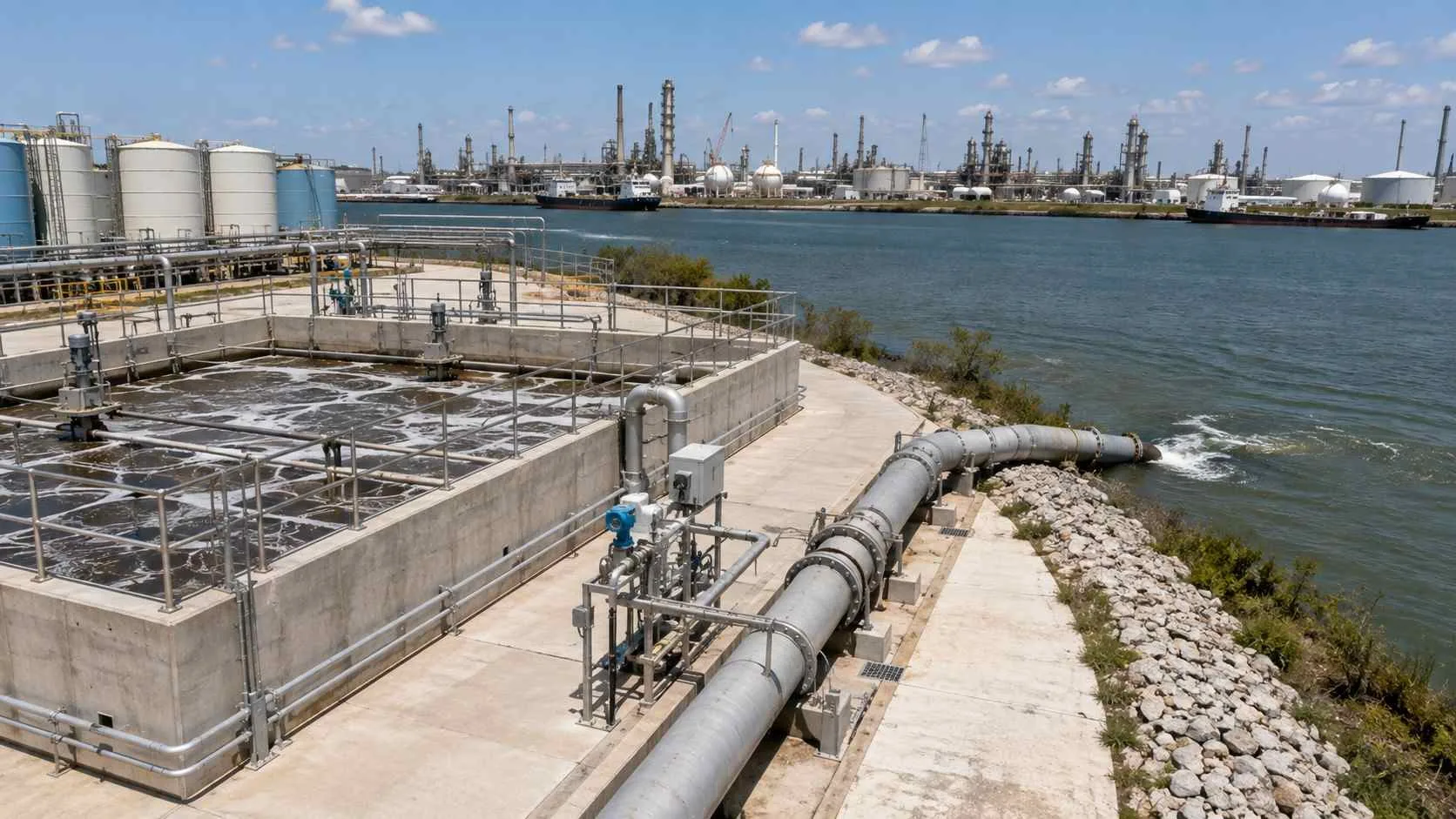
A facility’s raw water demand and its wastewater discharge strategy are two sides of the same water balance, and evaluating discharge strategy, whether through a TPDES permitted direct discharge, coordination with a regional wastewater treatment provider, or an on site treatment and reuse approach that reduces discharge volume, needs to happen alongside raw water contract and treatment planning rather than as a separate downstream permitting task. Industrial wastewater discharge to the Ship Channel or connecting waterways carries specific permitting requirements tied to the facility’s specific process wastewater characteristics, and confirming what treatment is required before discharge, and what discharge permit limits apply given the facility’s specific location and receiving water body, should inform the facility’s overall water and wastewater infrastructure design from the outset.
Drought Planning and Redundancy for Operational Reliability
Raw water availability under a Coastal Water Authority contract can be affected by regional drought conditions and associated water availability constraints, and an industrial facility with continuous process operations that cannot tolerate a water supply interruption should evaluate what redundancy or drought contingency planning its raw water contract and overall water infrastructure strategy provides, including whether storage capacity, an alternative supply arrangement, or specific contract provisions address drought-related supply reduction scenarios. This evaluation matters most for facilities where a water supply interruption would create significant operational or safety consequences, making redundancy planning a risk management exercise directly tied to the facility’s specific process criticality, not a generic add-on applied uniformly across every industrial water system regardless of actual operational risk.
Capital Budgeting and Long Term Utility Cost Across the Full System
The total capital cost of establishing raw water supply for a new or expanded Ship Channel facility extends well beyond the raw water contract’s own cost structure, encompassing intake or connection infrastructure to the Coastal Water Authority system, treatment infrastructure for each use category, cooling water system design and any reuse infrastructure, fire water storage and delivery systems, and wastewater treatment and discharge infrastructure, and this full infrastructure cost needs to be evaluated together during capital budgeting rather than estimated primarily around the raw water contract cost with other infrastructure treated as a smaller, secondary cost category. Long term operational cost similarly depends on the full system’s efficiency, including how effectively reuse and cycles of concentration optimization reduce ongoing raw water demand relative to a less optimized system design, making these efficiency considerations directly relevant to the facility’s long term utility cost, not just its upfront capital cost.
What This Means for Expansion Strategy
A facility planning future expansion should evaluate whether its current raw water contract capacity, treatment infrastructure, and wastewater discharge permitting have adequate headroom to support anticipated future growth, or whether expansion will require renegotiating contracted capacity, expanding treatment infrastructure, or modifying discharge permits, and building this expansion evaluation into the facility’s initial infrastructure planning, even where near term expansion isn’t yet committed, can meaningfully reduce the cost and schedule impact of a future expansion relative to a facility whose initial infrastructure was sized with no consideration for future growth.
Frequently Asked Questions
How do we determine the right contracted raw water capacity to negotiate with Coastal Water Authority for a new facility whose exact process demand isn’t yet fully finalized?
This requires developing a process specific water demand projection based on your facility’s proposed process design, cooling system approach, and fire protection requirements as early in design as possible, since negotiating contract capacity based on a rough industry benchmark rather than your facility’s actual projected demand risks either inadequate capacity for full operations or unnecessary cost from over-contracting capacity you won’t use.
Can reuse and cycles of concentration optimization in our cooling water system meaningfully reduce our required raw water contract capacity, or is the potential savings usually marginal?
The potential reduction varies by facility and cooling system design, but for many Ship Channel industrial facilities with significant cooling water demand, optimized reuse and cycles of concentration can represent a meaningful reduction in total raw water demand, making this evaluation worth a dedicated engineering analysis specific to your facility’s cooling system rather than an assumption that reuse potential is negligible without confirming it for your specific operation.
Does our wastewater discharge strategy need to be finalized before we negotiate our raw water contract, or can these be sequenced separately?
These should be evaluated together even if formal permitting and contracting occur on separate timelines, since your facility’s water balance, how much raw water you bring in versus how much wastewater you discharge or reuse, directly connects these two sides of your infrastructure plan, and finalizing raw water contract capacity without a clear wastewater strategy risks a mismatch between what you’ve contracted to receive and what your discharge permitting and infrastructure can actually accommodate.
Related Resources
- Land Application Permits in Texas: A Faster Path to Wastewater Approval for Developers
- Groundwater Reduction Plans: What the Harris Galveston Subsidence District Requires Before You Drill a Well
- San Jacinto River Authority Surface Water Conversion Contracts: What They Mean for a MUD’s Capital Plan
- The Integrated Pipeline Project: What Tarrant Regional Water District’s Raw Water Supply Plan Means for Fast Growing Western Suburbs
Planning Raw Water Supply and Wastewater Infrastructure for a Houston Ship Channel Facility?
MES works with industrial users, manufacturers, and developers to evaluate raw water demand across cooling, process, and fire protection needs, coordinate Coastal Water Authority contract capacity with treatment and reuse infrastructure, design wastewater discharge strategy, and reduce risk before major capital decisions are made.
We specialize in:
- Process specific raw water demand projection for cooling, process, and fire protection needs
- Treatment infrastructure design matched to raw water quality and facility specific use categories
- Cooling water reuse and cycles of concentration optimization to reduce contracted capacity needs
- Industrial wastewater discharge strategy and TPDES permitting coordinated with raw water planning
- Drought contingency and redundancy planning for continuous process industrial operations
- Capital budgeting and expansion-ready infrastructure sizing for Houston Ship Channel facilities
Modern Engineering Solutions, Houston, Texas. Contact: (214) 833-6748 or mod-eng.com
Keep reading
More to read.
Talk to an engineer
Tell us about your project.
An engineer reads it
Not a salesperson. Someone who can tell you whether the pathway is real.
You get a first answer
Your options, the agencies involved and the questions that decide cost and schedule.
You decide
No commitment to have the first call.
Prefer the phone? (214) 833-6748