
Blog
Dallas Water Utilities Impact Fee Structure for Infill Redevelopment: What Changes When You’re Rebuilding Inside the Loop
Dallas infill redevelopment utility costs do not follow greenfield logic. Learn how impact fees, meter upsizing, and aging mains change your pro forma before you close.
Quick Answer
Dallas Water Utilities’ impact fees and utility connection costs for infill redevelopment are calculated based on the increased demand a new use or increased density places on water and wastewater infrastructure relative to the site’s prior use, meaning a redevelopment project intensifying a site’s use, whether converting a smaller commercial building to multifamily, adding density to an existing structure’s footprint, or replacing an underused property with a higher-intensity building, can trigger impact fees, meter upsizing costs, and in some cases mandatory infrastructure upgrades that a comparably sized greenfield project on a site with no prior utility connection wouldn’t necessarily face in the same way. These costs depend heavily on the specific existing infrastructure’s condition, capacity, and age, factors that vary considerably from site to site within Dallas’s older redevelopment corridors, which is why utility cost due diligence for an infill project needs site specific analysis rather than a general cost assumption carried over from greenfield project experience. Developers should evaluate existing water and sewer connection capacity, meter sizing, fire flow, and downstream constraints during initial site feasibility, before finalizing acquisition price or pro forma assumptions, since utility cost findings discovered late in the process can materially change a redevelopment project’s economics.Why Redevelopment Utility Costs Don’t Follow Greenfield Logic
A greenfield development‘s water and wastewater cost analysis starts from a baseline of no existing service, meaning the analysis focuses on whether adequate capacity exists nearby, what extension or connection cost is required to reach it, and what impact fees apply to the new development’s total projected demand. A redevelopment site starts from a different baseline: an existing connection, an existing meter, and in most cases, an existing service history reflecting the site’s prior use, which means the utility cost question becomes specifically about the incremental demand your new use adds relative to what the existing infrastructure was already serving, not the total demand your new use will generate in isolation.
This incremental framing matters because it changes both the technical capacity question, since you need to confirm the existing infrastructure can handle the increased demand, not just confirm that adequate capacity exists somewhere in the area generally, and the fee calculation itself, since impact fees and connection costs for redevelopment projects are often assessed based on the net increase in demand between the prior use and the proposed use, a calculation that requires establishing what the prior use’s actual demand was, not simply what the new use’s demand will be.
Meter Sizing, Existing Connections, and What “Already Connected” Actually Means
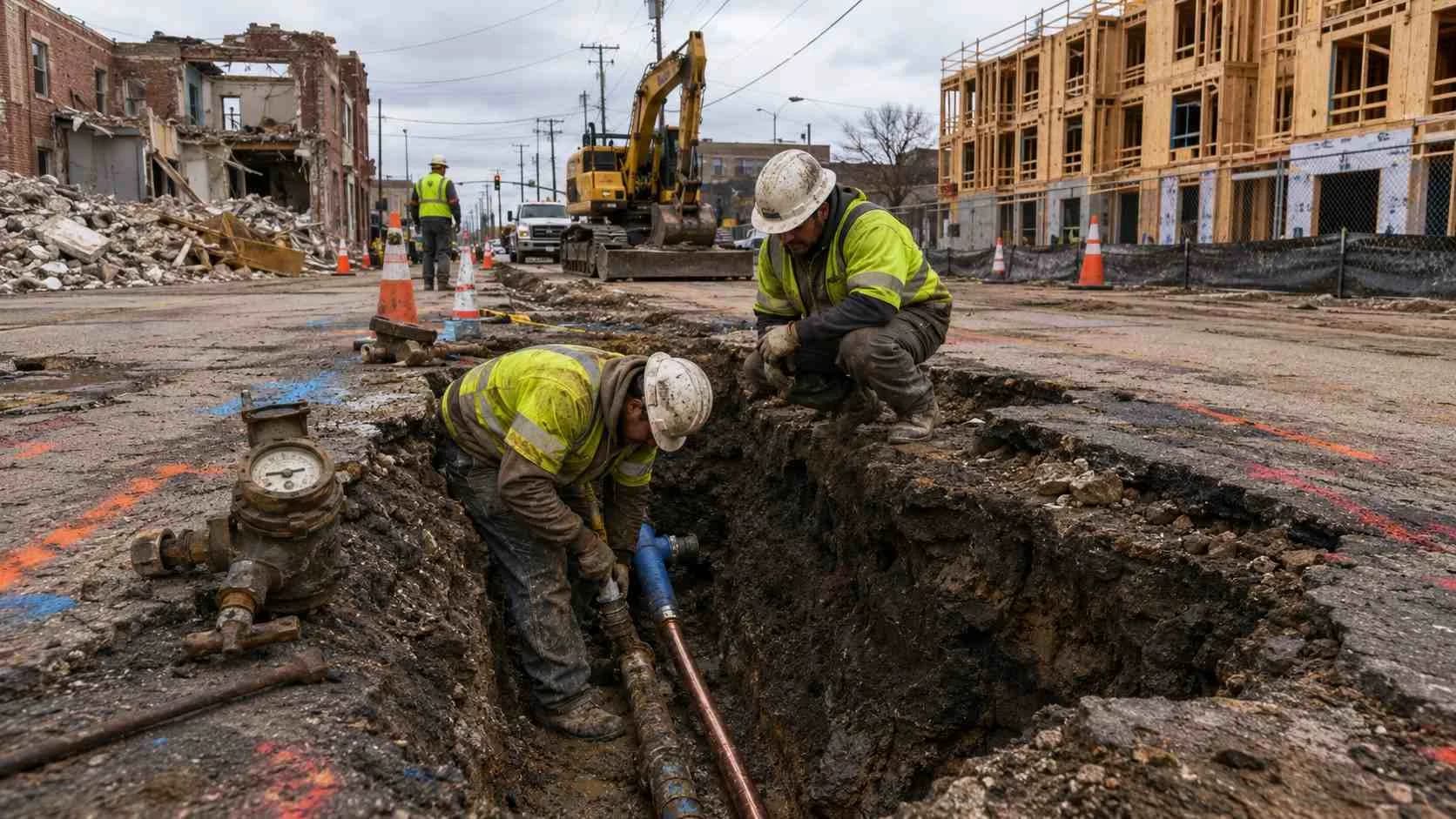
A site with an existing water meter and sewer connection is connected to the system in the sense that physical infrastructure exists at the property, but that existing connection’s meter size and the capacity of the specific main line segment serving it reflect the demand calculation made for the property’s prior use, not whatever demand your redevelopment project will actually generate. A meter sized adequately for a modest commercial building’s water demand will need to be upsized for a multifamily building generating meaningfully higher demand on the same site, and this upsizing itself carries a cost and a process, typically requiring confirmation that the main line serving the meter can support the larger meter’s flow before Dallas Water Utilities approves the upsize.
Developers evaluating an infill redevelopment site should specifically confirm the existing meter size, the existing connection’s service history and demand pattern if available, and whether the main line segment serving that connection has adequate capacity for the upsized meter your redevelopment program will require, rather than assuming that an existing connection automatically simplifies the utility question relative to a greenfield site with no connection at all. In some cases, an existing connection on infrastructure that’s already near capacity actually complicates the redevelopment utility question more than a nearby greenfield parcel with straightforward access to adequate capacity would.
Fire Flow Requirements Tied to the New Use, Not the Old One
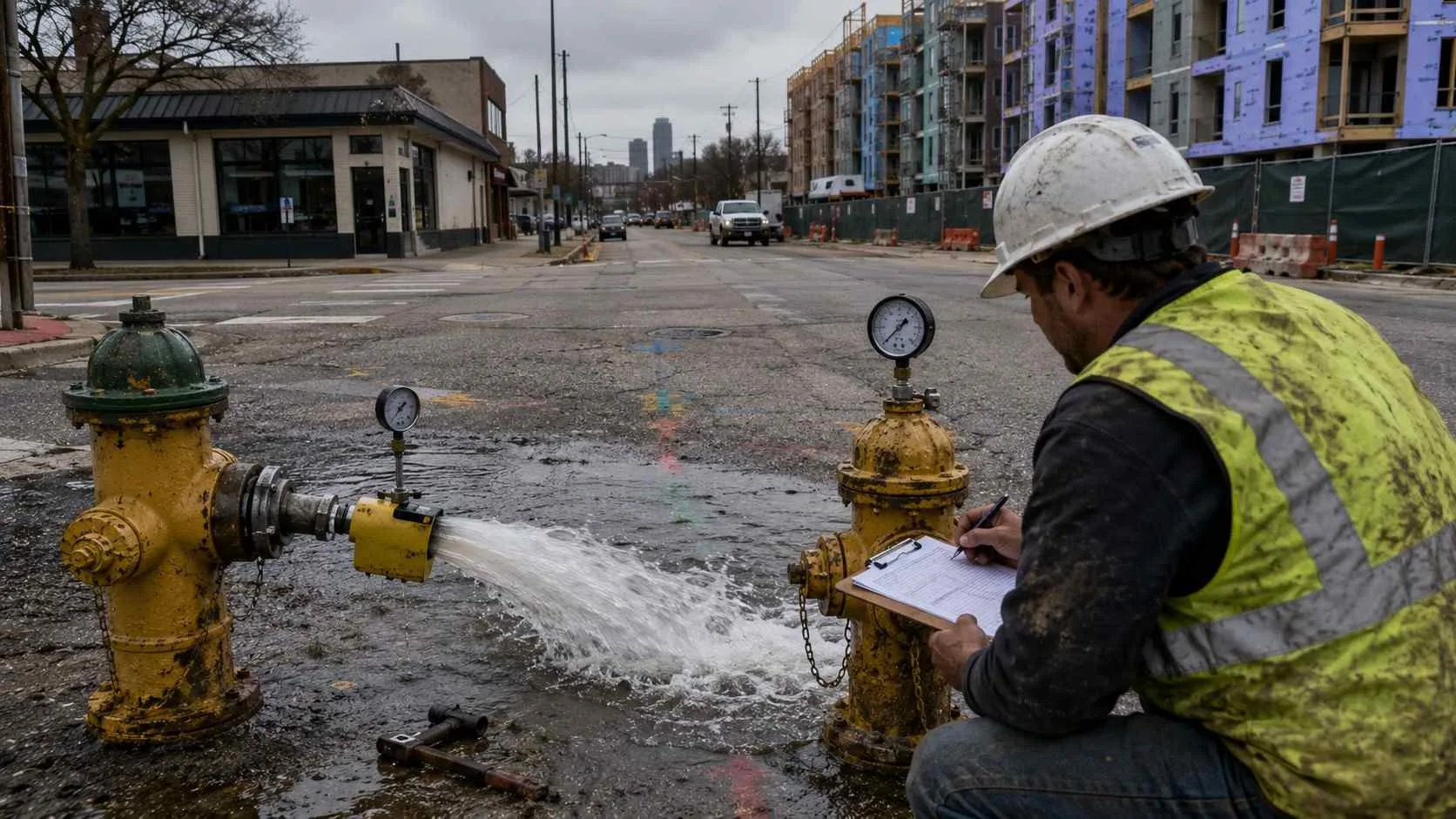
Fire flow requirements are determined by the proposed building’s type, height, occupancy, and construction, not by whatever fire flow the site’s prior use required, and a redevelopment project intensifying use or increasing building height or occupancy classification needs its own specific fire flow confirmation against the existing water infrastructure’s actual delivery capability, following the same fire flow evaluation logic relevant to PD overlay redevelopment generally. A site previously occupied by a single-story commercial building with a modest fire flow requirement, now proposed for a multifamily or mixed-use building with a substantially higher fire flow requirement, may find that the existing water main, even though it currently serves an active connection, doesn’t deliver adequate fire flow for the new building type without an upgrade.
This fire flow gap is a life safety requirement that Dallas Water Utilities and the fire marshal’s office will not waive, meaning a redevelopment project that discovers an inadequate fire flow condition late in design faces a genuine obstacle requiring resolution, whether through main upsizing, an extension to reach an adequately sized alternative source, or in limited cases an on site fire pump or storage solution evaluated on its own merits, before the project can proceed to permitting.
Sewer Availability, Downstream Constraints, and Aging Infrastructure
Confirming sewer capacity for a redevelopment site follows a similar incremental-demand logic to the water side, requiring confirmation that the sewer main serving the site, and any downstream segments and lift stations the flow path depends on, have adequate capacity for the project’s increased wastewater generation relative to the prior use’s baseline flow, an evaluation that should specifically account for the inflow and infiltration and wet weather performance concerns relevant to older Dallas sewer infrastructure generally, since many infill redevelopment sites sit within the same older watersheds where inflow and infiltration burden reduces real world available capacity below what pipe size alone suggests.
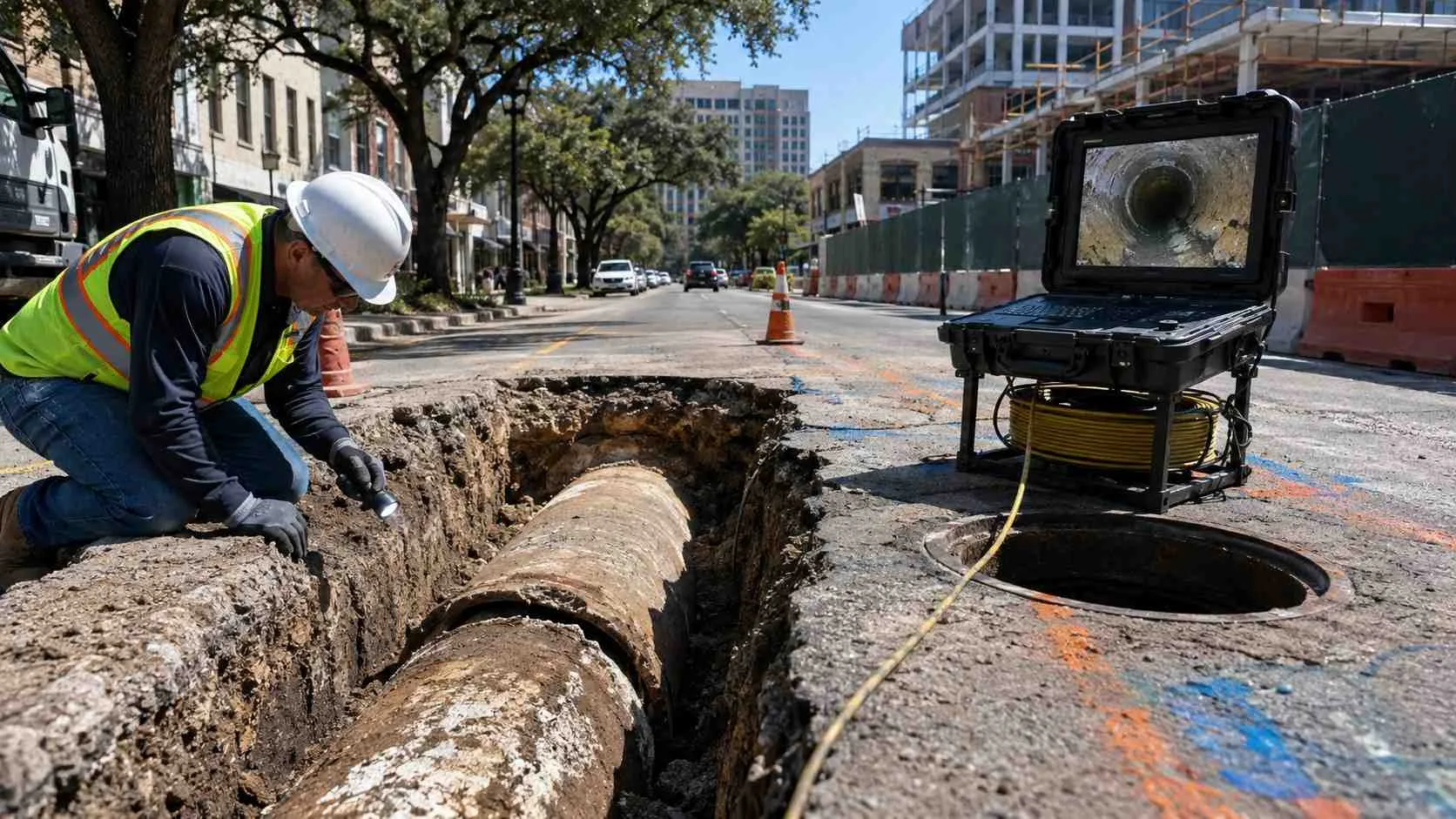
Aging infrastructure condition deserves its own specific evaluation for redevelopment sites, since a main line that’s technically adequate in size for a project’s projected demand but that’s approaching or past a reasonable service life expectation given its age and material carries a different risk profile than a comparably sized but newer, better condition main. Tapping into an aging main that’s already showing signs of deterioration can trigger a City requirement for replacement or rehabilitation as a condition of approving the new connection, a requirement developers should anticipate as a possibility during due diligence rather than discovering only when the City’s own review flags it.
Easements, Utility Conflicts, and CIP Priorities
Redevelopment sites within Dallas’s older, established corridors often carry existing utility easements from the site’s original development, and a redevelopment project’s new building footprint, parking configuration, or site access needs to be evaluated against these existing easements to confirm no conflict exists between the proposed redevelopment and the utility infrastructure the easement protects, following the same easement and utility conflict identification relevant to PD overlay redevelopment generally.
Dallas Water Utilities’ own capital improvement program priorities can also affect a specific redevelopment project’s utility cost and timeline, since a main line segment already scheduled for city funded upgrade or replacement within the capital improvement program’s planning horizon may present a different cost sharing or timing conversation than a segment with no planned investment, and developers should ask directly whether any planned capital improvement program work affects their specific site’s serving infrastructure, since this information isn’t always volunteered proactively during a routine utility inquiry and can meaningfully affect whether a developer needs to fund an improvement independently or can coordinate timing with a city funded project already in the pipeline.
How These Costs Affect Pro Forma, Closing, and Design Decisions
Impact fees, meter upsizing costs, fire flow improvement costs, and any required main replacement or extension costs identified through this due diligence process should be incorporated into a redevelopment project’s pro forma during the same due diligence period used to evaluate acquisition price and overall project feasibility, not treated as a utility line item to be finalized later once the site plan and building program are already fixed. A redevelopment project’s building size, unit count, or tenant mix assumptions made before utility costs are confirmed can require revision once the actual utility cost picture is known, particularly if a significant offsite improvement or main replacement requirement emerges that wasn’t factored into the original underwriting.
This utility cost uncertainty is one of the more consequential differences between redevelopment and greenfield underwriting, since a greenfield site’s utility cost, once capacity is confirmed adequate, tends to be relatively predictable and contained to extension or connection fees, while a redevelopment site’s utility cost carries more variability tied to the specific existing infrastructure’s age, condition, and capacity margin, factors that require site-specific investigation to quantify rather than a general assumption based on comparable projects elsewhere.
What to Evaluate Before Tapping an Aging Main
Before finalizing a redevelopment site’s utility strategy or tapping into an existing aging main, developers should confirm the existing line’s material, approximate installation date, and any known condition history, the line’s actual available capacity against your project’s specific incremental demand, current system pressure and fire flow delivery at the connection point, sewer availability and any known downstream capacity or inflow and infiltration constraints affecting the flow path, the status of any easements affecting the site or the utility corridor serving it, potential utility conflicts between your proposed site plan and existing infrastructure, and whether your project’s demand increase is likely to trigger a Dallas Water Utilities requirement for main replacement, upsizing, or extension as a condition of approving the new connection. Each of these factors should be confirmed through direct coordination with Dallas Water Utilities and, where warranted, targeted engineering evaluation, rather than assumed based on the existing connection’s mere presence at the site.
Frequently Asked Questions
How do we find out what our specific site’s prior use demand baseline was, so we can estimate our incremental impact fee exposure?
Dallas Water Utilities maintains billing and service history records that can indicate a property’s historical water usage pattern, and requesting this information directly, along with a formal capacity and fee inquiry specific to your proposed redevelopment program, is the reliable way to establish your site’s actual baseline rather than estimating it from general assumptions about the prior use’s building type and size.
If our due diligence reveals that tapping the existing main will trigger a required upgrade, is that cost something we can negotiate into our acquisition price?
Identifying a required utility upgrade cost during due diligence, before closing, gives you the ability to factor that cost into your acquisition price negotiation, purchase contract contingencies, or overall project underwriting, which is exactly why this analysis should happen during your due diligence period rather than after closing when your ability to adjust the deal’s economics around this finding is considerably more limited.
Does every infill redevelopment project in Dallas face significant impact fee or utility upgrade costs, or does this vary a lot by site?
This varies considerably by site, depending on the specific existing infrastructure’s age, condition, and capacity margin relative to your project’s proposed increase in demand, and some redevelopment sites, particularly those with previously higher intensity uses or infrastructure already upgraded through recent nearby development activity, may face relatively modest incremental utility costs, while others on aging, capacity constrained infrastructure can face substantial costs. This variability is exactly why site specific due diligence, rather than a general cost assumption based on other redevelopment projects’ experience, is necessary to evaluate your specific project’s actual utility cost exposure.
Related Resources
- PD Overlay Districts and Utility Extension Approval: Navigating Dallas Planned Development Zoning Alongside Utility Permitting
- Sanitary Sewer Overflow Risk in Dallas’s Older Watersheds: What White Rock and Turtle Creek I&I History Means for Infill Developers
- Reactive Clay Soils and Buried Utility Design: Engineering Water and Sewer Lines on Eagle Ford and Austin Chalk Formations
- Land Application Permits in Texas: A Faster Path to Wastewater Approval for Developers
Evaluating Utility Costs for a Dallas Infill Redevelopment Project?
MES works with Dallas developers, redevelopment teams, and property owners to confirm existing water and sewer capacity, evaluate meter sizing and fire flow adequacy, coordinate impact fee and infrastructure cost discussions with Dallas Water Utilities, and identify utility upgrade requirements before they become expensive surprises during construction.
We specialize in:
- Existing water and sewer connection capacity confirmation for Dallas infill and redevelopment sites
- Meter sizing, fire flow analysis, and pressure evaluation for intensified use redevelopment projects
- Sewer capacity and downstream constraint assessment accounting for aging infrastructure and inflow and infiltration risk
- Easement and utility conflict identification for redevelopment site plans in established Dallas corridors
- Impact fee and infrastructure cost due diligence to inform acquisition price and pro forma assumptions
- Aging main condition and capacity evaluation supporting connection strategy before construction commitment
Modern Engineering Solutions, Dallas, Texas. Contact: (214) 833-6748 or mod-eng.com
Keep reading
More to read.
Talk to an engineer
Tell us about your project.
An engineer reads it
Not a salesperson. Someone who can tell you whether the pathway is real.
You get a first answer
Your options, the agencies involved and the questions that decide cost and schedule.
You decide
No commitment to have the first call.
Prefer the phone? (214) 833-6748