
Blog
PD Overlay Districts and Utility Extension Approval: Navigating Dallas Planned Development Zoning Alongside Utility Permitting
A Dallas PD overlay approves your density but not your utility infrastructure. Learn what water, sewer, and fire flow gaps look like in older infill neighborhoods.
Quick Answer
A Dallas PD overlay grants zoning entitlement for a specific density, use, and development program, but it does not confirm that the existing water and sewer infrastructure serving the site has adequate capacity to support that approved density. Many Dallas infill neighborhoods now eligible for higher density redevelopment through planned development zoning are still served by water mains and sewer lines installed decades ago, in some cases dating to the 1950s or earlier, sized for the lower-density single family use those neighborhoods originally supported. When a PD overlay approves meaningfully higher density than the existing infrastructure was designed to serve, the project may require offsite utility extensions, upsized water mains, sewer capacity confirmation, or fire flow improvements as a separate approval process from zoning, one governed by Dallas Water Utilities’ own capacity and connection standards rather than the zoning entitlement itself. Developers should confirm utility capacity and connection requirements during the same due diligence period used to evaluate PD zoning feasibility, not after the PD overlay is already approved and the project’s design and financing are built around an assumed density the existing utility infrastructure may not actually support without additional investment.
Why Zoning Approval and Utility Approval Are Genuinely Separate Processes
Dallas’s planned development zoning process evaluates land use compatibility, density, building form, and neighborhood context factors relevant to the City Plan Commission and City Council’s zoning decision. Dallas Water Utilities‘ utility connection and capacity approval process evaluates something entirely different: whether the specific water and sewer infrastructure serving a site can actually deliver the water supply, fire flow, and wastewater capacity a proposed development requires, based on the physical infrastructure’s actual size, condition, and available capacity, independent of what use or density zoning has approved for the site.
These two processes run on different criteria, different review timelines, and in practice, different levels of attention from a developer’s project team, since zoning entitlement is often the focus of a project’s early feasibility and design effort, with utility infrastructure treated as a detail to be resolved once entitlement is secured. This sequencing creates real risk in Dallas’s older infill neighborhoods specifically because zoning entitlement and utility infrastructure capacity are not correlated with each other. A PD overlay can approve substantially higher density on a site than the surrounding utility infrastructure was ever designed to serve, and the zoning process itself has no mechanism to flag that mismatch, since utility capacity simply isn’t a criterion the zoning review evaluates.
Why Older Dallas Infrastructure Doesn’t Automatically Scale With New Density
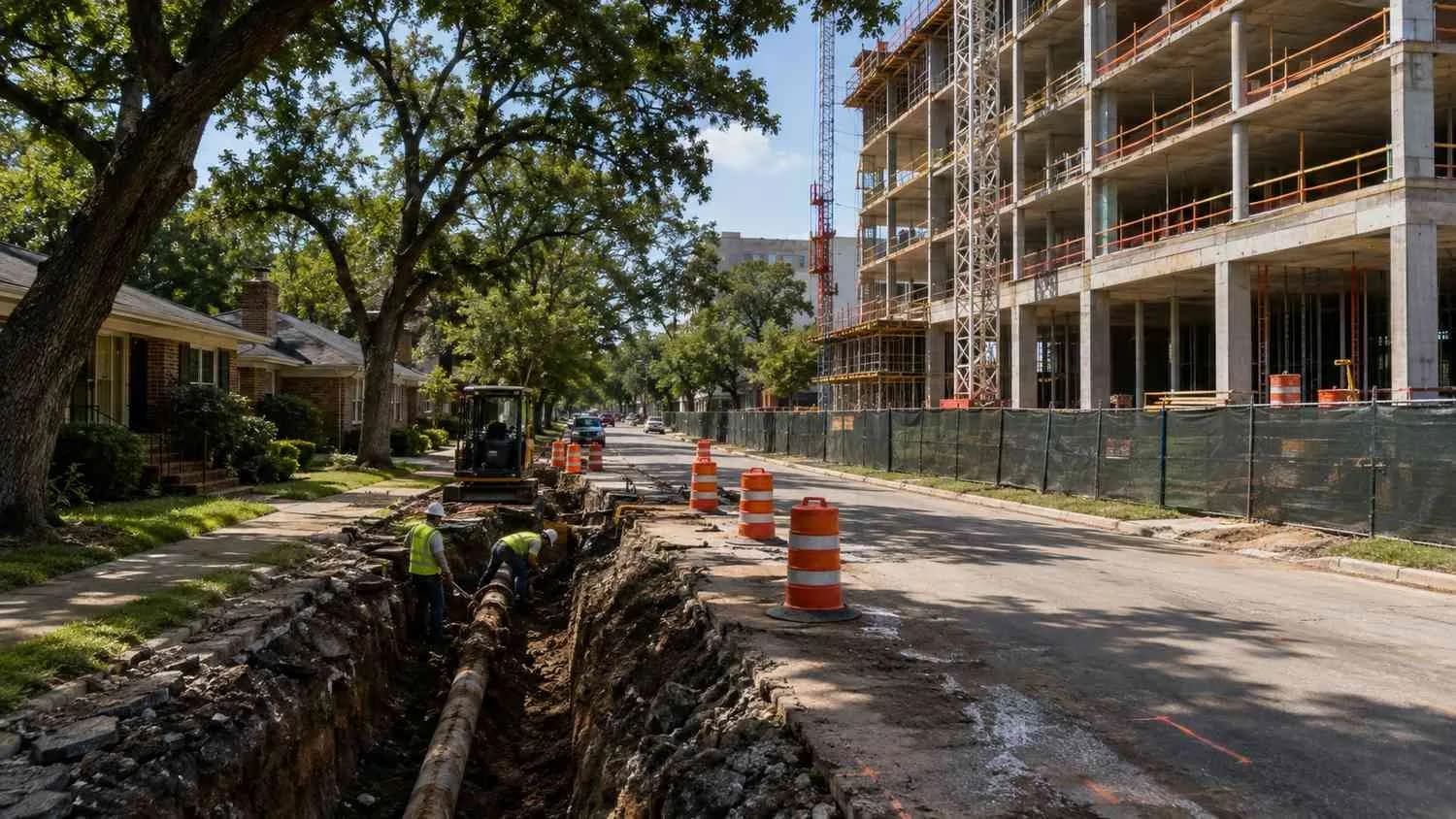
A substantial share of Dallas’s older infill neighborhoods, the same neighborhoods now attracting townhome, multifamily, and mixed use redevelopment interest through PD overlay zoning, were originally developed with water and sewer infrastructure sized for the single family residential density that existed when the infrastructure was installed, in many cases during the 1950s or even earlier expansion periods for the city. A water main sized to serve a block of single family homes carries a specific design capacity based on that original use’s water demand and fire flow requirement, and that same water main doesn’t gain additional capacity simply because a PD overlay later approves a townhome or multifamily development generating meaningfully higher water demand and, in many cases, a higher fire flow requirement on the same block.
This capacity mismatch is compounded by the infrastructure’s age, since a water or sewer main installed during this era is also more likely to carry the pipe material, joint technology, and condition concerns relevant to older infrastructure generally, meaning the same infrastructure that may already be undersized for a new PD overlay’s approved density can also be approaching or past a reasonable service life expectation, adding a rehabilitation or replacement consideration on top of the capacity question. Confirming both the sizing adequacy and the general condition of existing infrastructure serving a PD overlay redevelopment site addresses two related but distinct risk factors that both deserve attention during due diligence.
Undersized Water Lines and Fire Flow Constraints
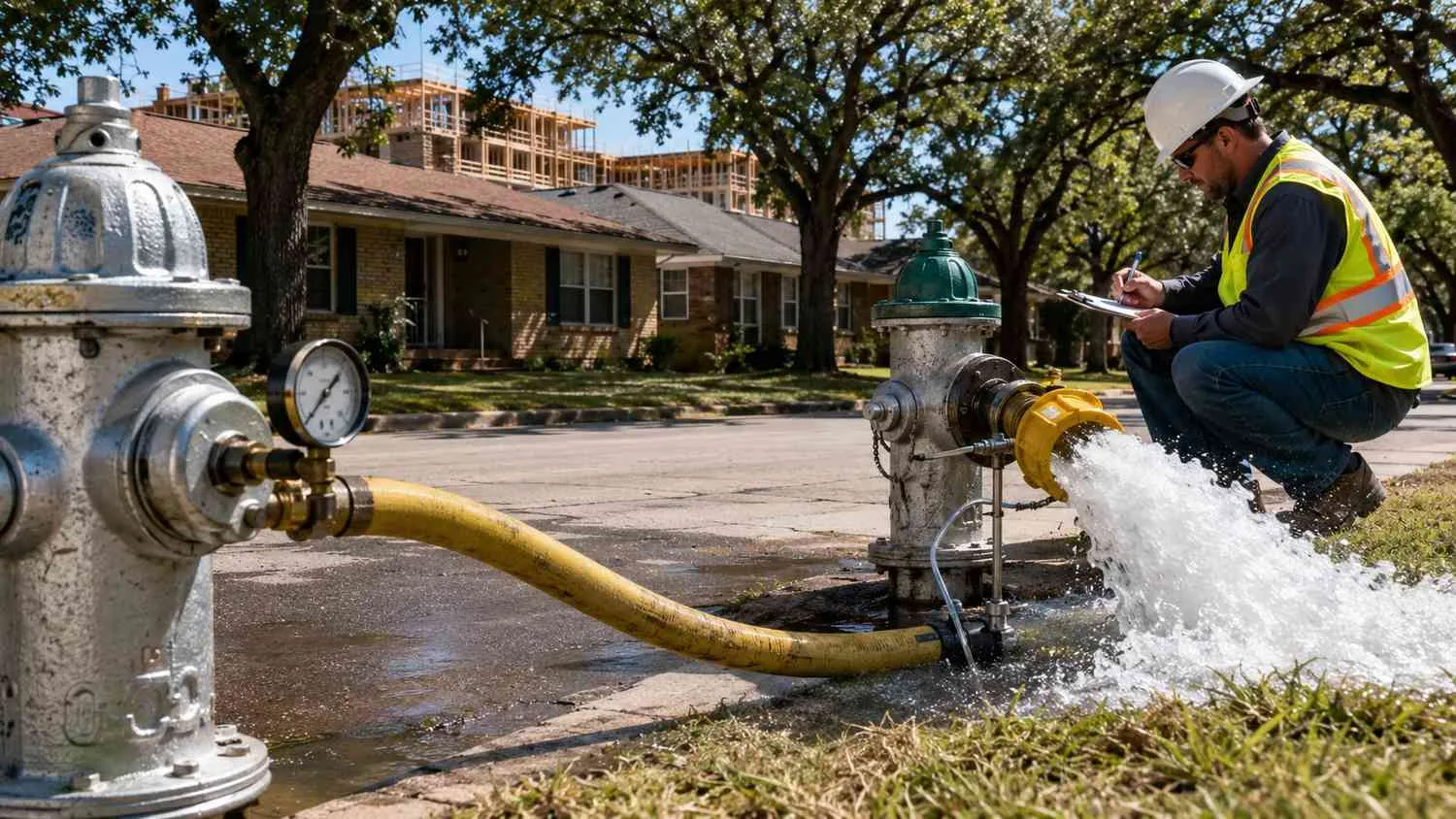
A water main that adequately served a block’s single family homes may not deliver adequate fire flow for a new multifamily or mixed use building the PD overlay approves, since fire flow requirements scale with building type, height, and occupancy in ways that a modest single family fire flow requirement doesn’t anticipate. This fire flow constraint is a life safety requirement the City will not waive regardless of the PD overlay’s zoning approval, meaning a project that discovers inadequate fire flow availability during utility review faces a real obstacle that zoning entitlement alone cannot resolve.
Addressing an undersized water main or inadequate fire flow condition typically requires either upsizing the existing main, extending a new main from an adequately sized source elsewhere in the system, or in some cases evaluating whether an on site fire pump or storage solution can bridge a modest fire flow gap, though this last option has its own cost and design implications that should be evaluated specifically rather than assumed as an automatic fallback. Confirming fire flow adequacy specifically, not just general water service availability, should be part of utility due diligence for any Dallas infill project where the PD overlay approves a use or building type with a meaningfully higher fire flow requirement than the surrounding infrastructure’s original design basis anticipated.
Sewer Capacity in the Context of Zoning Driven Density Increases
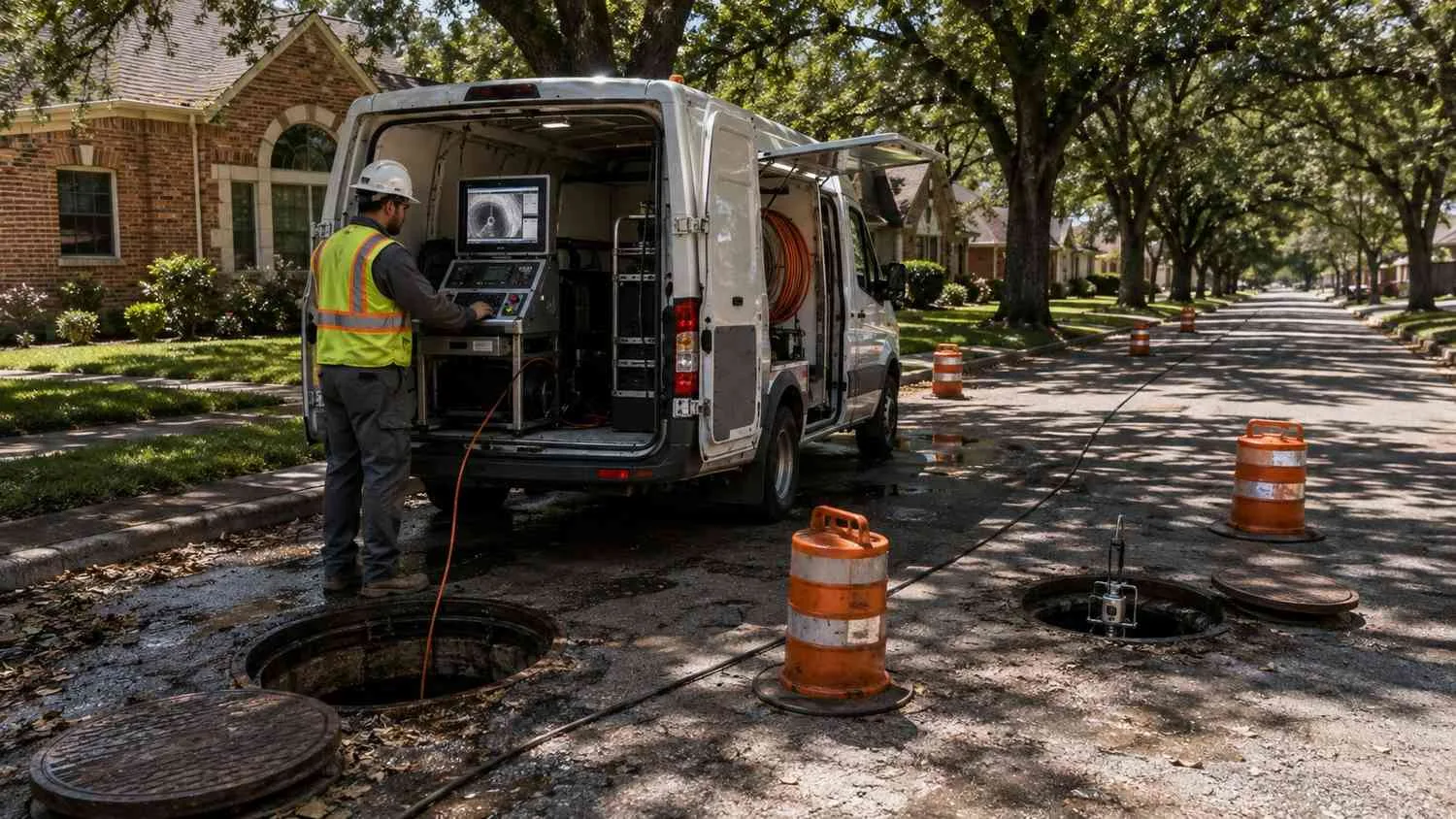
The same PD overlay driven density increase that raises water demand and fire flow requirements also raises projected wastewater flow, and confirming that the existing sewer main serving a redevelopment site has adequate capacity for the PD overlay’s approved density, rather than just the site’s prior lower density use, follows the same capacity confirmation logic relevant to infill wastewater due diligence generally, with the added complication that many of Dallas’s older sewer mains in these same neighborhoods carry accumulated inflow and infiltration burden that further reduces their actual available capacity below what the pipe’s nominal size alone would suggest.
A PD overlay redevelopment project’s sewer capacity confirmation should specifically evaluate both the pipe’s nominal capacity against projected flow at the approved density, and, where relevant, any known wet weather performance or inflow and infiltration history affecting the specific sewer segment, since a segment with significant inflow and infiltration burden may have meaningfully less real-world available capacity for new connections than its pipe size alone indicates, a distinction directly relevant to whether the PD overlay’s approved density can actually be served without offsite improvements.
Water Meter Sizing and Pressure Constraints
Beyond main line capacity, water meter sizing for a specific PD overlay project needs to reflect the development’s actual projected demand at the approved density, and a meter sized for the property’s prior use, or sized without specific reference to the new development’s demand calculation, can create a service constraint independent of whether the main line itself has adequate capacity. Pressure constraints, similarly, can affect a PD overlay redevelopment project even where the surrounding main line has adequate volumetric capacity, particularly for a taller building type the PD overlay newly permits, if the pressure zone serving the site wasn’t originally intended to serve a building of that height without a booster pump system, a consideration directly relevant to pressure zone design generally, applied here to a Dallas infill redevelopment context.
Alley Utilities, Easements, and Utility Conflicts in Established Neighborhoods
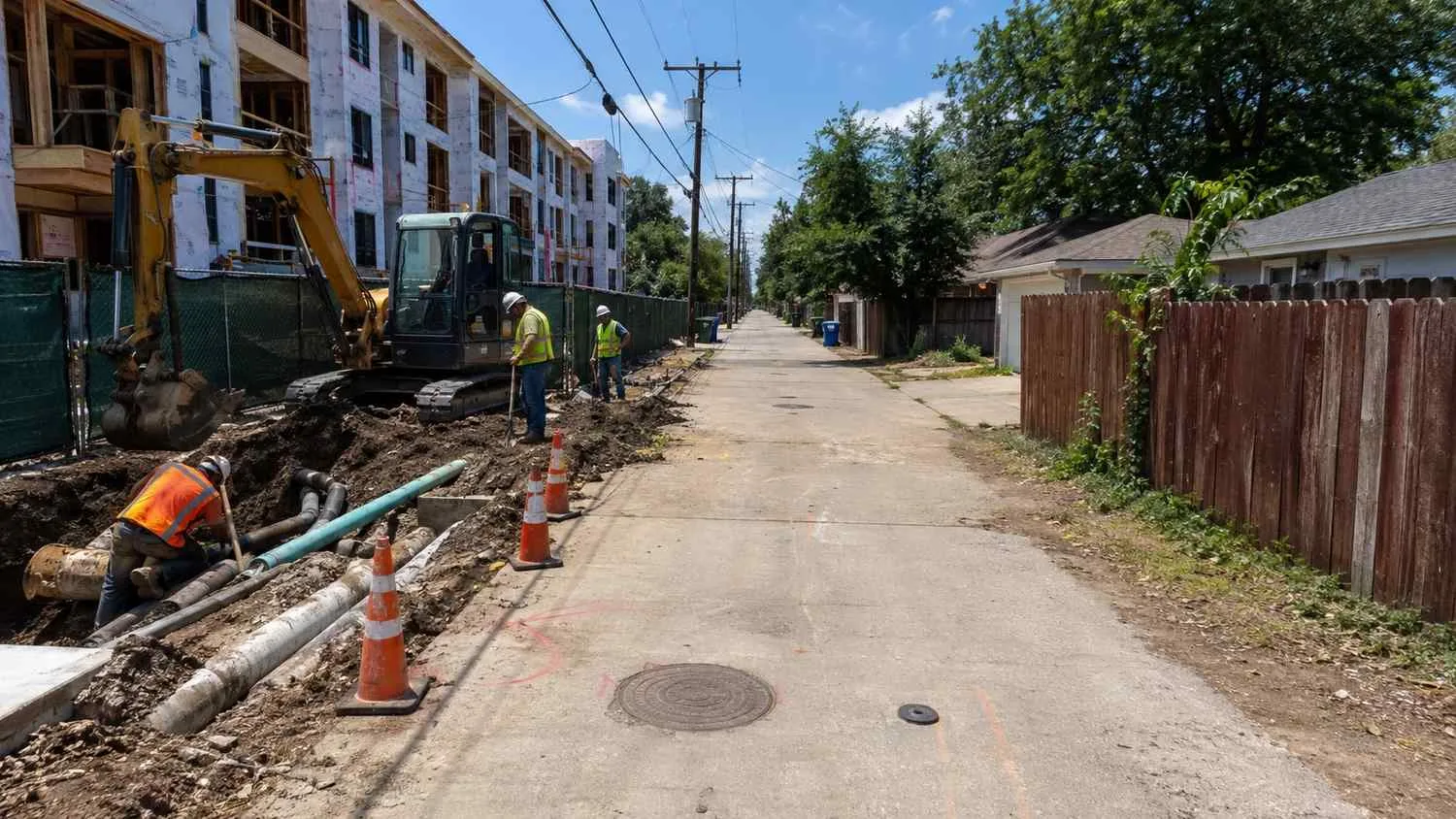
Many of Dallas’s older infill neighborhoods route utility infrastructure through rear alleys rather than exclusively along street frontages, and a PD overlay redevelopment project needs to specifically account for how its proposed building footprint, parking, and site access interact with these alley utility corridors, since a new development’s site plan can create a conflict with an existing alley utility easement that wasn’t apparent from a general zoning level site evaluation. Confirming the location, size, and easement status of alley based water, sewer, and other utility infrastructure serving a specific PD overlay redevelopment parcel is a necessary step that’s specific to Dallas’s particular infill development pattern and easy to overlook during a zoning focused feasibility evaluation.
Utility conflicts between a redevelopment project’s proposed new connections and existing infrastructure, whether in the alley, the street, or elsewhere on or adjacent to the site, should be identified during the same due diligence phase as the capacity confirmation, following the same coordination logic relevant to subdivision level utility and drainage conflicts, applied here to an individual infill redevelopment parcel’s specific utility corridor conditions.
Offsite Extension Requirements and Their Effect on PD Overlay Project Economics
When utility capacity confirmation for a PD overlay redevelopment site reveals inadequate existing infrastructure, the offsite extension, upsizing, or improvement required to serve the approved density needs to be evaluated with the same cost and feasibility rigor relevant to McKinney utility extension decisions, adapted to the specific challenges of extending or upsizing infrastructure within an already built out, older Dallas neighborhood, where construction within existing streets, alleys, and easements serving other established properties adds practical complexity beyond what a greenfield extension typically involves.
This offsite improvement cost should be factored into a PD overlay project’s financial feasibility analysis during the same period the zoning entitlement itself is being evaluated, since a project that appears financially viable based on its approved zoning density alone can look considerably different once a required utility upgrade’s cost is added to the project’s total development budget, and identifying this cost early gives the developer the ability to factor it into land acquisition price, financing plans, or in some cases the decision of whether to pursue the PD overlay at the density initially proposed at all.
Drainage Coordination Alongside Utility Approval
PD overlay redevelopment in established Dallas infill neighborhoods frequently also triggers drainage review, since increased density typically means increased impervious cover, and confirming that the site’s proposed drainage design meets current stormwater detention or discharge requirements should happen alongside the water and sewer capacity confirmation, following the same combined-analysis logic relevant to Trinity River area treatment plant siting, applied here to a smaller scale infill redevelopment context where drainage and utility conflicts within a tight urban parcel can be just as consequential to project feasibility as they are on a larger greenfield site.
Frequently Asked Questions
If our PD overlay is already approved, is it too late to address a utility capacity problem, or can it still be resolved?
An approved PD overlay establishes your zoning entitlement, but utility capacity issues discovered after PD approval can generally still be resolved, typically through offsite extension, main upsizing, or other infrastructure improvements coordinated with Dallas Water Utilities, though this resolution will need to happen as a separate process from your zoning entitlement and will add its own cost and schedule to your project. Addressing utility capacity during the same due diligence period as your PD overlay application, rather than after PD approval, gives you the opportunity to factor any required utility investment into your original project economics and timeline rather than discovering it as an unplanned addition after zoning is already secured.
How can we find out whether our specific PD overlay site’s existing utility infrastructure can support our approved or proposed density before we finalize our development program?
Direct coordination with Dallas Water Utilities to confirm existing main size, age, and available capacity for your specific site and proposed demand, including fire flow confirmation for your specific building type, is the reliable way to get project specific information, and this inquiry should happen during the same due diligence period you’re using to evaluate PD overlay feasibility, not as a separate, later step. A civil engineering evaluation translating that raw utility system information into a specific capacity and improvement needs conclusion for your particular development program adds the project specific analysis the raw system data alone doesn’t provide.
Does every PD overlay redevelopment project in Dallas’s older infill neighborhoods face this utility capacity risk, or is it specific to certain areas?
The risk is most pronounced in neighborhoods with meaningfully older infrastructure and where the PD overlay approves a significant density increase relative to the area’s prior use, conditions common across a number of Dallas’s infill redevelopment corridors but not universal to every PD overlay site citywide. Some areas have already received utility upgrades through prior development activity or municipal capital improvement projects that reduce or eliminate this risk, which is exactly why site specific utility capacity confirmation, rather than a general assumption based on the neighborhood’s overall reputation for infrastructure age, is the reliable way to evaluate risk for your specific parcel.
Related Resources
- Sanitary Sewer Overflow Risk in Dallas’s Older Watersheds: What White Rock and Turtle Creek I&I History Means for Infill Developers
- Reactive Clay Soils and Buried Utility Design: Engineering Water and Sewer Lines on Eagle Ford and Austin Chalk Formations
- McKinney Utility Availability Study: What Developers Need Before Submitting a Plat in Collin County’s Fastest Growing City
- Hydraulic Modeling for Dallas High Rise Developments: Why Pressure Zone Design Matters More Than You Think
Evaluating Utility Capacity for a Dallas PD Overlay Redevelopment Project?
MES works with Dallas infill developers, redevelopment teams, and architects to confirm existing water and sewer capacity, evaluate fire flow adequacy, identify offsite extension and upsizing needs, coordinate alley utility and easement conflicts, and prepare utility documentation that keeps PD overlay projects moving once zoning entitlement is secured.
We specialize in:
- Water and sewer capacity confirmation for Dallas PD overlay and planned development redevelopment sites
- Fire flow analysis and pressure zone evaluation for townhome, multifamily, and mixed use infill projects
- Sewer capacity and inflow and infiltration risk assessment for connections into older Dallas collection systems
- Alley utility, easement, and utility conflict identification for established Dallas infill neighborhoods
- Offsite extension and infrastructure upgrade cost evaluation to support PD overlay project financial feasibility
- Drainage coordination alongside utility approval for increased density Dallas redevelopment sites
Modern Engineering Solutions, Dallas, Texas. Contact: (214) 833-6748 or mod-eng.com
Keep reading
More to read.
Talk to an engineer
Tell us about your project.
An engineer reads it
Not a salesperson. Someone who can tell you whether the pathway is real.
You get a first answer
Your options, the agencies involved and the questions that decide cost and schedule.
You decide
No commitment to have the first call.
Prefer the phone? (214) 833-6748