
Blog
Sanitary Sewer Overflow Risk in Dallas’s Older Watersheds: What White Rock and Turtle Creek I&I History Means for Infill Developers
Sanitary sewer overflow risk in Dallas's older watersheds comes from inflow and infiltration, so infill sites need wet-weather capacity checks before closing.
Quick answer
Sanitary sewer overflow risk in Dallas's older watersheds comes mostly from rain getting into the sewers through inflow and infiltration, and the city's own overflow reports say so. For an infill developer, that means wet-weather flow, not a dry-day snapshot, decides how much capacity your connection can count on. Confirm it with the city's wastewater capacity analysis or third-party flow monitoring before you close.
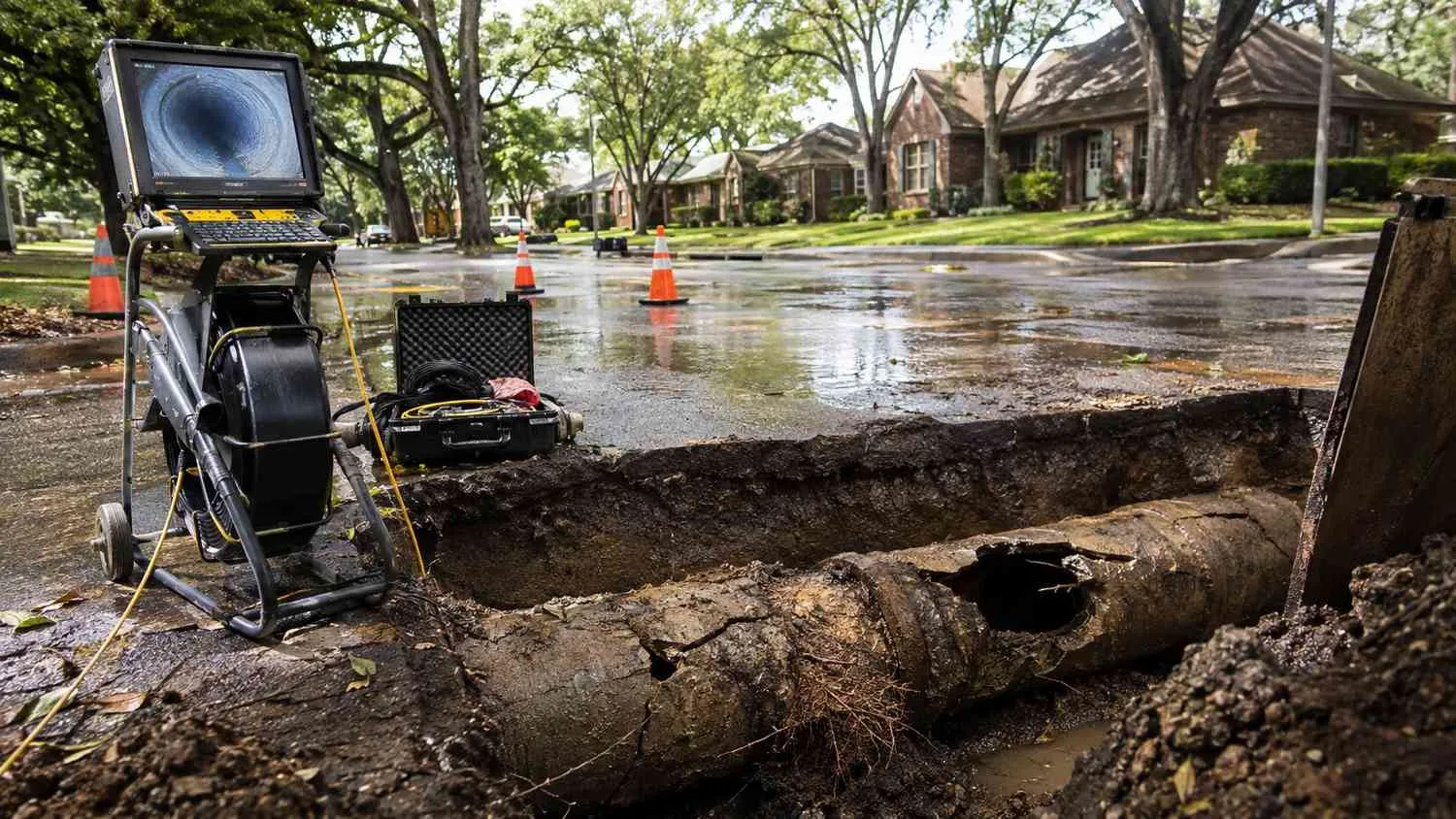
What causes overflows in Dallas's older sewers?
Rainwater that gets into pipes built for sewage. TCEQ describes a sanitary sewer overflow as an unauthorized discharge of untreated or partially treated wastewater from a collection system before it reaches treatment, and names significant inflow and infiltration, poor operation and maintenance, and inadequate capacity among the causes.
Inflow is stormwater that enters directly: through manhole lids, broken cleanouts and illegal downspout or area drain connections. Infiltration is groundwater that seeps in through cracked pipe, failed joints and leaking manholes. Both use up pipe capacity that sewage needs.
Dallas Water Utilities has said this plainly. After heavy rain in August 2022, the city reported overflows at several locations in four major drainage basins and said, in its Dallas City News release, that they were primarily caused by inflow and infiltration of stormwater into the collection system.
Which Dallas basins have documented overflows?
White Rock is on the public record; check your own basin. A city manager's memo on the April 24 and 25, 2019 overflows reported overflows in the White Rock, East Bank and Five Mile drainage basins, with White Rock and East Bank each over 100,000 gallons. The city counted 26 overflow locations and more than 380,000 gallons in total, tied to stormwater inflow and infiltration.
The same memo explains the reporting rule DWU works under: it reports all known overflows to TCEQ and issues a public notice when estimated volume tops 100,000 gallons in a single drainage basin.
The public memos do not cover every basin or every storm. If your site drains toward Turtle Creek or another older part of the system, ask the city for the overflow and condition history of the mains downstream of your connection.
Why does wet weather set your available capacity?
Because the pipe has to carry the storm flow too. In a basin with heavy inflow and infiltration, wet-weather flow can far exceed dry-weather flow while sewage from the homes upstream stays about the same. When that flow reaches a pipe's capacity, the line surcharges, the hydraulic grade line rises toward the manhole rims, and the lowest openings overflow first.
State design rules already build this in. Under 30 TAC §217.53, sizing a new collection system must be based on an engineering analysis of peak domestic flow, industrial flow and maximum expected infiltration rates. A capacity check that uses only dry-weather flow leaves out the part of the hydrograph that causes overflows.
The downstream path matters as much as your connection. A full trunk or lift station far downstream can be the real limit even when the main in front of your site looks fine.
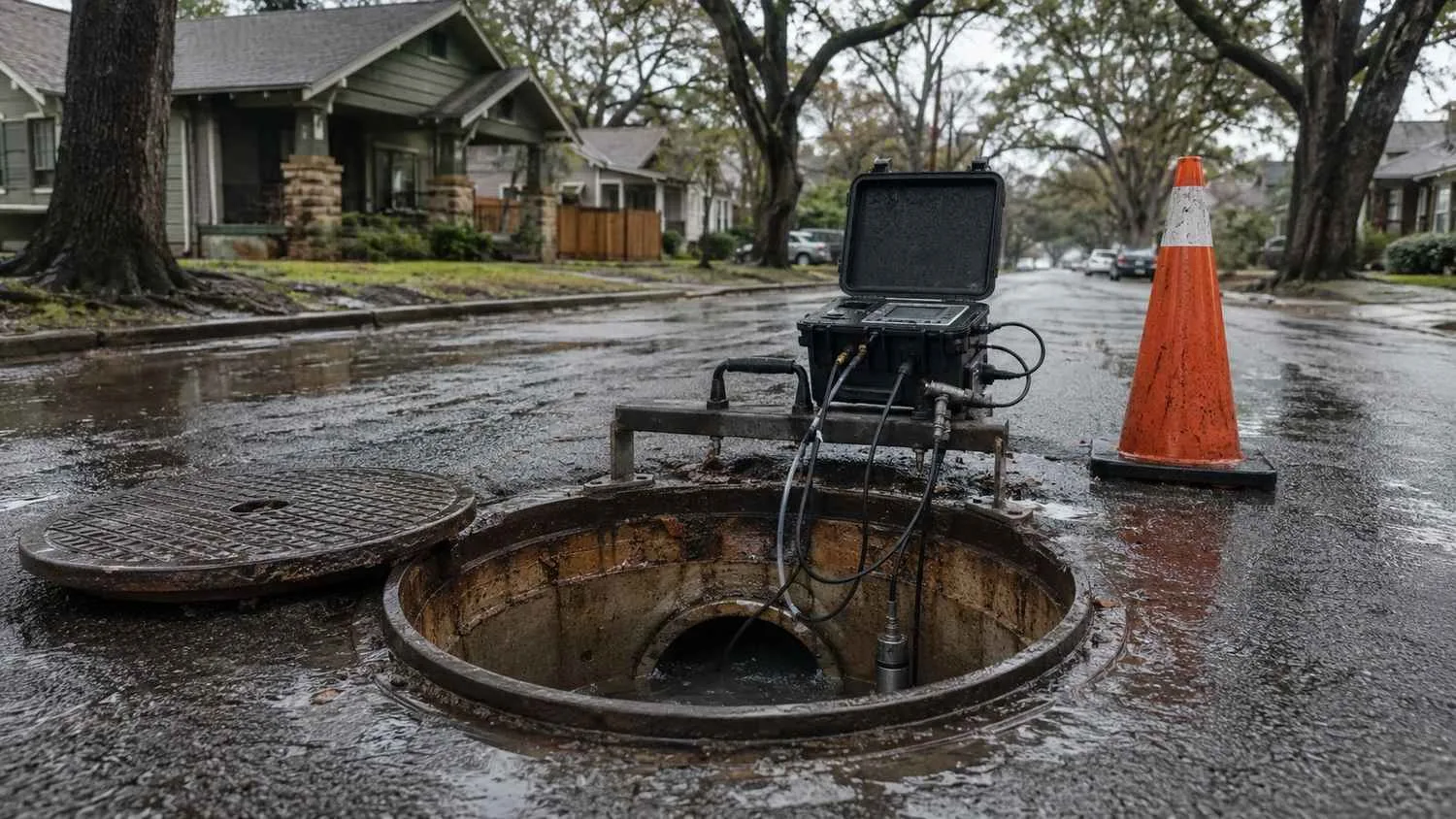
How do you confirm sewer capacity for a Dallas infill site?
Use the city's process, and make sure it sees a storm. The City of Dallas Water/Wastewater Availability Application Guide (Rev. 6/19) offers three requests:
- a wastewater capacity analysis by the city, whose flow monitoring takes an average of 6 to 8 weeks minimum;
- third-party flow monitoring, with a DWU wastewater collections inspector on site before the manhole lid comes off, and results going to your engineer for a formal capacity report;
- a third-party CCTV condition check, delivered with a pipe condition report and a recommended PACP rating.
The same guide includes DWU's flow monitor specification, which frames the city's own monitoring around investigating inflow and infiltration and warning of main surcharging or overflows. Ask whether your monitoring period caught real rain events, and how the capacity report treats them.
What can the city require if capacity is short?
Downstream work, or no release until it is fixed. Under the Dallas City Code, §49-60(b)(2), the city is not obligated to release a plat if the proposed mains exceed the system's existing or immediate future capacity. Section 49-62 requires a developer to replace existing substandard mains serving the development and to build needed off-site extensions, with city participation in defined cases.
Owners can also ask for help. Section 49-59 authorizes the director to replace a substandard main when property owners request it in writing to improve the quality or capacity of wastewater collection in an area.
Your own site should not add to the problem. New gravity sewer must pass an air test or an infiltration or exfiltration test under 30 TAC §217.57, so specify tight laterals, gasketed joints and sealed manholes on your wastewater work.
Is your infill site's sewer capacity confirmed?
Answer yes or no. Any no is a capacity risk still sitting in your deal.
- Do you know which main and drainage basin your site connects to?
- Have you asked the city for overflow and condition history downstream of your connection?
- Has capacity been confirmed by city analysis or third-party flow monitoring?
- Did the monitoring period include rain, and does the report use wet-weather flow?
- Has the downstream path, including any lift station, been checked?
- Have you seen CCTV of the main you will connect to?
- Do your plans call for tested, tight laterals and manholes?
Questions for your team: What is our peak wet-weather flow? Where is the first downstream bottleneck? What does the city consider substandard on our path?
Limits: this is general education based on the city's published memos and forms, which do not cover every basin or storm. Sewer conditions change, so confirm capacity and requirements for your connection with the City of Dallas and your engineer.
Frequently asked questions
What is the difference between inflow and infiltration?
Inflow is stormwater that enters quickly through openings and illegal connections during rain. Infiltration is groundwater that seeps in through defects and can keep flowing after the rain stops.
How do we find out whether our site's sewer has an overflow history?
Ask the city for the overflow and condition history of the mains downstream of your connection, and read the city's public overflow memos for your basin. Then confirm capacity with the city's analysis or third-party monitoring.
I'm an infill developer under contract on a lot in the White Rock drainage basin for 40 townhomes. Do I need flow monitoring, or is a desktop capacity check enough?
White Rock is a basin with documented wet-weather overflows, so a desktop check on dry-weather flow is not enough. Request the city's capacity analysis or third-party monitoring early, because the city's own monitoring averages 6 to 8 weeks minimum.
Our capacity report found a wet-weather constraint downstream of our Dallas site. Does that kill the project?
Not by itself. Options include replacing or upsizing the constrained main, choosing another connection point, or reducing flow. Under Local Government Code §212.904, your required share of city infrastructure costs is limited to what is roughly proportionate to your development.
Is this only a White Rock problem?
No. The city's 2019 memo lists East Bank and Five Mile too, and its 2022 release covers four major basins. Any older part of the system deserves the same wet-weather check.
Related resources
- Dallas Water Utilities Impact Fee Structure for Infill Redevelopment: What Changes When You’re Rebuilding Inside the Loop
- Reactive Clay Soils and Buried Utility Design: Engineering Water and Sewer Lines on Eagle Ford and Austin Chalk Formations
- Combined Sewer vs. Separate Sanitary Systems in Older Texas Cities: Why Legacy Infrastructure Changes a Discharge Permit’s Monitoring Burden
- How Inflow and Infiltration Impacts Your Collection System and Wastewater Treatment Plant | EP 11
Worried the sewer can't take your infill project?
We check capacity the way the storm will, with the city's tests and the downstream path, so you know what the connection needs before you close.
We specialize in:
- Sewer capacity analysis for infill sites
- Flow monitoring review and capacity reports
- Inflow and infiltration analysis
- Gravity sewer and lift station design
- Utility due diligence before closing
- Site civil design for redevelopment
Modern Engineering Solutions, McKinney, Texas. Contact: (214) 833-6748 or mod-eng.com
Talk to an engineer
Tell us about your project
An engineer reads it
Not a salesperson. Someone who can tell you whether the pathway is real.
You get a first answer
Your options, the agencies involved and the questions that decide cost and schedule.
You decide
No commitment to have the first call.
Prefer the phone? (214) 833-6748