
Blog
Domestic Wastewater Treatment Works Design Criteria: The CDPHE Engineering Standards Package Plants Must Meet
CDPHE's domestic wastewater treatment works design criteria set the flow, redundancy, power, alarm and cold weather rules a package plant must meet.
A package plant meets Colorado's domestic wastewater treatment works design criteria only when your engineer's Process Design Report proves it, unit by unit, for your site. The manufacturer's rating is not that proof. CDPHE reviews flows, redundancy, standby power, alarms, cold weather and solids handling, and Colorado treats buying the equipment as construction. Check the unit against the criteria before you order it.
What are CDPHE's design criteria for domestic wastewater treatment works?
They are CDPHE's Design Criteria for Domestic Wastewater Treatment Works, policy WPC-DR-1, effective June 7, 2022. The Water Quality Control Division uses them to review any treatment works designed to receive more than 2,000 gallons per day (gpd).
Regulation 22, Colorado's site location and design regulations (5 CCR 1002-22), covers those works (section 22.1(2)) and requires design approval before construction (section 22.13). For a treatment plant that means a Process Design Report (PDR) stamped by a Colorado-registered professional engineer, then the engineer's self-certification that the final design is consistent with the site application, the PDR approval and the most recent version of the criteria.
The criteria are performance based where practical, and the Division's review is not quality control of your project (section 1.1.0).
Why isn't the manufacturer's rating enough?
Because the Division reviews the PDR's calculations for your flows, loads and site, not the vendor's brochure.
The PDR must include supporting calculations for each unit process, design parameters in tables that reference the criteria, oxygen transfer calculations for blower sizing, and a process flow diagram showing sampling locations and bypasses (section 1.3.3). Secondary treatment calculations must justify the tanks, aeration equipment and clarifiers, and activated sludge parameters must fall in the general ranges of the latest edition of WEF's Manual of Practice 8 (section 7.1.1).
Where a unit misses a criterion, the design needs equivalent measures, redundant emergency plans or, failing those, a site-specific deviation justified in the PDR with calculations, operating data or a peer-reviewed criterion. If a deviation protects less than the criteria would, the Division can deny it or require compensatory measures (section 1.7.0). A technology the criteria do not cover needs alternative technology review, requested no later than the site location application (section 1.8.0). If no standard unit fits, weigh a package plant against a custom-designed plant.
How do the criteria set design flow and loading?
The Division typically rates a plant on maximum month flow and load. Peak hour flow sizes screens, clarifiers, filters, disinfection, pumps and equalization tanks (section 2.1.0).
Base flows on at least three years of records where they exist; otherwise document the peaking factors and assumptions, including infiltration and inflow (section 2.1.1). Three rules catch package plants:
- Loading for less than 24 hours a day, as at schools, subdivisions and recreational facilities, means upsizing units by 24 divided by the loading hours, or adding flow equalization (section 2.1.1).
- Loadings for single-use facilities such as camps, lodges and schools are computed for maximum possible occupancy (section 2.1.2).
- Start-up counts. The PDR covers initial and minimum daily flow and, when start-up flow is far below design, how the plant runs until loaded (sections 2.1.0 and 1.3.3).
For a phased development, see projecting flows for a development without overbuilding.
When does a package plant need two of everything?
At a design capacity of 40,000 gpd or more. Then you need at least two units of each process type; with two, each must carry at least half the design flow (section 2.3.4).
With the largest unit out, the rest must still pass peak flow hydraulically. Below 40,000 gpd a single train is allowed, but the PDR must describe bypass and backup for planned and emergency outages, plus an emergency operation plan such as storage or hauling. At any size, pumps, blowers and chemical feed pumps need firm capacity: 100 percent of design capacity with the largest unit out. For disinfection, chlorine firm capacity must handle peak hour flow (section 9.3.8), and each UV reactor needs at least two banks in series, installed as N+1 (section 9.5.2).
What do the criteria require for standby power and alarms?
When primary power fails, the plant must convey all flow without bypass or overflow and still provide preliminary treatment, the equivalent of primary treatment, and disinfection (section 2.2.2).
Discharge limits still apply during an outage, so applicants should consider standby power for normal operation, from a self-starting generator or a second independent supply.
Alarms must cover equipment whose failure could interrupt treatment or endanger staff. An unstaffed plant sends alarms to a continuously staffed point, such as an autodialer to the on-call operator, and test circuits must prove the alarms work (section 2.3.6). Every plant also needs full manual operation and some redundant alarms that work outside SCADA (section 2.3.4).
How do cold weather and altitude change the design?
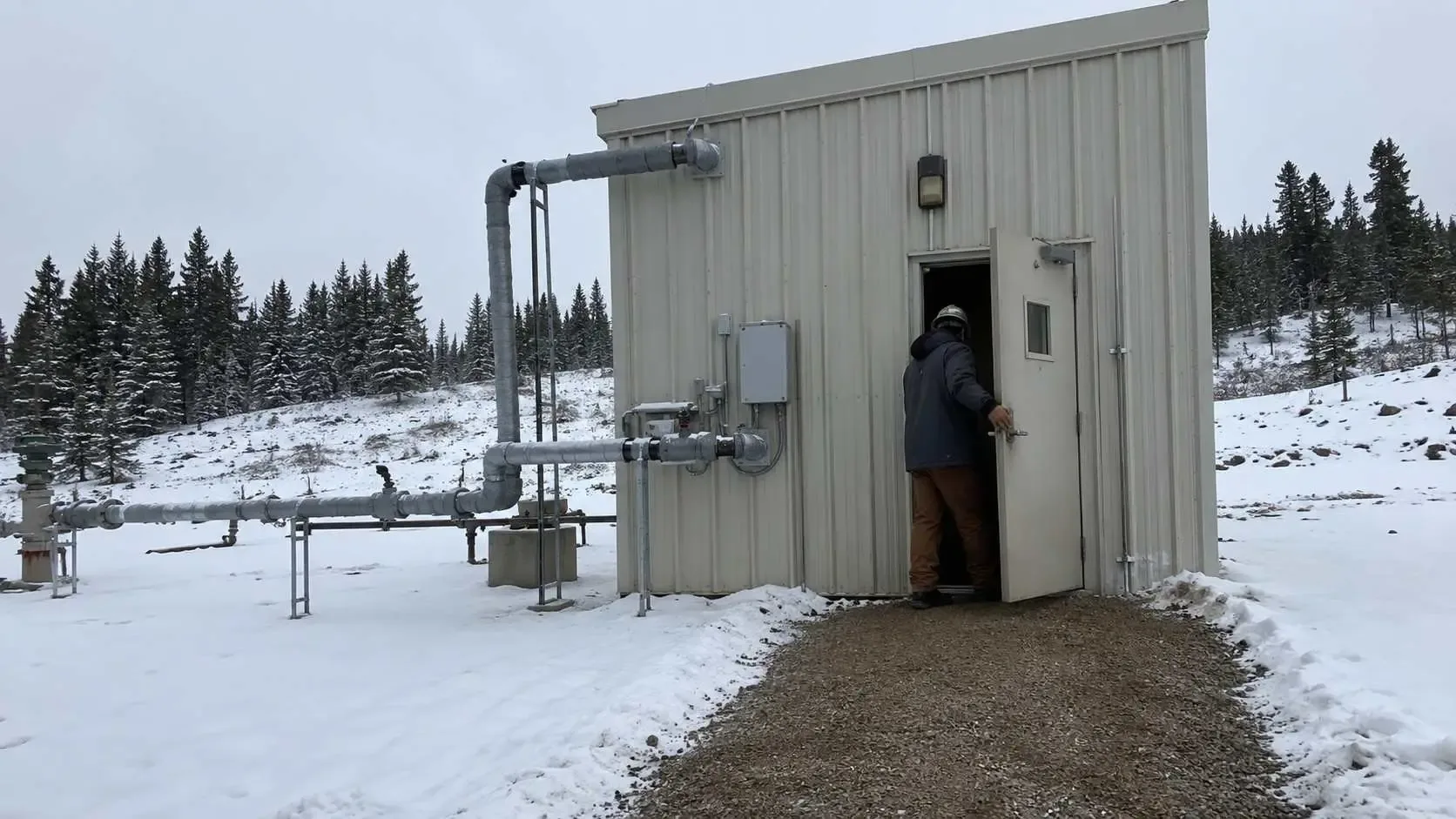
Units must be designed for the site's wastewater and air temperature ranges, altitude and precipitation (section 2.2.3), and every mechanical part must be protected from freezing (section 2.3.14).
Where extreme cold could hurt treatment, enclosures and temperature control are required. Flow meters must be protected against freezing too (section 2.3.2). Ask the vendor for oxygen transfer numbers at your elevation and winter wastewater temperature.
What else does the reviewer look for besides the process units?
Metering, sampling, solids, access, safety and security, which sit outside the vendor's tanks.
- A recording flow meter at the headworks, and both influent and effluent meters where the flows differ, as with sequencing batch reactors and equalization (section 2.3.2).
- Sampling locations and bypasses shown on the process flow diagram (section 1.3.3).
- A separate aerated solids holding tank when there is no digester, with its sizing and the final disposal plan in the PDR (section 11.1.0).
- Room to remove and replace each component (section 2.2.1), and graded walkways to all units (section 2.3.9).
- Safe confined-space entry, lighting, ventilation and shutoffs located away from hazardous equipment (section 2.3.18), plus a lab or workspace for on-site tests (section 2.3.12).
- A 6-foot fence around a mechanical plant, or buildings that control access (section 2.3.17).
When should you check a package plant against the criteria?
Before you order it. Regulation 22 counts procurement of equipment as construction, and construction waits for site location approval, PDR approval and acceptance of the self-certification (section 22.13).
The PDR's hydraulic and organic capacity must match the site location approval (section 1.3.3). After approval, a late vendor swap that changes design capacity or the treatment process needs a new site location approval (section 1.6.0). Settling the unit, the PDR and the site application together is the core of package wastewater treatment plant design in Colorado.
Is your package plant ready for CDPHE review?
If any answer is no, it is not ready to order.
- Are maximum month and peak hour flows documented, including part-day loading and start-up flow?
- At 40,000 gpd or more, are there two units of each process? Below that, is the single-train emergency plan written?
- Does the plant convey all flow and disinfect on standby power?
- Do alarms reach a staffed point, with manual operation outside SCADA?
- Is the design checked for your winter temperatures and altitude?
- Are flow meters, sampling points and solids holding on the drawings?
Then ask your engineer which criteria the unit misses and how each gap will be closed.
Scope: this is general education on WPC-DR-1 (effective June 7, 2022) and Regulation 22 (version effective June 14, 2020) as of October 2026. The Division and your engineer of record decide what applies to your plant.
Frequently asked questions
Do the design criteria apply to a plant of 2,000 gpd or less?
No. They cover works designed to receive more than 2,000 gpd. A smaller onsite system follows the local board of health's regulations under Regulation 43, Colorado's onsite wastewater treatment system regulation (5 CCR 1002-43), section 43.4.A.
Which version of the design criteria applies?
The final design self-certification cites the most recent version (section 22.13). The version CDPHE links today is WPC-DR-1, effective June 7, 2022. The Division announces addenda and minor revisions in its monthly Water Quality Bulletin (section 1.1.0).
I'm developing a 60-lot subdivision in a Colorado mountain county, and the vendor proposes a single-train 30,000 gpd package plant. Will CDPHE accept one train?
It can. Below 40,000 gpd the criteria allow a single train, but the PDR must describe bypass and backup for short, intermediate and long outages, plus an emergency operation plan such as storage or hauling (section 2.3.4). Pumps and blowers still need firm capacity.
I run a seasonal camp in Colorado that fills up on summer weekends and sits nearly empty in winter. How should we size the replacement plant?
Compute loadings for maximum possible occupancy (section 2.1.2) and base process calculations on peak season loads (section 7.1.1). Average the maximum month over the days with real flow, not over all 30 days (section 2.1.0). If flow arrives over fewer than 24 hours a day, upsize by 24 divided by those hours or add equalization (section 2.1.1). Ask how it runs at winter flow.
Related resources
- Colorado Package Wastewater Treatment Plant Permitting: CDPHE Approval, Operations, and Compliance
- CDPHE Site Application vs. Discharge Permit Application: The Two-Step Process Colorado Developers Often Confuse Into One
- Decentralized Wastewater Clusters: Designing Multiple Small Package Plants Across a Phased Development
- Colorado Biosolids Management Regulations: How CDPHE Land Application Rules Differ from Texas for Private Plant Operators
Checking a package plant against Colorado's design criteria?
The easiest time to close a gap is before the unit is ordered and the site application is filed. MES is licensed in Colorado, with an office in Golden, and designs package plants to the criteria from the site application through construction.
We specialize in:
- Package wastewater treatment plant design
- Process design reports
- Site location and discharge permit applications
- Lift stations and collection systems
- Construction administration
Modern Engineering Solutions, McKinney, Texas. Contact: (214) 833-6748 or mod-eng.com
Keep reading
More to read.
Talk to an engineer
Tell us about your project.
An engineer reads it
Not a salesperson. Someone who can tell you whether the pathway is real.
You get a first answer
Your options, the agencies involved and the questions that decide cost and schedule.
You decide
No commitment to have the first call.
Prefer the phone? (214) 833-6748