
Blog
OSSF vs. Centralized Sewer: Choosing Between Travis County Septic Permitting and TCEQ Wastewater Permits for Exurban Sites
Travis County exurban developers choose OSSF by default without evaluating whether density and phasing actually support it. Learn how to make the right call early.
Quick Answer
Choosing between an onsite sewage facility and a centralized wastewater strategy, whether that means extending public sewer, building a private treatment plant permitted under TPDES, or pursuing a TLAP land application approach, depends primarily on projected development density and wastewater flow, site soil and drainage conditions, groundwater and aquifer sensitivity, and whether the project is a single phase low density development or a phased, higher-density subdivision or mixed use project with growth potential beyond what an OSSF can accommodate. OSSF systems, permitted through Travis County under TCEQ’s delegated authority, generally work well for lower-density residential development on sites with adequate soil absorption capacity and sufficient lot size to meet setback and drainfield area requirements, while higher density residential, commercial, mixed use, or phased subdivision projects typically generate flow volumes and site configurations that exceed what OSSF can reasonably support, making centralized wastewater treatment, whether public sewer extension or a permitted private treatment plant, the more appropriate long term strategy. Developers should evaluate this choice based on their project’s actual density and phasing plan during initial feasibility, not on the simple fact that municipal sewer is currently unavailable, since that unavailability doesn’t mean OSSF is automatically the right fit for the specific project being planned.
How OSSF and Centralized Sewer Actually Differ in Practice
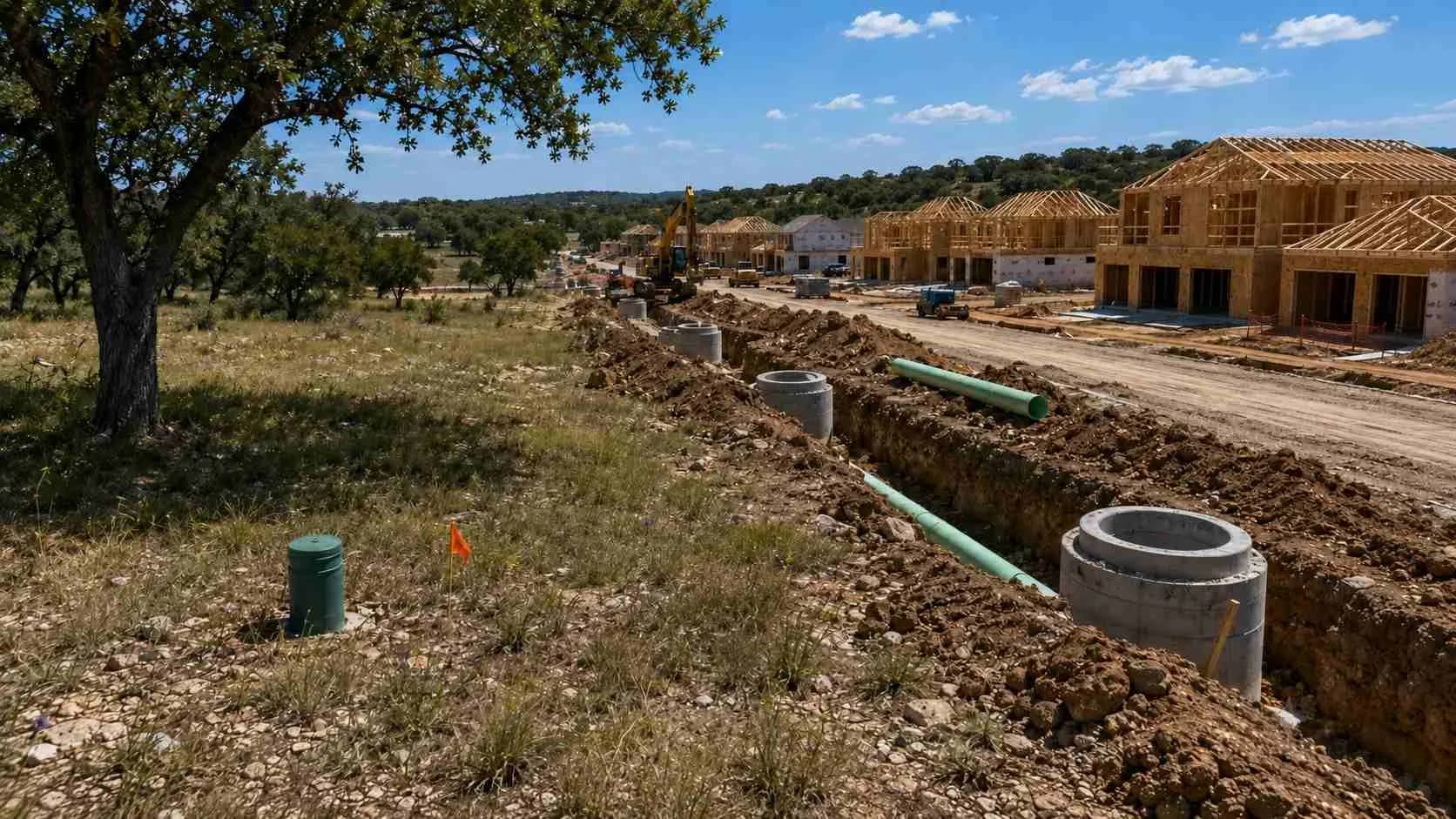
An onsite sewage facility treats and disposes of wastewater entirely within the boundaries of the property it serves, typically through a septic tank and a drainfield or other soil based dispersal system, and its permitting in Travis County proceeds through the county’s OSSF program operating under authority delegated by TCEQ. This approach requires no connection to any offsite infrastructure, no easement acquisition for utility lines, and no coordination with a municipal or private utility’s capacity constraints, which is exactly why it’s attractive for a genuinely rural or low density exurban site where those centralized wastewater considerations would add cost and complexity disproportionate to the project’s scale.
Centralized wastewater treatment, whether achieved through extending to an existing public sewer system, building a private treatment plant permitted under TPDES, or pursuing a TLAP permitted land application approach, treats and disposes of wastewater collectively for multiple lots or units, requiring collection infrastructure, treatment capacity sized for the development’s aggregate flow, and a permitting and design process considerably more involved than an individual OSSF but capable of supporting density and flow volumes far beyond what site by site OSSF systems can reasonably accommodate.
Site Size, Soil Conditions, and Drainage as the First OSSF Feasibility Checks
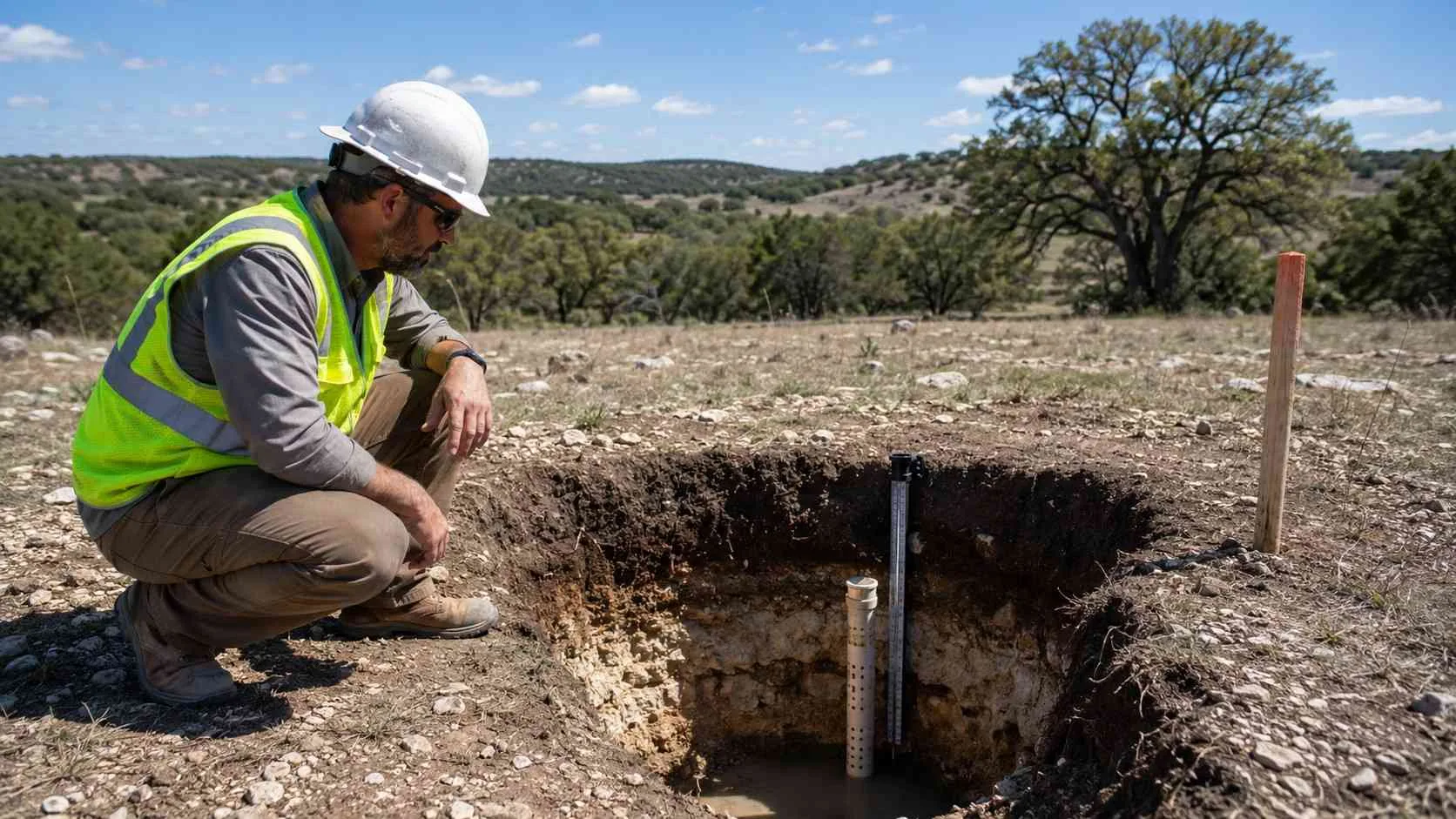
An OSSF’s feasibility on a specific site depends heavily on lot size adequate to accommodate the required setbacks from property lines, wells, and water features, along with a drainfield sized appropriately for the site’s specific soil absorption characteristics, which vary considerably across Travis County and the broader Central Texas region depending on local soil type and depth to bedrock or restrictive soil layers. A site with poor soil absorption characteristics, shallow soil depth over bedrock, or inadequate lot size to accommodate required setbacks and drainfield area may not support a conventional OSSF at all, requiring either an alternative OSSF technology with its own added cost and maintenance requirements, or a shift toward a centralized wastewater strategy instead.
Drainage conditions on the site also affect OSSF feasibility, since a drainfield’s function depends on adequate unsaturated soil depth to properly treat effluent before it reaches groundwater, and a site with high groundwater, seasonal saturation, or poor natural drainage can present a genuine constraint on OSSF viability that soil type testing alone might not fully reveal without a more complete site evaluation.
Groundwater Sensitivity and Aquifer Protection Considerations
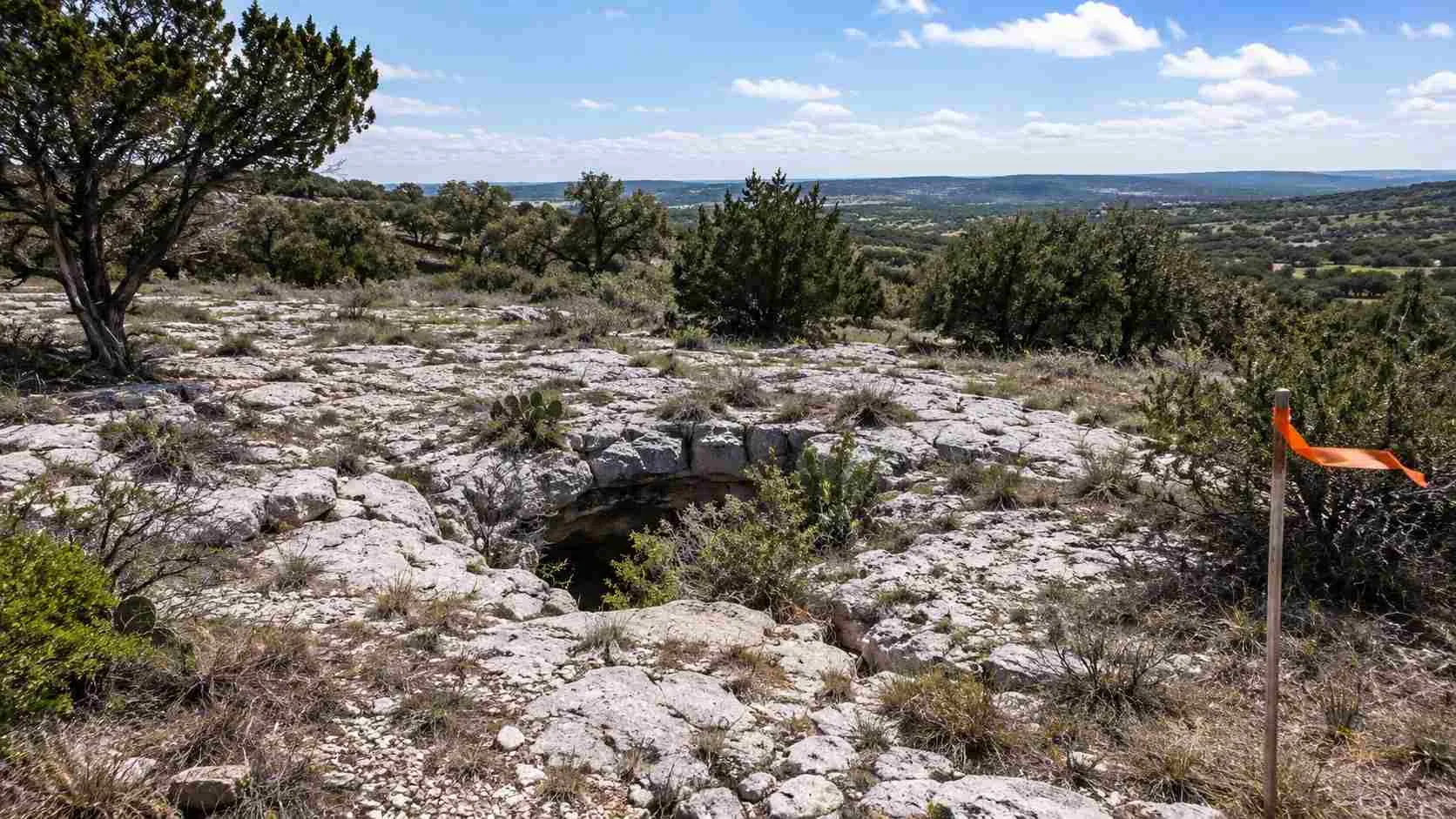
Central Texas sites overlying the Edwards Aquifer or other sensitive groundwater resources carry additional scrutiny for OSSF siting, since a drainfield’s effluent dispersal needs to maintain adequate protective distance and treatment performance to avoid contaminating groundwater that may feed sensitive aquifer zones or springs, a consideration directly relevant to sites within or near Barton Springs Edwards Aquifer Conservation District jurisdiction or other aquifer-sensitive Central Texas locations. This aquifer sensitivity can result in more stringent OSSF siting or design requirements in these areas than a comparable site outside sensitive aquifer zones would face, and in some cases can push a project toward centralized treatment specifically to reduce the groundwater contamination risk multiple individual OSSF systems across a subdivision might otherwise represent in aggregate.
Development Density and Flow Projections as the Core Decision Driver
The most direct factor determining whether OSSF or centralized wastewater treatment fits a specific project is the development‘s density and resulting wastewater flow projection, since OSSF systems are designed and permitted for individual lot scale flow volumes, and a project generating flow volumes well beyond what individual lot scale OSSF systems were designed to handle, whether through higher residential density, commercial use, or mixed use programming, needs a wastewater strategy scaled to match that aggregate flow. A single-family subdivision at low density with adequately sized lots may support individual OSSF systems for each lot reasonably well, while the same acreage developed at higher density, or developed with any commercial or mixed-use component, likely generates flow and site configuration considerations that exceed what lot by lot OSSF can support.
Calculating projected wastewater flow for the project’s actual proposed density and use mix, rather than assuming based on the site’s rural or exurban location that OSSF is automatically appropriate, is the necessary first step in this evaluation, and this flow calculation should inform which wastewater strategy gets evaluated in detail rather than following as an afterthought once OSSF has already been assumed as the default path.
Phased Growth and Why OSSF Can Become the Wrong Long Term Answer
A project that begins as a lower density initial phase, potentially well suited to OSSF, but that anticipates higher density later phases or future rezoning toward more intensive use, faces a specific strategic decision about whether to build individual OSSF systems for the initial phase or invest in centralized wastewater infrastructure upfront that can accommodate the full anticipated build out. Building OSSF systems for an initial phase that later needs to transition to centralized treatment as density increases can mean essentially starting the wastewater infrastructure investment over, since OSSF systems generally can’t be readily converted into or integrated with a centralized collection and treatment system serving later, higher-density phases.
This phased growth consideration follows the same phased capacity planning logic relevant to master planned community wastewater design generally, and developers with a multi phase project spanning a meaningful density range across phases should evaluate whether centralized treatment, sized and phased appropriately from the outset, ultimately proves more cost-effective and strategically sound than an OSSF approach for early phases that will need to be abandoned or supplemented once later, higher density phases come online.
Comparing Private WWTP, TLAP, and Reuse Against Public Sewer Extension
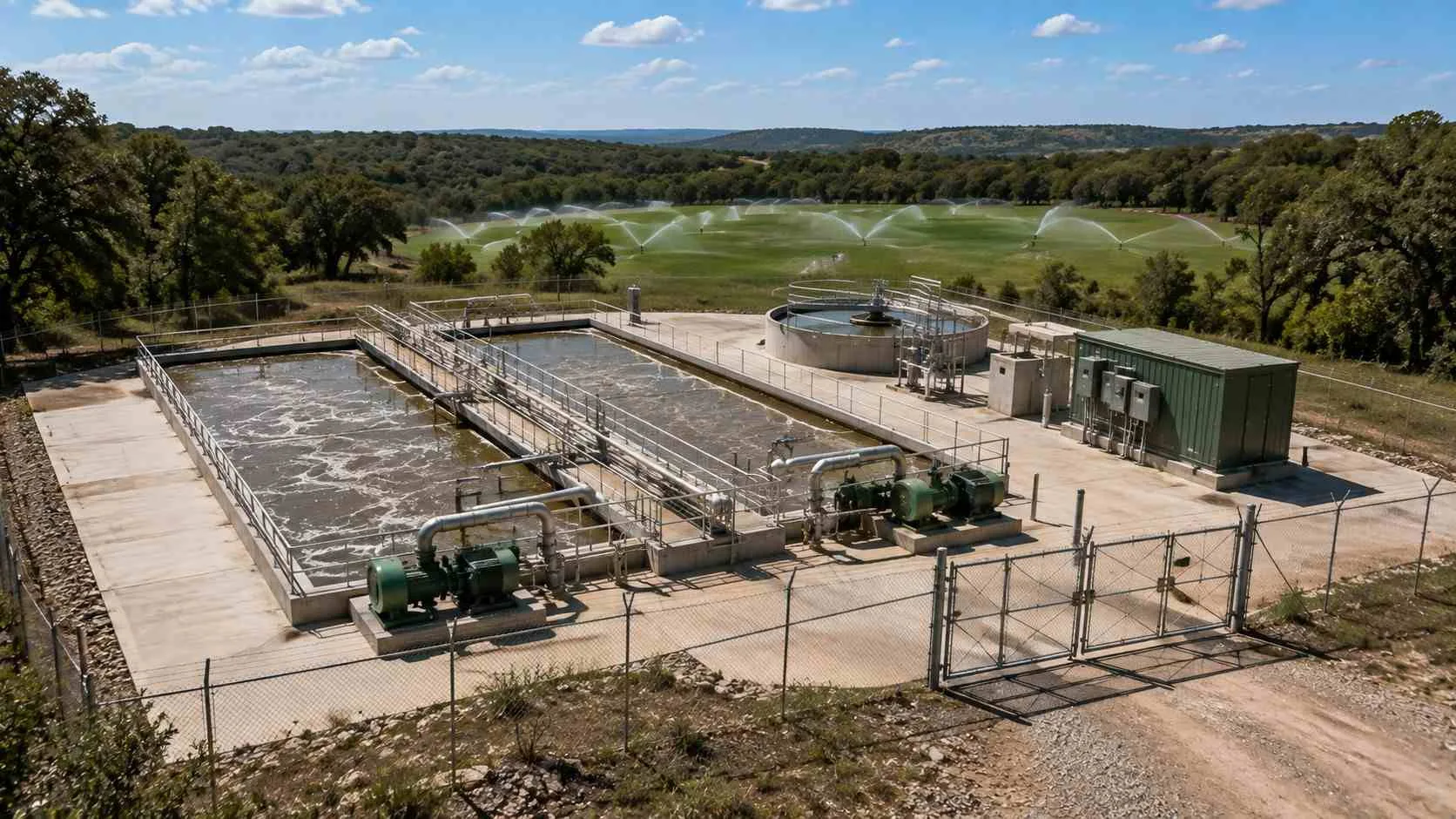
Where a project’s density or flow profile points toward centralized treatment rather than OSSF, but public sewer extension is unavailable, too costly, or too far outside the project’s timeline, evaluating a private wastewater treatment plant permitted under TPDES, or a TLAP permitted land application approach, against the specific cost and timeline of extending public sewer follows the same comparative feasibility framework relevant to public-versus-private treatment decisions generally. For exurban sites with meaningful irrigation demand or open space suitable for land application, TLAP and Chapter 210 reclaimed water reuse can offer a specific advantage by addressing both wastewater disposal and irrigation water supply through the same infrastructure investment, a consideration worth weighing directly against a straightforward TPDES permitted discharge alternative.
This comparison should account for each option’s permitting timeline, since TPDES and TLAP permitting each carry their own specific regulatory review process and typical duration, construction cost, and long term operational responsibility, since a privately owned treatment plant or land application system requires ongoing operation and maintenance that a public sewer connection, once complete, transfers to the municipal utility instead.
What Endangered Species and Habitat Sensitive Review Can Add to the Timeline
For utility extensions, easements, or infrastructure construction affecting environmentally sensitive areas within Travis County and the broader Central Texas region, including habitat relevant to species protected under the Endangered Species Act or covered by regional habitat conservation planning, developers should anticipate an additional review layer that can affect both the routing options available for a centralized wastewater extension and the project’s overall permitting timeline. Where a utility corridor or construction area overlaps habitat-sensitive terrain, this review can require specific construction timing restrictions, alternative routing to avoid sensitive habitat, or a more extended environmental review process than a comparable utility project in a non habitat sensitive area would face.
Confirming early whether a project’s specific utility extension or construction footprint intersects habitat sensitive areas, and what specific review or permitting process applies as a result, allows a developer to build this potential timeline extension into the overall project schedule rather than discovering it as an unanticipated delay once utility construction planning is already underway.
How to Actually Make This Decision for Your Specific Project
The right wastewater strategy for a specific exurban Central Texas site depends on the combination of density and flow projection, soil and groundwater conditions, phasing plan, distance to adequate public sewer capacity if any exists nearby, and any habitat sensitive review your specific site or utility corridor might trigger, and no single factor in isolation determines the right answer for every project. Evaluating these factors together, specifically for your site and your actual development program, during initial feasibility rather than defaulting to OSSF because the site sits outside municipal sewer service, is the practical way to choose a wastewater strategy that fits your project’s actual scale and growth trajectory rather than one chosen by default that your project later outgrows.
Frequently Asked Questions
Can we start with OSSF for our initial development phase and switch to centralized treatment later if our project grows as planned?
This is technically possible in some cases but generally isn’t cost effective, since OSSF infrastructure built for an initial phase typically can’t be integrated into a later centralized collection and treatment system, meaning the OSSF investment is largely lost once the transition happens. Evaluating your full anticipated build out density during initial planning, rather than only your first phase’s density, gives you a more accurate picture of whether centralized treatment makes more sense from the outset.
How do we know whether our specific site’s soil conditions will support a conventional OSSF or whether we’ll need a more expensive alternative system?
This requires site specific soil testing and evaluation performed as part of your Travis County OSSF permitting process, since soil absorption characteristics vary considerably even within a relatively small geographic area, and a general assumption based on the broader region’s soil reputation isn’t a substitute for site specific testing on your particular parcel.
If our site is near a sensitive aquifer area, does that automatically rule out OSSF as an option?
Not automatically, but it typically means more stringent siting, design, or setback requirements apply to any OSSF proposed in that area, and depending on your project’s density and the specific aquifer sensitivity classification, evaluating a centralized alternative may prove more practical than meeting these more stringent OSSF requirements at the individual lot scale across an entire subdivision.
Related Resources
- Land Application Permits in Texas: A Faster Path to Wastewater Approval for Developers
- NTMWD Connection vs. Private Treatment: The McKinney Developer’s Guide to Choosing the Right Wastewater Path
Choosing the Right Wastewater Strategy for an Exurban Travis County Site?
MES works with Austin area developers, landowners, and project teams to evaluate OSSF feasibility, compare centralized wastewater options including public sewer extension, private TPDES permitted treatment, and TLAP land application, and identify habitat sensitive review requirements before site plan or pro forma decisions are finalized.
We specialize in:
- OSSF feasibility evaluation including soil, drainage, and groundwater sensitivity assessment for Travis County sites
- Wastewater flow projection and density analysis to match treatment strategy with actual project scale
- Private wastewater treatment plant design and TPDES and TLAP permitting for exurban Central Texas development
- Phased wastewater infrastructure planning for subdivisions and mixed use projects with multi phase density growth
- Reclaimed water and Chapter 210 reuse integration for sites with irrigation or land application potential
- Habitat sensitive review coordination for utility extensions and easements affecting environmentally sensitive areas
Modern Engineering Solutions, Austin, Texas. Contact: (214) 833-6748 or mod-eng.com
Keep reading
More to read.
Talk to an engineer
Tell us about your project.
An engineer reads it
Not a salesperson. Someone who can tell you whether the pathway is real.
You get a first answer
Your options, the agencies involved and the questions that decide cost and schedule.
You decide
No commitment to have the first call.
Prefer the phone? (214) 833-6748