
Blog
Title 22 Recycled Water in San Jose: The Fastest Path to Water Approvals
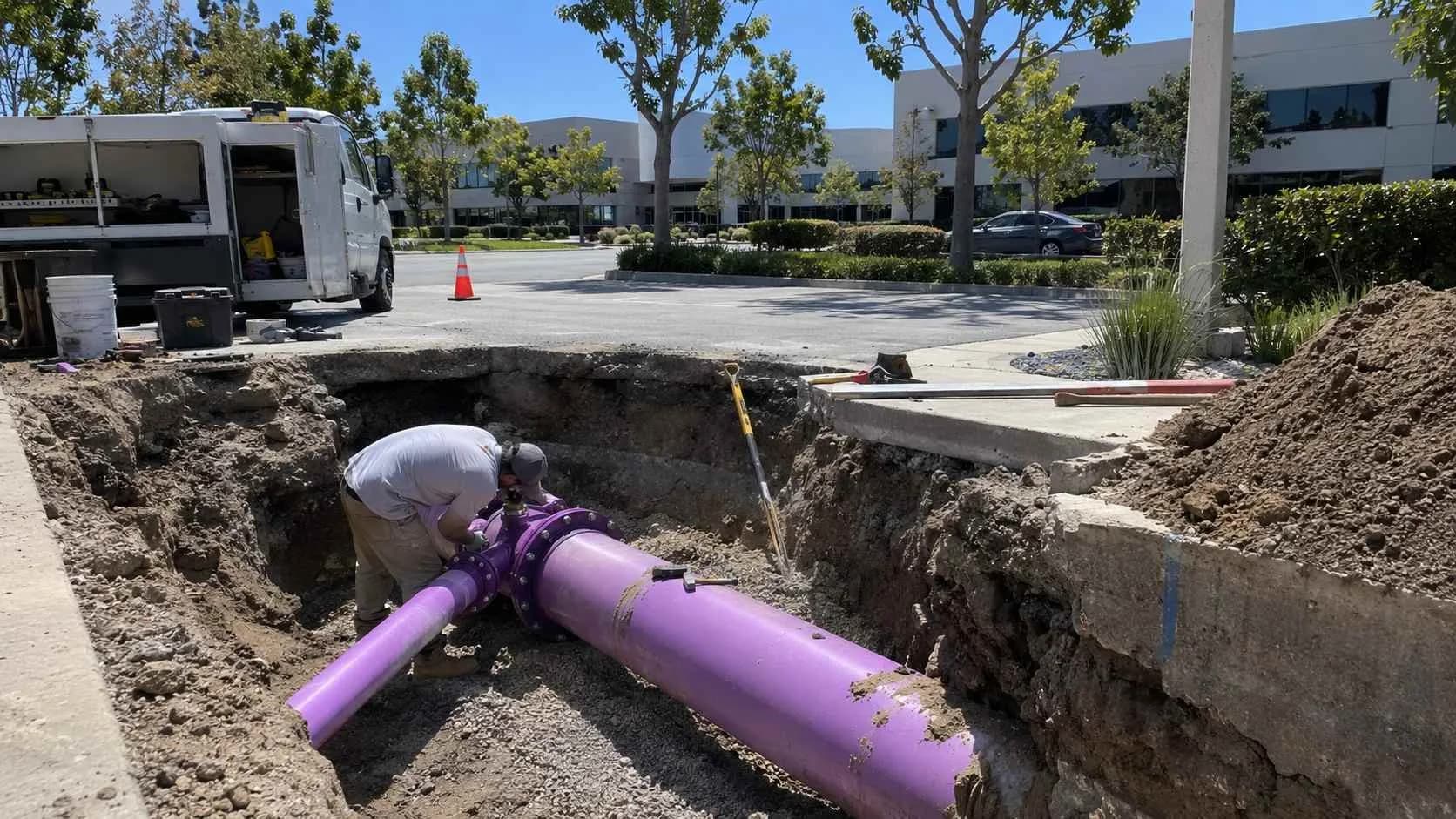
San Jose has an existing purple pipe network most cities lack. See why that changes the availability question but not the Title 22 compliance work.
Quick Answer
San Jose sits within South Bay Water Recycling’s service area, an established recycled water program operating over 150 miles of purple pipe infrastructure across San Jose, Santa Clara, and neighboring communities, which means many development sites in the area have a real, physically nearby recycled water source available in a way that would require building an entirely new distribution system elsewhere in California. That existing infrastructure genuinely can make recycled water use faster to implement for a San Jose project than starting from scratch would be in a city without a comparable network. It does not eliminate the Title 22 engineering report, DDW and local agency review, cross-connection control design and testing, backflow prevention, signage, user agreements, and as-built documentation requirements that govern any recycled water connection, the same framework we described in detail for Title 22 projects generally. A San Jose developer who assumes proximity to SBWR’s purple pipe network means recycled water approval will be quick and simple is skipping the actual engineering and agency coordination work that determines whether a connection happens on schedule or becomes its own bottleneck layered on top of the rest of the project’s approvals.
Why San Jose’s Existing Infrastructure Changes the Availability Question, Not the Compliance Question
South Bay Water Recycling’s purple pipe network, built out since the 1990s and now delivering recycled water across a substantial service area, means a San Jose project evaluating recycled water use is often asking a different first question than a project in a jurisdiction without comparable infrastructure. Instead of “is building a recycled water distribution system to reach our site even feasible,” many San Jose sites are asking “is our site close enough to existing SBWR infrastructure to connect economically,” a meaningfully easier starting point that can make recycled water genuinely more attractive for irrigation, cooling, or industrial reuse than it would be in an area requiring new distribution infrastructure from the ground up.
This infrastructure advantage is real, but it answers an availability question, not a compliance question. Connecting to SBWR’s existing system still requires the connecting project to meet Title 22’s recycled water criteria for its specific intended use, still requires an engineering report addressing the connecting project’s own distribution, cross-connection control, and monitoring design, and still requires coordination with SBWR itself as the recycled water provider alongside DDW and any other applicable review. Proximity to existing purple pipe shortens the infrastructure question considerably. It does nothing to shorten the engineering and regulatory work the connecting project itself still has to complete correctly.
What the Title 22 Engineering Report Still Requires for a San Jose Connection
The Title 22 engineering report requirements we described in detail for California recycled water projects generally apply in full to a San Jose project connecting to SBWR’s system, use area boundaries and demand estimation specific to the connecting site, treatment process verification, though for many San Jose connections the treatment itself has already occurred upstream at SBWR’s facility, meaning the connecting project’s report focuses more heavily on distribution design, monitoring, and cross-connection control than on treatment process description.
Distribution design for the connecting project still needs its own engineering, sizing the purple pipe network within the project site itself, from the connection point to SBWR’s main to each individual use area on the property, dual plumbing design where the project includes both potable and recycled water piping, and coordination with the site’s overall utility layout so recycled water distribution doesn’t conflict with other underground infrastructure during construction. A developer who assumes that because SBWR already treats and delivers recycled water to the property line, the connecting project’s own engineering work is minimal, is underestimating what actually goes into a compliant onsite distribution design.
Irrigation, Cooling, and Industrial Reuse: Different Uses, Different Design Requirements
Irrigation reuse, the most common application for SBWR connected properties, particularly landscape irrigation for common areas, parks, and golf courses within the service area, requires use area mapping and public access classification the same way any Title 22 irrigation reuse project does, since the required quality standard and monitoring intensity depend on how much public contact the specific irrigated area involves. A San Jose project with multiple distinct irrigation zones, some with unrestricted public access and others more limited, needs each zone’s classification and requirements addressed individually in the engineering report rather than treating the entire site’s irrigation as a single undifferentiated use.
Cooling tower reuse and industrial reuse applications, increasingly relevant given the data center and industrial development interest in the South Bay, bring the same water quality and reliability considerations we described for data center cooling water generally, and connecting to SBWR’s recycled water for cooling makeup rather than sourcing cooling water from potable supply or onsite reuse can be a genuinely attractive option where the connecting project’s cooling water quality requirements align with what SBWR delivers. Confirming that alignment, whether SBWR’s recycled water quality is actually suitable for the specific cooling system’s requirements without additional treatment, or whether some polishing treatment is still needed onsite, is a technical question that has to be answered specifically for the connecting project’s actual cooling system design, not assumed favorably because recycled water is available nearby.
Cross Connection Control, Backflow Prevention, and Signage: The Requirements That Don’t Shrink With Proximity
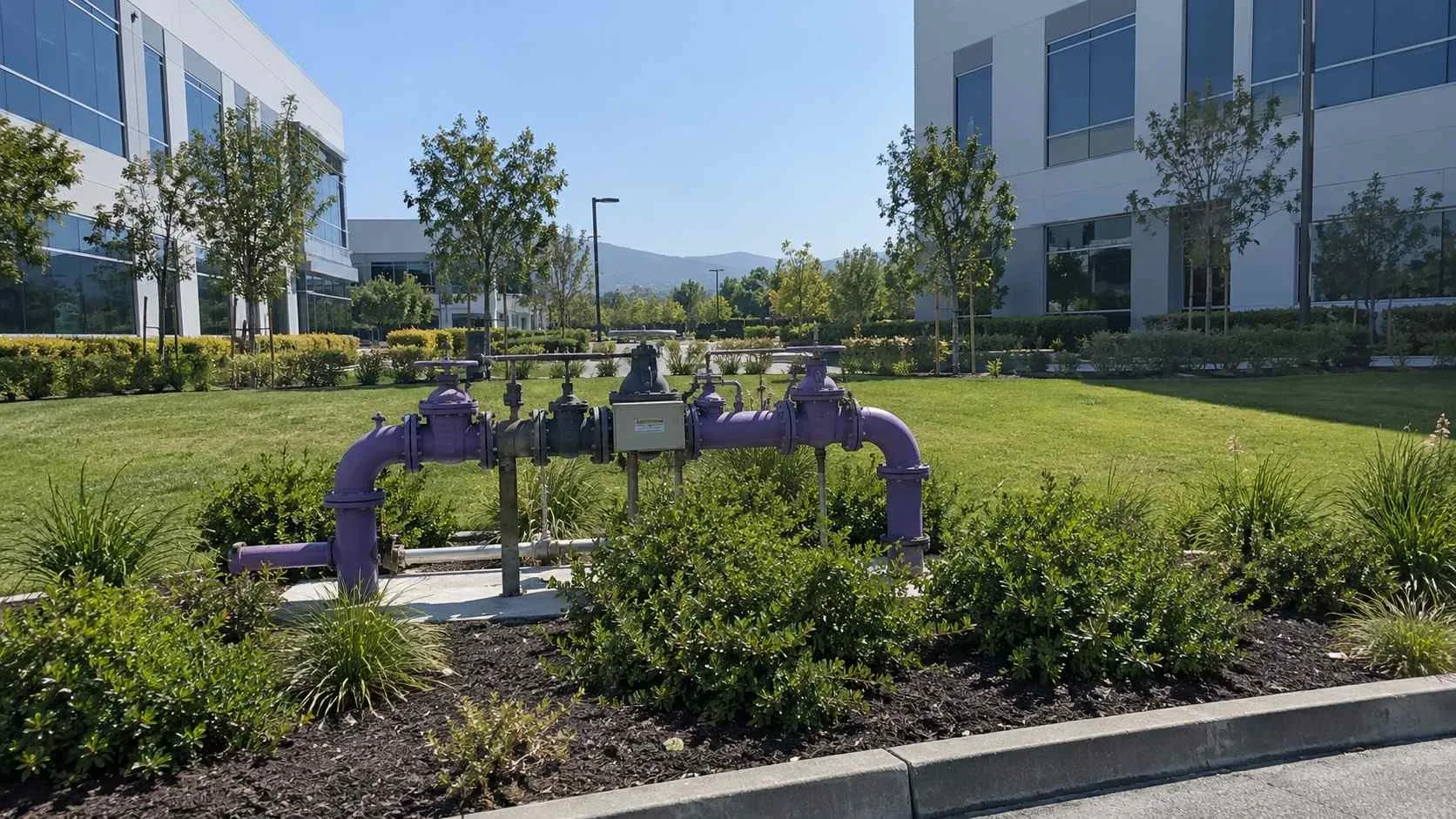
Cross connection control requirements, preventing any unauthorized connection between the recycled water distribution system and the property’s potable water system, apply with full force regardless of how established the upstream recycled water source is, because the risk cross connection control addresses exists entirely within the connecting project’s own onsite plumbing, not in SBWR’s upstream infrastructure. Backflow prevention devices at every point where recycled and potable systems could conceivably interact, purple pipe signage and labeling throughout the distribution system identifying it clearly as non-potable, and a documented cross connection control testing program are all required elements of the connecting project’s own compliance package, independent of the upstream source’s maturity.
A common mistake on San Jose connections is treating cross connection control as a lighter touch requirement because the recycled water itself comes from an established, well regulated regional provider rather than a newly built onsite treatment system, as though the source’s credibility somehow reduces the onsite risk a cross connection would create. It does not. The risk being managed is entirely about what happens within the connecting project’s own plumbing, and that risk is identical whether the recycled water source is a brand new onsite system or an established regional network that has been operating reliably for decades.
User Agreements, Multi Tenant Coordination, and the SBWR Connection Process Itself
Multi tenant or multi parcel San Jose developments, a business park, a mixed use project with multiple ground floor tenants, an HOA governed community with shared irrigation areas, face the same user agreement coordination burden we described for Title 22 projects generally, defining each user’s responsibility for cross connection control, signage maintenance, and reporting obligations across multiple parties sharing a single recycled water connection. Getting these agreements drafted and executed takes real time, and a project’s SBWR connection application submitted while these agreements are still being negotiated faces the same incomplete submission problem any Title 22 project faces when its operational responsibilities haven’t actually been established yet.
SBWR’s own connection process, application, review, agreement execution, and physical connection to the existing main, runs on its own timeline that a project needs to coordinate with its broader Title 22 engineering report submission and DDW review, rather than assuming SBWR’s process happens automatically once the engineering report is approved elsewhere. Confirming SBWR’s specific current application requirements and connection timeline directly, early in a project’s planning, is the step that lets a developer build a realistic combined schedule instead of discovering a SBWR specific requirement mid process that the broader Title 22 report submission did not anticipate.
Monitoring, Inspections, and As Built Documentation That Close Out the Connection
Monitoring point placement within the connecting project’s own distribution system, inspections confirming the built distribution system matches the approved engineering report, and as built documentation reflecting exactly what was actually constructed are the closing steps that finalize a San Jose recycled water connection, the same documentation discipline that matters for avoiding the kind of built versus approved drift we’ve described causing problems on other permitted systems when field changes during construction aren’t captured and reconciled against the approved design.
A project that treats as built documentation as a formality to complete after construction wraps up, rather than an ongoing discipline tracking field changes as they happen throughout construction, risks a final inspection that surfaces discrepancies requiring correction before the connection can actually be approved for service, adding time at exactly the point in the project where a developer most wants to be closing out rather than reopening design questions.
Whether Recycled Water Actually Speeds Up a San Jose Project’s Water Approvals
The honest answer to whether recycled water speeds up water approvals for a San Jose project is that it depends on what “water approvals” the project actually needs. If a project’s potable water demand is meaningfully reduced by shifting irrigation, cooling, or industrial process water to a recycled water connection, and that reduction eases a potable water capacity or entitlement condition that would otherwise be a constraint, recycled water use can genuinely support faster or smoother approval on that front. It does not, on its own, eliminate the separate engineering report, cross-connection control, user agreement, and SBWR coordination work required to actually implement the recycled water connection, work that has its own realistic timeline running in parallel with, not automatically faster than, other project approvals.
Frequently Asked Questions
Does San Jose’s existing purple pipe infrastructure mean recycled water approval is automatic?
No. SBWR’s existing network makes the water source physically available to many sites without requiring new distribution infrastructure, but the connecting project still needs its own Title 22 engineering report, cross-connection control design, and SBWR connection process, none of which are skipped just because the upstream source is established.
Does using recycled water actually speed up a San Jose project’s overall water approvals?
It can, specifically where reducing potable water demand eases a capacity constraint or entitlement condition tied to potable supply. It does not shorten the separate engineering, cross connection control, and agency coordination timeline the recycled water connection itself requires, which runs on its own schedule.
What documents does a San Jose project need to connect to SBWR’s recycled water system?
A Title 22 engineering report covering use area mapping, distribution design, and monitoring, cross connection control testing documentation, user agreements for multi tenant sites, and SBWR’s own connection application, coordinated with DDW review and as built documentation once construction is complete.
What design mistakes cause the most delay on San Jose recycled water connections?
Treating cross connection control as a lighter requirement because the source is an established regional provider, submitting a SBWR connection application before multi tenant user agreements are finalized, and inconsistencies between as-built conditions and the approved engineering report are the most common sources of added delay.
How does MES help a San Jose developer connect to recycled water without it becoming a bottleneck?
We confirm SBWR’s specific current connection requirements and timeline early, design the onsite distribution and cross connection control system to Title 22 standard from the start, coordinate multi tenant user agreements in parallel with the engineering report rather than after it, and manage as built documentation through construction so the final connection inspection confirms compliance rather than surfacing discrepancies.
Related Resources
- The Title 22 Engineering Report: The Real Bottleneck in California Recycled Water Projects
- Understanding Order WQ 2016-0068-DDW: California’s General Recycling Authorization
- Permitting Land Application: Choosing Between WDRs and Recycled Water Rules
Evaluating a Recycled Water Connection for Your San Jose Project?
If your site sits near South Bay Water Recycling’s purple pipe network and you’re weighing whether a recycled water connection actually helps your approval timeline, MES can confirm SBWR’s requirements and build the Title 22 engineering report and cross connection control design before the connection process becomes its own delay.
We specialize in:
- Site proximity and connection feasibility assessment against SBWR’s existing network
- Title 22 engineering report preparation for distribution design and use area mapping
- Cross connection control and backflow prevention design specific to your onsite plumbing
- User agreement coordination for multi tenant or multi parcel connections
- Direct coordination with South Bay Water Recycling and DDW
- As built documentation management through construction to closeout
Modern Engineering Solutions, San Jose, California. Contact: (214) 833-6748 or mod-eng.com
Keep reading
More to read.
Talk to an engineer
Tell us about your project.
An engineer reads it
Not a salesperson. Someone who can tell you whether the pathway is real.
You get a first answer
Your options, the agencies involved and the questions that decide cost and schedule.
You decide
No commitment to have the first call.
Prefer the phone? (214) 833-6748