
Blog
When Lift Station Force Mains Fail: Your Colorado Community’s CIPP Solution
CIPP force main rehabilitation can renew a failing Colorado lift station force main in place when it passes the pressure, surge, capacity and bypass checks.
Quick answer
CIPP force main rehabilitation can renew a failing lift station force main in place, through pits instead of a trench. It fits when the liner can carry the main's working and surge pressure, the smaller bore still carries peak flow, and the flow can be bypassed during the work.
Why do lift station force mains fail?
Corrosion, leaking joints and pressure surges cause most failures in iron and steel mains. In the failure data compiled in EPA's 2010 State of Technology Report for Force Main Rehabilitation, internal corrosion explained 26.2 percent of ferrous force main failures.
External corrosion followed at 19.2 percent, then joint leakage at 15.2 percent and surge pressure at 10.2 percent. Plastic and other non-ferrous mains fail differently: third-party damage accounted for 36 percent of their failures.
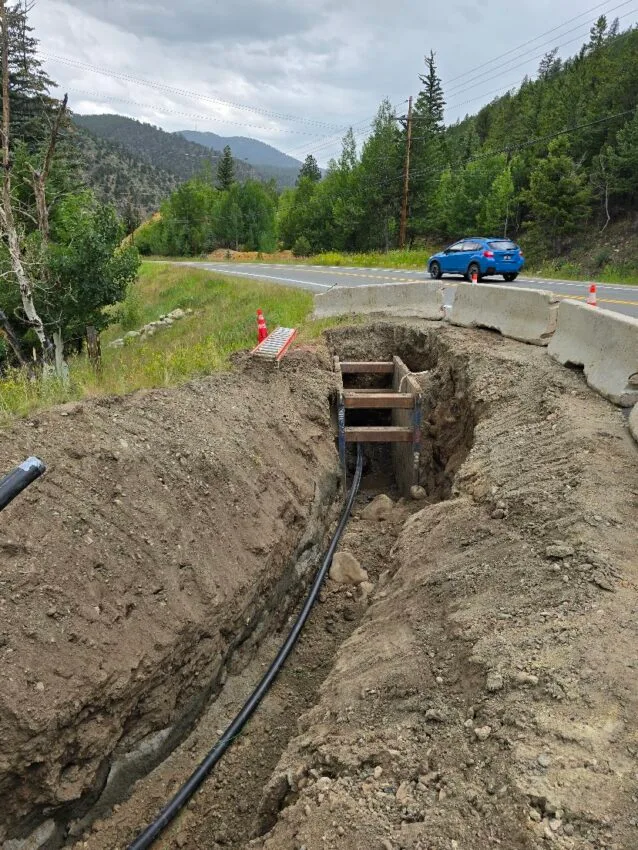
Internal corrosion starts with hydrogen sulfide. A force main runs full under pressure, so the sewage has no chance to pick up oxygen, as EPA's 1991 report to Congress on hydrogen sulfide corrosion describes. The 2010 report adds that force main sewage can release hydrogen sulfide gas at high points or near discharges.
The same gas attacks the discharge manhole at the end of the line. Our post on why Colorado manholes fail covers that side.
Why is a force main break an emergency?
The pumps keep pushing sewage out of the break, and there is rarely a second pipe to switch to. EPA's 2010 report warns that a force main rupture could release millions of gallons of raw sewage. Without a redundant main, any cleaning or repair needs bypass pumping.
In Colorado, CDPHE asks that water quality spills be reported to its incident hotline within 24 hours of discovery, and it provides a five-day spill report form for the written follow-up.
When can CIPP line a force main instead of replacing it?
When the host pipe, the pressure and the flow all fit a liner design. ASTM F1216 covers cured-in-place pipe for gravity and pressure lines from 2 to 108 inches. A resin-saturated tube is inverted into the old pipe and cured with hot water, steam or light into a continuous, tight-fitting new pipe.
The fit is narrower than for gravity sewers. EPA's report found few rehabilitation products designed specifically for sewer force mains, so check each product's pressure rating and test data against your main.
Replacement is the better path when you need more capacity, when the main has to move, or when the station's flow cannot be bypassed for the length of the job.
What does the engineer check first?
Five things: liner class, surge, capacity, bypass and access. A no on any of them can rule CIPP out.
Liner class and pressure
EPA's 2010 report describes the four design classes in the AWWA M28 manual of that time. Class I liners only protect against corrosion. Class II and III liners bridge holes and gaps but still rely on the host pipe. Class IV liners carry the full internal pressure without help from the host pipe.
If the old main can no longer hold pressure on its own, you need an independent liner. EPA says that kind of liner must carry the full working pressure and surge pressure itself, and that interactive liners should not be used in mains that far gone.
Surge
Pump starts, stops and power failures send pressure waves through a force main. Design the liner for the worst transient, not the normal operating pressure, and get a transient analysis if you have none.
Capacity
Every rehabilitation method shrinks the bore, EPA notes, though a smoother new wall offsets part of the loss. Check the pumps against the new system curve at peak flow. If the main is already short on capacity, replacement may be the only workable answer.
Bypass pumping
The main must come out of service to be cleaned, lined and cured. Plan bypass pumps, temporary piping and wet well storage for the whole outage, sized for peak flow, with a backup pump on site.
Access pits and fittings
Lining runs from pit to pit. The CIPP products in EPA's review listed runs of up to about 600 to 1,200 feet, depending on the product and diameter. Some could pass a 90-degree bend; others were limited to 45 degrees.
Valves, large fittings and air release points often need their own pits. For one product EPA reviewed, every large connection and fitting had to be excavated and reconnected with mechanical fittings.
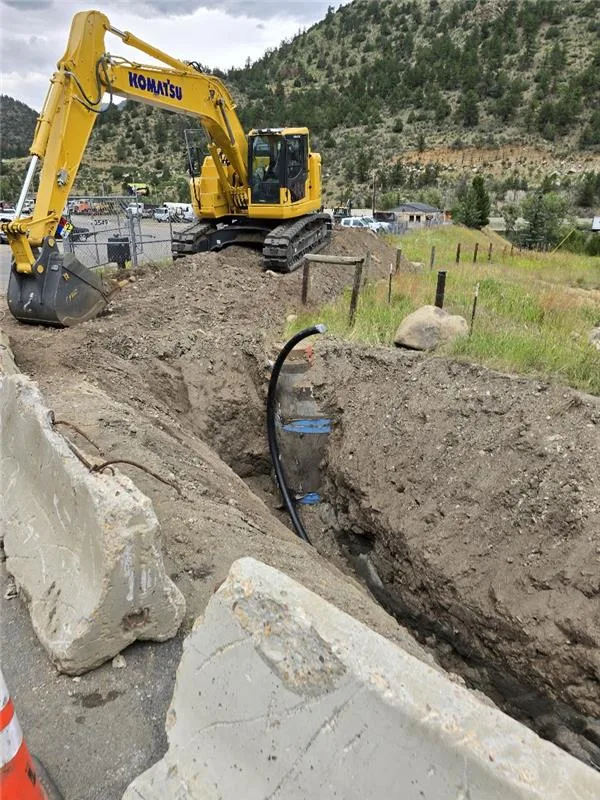
What does the lining sequence look like?
Bypass, clean, line, cure, test and reconnect. The details vary by product, but the order rarely does.
- Set up bypass pumping and take the main out of service.
- Dig the access pits at each end of the run and at fittings.
- Clean the main and inspect it with a camera.
- Insert the resin-saturated tube by inversion or by pulling it in, then cure it with hot water, steam or light.
- Inspect the finished liner with a camera and pressure test it.
- Seal and reconnect the ends, restore valves and air release points, and return the main to service.
On testing, EPA's report says a post-installation camera inspection is the most common check and recommends leak tightness testing. For two of the CIPP products it reviewed, the recommended pressure test was twice the operating pressure or operating pressure plus 50 psi, whichever is less. Another called for 120 percent of working pressure.
What changes for a Colorado force main?
Elevation, early frost and highway crossings. Each one shapes the schedule and the permit list.
- Static head: steep routes raise operating pressure, which feeds straight into the liner class.
- Frost: the Colorado Climate Center's 2024 review of first fall freezes found they track elevation, with the high country freezing first. Plan pits and bypass lines for the warmer months.
- Highways: Colorado's State Highway Utility Accommodation Code, 2 CCR 601-18, requires a CDOT permit before utility work in state highway right-of-way, including maintenance an existing permit does not cover (Section 2.2.1.1). Fewer, smaller pits mean less work in the road.
From our own work: a Colorado mountain community MES worked with had a failing force main under a state highway. We coordinated the lift station shutdown and temporary bypass pumping while the contractor cleaned the main and installed a pressure-rated liner cured with heat. The work took weeks rather than months, and the highway stayed open except for small access excavations.
Our Colorado collection systems page covers our sewer collection work in the state.
Is your force main a candidate for CIPP?
A no on item 2, 3 or 4 means you need a design study before a lining bid.
- Do you know the pipe material, age, diameter and length?
- Do you have operating pressure data and a surge estimate?
- Can the station's flow be bypassed or stored for the whole outage?
- Will the pumps still meet peak flow with a slightly smaller bore?
- Are the valves, fittings, bends and air release points mapped?
- Is the main free of planned upsizing or rerouting?
- Do you know which permits apply, such as a CDOT utility permit?
Then ask your engineer which liner class the pipe's condition calls for, and how the bypass will handle a wet-weather peak. Our page for utilities and municipalities shows how we work with owners on that kind of decision.
A note on limits: this is general education from EPA reports, an ASTM summary and Colorado agency sources, current as of October 2026. Much of EPA's force main data dates to 2010, and liner products may have changed since, so check current product data with your engineer.
Frequently asked questions
Can a force main stay in service while it is lined?
No. The main has to be shut down and cleaned, so the station's flow is bypassed or stored until the liner is cured, tested and reconnected.
Does lining reduce force main capacity?
Somewhat. EPA notes that every rehabilitation method reduces the cross-section, though smoother walls offset part of the loss. A main already short on capacity may need replacement.
I'm the utility manager for a Colorado mountain town, and our lift station force main runs under a state highway. Can we line it without trenching across the road?
Possibly, if the main suits a liner. Pits at each end of the run, outside the roadway where you can, replace the long trench. You still need a CDOT utility permit for work in state highway right-of-way, and traffic control for any pit near the road.
I run public works for a small Colorado district, and our ductile iron force main has broken twice near its discharge this year. Is lining worth studying before we replace it?
Yes, study it first. Internal corrosion is the top cause of iron and steel force main failures in EPA's data, and EPA notes that force mains can release hydrogen sulfide near discharges. A condition check tells you whether a liner can carry the pressure or the pipe is too far gone.
Related resources
- Understanding Lift Stations: A Walkthrough of Force Main and Pump Sizing Calculations
- Force Main Corrosion in Florida's Coastal Environment: Design Strategies That Last
- Gravity Sewer vs. Pressure Sewer: Choosing the Right System for Your Community
- Lift Stations and Collection Systems: What the Plant Needs Upstream to Function Properly
Worried your force main is the next to fail?
Send us the pipe records, pump data and any break history. We will help you decide whether to line, repair or replace it, and plan the bypass.
We specialize in:
- Lift station and force main design
- Collection system design
- Inflow and infiltration studies
- Funding applications and engineering reports
- Construction administration
Modern Engineering Solutions, McKinney, Texas. Contact: (214) 833-6748 or mod-eng.com
Talk to an engineer
Tell us about your project
An engineer reads it
Not a salesperson. Someone who can tell you whether the pathway is real.
You get a first answer
Your options, the agencies involved and the questions that decide cost and schedule.
You decide
No commitment to have the first call.
Prefer the phone? (214) 833-6748