
Blog
Significant Industrial User Designation: How a Texas Facility Gets Classified and What Changes
Most Texas facility owners find out about SIU classification from a letter, not a plan. See what actually triggers it and what changes once it applies now.
Quick Answer
A Significant Industrial User, or SIU, is an industrial facility that a Texas Publicly Owned Treatment Works has determined meets specific criteria under the EPA National Pretreatment Program at 40 CFR Part 403, triggering a heavier set of permitting, monitoring, and reporting obligations than a standard commercial sewer connection carries. A facility becomes an SIU if it is a Categorical Industrial User subject to national pretreatment standards, if it discharges 25,000 gallons per day or more of process wastewater, if it represents 5 percent or more of the POTW’s design hydraulic or organic capacity, or if the local control authority designates the facility as significant based on its potential to cause interference, pass-through, or a slug discharge, regardless of flow volume. SIU designation brings an individual industrial wastewater permit, baseline monitoring and periodic compliance reporting, self-monitoring and sampling requirements, inspections, and slug discharge evaluation. Facilities should determine their likely classification during site selection and process design, not after connecting to the sewer, because the physical controls that reduce compliance cost are far cheaper to build in than to retrofit.
What an SIU Is and Why the Designation Exists
The EPA National Pretreatment Program, codified at 40 CFR Part 403, exists because a municipal treatment plant is built to handle domestic sewage at a fairly predictable volume and strength, and an industrial facility can discharge wastewater that a domestic scale plant was never designed to absorb. The program gives control authorities, meaning the city or utility that owns the treatment plant, the tools to identify which industrial dischargers pose enough risk to the plant’s operation to warrant individual permitting and monitoring rather than the general sewer use rules that cover ordinary commercial connections.
Significant Industrial User status is the mechanism that sorts industrial dischargers into that higher oversight category. An SIU designation doesn’t mean a facility is doing anything wrong. It means the facility’s discharge, by volume, by strength, by chemistry, or by categorical classification, has enough potential to affect the treatment plant’s operation that the control authority needs direct visibility into what the facility is sending downstream on an ongoing basis.
SIU, Categorical Industrial User, and Non Significant Categorical Industrial User Are Not the Same Thing
These three terms get used interchangeably in casual conversation, and the differences matter for figuring out which requirements actually apply to a given facility.
A Categorical Industrial User is a facility whose industrial process falls under one of EPA’s national categorical pretreatment standards, meaning a federal effluent limit already exists for that specific industry regardless of what the local POTW’s general limits look like. Categorical Industrial User status is automatic once a facility’s process matches a covered category; it is not something the city decides after the fact.
Every Categorical Industrial User is treated as an SIU by default, which is why the two terms often get conflated. But a facility can also be an SIU without being a Categorical Industrial User, if it qualifies through the flow, capacity, or discretionary criteria described below rather than through a categorical standard.
A Non-Significant Categorical Industrial User is a narrower exception: a facility that technically falls under a categorical standard but whose discharge is small enough, and consistent enough, that the control authority determines it doesn’t need the full SIU monitoring and reporting burden. This designation requires the control authority’s approval and specific certification, and it isn’t available to every categorical facility, only to those meeting the reduced risk criteria the local pretreatment program applies.
The Factors That Actually Determine Classification
A facility’s SIU status comes down to a handful of qualifying factors, and any one of them is enough to trigger the designation.
Categorical pretreatment standards apply automatically if the facility’s industrial process matches an EPA-covered category, regardless of flow volume.
Process wastewater flow of 25,000 gallons per day or more, excluding sanitary wastewater, cooling water, and boiler blowdown, is the most commonly cited numeric threshold.
Percentage of POTW hydraulic or organic capacity captures facilities whose discharge represents 5 percent or more of the treatment plant’s design capacity, even if the facility’s absolute flow is modest relative to a large industrial user elsewhere.
Pollutant characteristics matter independently of flow. A small-volume discharge carrying concentrated metals, high organic strength, or chemistry that could interfere with the plant’s biological treatment process can draw scrutiny that flow numbers alone wouldn’t suggest.
Potential for interference or pass through is a qualitative standard the control authority applies when a facility’s discharge, in the city’s judgment, could disrupt the treatment process or allow pollutants to pass through untreated to the receiving stream.
Slug discharge risk factors into classification separately from routine discharge characteristics, since a facility with concentrated chemical storage or batch processes can pose a slug risk that justifies SIU oversight even with unremarkable routine flow.
Local control authority discretion is the catch-all. Even where none of the numeric thresholds are met, the city can designate a facility as significant based on its own assessment of risk, and this discretionary authority is where facilities are most often caught off guard, because it doesn’t reduce to a flow calculation anyone can run independently.
What Actually Changes Once the Designation Applies
SIU status converts a facility’s relationship with the city from a general sewer use connection into an individually permitted, individually monitored relationship, and the added obligations touch nearly every part of ongoing operations.
The facility moves onto an individual industrial wastewater permit carrying discharge limits specific to its process, rather than relying on the POTW’s general sewer use ordinance limits. New SIUs, particularly Categorical Industrial Users, typically submit a baseline monitoring report establishing their initial compliance status against applicable standards, followed by periodic compliance reports on a recurring schedule the permit defines.
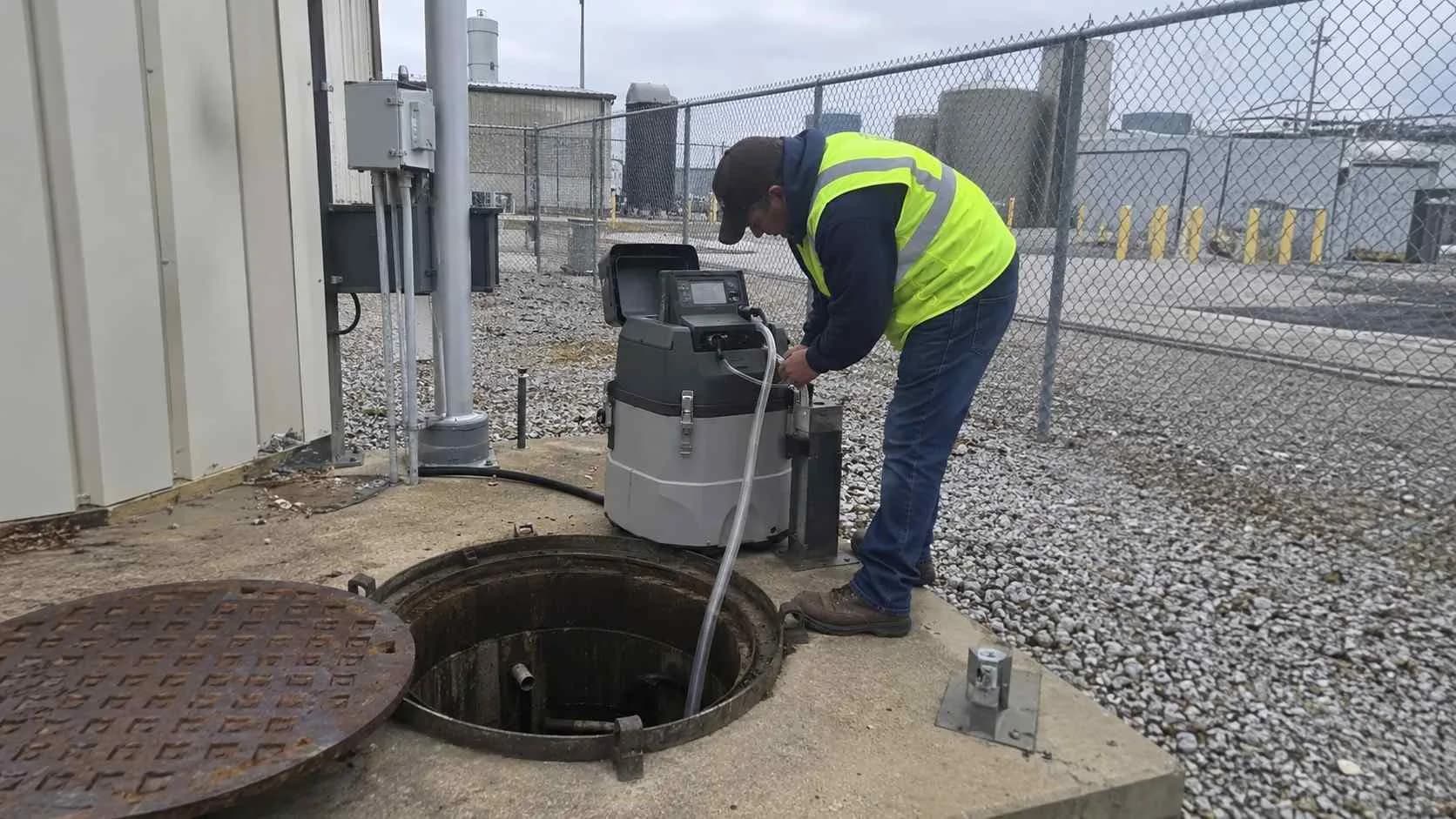
Self monitoring and sampling become the facility’s own responsibility, following a sampling schedule the permit specifies, often requiring a dedicated sampling manhole or access point the city can also use during its own inspections. Inspections themselves become more frequent and more detailed once SIU status applies, and recordkeeping requirements expand to cover sampling results, training records, and maintenance logs the city can request during a site visit.
Slug discharge evaluation becomes a formal requirement, often resulting in a Slug Discharge Control Plan that documents the facility’s specific risks and controls. Spill reporting obligations tighten, typically requiring immediate notification to the POTW followed by written follow-up documentation. Employee training on discharge procedures and spill response becomes part of what an inspector expects to see documented, and pretreatment equipment maintenance records, showing that any required pretreatment system is actually being operated and maintained rather than just installed, become part of the compliance file the city reviews.
Industries That Land Here Most Often
Certain sectors encounter SIU classification often enough that it should be assumed during early planning rather than discovered during permitting. Food and beverage manufacturing generates high strength organic loads that frequently cross the qualifying thresholds. Chemical processing and pharmaceutical manufacturing carry categorical standards and concentrated process chemistry almost by definition. Metal finishing operations fall under well established categorical pretreatment standards covering metals discharge. Semiconductor and electronics manufacturing bring concentrated process chemicals and tight discharge tolerances. Industrial laundries and concrete products operations generate high strength or high pH wastewater that draws attention independent of flow volume, and industrial washdown operations, including fleet and equipment washing at distribution facilities, often surprise owners who didn’t think of washdown water as an industrial discharge at all. Any high-strength wastewater generator, regardless of industry label, should run the qualification factors above rather than assume classification based on what similar facilities elsewhere have experienced.
Engineering Decisions That Reduce the Compliance Burden
SIU status itself isn’t avoidable for a facility that genuinely meets the criteria, but the cost and difficulty of staying compliant under that status depends heavily on engineering decisions made during design. An equalization tank smooths out flow and strength variability, which keeps routine discharge within permit limits with real margin instead of running close to the edge. Automated sampling equipment tied to a properly constructed sampling manhole reduces the labor and error risk of manual self monitoring, while flow monitoring and pH adjustment systems catch and correct excursions before they become reportable violations.
Spill containment and chemical storage improvements reduce the underlying slug discharge risk that drives a lot of the heavier monitoring obligations in the first place. Pretreatment equipment sized to the facility’s actual constituents, not a generic assumption, keeps ongoing operating costs and surcharge exposure predictable. An emergency response plan built into daily operations, not just filed as a document, is what actually gets used when something goes wrong. Facilities that build these controls into the original design consistently spend less on compliance over the life of the facility than facilities that treat SIU status as a paperwork problem to be solved after construction is finished.
What Happens When Compliance Slips
An SIU that falls out of compliance faces a specific, escalating set of consequences. Permit violations trigger enforcement action from the control authority, which can include increased monitoring frequency, additional discharge restrictions, and formal notices that follow the city’s local enforcement procedures. Surcharge exposure applies where the local rate structure charges industrial users based on discharge strength, meaning a facility discharging above its baseline assumptions pays more, sometimes substantially more, on its utility bill. Persistent or serious violations can force required equipment upgrades on a compliance schedule the city sets rather than one the facility controls, and can result in penalties under the local pretreatment program’s enforcement authority. For a facility still in development, an SIU compliance problem discovered during permitting is a direct source of project delay, since the city has no obligation to approve a connection for a facility it doesn’t believe can meet its discharge limits.
Frequently Asked Questions
How can I determine whether my new Texas manufacturing facility will be classified as a Significant Industrial User?
Start by checking your projected process wastewater flow against 25,000 gallons per day and checking whether that flow is 5 percent or more of the receiving POTW’s capacity. Also check whether your process falls under an EPA categorical pretreatment standard, since that triggers SIU status automatically regardless of flow. The city can also designate a facility as significant at its own discretion, so the safest move is a direct conversation with the POTW’s pretreatment coordinator early in site selection, backed by a wastewater characterization study for your specific process.
What additional permits, monitoring, inspections, and reporting are required after SIU designation?
Expect an individual industrial wastewater permit with limits specific to your facility, a baseline monitoring report, and periodic compliance reports on a set schedule. Self monitoring and sampling become your responsibility, usually through a dedicated sampling manhole, and inspections get more frequent. Recordkeeping expands to cover sampling data, training logs, and pretreatment equipment maintenance, and slug discharge evaluation often results in a formal Slug Discharge Control Plan. The exact combination varies by city, so confirm the specifics with your receiving POTW’s pretreatment program.
Can engineering improvements reduce future pretreatment compliance costs for an SIU facility?
Yes. An equalization tank, automated sampling, flow monitoring, and pH control all reduce how often a facility runs close to a permit limit, which is where most compliance cost actually comes from. Spill containment and better chemical storage lower slug discharge risk, which lowers both enforcement exposure and surcharge costs tied to discharge strength. Building these controls in during design is consistently cheaper than adding them after a violation.
Could expanding my industrial facility trigger SIU classification even if I was previously exempt?
Yes, easily. SIU qualification is based on current flow and current process, not history. Adding a production line, increasing chemical usage, or pushing process wastewater flow past 25,000 gallons per day can trigger classification even for a facility that never crossed that threshold before. Any expansion plan should include a wastewater impact review and a direct check with the POTW’s pretreatment coordinator, rather than assuming your exempt status carries forward.
What qualifications should I look for when hiring a Texas engineering firm to help with SIU designation, pretreatment permitting, and regulatory compliance?
Look for a firm that handles all three pieces together: understanding of 40 CFR Part 403 and how your local POTW applies it, direct coordination experience with pretreatment staff on classification and permit terms, and the design capability to build the equalization, monitoring, and pretreatment systems that actually keep you compliant. A firm that only does paperwork or only does design leaves you managing the other half yourself. MES handles the classification review, the POTW coordination, and the system design as one process.
Related Resources
- Texas Wastewater Pretreatment Permits: What Industrial Facilities Discharging to a POTW Must Know
- How TCEQ Sets Effluent Limits: Understanding Receiving Water Quality Standards and Permit Conditions
- Why Your Site Civil Engineer Isn’t the Right Person to Lead TCEQ Permitting
- Land Application Permits in Texas: A Faster Path to Wastewater Approval for Developers
Planning a Facility That Could Be Classified as an SIU?
Before signing a lease, submitting utility plans, installing process equipment, or discharging industrial wastewater to a Texas POTW, MES helps industrial developers, manufacturers, and project teams determine SIU classification risk early, coordinate directly with local pretreatment programs, and design the systems that keep a facility compliant from day one.
We specialize in:
- SIU classification review and qualification analysis for new and expanding Texas industrial facilities
- Industrial wastewater pretreatment permit applications and direct POTW coordination
- Baseline monitoring reports, sampling program design, and periodic compliance reporting support
- Pretreatment system design, including equalization, pH control, and automated monitoring
- Slug discharge risk assessment and Slug Discharge Control Plan development
- Wastewater compliance planning integrated with facility design and expansion timelines
Modern Engineering Solutions, McKinney, Texas. Contact: (214) 833-6748 or mod-eng.com
Keep reading
More to read.
Talk to an engineer
Tell us about your project.
An engineer reads it
Not a salesperson. Someone who can tell you whether the pathway is real.
You get a first answer
Your options, the agencies involved and the questions that decide cost and schedule.
You decide
No commitment to have the first call.
Prefer the phone? (214) 833-6748