
Blog
Chlorine Neutralization Before Discharge: The Field Step Contractors Skip Until It Becomes a Compliance Problem
Skipping chlorine neutralization before flushing a new water main turns routine disinfection into a TCEQ compliance problem.
Quick Answer
Disinfecting a new water main correctly is only half the job. The other half is making sure the chlorinated water used for that disinfection, and any hydrostatic test water carrying it, doesn’t go straight into a storm drain, ditch, or receiving water without neutralization and verification first. Residual chlorine is toxic to aquatic life even at concentrations that seem trivial relative to the volume of water involved, and discharging it without dechlorinating and confirming that dechlorination worked can trigger permit violations, failed inspections, discharge complaints, or a mid-project shutdown. This is a field step, not a paperwork step, and it needs to happen before anyone opens a valve, not after someone downstream notices a problem.
Why This Step Gets Skipped
Water main disinfection is a routine, well understood procedure for most utility installers and contractors, and that routineness is exactly why the neutralization step downstream of disinfection sometimes gets treated as an afterthought. The crew knows how to chlorinate a new main to the required concentration and hold time. What gets missed is that the same water, now carrying that chlorine residual, has to go somewhere once the disinfection and flushing process is complete, and “somewhere” is rarely a location where discharging chlorinated water without treatment is acceptable.
The mistake isn’t a lack of technical knowledge about disinfection. It’s a gap in the discharge planning that should happen alongside the disinfection plan, not after the water is already sitting in the pipe ready to be released.
Why Residual Chlorine Matters to a Receiving Water
Chlorine is effective at disinfecting a water main precisely because it’s toxic to living organisms, including whatever bacteria might be present in a new pipe. That same toxicity applies to aquatic life in a creek, pond, or other receiving water if chlorinated water reaches it in concentrations above what that water body can tolerate. Because chlorine is effective in small concentrations, a discharge that looks like “just water” to the naked eye can still carry enough residual chlorine to create a real aquatic toxicity problem, which is why a visual check alone is never sufficient to confirm a discharge is safe to release.
Dechlorination Methods: Tablets and Sodium Thiosulfate
Chemical dechlorination is the standard field method for neutralizing chlorine residual before discharge, typically using sodium thiosulfate or dechlorination tablets designed for this purpose. Sodium thiosulfate reacts with free chlorine to neutralize it, and the dosing needs to be calculated based on the actual chlorine concentration present and the volume of water being treated, not applied as a rough estimate. Dechlorination tablets offer a simpler field application method for smaller volumes or discharge points, but the same principle applies: dosing needs to match the actual chlorine residual, confirmed by testing, not assumed based on how the main was originally disinfected.
Under dosing leaves residual chlorine in the discharge. Over-dosing wastes material and can affect pH or other water quality parameters unnecessarily, which is part of why testing before and after treatment, not just applying dechlorination chemical and assuming it worked, is the step that actually confirms compliance.
Field Test Kits and Residual Chlorine Testing
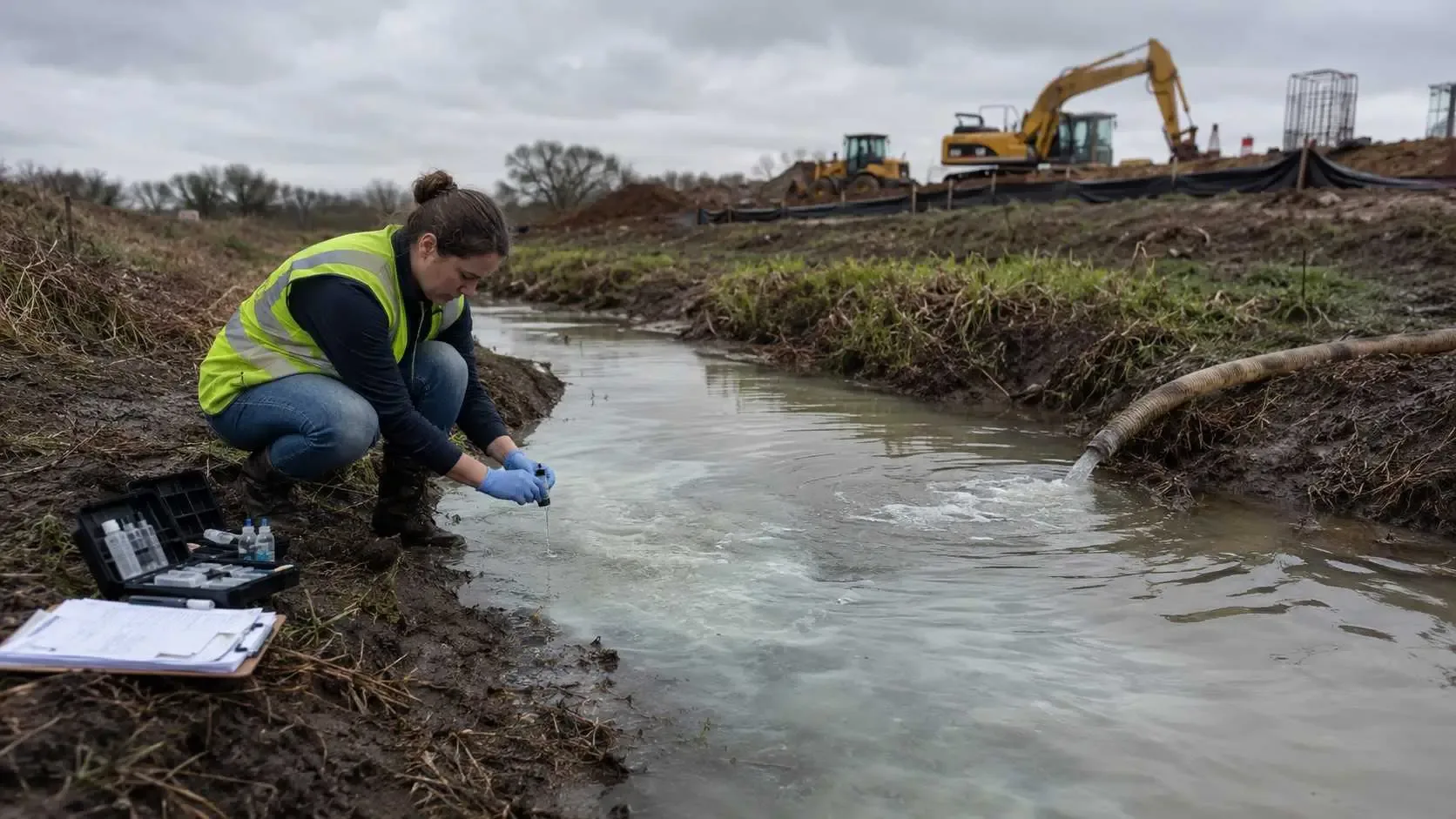
Confirming a discharge is actually safe to release requires field testing for residual chlorine at the discharge point, using a test kit appropriate for the expected concentration range, before opening the discharge valve or beginning discharge. This testing should happen after dechlorination treatment has been applied and given time to react, not immediately upon application, since the neutralization reaction takes some time to complete fully. A single test at the start of discharge is not sufficient for anything beyond a very short, small-volume discharge. Ongoing testing throughout a longer discharge event confirms that dechlorination remains effective as conditions in the pipe or tank change.
pH Checks Alongside Chlorine Testing
Dechlorination chemicals and the disinfection process itself can affect the pH of the water being discharged, and pH is its own water quality parameter relevant to receiving water health independent of chlorine residual. Checking pH alongside residual chlorine testing, rather than treating chlorine as the only parameter that matters, gives a more complete picture of whether the discharge is actually within acceptable parameters before it’s released, and helps catch a situation where dechlorination chemical dosing has pushed pH outside an acceptable range even after chlorine itself has been successfully neutralized.
Discharge Rate Control and Discharge Location
Even properly dechlorinated water can create problems if discharged too quickly or at an inappropriate location, since discharge rate affects erosion and sediment disturbance at the discharge point, particularly where the discharge enters a ditch, swale, or unlined channel leading to a receiving water. Controlling discharge rate, using appropriate energy dissipation or a controlled release method rather than simply opening a valve to full flow, reduces the risk of creating a secondary compliance issue, erosion or sediment discharge, even after the chlorine concern has been properly addressed.
Discharge location itself deserves the same scrutiny described for any construction discharge decision: confirming whether the discharge point leads to a storm drain system, a ditch, or a direct connection to a creek or other receiving water, and understanding what additional considerations, municipal storm system notification, receiving water sensitivity, apply to that specific location before treated water is released there.
Sampling Logs and Visual Monitoring
Documentation is what turns a properly executed field procedure into a defensible compliance record. Sampling logs recording test results, time, location, and the person conducting each test create a record showing that residual chlorine and pH were confirmed within acceptable parameters before and during discharge, and this record is what protects a contractor if a discharge complaint or inspection question arises after the fact. Visual monitoring during discharge, watching for unusual color, foam, sediment, or any other visible indicator of a problem, complements the sampling log rather than replacing it, since visual observation alone cannot confirm chlorine residual levels but can catch other visible problems a test kit wouldn’t necessarily flag.
A contractor who dechlorinates and tests correctly but keeps no record of having done so is in a considerably weaker position if a downstream complaint or inspection raises a question, even if the discharge itself was actually compliant.
Contractor Responsibility Before Opening a Valve
The responsibility for confirming a discharge is compliant sits with whoever controls the valve, not with whoever designed the disinfection procedure or approved the project’s overall permitting pathway. This means field crews need clear guidance, and ideally a simple checklist, confirming that dechlorination has been applied, residual chlorine and pH have been tested and confirmed within acceptable parameters, discharge rate and location have been evaluated, and the test results have been logged, before any valve is opened to begin discharge. Building this checklist into the standard hydrostatic testing and disinfection procedure, rather than treating discharge compliance as a separate consideration handled by someone else after the field work is done, is what actually prevents this from becoming a mid project shutdown or compliance problem.
What Happens When This Step Is Skipped
A discharge complaint from a downstream property owner, a failed inspection triggered by visible discoloration or a fish kill in a receiving water, or a TCEQ enforcement inquiry following an unauthorized discharge, are all realistic consequences of skipping proper dechlorination and testing before discharge. Any of these can halt work on the specific discharge activity, and depending on severity, can affect the broader project’s schedule while the issue is investigated and resolved. The field time required to properly dechlorinate, test, and document a discharge is minor compared to the schedule and reputational cost of managing a compliance problem after an improper discharge has already occurred.
Frequently Asked Questions
How long after applying dechlorination chemical should we wait before testing residual chlorine?
The dechlorination reaction needs adequate time to complete before testing accurately reflects the treated water’s actual residual chlorine level, and this timing should follow the specific product’s guidance and be confirmed through testing rather than assumed based on a fixed rule of thumb applied regardless of dosing or volume.
Is a single chlorine test at the start of discharge sufficient for a longer hydrostatic test water release?
No. Ongoing testing throughout a longer discharge event is necessary to confirm dechlorination remains effective as flow conditions and any residual variability in the pipe or tank change over the course of the discharge.
Do we need to test pH in addition to chlorine, or is chlorine testing sufficient on its own?
pH should be checked alongside chlorine testing, since dechlorination chemicals and disinfection procedures can affect pH independently of chlorine residual, and confirming both parameters gives a more complete picture of discharge compliance than checking chlorine alone.
What should our documentation include if we’re ever asked to demonstrate a discharge was compliant?
A sampling log recording test results, timing, location, and the person conducting each test, along with records confirming the dechlorination method and dosing used, gives a defensible record showing the discharge was properly treated and verified before release.
Related Resources
- TPDES General Permit vs. Individual Permit for Construction Discharges: When the Standard Permit Is Not Enough
- Land Application Permits in Texas: A Faster Path to Wastewater Approval for Developers
- Coastal Water Authority Raw Water Contracts: What Industrial Users in the Houston Ship Channel Need to Know
- Groundwater Reduction Plans: What the Harris Galveston Subsidence District Requires Before You Drill a Well
Coordinating Disinfection, Neutralization, and Discharge Compliance for a Water Main Project?
MES helps contractors and developers coordinate disinfection, dechlorination, testing, documentation, and discharge planning so compliance is handled before the water ever leaves the pipe.
We specialize in:
- Disinfection and dechlorination planning integrated into hydrostatic testing procedures
- Field testing protocols for residual chlorine and pH verification before discharge
- Discharge rate control and location evaluation to prevent secondary compliance issues
- Sampling log and documentation frameworks that create a defensible compliance record
- Contractor field checklists that build discharge compliance into standard procedure
- Coordination with TCEQ and municipal storm system requirements for construction water discharge
Modern Engineering Solutions, McKinney, Texas. Contact: (214) 833-6748 or mod-eng.com
Keep reading
More to read.
Talk to an engineer
Tell us about your project.
An engineer reads it
Not a salesperson. Someone who can tell you whether the pathway is real.
You get a first answer
Your options, the agencies involved and the questions that decide cost and schedule.
You decide
No commitment to have the first call.
Prefer the phone? (214) 833-6748