
Blog
Outfall Design and Diffuser Engineering: The Overlooked Civil Design Work Behind a Compliant Discharge Point
A discharge permit sets the numbers, but the outfall structure has to make them work in the field. See what outfall siting and diffuser design require.
Quick Answer
A wastewater discharge permit sets effluent limits and monitoring requirements, but it doesn’t build the physical structure that actually gets treated water from the plant into the receiving water. That structure, the outfall, along with its diffuser configuration, pipe alignment, and erosion protection, is civil design work that determines whether a permitted discharge actually functions the way it was assumed to when the permit was written. An outfall sited without accounting for receiving water depth, streambank stability, or actual mixing conditions can create erosion, poor dilution, public complaints, and a maintenance headache, even when the treatment plant behind it is performing exactly as designed. Treating outfall design as a minor detail to finalize after permitting is one of the more common and more costly planning mistakes in a discharge project.
Why the Outfall Deserves Its Own Design Attention
Much of the planning effort behind a new or expanded discharge understandably focuses on treatment process design and permit limit compliance, since these are the elements directly tied to the numbers that appear in the permit itself. But the outfall, the physical structure and location where treated effluent actually enters the receiving water, is where all of that upstream work either succeeds or runs into a completely different set of civil and hydraulic problems. A permit’s mixing zone assumptions, its effluent limit calculations tied to expected dilution, and its overall regulatory approval all depend on the outfall performing as physically assumed, and a poorly sited or poorly designed outfall can undermine those assumptions regardless of how well the treatment process itself performs.
Outfall Siting and Receiving Water Depth
Where the outfall is physically located along a receiving water affects everything downstream of that decision, including mixing behavior, erosion exposure, and access for future inspection and maintenance. Receiving water depth at the proposed outfall location matters directly, since a shallow location may not provide adequate depth for the diffuser configuration the permit’s mixing assumptions were built around, while a location with more consistent depth across varying flow conditions offers more reliable performance across the full range of conditions the outfall will actually experience over its service life. Evaluating actual site specific depth and cross sectional conditions at candidate outfall locations, rather than assuming a generally suitable stretch of receiving water will work adequately, is a foundational step that shapes much of the design work following it.
Streambank Stability
A receiving water’s streambank at and near the proposed outfall location needs its own stability evaluation, since an outfall structure penetrating or sitting adjacent to an unstable bank faces ongoing risk of undermining, shifting, or structural exposure as the bank continues to erode or migrate over time. A streambank that appears stable during a site visit under normal flow conditions may behave very differently during a significant storm event, and evaluating stability under a range of conditions, not just the conditions observed during design-phase site visits, protects against a structure that performs fine initially but faces a stability problem within a few years of service.
Pipe Material and Headwall Design
Pipe material selection for the outfall pipe itself needs to account for the specific conditions it will face, exposure to the receiving water environment, structural loading from the surrounding soil and any traffic or equipment above it, and long-term durability given the outfall’s expected service life. Headwall design, the structure at the pipe’s terminus where it meets the receiving water, needs to manage the transition from pipe flow to open water discharge in a way that controls velocity and directs flow appropriately, rather than simply terminating the pipe at the water’s edge without a structure designed to manage that transition properly.
Diffuser Ports and Mixing Assumptions
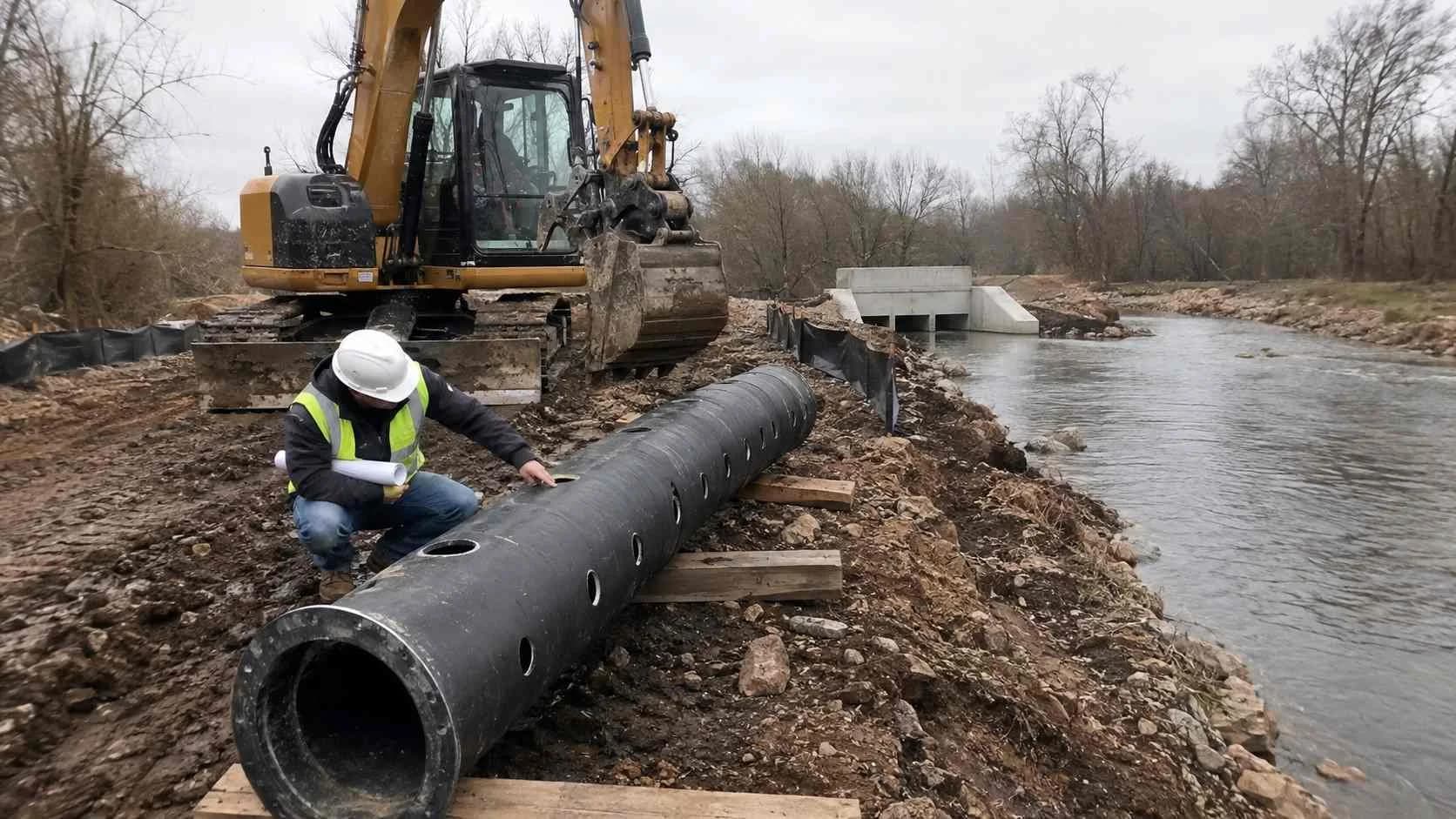
Where a permit’s effluent limits are calculated based on an assumed level of dilution achieved through mixing with the receiving water, the diffuser, the structure or series of ports distributing effluent into the receiving water, needs to actually achieve that assumed mixing performance in the field. A diffuser with too few ports, ports spaced or oriented in a way that doesn’t achieve adequate initial mixing, or a diffuser sized for a different flow rate than what the plant actually discharges, can produce a discharge that doesn’t achieve the mixing the permit’s water quality analysis assumed, creating a gap between what the permit assumed would happen and what actually happens at the discharge point. Coordinating diffuser design directly with the mixing zone analysis and assumptions used in the permit application, rather than designing the diffuser as a separate, later civil task disconnected from the permit’s technical basis, keeps these two pieces of the project aligned.
Erosion Protection and Scour Control
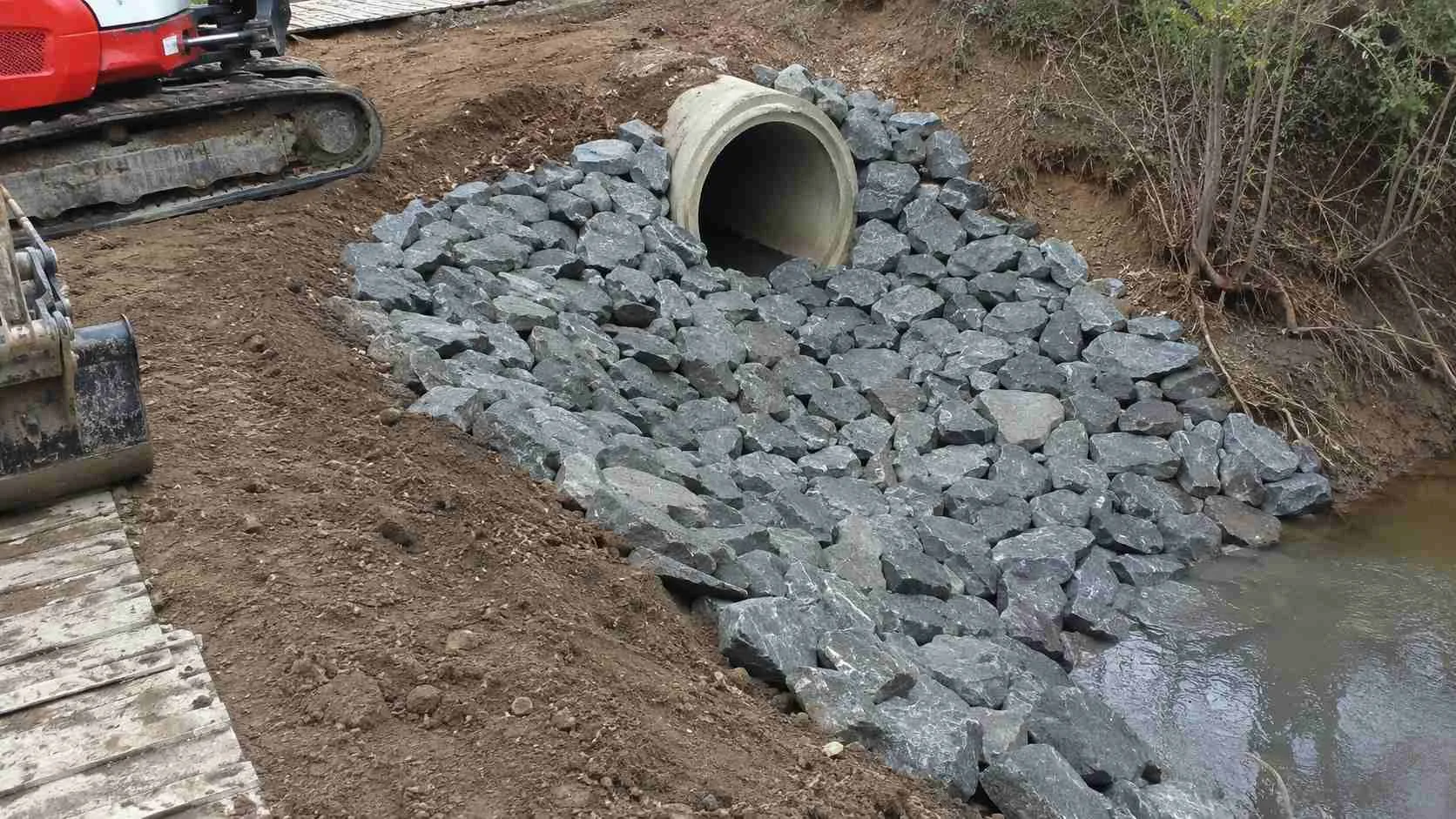
The area immediately surrounding an outfall discharge point faces elevated erosion and scour risk compared to undisturbed sections of the receiving water, since concentrated flow exiting the outfall structure creates localized velocity and turbulence that can erode the streambed and banks in that specific area over time if not properly protected. Appropriate erosion protection and scour control measures, sized for the outfall’s actual discharge velocity and volume rather than a generic standard detail applied without regard for site-specific hydraulics, protect against a slowly developing erosion problem that might not be obvious immediately after construction but becomes a visible and costly issue after months or years of actual discharge.
Access for Inspection and Maintenance
An outfall structure needs periodic inspection and occasional maintenance over its service life, and access for this purpose needs to be planned into the design rather than assumed to be available simply because the site was accessible during construction. A remote or difficult to reach outfall location, one requiring specialized equipment or extensive coordination just to reach for a routine inspection, adds ongoing operational burden that a more thoughtfully sited and designed outfall, planned with maintenance access in mind from the start, would avoid.
Floodplain Impacts and Easements
Where an outfall location falls within a mapped floodplain, floodplain impact evaluation needs to confirm the structure doesn’t create an adverse impact on flood conveyance or elevation, and any applicable floodplain permitting requirements need to be addressed alongside the discharge permit itself. Easement needs, both for the outfall structure itself and for any access corridor required to reach it for future maintenance, should be identified and secured during design and land planning, not discovered as a gap after construction has already begun and access across land the project doesn’t control turns out to be necessary.
Constructability and Maintenance Planning
An outfall design that looks correct on paper still needs to be genuinely buildable given the actual site conditions, equipment access, and construction sequencing available for that specific location, and a design that assumes construction access or methods that don’t actually match field conditions can create costly change orders or delays once construction begins. Planning for ongoing maintenance requirements as part of the initial design, rather than treating maintenance as a future operational problem unrelated to design decisions, produces an outfall that’s easier and less costly to keep functioning properly over its full service life.
Coordination With TCEQ Permit Conditions
Throughout outfall and diffuser design, coordination with the specific TCEQ permit conditions governing that discharge, mixing zone definitions, monitoring point locations, and any specific outfall configuration requirements referenced in the permit itself, keeps the physical design aligned with what the permit actually requires and assumes. A design developed without this direct coordination risks a mismatch between what was permitted and what gets built, a gap that can create compliance questions even when the underlying design intent was reasonable.
Why an Afterthought Outfall Becomes a Costly Redesign
An outfall treated as a minor detail to finalize quickly after the harder work of permitting and treatment design is complete risks becoming exactly the kind of problem this article describes: erosion nobody anticipated, mixing that doesn’t match the permit’s assumptions, an access problem discovered only when maintenance becomes necessary, or a public complaint arising from a visibly poor discharge condition at the outfall itself. Addressing these issues after construction and after permit approval is considerably more difficult and disruptive than addressing them during design, when adjusting siting, diffuser configuration, or erosion protection details is still a straightforward design change rather than a field problem requiring remediation.
Frequently Asked Questions
Does our permit’s mixing zone analysis automatically ensure our diffuser will be designed correctly?
Not automatically. The mixing zone analysis establishes the assumptions the permit relies on, but the diffuser itself needs to be specifically engineered to actually achieve those assumptions in the field, which requires coordinated design work connecting the permit’s technical basis to the actual structure being built.
How early in a project should outfall siting be evaluated?
As early as possible, ideally during initial feasibility and permit application planning, since siting affects receiving water depth, streambank stability, and access considerations that are much easier to address by selecting a better location than by trying to engineer around a poor location after it’s already been chosen.
Can erosion at an outfall really become a significant problem if the discharge itself meets its permit limits?
Yes, erosion and scour at a discharge point are physical and hydraulic issues largely independent of the effluent’s chemical compliance, meaning a permit compliant discharge can still create a visible and costly erosion problem if the outfall wasn’t designed with adequate erosion protection for its actual discharge conditions.
Do phased developments need to plan for future outfall capacity now, even if the immediate discharge volume is smaller?
This is worth evaluating during initial planning, since an outfall sized only for an initial phase’s volume may need significant modification or replacement as later phases increase discharge volume, and planning for eventual capacity during initial design can avoid a more disruptive and costly retrofit later.
Related Resources
- Antidegradation Review Explained: Why Some Texas Streams Trigger a Harder TCEQ Review Than the Standard Effluent-Limit Process
- Whole Effluent Toxicity Testing: What WET Testing Requires Beyond Standard Chemical Monitoring
- Land Application Permits in Texas: A Faster Path to Wastewater Approval for Developers
- Erosion and Sedimentation Control at the Discharge Point: What Inspectors Check When Test Water Hits Open Ground
Planning a New or Expanded Discharge Outfall for Your Project?
MES helps clients evaluate outfall feasibility, design practical discharge structures, coordinate diffuser and mixing assumptions, prepare construction ready details, and reduce compliance risk at the actual discharge point.
We specialize in:
- Outfall siting evaluation based on receiving water depth, streambank stability, and access
- Diffuser design coordinated directly with permit mixing zone assumptions
- Erosion protection and scour control sized for site specific discharge hydraulics
- Floodplain impact evaluation and easement planning for outfall structures and access corridors
- Constructability review and maintenance planning integrated into initial outfall design
- Coordination with TCEQ permit conditions to keep physical design aligned with permitted assumptions
Modern Engineering Solutions, McKinney, Texas. Contact: (214) 833-6748 or mod-eng.com
Keep reading
More to read.
Talk to an engineer
Tell us about your project.
An engineer reads it
Not a salesperson. Someone who can tell you whether the pathway is real.
You get a first answer
Your options, the agencies involved and the questions that decide cost and schedule.
You decide
No commitment to have the first call.
Prefer the phone? (214) 833-6748