
Blog
Whole Effluent Toxicity Testing: What WET Testing Requires Beyond Standard Chemical Monitoring
Passing every chemical limit does not guarantee a discharge is non-toxic. See what WET testing checks for, who gets flagged, and what a failure triggers.
Quick Answer
Standard chemical monitoring tells a facility what individual pollutants are present in its effluent and at what concentration. Whole Effluent Toxicity testing, commonly called WET testing, asks a different question entirely: does the complete effluent, all of it together, cause a toxic effect on living aquatic organisms exposed to it. A facility can pass every individual chemical parameter on its discharge permit and still fail a WET test, because WET testing captures the combined and interactive effect of everything in the effluent together, including substances that individual chemical monitoring wasn’t specifically looking for or wouldn’t flag as concerning in isolation. For municipalities, industrial dischargers, and treatment facility operators, understanding what WET testing actually measures, and whether a specific facility’s permit or receiving water profile makes WET testing likely, is essential for avoiding a compliance surprise.
Why WET Testing Goes Beyond Standard Chemical Monitoring
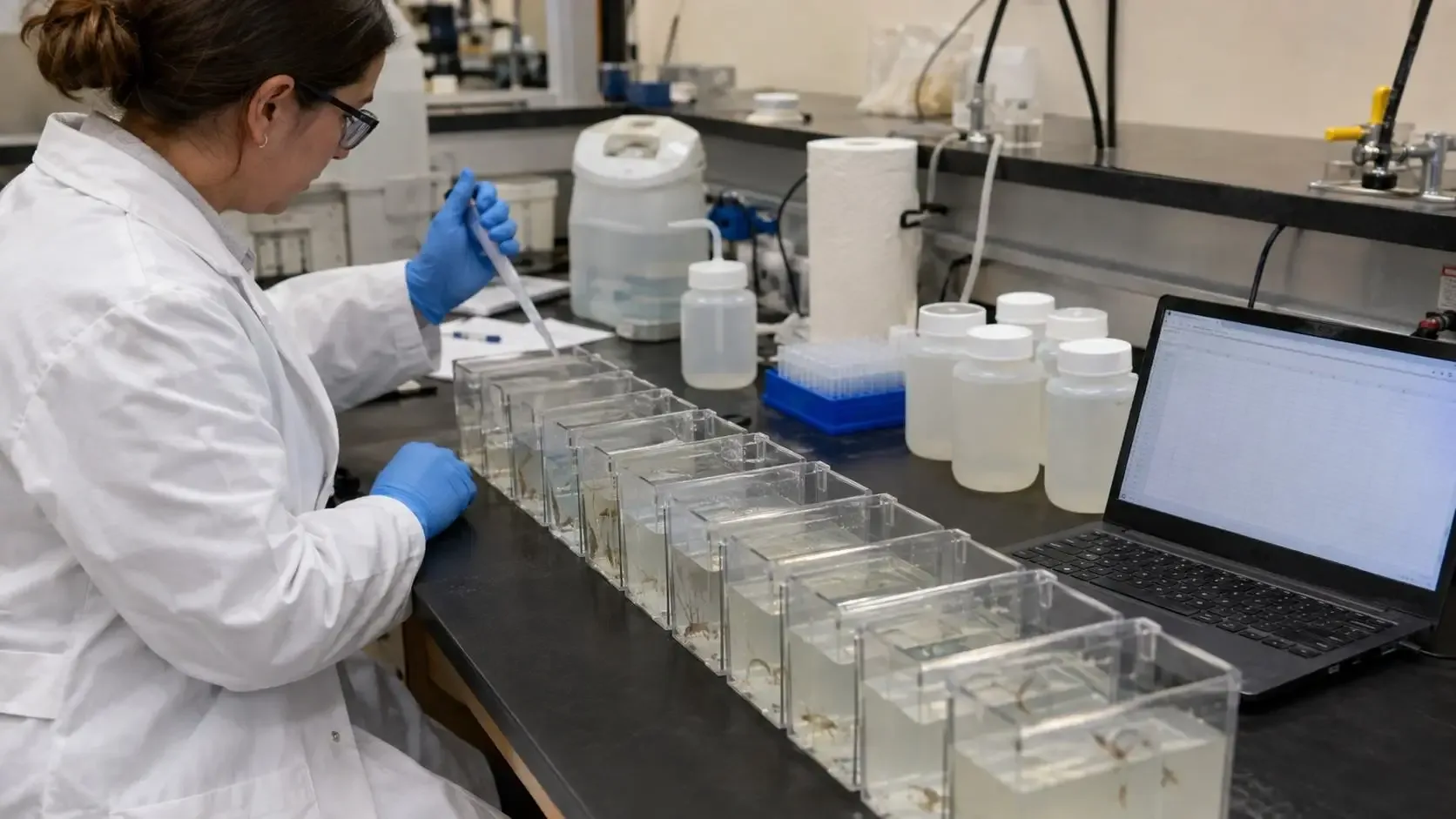
A standard permit monitoring program measures specific parameters, ammonia, various metals, biochemical oxygen demand, and other named pollutants, each against its own individual limit. This approach works well for identifying and controlling known, specifically regulated pollutants, but it has an inherent limitation: it can only evaluate what it’s specifically designed to look for, and it evaluates each parameter largely in isolation from the others. Real effluent is a complex mixture, and substances can interact in ways that produce a toxic effect on aquatic organisms even when every individually monitored parameter stays within its own limit. WET testing addresses this gap directly by exposing live test organisms to actual effluent and observing whether the whole mixture, exactly as discharged, causes harm, rather than inferring safety from a list of individual chemical results.
Acute Versus Chronic WET Testing
WET testing is generally categorized into two types reflecting different exposure durations and different measures of harm. Acute WET testing evaluates short term exposure, typically measuring organism survival over a relatively brief testing period, and is generally used to assess whether a discharge poses an immediate lethal risk to organisms in the receiving water. Chronic WET testing evaluates longer term exposure and typically looks beyond simple survival to include effects like reproduction and growth, since a discharge can fail to kill organisms outright while still meaningfully impairing their ability to reproduce or develop normally over a longer exposure period. Which type of testing, or whether both, applies to a specific permit depends on the receiving water’s characteristics and the discharge’s characteristics, and this should be confirmed against the specific permit requirements rather than assumed.
Test Organism Selection
WET testing uses specific test organism species selected for their sensitivity and their relevance to the kinds of aquatic life a receiving water is meant to support, and testing protocols typically specify particular organism types for acute versus chronic testing. The specific organisms and testing protocol required for a given facility should be confirmed with the laboratory conducting the testing and against the facility’s specific permit requirements, since protocols and required species can be updated over time and vary depending on receiving water type and other site-specific factors.
Sampling Requirements and Laboratory Coordination
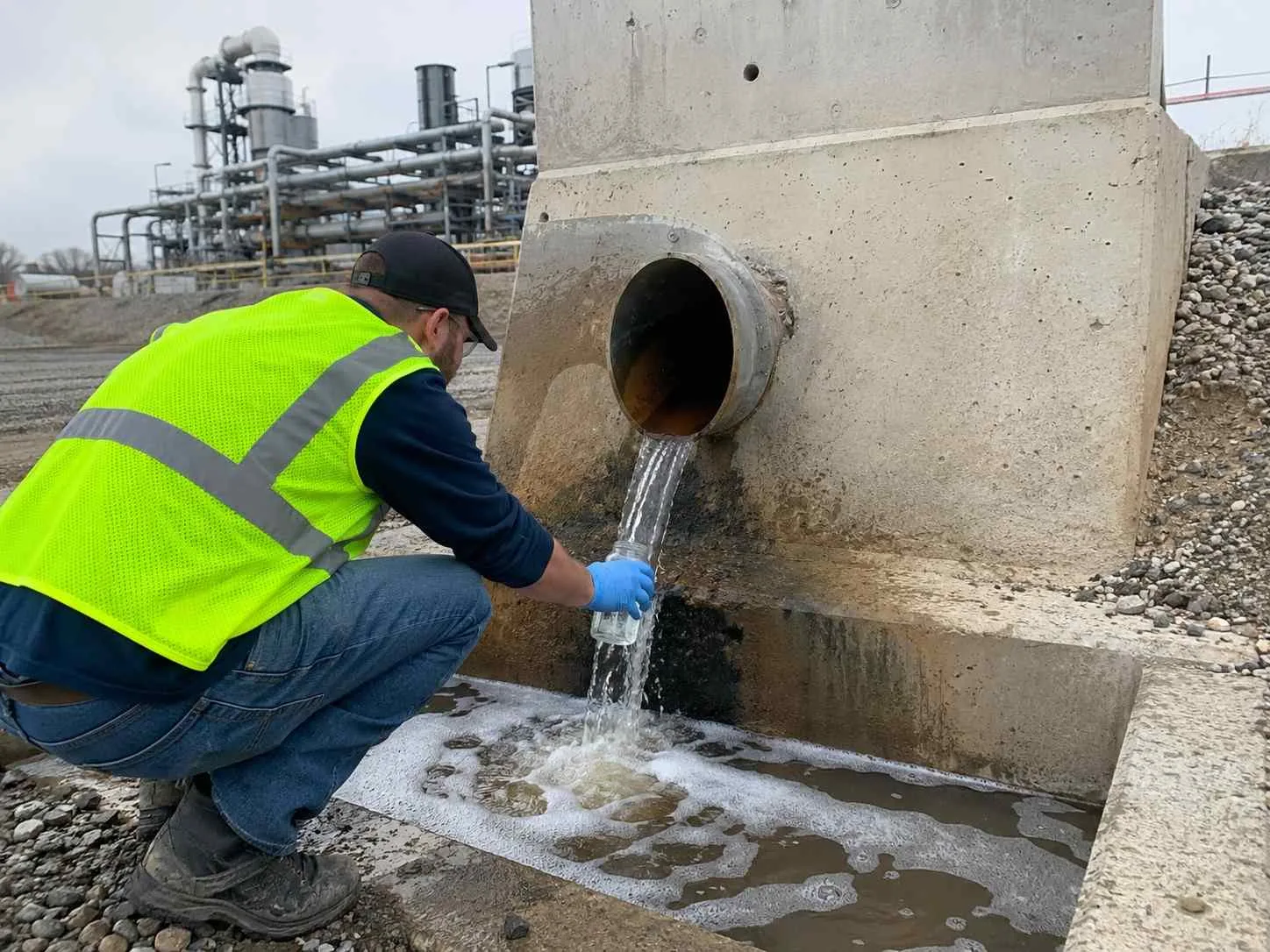
Proper WET testing depends on collecting an effluent sample that accurately represents actual discharge conditions, following specific sampling protocols for timing, volume, and handling that preserve the sample’s characteristics until testing begins. Coordination with a qualified laboratory experienced in WET testing protocols is essential, both for guidance on proper sample collection and handling, and because the testing itself, exposing live organisms and monitoring their response over the required test duration, requires specialized laboratory capability that most facilities don’t perform in house. Establishing this laboratory relationship and confirming sampling logistics well before a required testing date, rather than scrambling to arrange this at the last minute, protects against a missed compliance deadline or an improperly collected sample undermining the test’s validity.
Test Duration and Result Interpretation
WET tests run over a defined exposure period appropriate to whether acute or chronic effects are being evaluated, and results are interpreted against specific pass or fail criteria defined in the applicable test method and permit requirements. A facility receiving WET test results should have those results reviewed by someone familiar with the specific interpretation criteria for that test type, since a marginal or borderline result may carry different implications depending on the specific criteria applied, and this interpretation should not be treated as a simple pass or fail read without understanding the specific basis for that determination.
Toxicity Identification and Toxicity Reduction Evaluation
Where a facility fails a WET test, the typical next step involves a toxicity identification evaluation, a structured process attempting to identify what specific substance or combination of substances within the effluent is causing the observed toxic effect. This is a different and more involved process than standard chemical monitoring, since it’s specifically designed to identify a toxicity source that standard monitoring wasn’t able to flag on its own. Where a toxicity source is identified, a toxicity reduction evaluation follows, examining what treatment process changes, chemical substitutions, or other operational adjustments could reduce or eliminate the identified toxicity going forward. This combined process can extend over a significant period and typically requires close coordination between facility operators, engineers, and the testing laboratory to work through methodically.
Retesting and What Happens After a WET Test Failure
A WET test failure generally triggers a retesting requirement, following the timeline specified in the applicable permit or compliance schedule, to confirm whether the toxicity was a one time occurrence or a persistent condition. Depending on the outcome of retesting and any toxicity identification and reduction evaluation performed, a facility may need to make actual changes to its treatment process or operational practices to reliably pass future testing, rather than treating an isolated failure as resolved simply because retesting happened to pass on a subsequent attempt without addressing an underlying cause.
Which Facilities Are More Likely to Be Flagged for WET Testing
Certain facility characteristics correlate with a higher likelihood of WET testing being required or emphasized within a permit. Discharges to receiving waters with sensitive aquatic life uses or limited assimilative capacity, the same kind of receiving water sensitivity relevant to antidegradation review, tend to draw closer attention to potential toxic effects beyond standard chemical parameters. Industrial or mixed wastewater flows, particularly those combining multiple waste streams with varying and less predictable characteristics compared to a straightforward domestic wastewater flow, present a higher likelihood of containing an interactive toxic effect that standard chemical monitoring alone wouldn’t catch. Facilities using chemical additives in their treatment process, coagulants, polymers, or disinfection chemicals, introduce substances into the effluent that themselves warrant evaluation for toxicity contribution. Treatment plants experiencing variable influent characteristics, whether from industrial contributors, seasonal variation, or inconsistent pretreatment compliance from upstream sources, face a similarly elevated likelihood of producing an effluent whose toxicity characteristics vary unpredictably between testing events. Permits already carrying other water quality based concerns tend to include WET testing as part of a broader, more comprehensive monitoring approach for that specific facility.
Effects on Treatment Process Design, Chemical Selection, and Pretreatment Strategy
Where WET testing risk is identified early, whether during permit renewal planning or facility expansion, treatment process design and chemical selection decisions can be evaluated with toxicity potential specifically in mind, rather than discovering after the fact that a chemical selected for its treatment performance also introduces a toxicity concern. For facilities receiving industrial contributions, pretreatment strategy, working with upstream industrial contributors to control specific substances before they reach the treatment facility, can directly reduce the likelihood of a WET test failure tied to those contributed substances, making pretreatment program strength a meaningful factor in overall WET testing risk management.
Effects on Operator Responsibilities, Budget Planning, and Permit Renewal Risk
WET testing requirements add ongoing responsibilities for facility operators, coordinating sampling schedules, working with the testing laboratory, and responding to any failed test with the follow up evaluation process described above, all of which should be planned into normal facility operations and budget planning rather than treated as an occasional, unplanned expense. Because WET testing results and compliance history factor into permit renewal review, a facility with a strong, consistent WET testing compliance record generally faces a smoother permit renewal process than a facility with a history of failures or unresolved toxicity identification findings, making proactive WET testing management a factor in long term permit renewal risk, not just immediate compliance status.
Frequently Asked Questions
Can a facility pass all its individual chemical limits and still fail a WET test?
Yes, this is precisely the situation WET testing is designed to catch, since it evaluates the combined effect of the whole effluent mixture rather than each individually monitored chemical parameter in isolation, and interactive or unmonitored substances can produce toxicity even when every individually monitored parameter meets its limit.
How do we know if our specific permit requires WET testing?
This should be confirmed directly against the specific permit language, since WET testing requirements, including whether acute, chronic, or both apply, and the specific testing frequency, are set out in the individual permit rather than applying uniformly to every discharger.
What’s the first step if we fail a WET test?
Coordinating with the testing laboratory and an experienced engineer on next steps, generally beginning with retesting per the compliance schedule and, where appropriate, initiating a toxicity identification evaluation to understand the specific cause before determining what treatment or operational changes may be needed.
Does having chemical additives in our treatment process mean we will fail a WET test?
Not necessarily, but it does mean those additives should be evaluated specifically for toxicity contribution as part of overall WET testing risk planning, since some chemical selections carry more toxicity risk than others even among chemicals performing a similar treatment function.
Related Resources
- Antidegradation Review Explained: Why Some Texas Streams Trigger a Harder TCEQ Review Than the Standard Effluent Limit Process
- The Cost of Non-Compliance: What TCEQ Enforcement Patterns Reveal About Unpermitted Test Water Discharges
- Land Application Permits in Texas: A Faster Path to Wastewater Approval for Developers
- TPDES General Permit vs. Individual Permit for Construction Discharges: When the Standard Permit Is Not Enough
Evaluating WET Testing Risk for Your Facility or Upcoming Permit Renewal?
MES helps clients understand WET requirements, coordinate testing strategy, evaluate toxicity risk, review treatment processes, and prepare practical compliance responses before WET issues become enforcement problems.
We specialize in:
- WET testing risk screening based on receiving water sensitivity and discharge characteristics
- Coordination with qualified laboratories on sampling protocols and testing logistics
- Toxicity identification and toxicity reduction evaluation support following a failed test
- Treatment process and chemical selection review with toxicity potential in mind
- Pretreatment program strategy for facilities receiving industrial or mixed waste contributions
- Permit renewal preparation that accounts for WET testing compliance history and future risk
Modern Engineering Solutions, McKinney, Texas. Contact: (214) 833-6748 or mod-eng.com
Keep reading
More to read.
Talk to an engineer
Tell us about your project.
An engineer reads it
Not a salesperson. Someone who can tell you whether the pathway is real.
You get a first answer
Your options, the agencies involved and the questions that decide cost and schedule.
You decide
No commitment to have the first call.
Prefer the phone? (214) 833-6748