
Blog
Shrink Swell Clay Soils in Collin County: Engineering Buried Utilities for Blackland Prairie Conditions
Blackland Prairie clay quietly damages buried utilities. How bedding, joint design and geotechnical coordination prevent failures in Collin County.
Quick Answer
Collin County sits on Blackland Prairie soils, expansive clays that shrink and swell significantly as moisture content changes. That movement puts real stress on buried water, wastewater, and stormwater infrastructure. Trenches lose stability, bedding shifts, pipe joints separate, manholes settle unevenly, and pavement above utility corridors can crack or heave. None of this is solved by pipe size or alignment alone. Reliable buried utility design in Collin County starts with geotechnical data and carries through bedding, backfill, joint selection, and slope protection choices that are matched to how the specific soil on your site actually behaves.
Why Blackland Prairie Soils Are a Different Design Problem
Blackland Prairie clay is known for its high plasticity and its capacity to expand when wet and contract when dry, sometimes by a significant percentage of its volume. For buildings, this drives foundation design. For buried utilities, it drives something different, and often less visible until problems appear years after construction. A trench cut through expansive clay does not behave like a trench cut through sand or a more stable soil. The surrounding material keeps moving seasonally, and every pipe, joint, and structure inside that trench experiences that movement whether the design accounted for it or not. Treating shrink swell clay utility design in Texas as a generic trenching exercise, rather than a soil specific engineering problem, is where a lot of long term maintenance issues originate.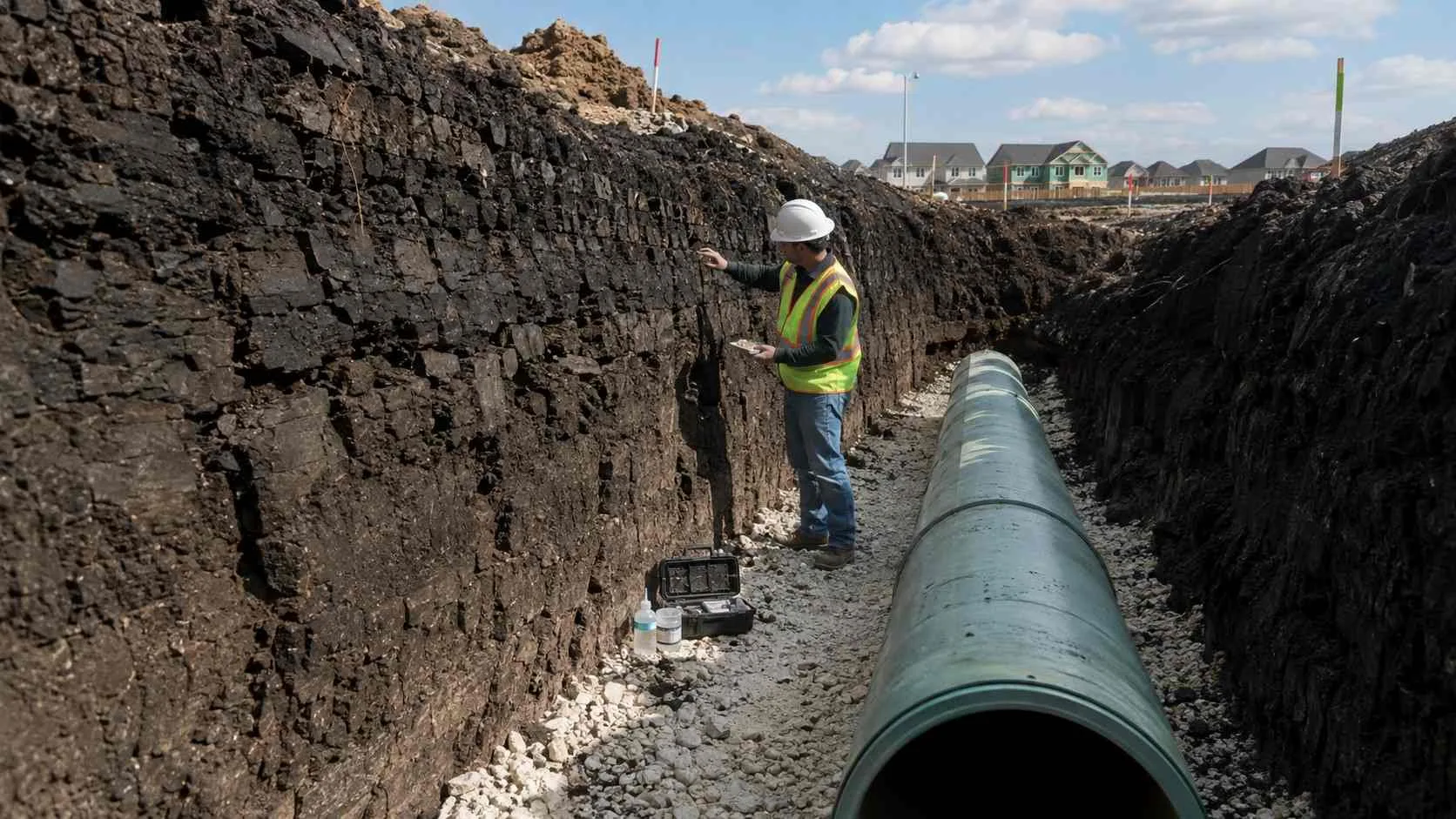
Trench Stability, Bedding, and Backfill
Trench stability in expansive clay depends heavily on how the trench is opened, how long it stays open, and what goes back into it. Clay that dries out at the trench walls before backfill can crack and lose strength, while clay that absorbs water during an open trench period can become unstable and difficult to compact properly. Bedding material selection matters just as much as backfill. A bedding designed to isolate the pipe from direct contact with reactive clay, combined with a backfill compaction approach suited to the specific soil on site, reduces the differential movement that transmits stress into the pipe itself.
Generic bedding and backfill specifications that do not account for site specific clay plasticity and moisture conditions are a common source of later settlement and pipe movement, which is why geotechnical recommendations need to directly inform the buried utility plan rather than sit in a separate report that the utility design does not reference.
Pipe Deflection and Joint Movement
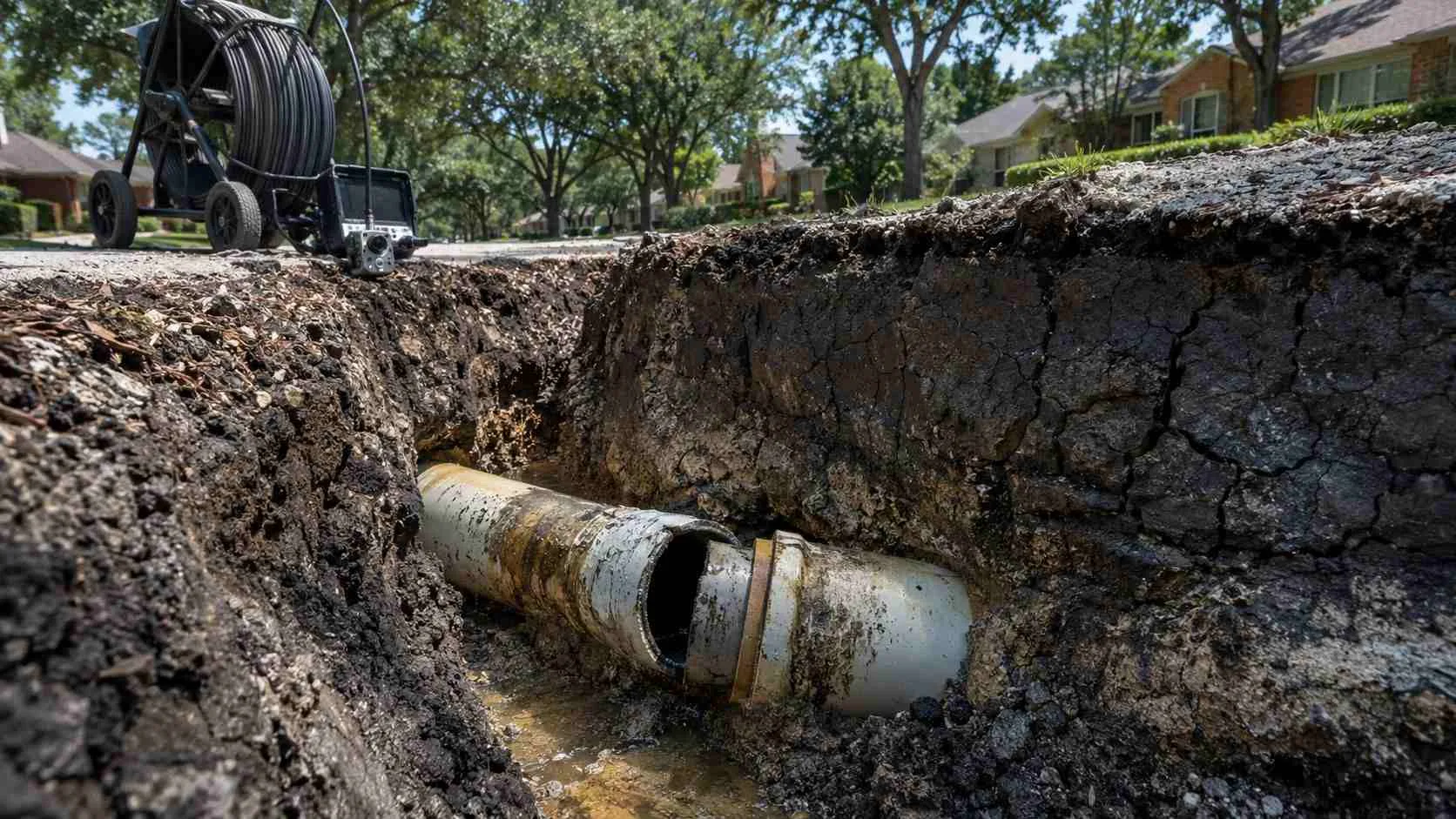
Seasonal clay movement puts differential loading on buried pipe, and how a pipe responds depends on its material and joint type. Flexible pipe materials can accommodate some soil movement through controlled deflection, but only within limits, and exceeding those limits over repeated shrink-swell cycles can lead to long term deformation. Rigid pipe and rigid joints handle movement differently, and joint separation is one of the more common failure points in expansive clay areas, since a joint that is not detailed to tolerate some differential movement becomes a likely infiltration or exfiltration point once the surrounding soil begins its seasonal cycle.
Matching pipe material and joint design to the specific magnitude of soil movement expected on a given site, rather than defaulting to a standard detail used across unrelated soil conditions, is a core part of water sewer design in Collin County done correctly.
Manhole Settlement and Structure Movement
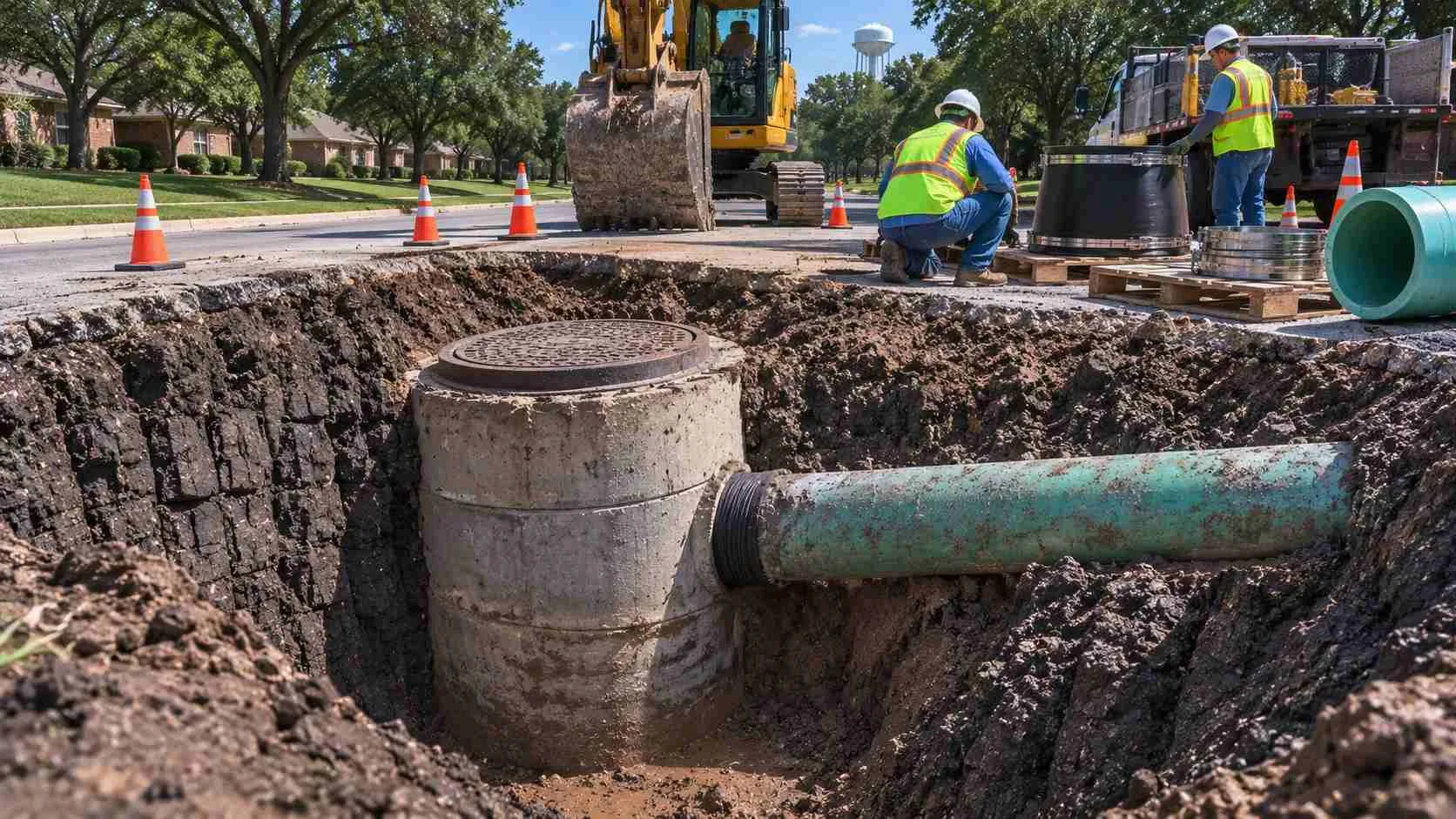
Manholes and other buried structures present a different challenge than straight pipe runs, because they are rigid points within an otherwise flexible utility corridor. Differential movement between a manhole and the pipe entering or leaving it is a frequent source of leakage and infiltration, since the transition point between a rigid structure and connected pipe is exactly where shrink-swell movement concentrates stress. Manhole settlement, whether from inadequate bedding beneath the structure or from surrounding clay movement pulling the structure out of alignment with connected pipe, can create both a structural maintenance issue and an ongoing infiltration pathway that is expensive to correct once the surrounding pavement and utilities are in place.
Detailing flexible connections at these transition points, and confirming subgrade support beneath structures matches the geotechnical report’s specific recommendations for that location, reduces this risk considerably compared to a standard structure detail applied without site specific adjustment.
Water Main Stress and Sewer Slope Protection
Water mains under pressure experience a different type of stress from shrink-swell movement than gravity sewer lines do. Ground movement that shifts a pressurized main out of its designed alignment can create localized stress concentrations at joints and fittings, increasing the likelihood of leaks developing over time even without an obvious single failure event. Gravity sewer lines face a related but distinct concern, since sewer performance depends on maintaining design slope for proper flow, and differential settlement along a sewer run can create low spots or slope reversals that trap solids, reduce flow velocity, and increase maintenance frequency.
Protecting sewer slope integrity in expansive clay conditions often means paying closer attention to bedding uniformity along the entire pipe run, since even a short section of poorly supported pipe can create a slope irregularity that affects performance well beyond that immediate location.
Infiltration Risk and Long Term Reliability
Every joint, connection, and structure interface described above becomes a potential infiltration or exfiltration point when shrink swell movement is not properly engineered around, and infiltration in particular carries a compounding cost. Groundwater or shallow soil moisture entering a sewer system through compromised joints increases flow that has to be conveyed and treated, adding operational cost and, in some cases, contributing to capacity issues in downstream infrastructure that were not part of the original design assumption. Addressing infiltration after construction, once it is buried under pavement and site improvements, is considerably more disruptive and costly than designing joints, bedding, and structure connections to resist it from the outset.
Pavement Restoration Over Utility Corridors
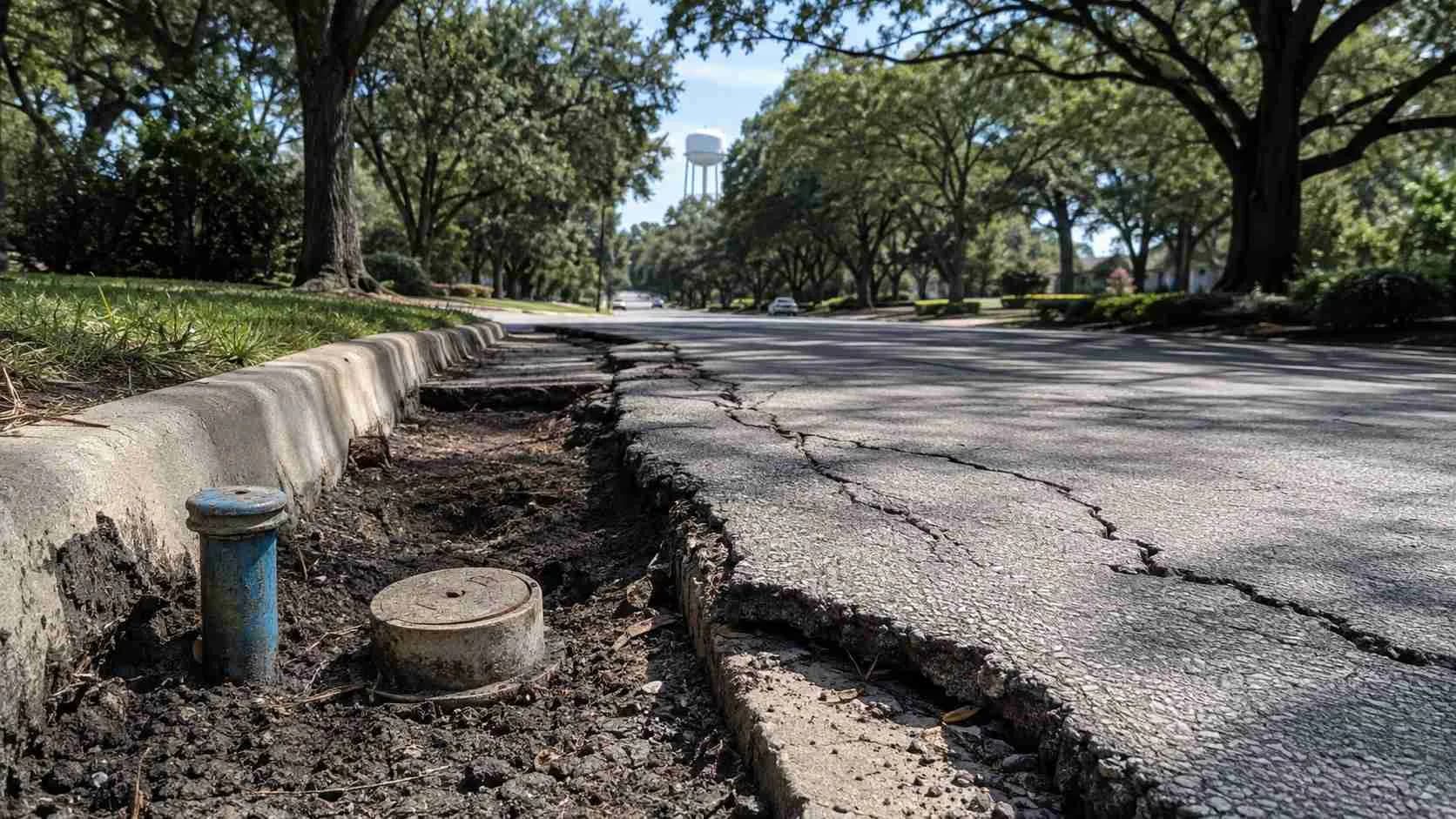
Utility trenches beneath pavement in Blackland Prairie soils face an additional complication, because the same shrink swell movement affecting the buried utility also affects the subgrade supporting the pavement above it. A trench backfilled without matching the surrounding subgrade’s moisture and compaction characteristics can create a reflective crack or a settlement trough in the pavement surface directly above the utility corridor, a common and highly visible symptom of buried infrastructure issues in expansive clay areas. Coordinating trench backfill specifications with the pavement design’s own subgrade requirements, rather than treating utility backfill and pavement subgrade as unrelated construction items, reduces this visible and often costly pavement failure mode.Why Geotechnical Coordination Has to Happen Early
The geotechnical report for a Collin County site typically identifies the specific clay plasticity, expected shrink swell movement range, and moisture related recommendations for that particular parcel, and this information needs to directly inform bedding, backfill, pipe material, joint selection, and structure detailing decisions in the utility design, not simply get filed alongside the civil plans as a reference document. McKinney buried utility engineering that treats geotechnical findings as an input to design, rather than a compliance checkbox, is what actually reduces the leaks, settlement, infiltration, and pavement failures that expansive clay conditions can otherwise produce over the life of the infrastructure.
Frequently Asked Questions
Does shrink swell clay affect all buried utilities the same way?
No. Pressurized water mains, gravity sewer lines, and structures like manholes each respond differently to soil movement, so bedding, joint, and material choices need to be evaluated separately for each utility type rather than applying one standard detail across the entire buried utility system.
Can a standard bedding and backfill specification work across an entire Collin County site?
Not reliably. Clay plasticity and expected movement can vary across a single site, so bedding and backfill specifications should be informed by the geotechnical report’s site specific findings rather than a generic specification applied uniformly regardless of local soil variation.
What is the most common visible sign that buried utilities were not properly engineered for expansive clay?
Pavement cracking or settlement directly above utility corridors is one of the more visible symptoms, along with increased infiltration flows and more frequent maintenance calls related to sewer slope irregularities or manhole settlement.
When should geotechnical findings be incorporated into utility design?
As early as possible, ideally before final utility layout and material selection are locked in, since retrofitting bedding, joint, or material decisions after design is largely complete is far more disruptive than coordinating these decisions with geotechnical recommendations from the outset.
Related Resources
- Water Storage and Pressure Zone Design for McKinney’s Rolling Terrain: Engineering for Collin County Topography
- Impact Fees and CIP Timing: Why Phasing Costs Blindside Developers When the Capital Improvement Plan Schedule Does Not Match Their Build Out
- NTMWD Connection vs. Private Treatment: The McKinney Developer’s Guide to Choosing the Right Wastewater Path
- Approved Plans Aren’t Always Optimized Plans: The Difference Can Cost $15 Million
Designing Buried Utilities for Expansive Clay Conditions in Collin County?
MES helps developers and project teams coordinate geotechnical findings with practical buried utility design, reducing construction risk and improving long term reliability across McKinney area subdivisions, commercial sites, and master planned communities.
We specialize in:
- Coordinating geotechnical recommendations directly into buried utility design decisions
- Bedding, backfill, and trench design tailored to site specific expansive clay conditions
- Pipe material and joint selection matched to expected shrink swell movement
- Manhole and structure detailing to reduce settlement and infiltration risk
- Sewer slope protection and gravity system design for challenging soil conditions
- Utility corridor and pavement subgrade coordination to prevent post-construction surface failures
Modern Engineering Solutions, McKinney, Texas. Contact: (214) 833-6748 or mod-eng.com
Keep reading
More to read.
Talk to an engineer
Tell us about your project.
An engineer reads it
Not a salesperson. Someone who can tell you whether the pathway is real.
You get a first answer
Your options, the agencies involved and the questions that decide cost and schedule.
You decide
No commitment to have the first call.
Prefer the phone? (214) 833-6748