
Blog
TPDES General Permit vs. Individual Permit for Construction Discharges: When the Standard Permit Is Not Enough
General permit coverage for construction discharge is not automatic in Texas. MES confirms the correct TPDES permit path before your schedule is locked in.
Quick Answer
Most construction related discharges in Texas, dewatering, hydrostatic test water, sediment laden runoff, can be authorized under a TPDES general permit, a standardized permit covering a defined category of discharge that meets specific conditions. The mistake contractors and developers make is assuming “it’s just temporary water” always qualifies. When discharge volume is large, water quality includes pollutants outside the general permit’s authorized parameters, the discharge location is a sensitive receiving water, or project conditions otherwise fall outside the general permit’s coverage terms, an individual permit, with its own application, technical review, and public notice process, may be required instead. Discovering this after discharge has already started, or after a schedule was built assuming general permit timing, is one of the more expensive and disruptive compliance mistakes on a construction project.
Why “It’s Just Temporary Water” Is a Risky Assumption
Construction dewatering and hydrostatic test water discharges feel temporary and low risk because they are short duration and often involve water that started out relatively clean. That framing is exactly what leads contractors and developers to assume a standard permit pathway automatically applies without confirming the specific conditions of the general permit against the actual discharge in question. A TPDES general permit authorizes a category of discharge that meets defined conditions, not every discharge that resembles the category in a general sense, and the difference between “resembles” and “meets the defined conditions” is where compliance risk lives.
Confirming general permit eligibility requires evaluating the specific discharge’s volume, quality, location, and receiving water characteristics against the general permit’s actual terms, not assuming eligibility based on the discharge being temporary or construction related in nature.
What Determines Whether a General Permit Applies
Several factors drive whether a specific construction discharge fits within a general permit’s coverage or requires individual permit review. Discharge volume matters because general permits are typically structured around a defined scale of activity, and a discharge significantly larger than what the general permit’s authorized category anticipates may fall outside its intended coverage. Water quality and pollutant content matter because general permits authorize discharges meeting specific quality parameters, and water containing pollutants, elevated sediment beyond authorized limits, residual chlorine from disinfection or test water sources, or other constituents outside the general permit’s parameters, may not qualify for that general permit’s authorization regardless of the water’s temporary nature.
Discharge location and receiving water sensitivity add another layer, since a discharge to a storm drain system connecting to a larger municipal system may be evaluated differently than a direct discharge to a creek or other water body, particularly where that receiving water carries specific water quality classifications or sensitivity that the general permit’s standard conditions were not designed to address without additional review.
Construction Dewatering Considerations
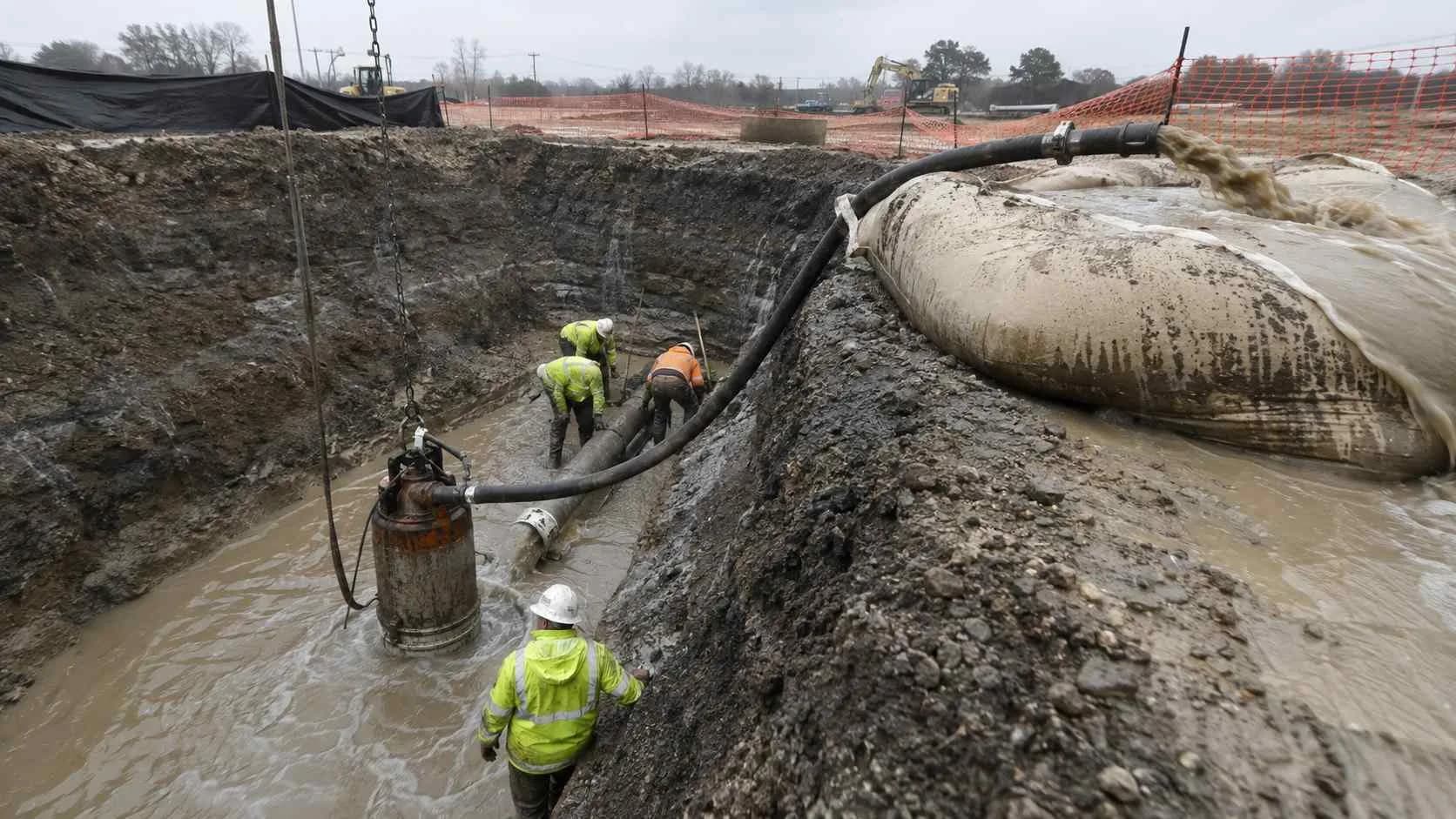
Dewatering during excavation, utility installation, or foundation work often involves groundwater that has been in contact with disturbed soil, and this contact can introduce sediment and, depending on site history and soil conditions, potentially other constituents into the water being pumped and discharged. Sediment laden dewatering discharge is one of the more common scenarios where a general permit’s authorized quality parameters need to be checked carefully, since sediment load that exceeds the general permit’s conditions may require additional treatment, such as settling or filtration, before discharge, or may push the discharge toward requiring more extensive review depending on volume and receiving water.
Sites with known soil contamination history, or dewatering occurring near a former industrial use, add further complexity, since dewatering discharge in these circumstances may need to be evaluated for constituents entirely outside a standard general permit’s contemplated scope, potentially requiring coordination with TCEQ beyond the standard construction dewatering pathway.
Hydrostatic Test Water and Chlorinated Water Discharge
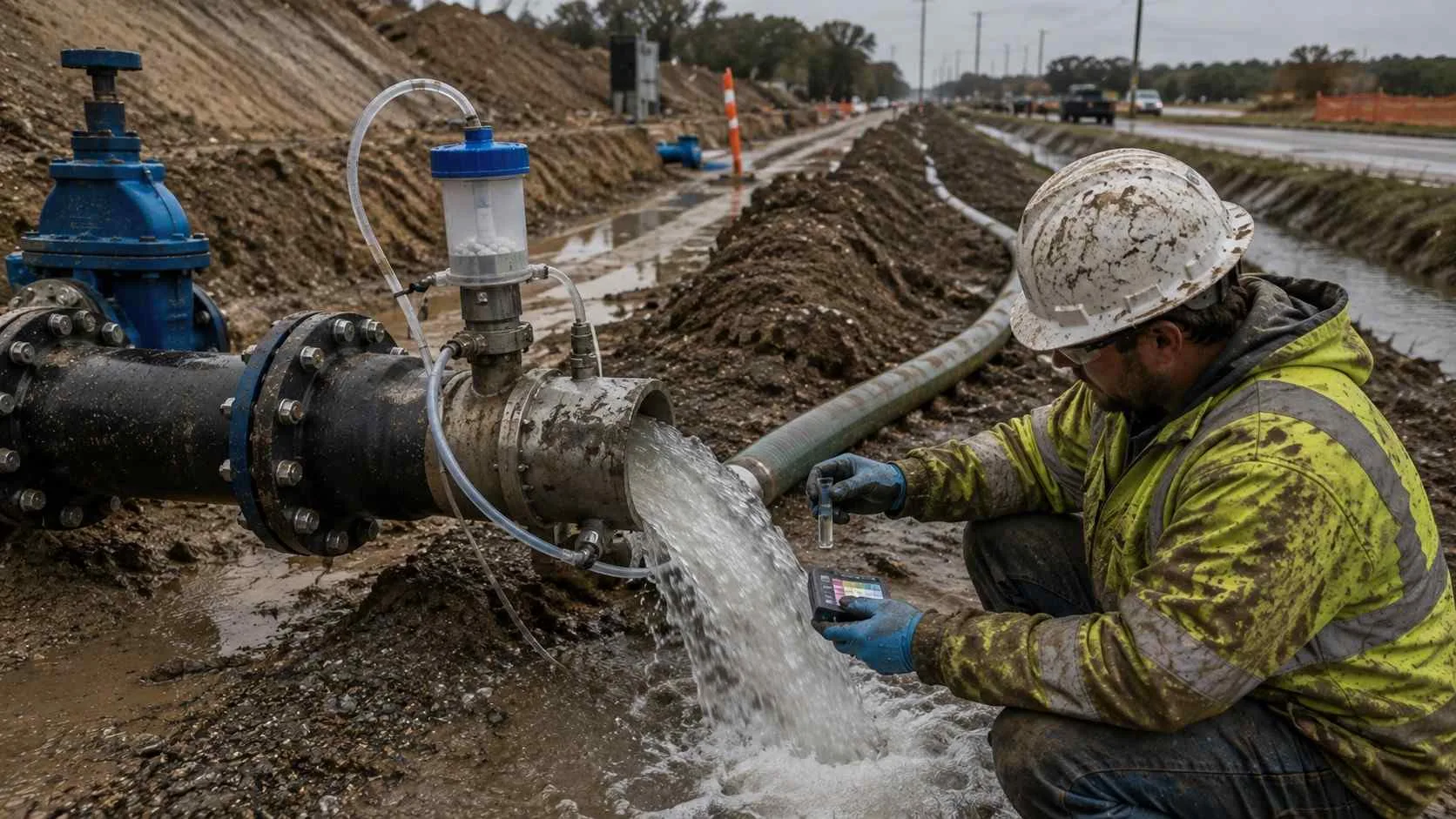
Hydrostatic testing of new water lines or storage facilities typically uses potable or near-potable water, but that water is often chlorinated as part of disinfection procedures required before a new water main or facility goes into service, and discharging chlorinated water carries its own specific consideration, since residual chlorine can be toxic to aquatic life in a receiving water even at concentrations that seem minor relative to the water’s overall volume. Confirming residual chlorine levels before discharge, and dechlorinating where necessary to bring the discharge within authorized parameters, is a common requirement for hydrostatic test water discharge that some project teams overlook when treating this water as equivalent to the clean water it started as before chlorination.
Discharge to Storm Drains Versus Creeks
Where a discharge is directed to a municipal storm drain system rather than directly to a natural water body, additional coordination with the municipality operating that storm drain system may be required independent of the TPDES permitting question, since a municipality may have its own discharge conditions or notification requirements for temporary construction discharges entering its storm system. A direct discharge to a creek or other natural water body removes that intermediate step but places more direct scrutiny on the discharge’s quality and volume relative to that specific receiving water’s characteristics and any applicable water quality standards, making direct discharges to sensitive or smaller receiving waters a scenario warranting closer permit path evaluation than a discharge routed through a larger storm drain system.
When Individual Permit Review Becomes Necessary
An individual TPDES permit becomes necessary when a discharge doesn’t fit within any applicable general permit’s defined conditions, whether due to volume, pollutant content, receiving water sensitivity, or another project specific condition outside the general permit’s scope. Unlike a general permit’s more standardized authorization process, an individual permit involves a project specific technical review by TCEQ, typically a public notice and comment period, and a considerably longer processing timeline than obtaining coverage under an already established general permit.
This timeline difference is where TPDES general permit vs individual permit Texas decisions most directly affect a construction project’s schedule, since a project team that assumes general permit timing and later discovers an individual permit is required faces a substantial and often unplanned delay, one that can affect not just the specific discharge activity but any construction sequencing that depended on that discharge occurring on the original schedule.
Project Sequencing and the Cost of a Late Discovery
Construction schedules are often built assuming dewatering, test water discharge, or other temporary discharge activities can proceed on a specific date within an overall sequence, utility installation depending on dewatering being complete, a water main going into service depending on hydrostatic testing and disinfection being finished. Discovering mid construction that the actual discharge conditions require individual permit review, after site conditions have already been evaluated in the field or after discharge has already begun without proper authorization, creates a sequencing problem that ripples through the rest of the schedule, and in some cases can require a construction shutdown until proper authorization is obtained.
The cost of this late discovery is rarely just the permitting delay itself. It includes idle equipment and crews, delayed downstream construction activities dependent on the discharge activity being complete, and in more serious cases, potential enforcement exposure for discharge that occurred without proper authorization.
TCEQ Coordination and Permit Timing
Evaluating discharge permitting requirements early, during project planning rather than once dewatering or testing activities are imminent, allows adequate time to coordinate with TCEQ on the correct permit pathway and, if individual permit review is required, to build that longer timeline into the overall project schedule rather than discovering the need for it once the original schedule is already underway. This early coordination should evaluate the specific discharge activities anticipated across the entire project, not just the first dewatering event expected, since a project may face multiple discharge scenarios at different phases, each of which should be evaluated against general permit eligibility individually.
Frequently Asked Questions
How do we know if our specific dewatering discharge qualifies for general permit coverage or needs individual review?
This requires evaluating your discharge’s specific volume, water quality including sediment and any other constituents present, discharge location, and receiving water characteristics against the applicable general permit’s actual defined conditions, an evaluation that should be done for your specific site and discharge scenario rather than assumed based on a similar seeming project elsewhere.
Does chlorinated hydrostatic test water always need dechlorination before discharge?
Residual chlorine levels need to be evaluated against applicable discharge limits, and dechlorination is commonly required where residual levels exceed those limits, so confirming actual residual chlorine concentration and the applicable limit for your discharge scenario is a necessary step rather than an assumption in either direction.
If our site has a known history of soil contamination, can we still use a standard dewatering discharge pathway?
This depends on the specific contaminants involved and what your dewatering water quality testing shows, and sites with contamination history often warrant additional water quality testing and TCEQ coordination beyond a standard construction dewatering evaluation, since the standard pathway typically contemplates a narrower range of constituents than may be present at a contaminated site.
How much lead time should we build in to confirm our permit pathway before construction begins?
This should be evaluated during project planning, well before construction sequencing locks in specific dates for dewatering or test water activities, since confirming general permit eligibility or beginning individual permit review, if required, takes meaningfully longer than most project teams assume when treating discharge permitting as a routine, last minute item.
Related Resources
- Land Application Permits in Texas: A Faster Path to Wastewater Approval for Developers
- Groundwater Reduction Plans: What the Harris Galveston Subsidence District Requires Before You Drill a Well
- Coastal Water Authority Raw Water Contracts: What Industrial Users in the Houston Ship Channel Need to Know
- Shrink Swell Clay Soils in Collin County: Engineering Buried Utilities for Blackland Prairie Conditions
Evaluating Construction Discharge Permitting Before Your Project Breaks Ground?
MES helps contractors, developers, and project engineers evaluate discharge permitting options early, confirm the correct TPDES permit pathway, and avoid schedule disruptions caused by wrong permit assumptions.
We specialize in:
- Evaluating construction dewatering and hydrostatic test water discharge scenarios against TPDES general permit conditions
- Water quality assessment for sediment, chlorine, and other constituents affecting permit eligibility
- Coordination with TCEQ on general versus individual permit pathways
- Discharge location and receiving water evaluation for storm drain and direct water body discharges
- Permit timing integration with overall construction sequencing and schedule planning
- Compliance support to prevent shutdowns, rework, and enforcement exposure from improper discharge authorization
Modern Engineering Solutions, McKinney, Texas. Contact: (214) 833-6748 or mod-eng.com
Keep reading
More to read.
Talk to an engineer
Tell us about your project.
An engineer reads it
Not a salesperson. Someone who can tell you whether the pathway is real.
You get a first answer
Your options, the agencies involved and the questions that decide cost and schedule.
You decide
No commitment to have the first call.
Prefer the phone? (214) 833-6748