
Blog
The US-380 Corridor Boom: Utility Capacity Planning for Prosper, Celina, Anna, and Melissa Ahead of the Rooftops
Rooftops along US-380 are outpacing utility capacity in Prosper, Celina, Anna, and Melissa. Learn what to confirm before land closes.
Quick Answer
Utility capacity along the US-380 corridor, spanning Prosper, Celina, Anna, and Melissa, varies considerably from parcel to parcel depending on proximity to existing water and sewer infrastructure, current capacity utilization in that infrastructure, each community’s specific capital improvement timeline, and whether the serving utility is a municipality, a utility district, or a wholesale provider with its own capacity and service area considerations. A site’s strong land fundamentals and market position don’t confirm that adequate water supply, wastewater capacity, lift station capacity, and fire flow exist to serve the project as currently planned, and this corridor’s rapid growth means capacity conditions can shift meaningfully within just a year or two as nearby projects consume previously available capacity. Developers evaluating US-380 corridor sites should confirm utility capacity, CCN or service area status, and each relevant utility’s capital improvement timing during initial feasibility, before land closing or plat submittal, since utility capacity constraints discovered later can directly reduce lot yield, require costly offsite improvements, or delay a project’s schedule beyond what its underlying market opportunity can absorb.
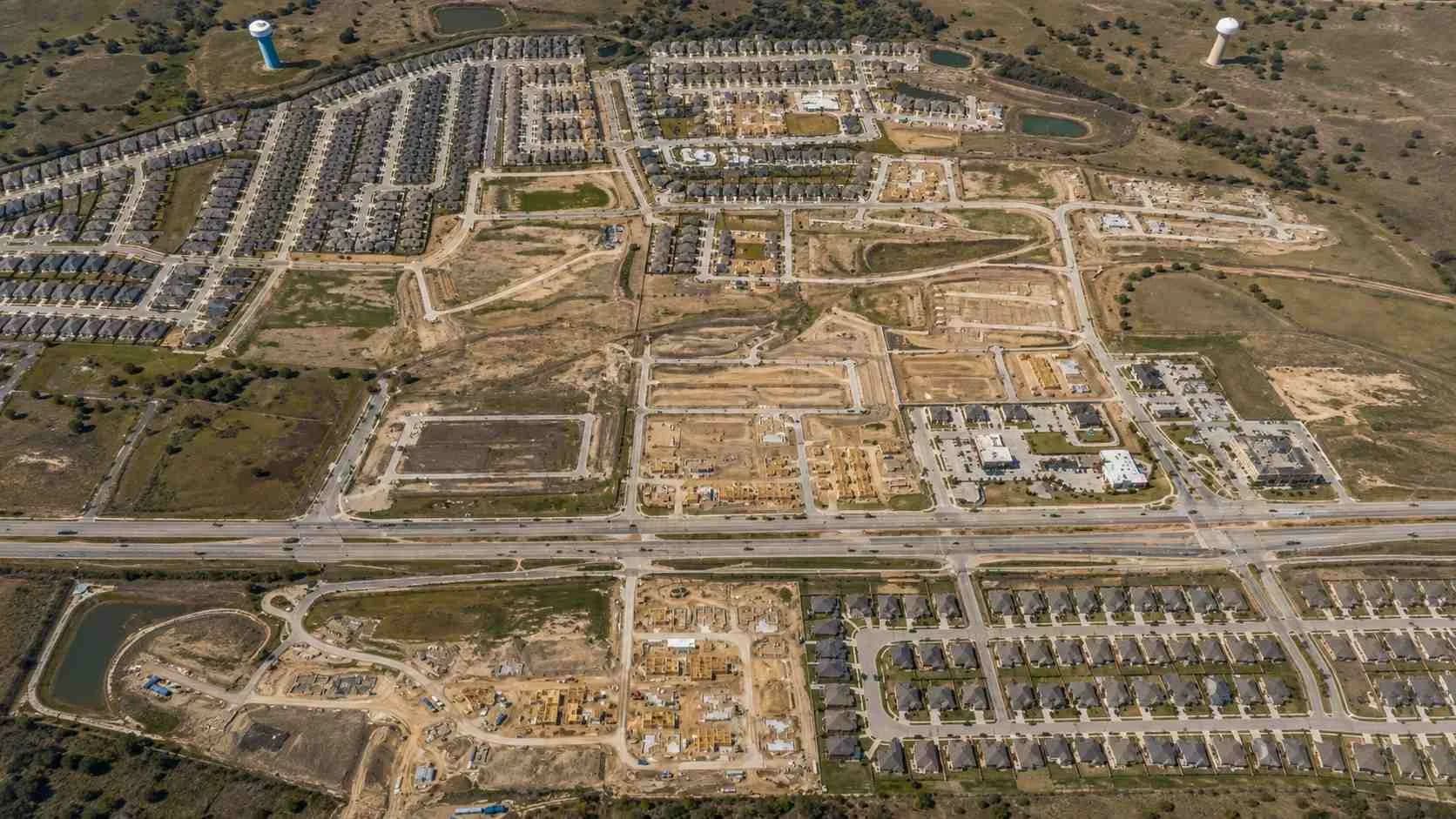
Why This Corridor’s Growth Pace Makes Utility Capacity a Moving Target
Prosper, Celina, Anna, and Melissa are each experiencing development activity substantial enough that utility capacity conditions along the corridor don’t stay static for long. A specific sewer main segment or lift station that shows adequate available capacity today can be substantially more constrained within a relatively short time if several other approved projects in the surrounding area are also drawing on that same capacity as they move through construction and come online. This dynamic means utility capacity confirmation for a US-380 corridor site has a shorter useful shelf life than the same confirmation might have in a slower growing market, and a developer who confirmed capacity informally a year or two ago, without a specific, current capacity reservation or agreement in place, shouldn’t assume that earlier confirmation still reflects current conditions.
This is exactly why utility capacity evaluation for a corridor project needs to happen as close as practical to the actual land closing and site planning decision, with an understanding that capacity conditions can continue to evolve even after that confirmation, making early coordination with the relevant utility about any available capacity reservation mechanism a genuinely valuable step for protecting a project’s assumed capacity against being consumed by a competing project during the time between initial confirmation and actual construction.
Water Supply and Pressure Zone Considerations Across the Corridor
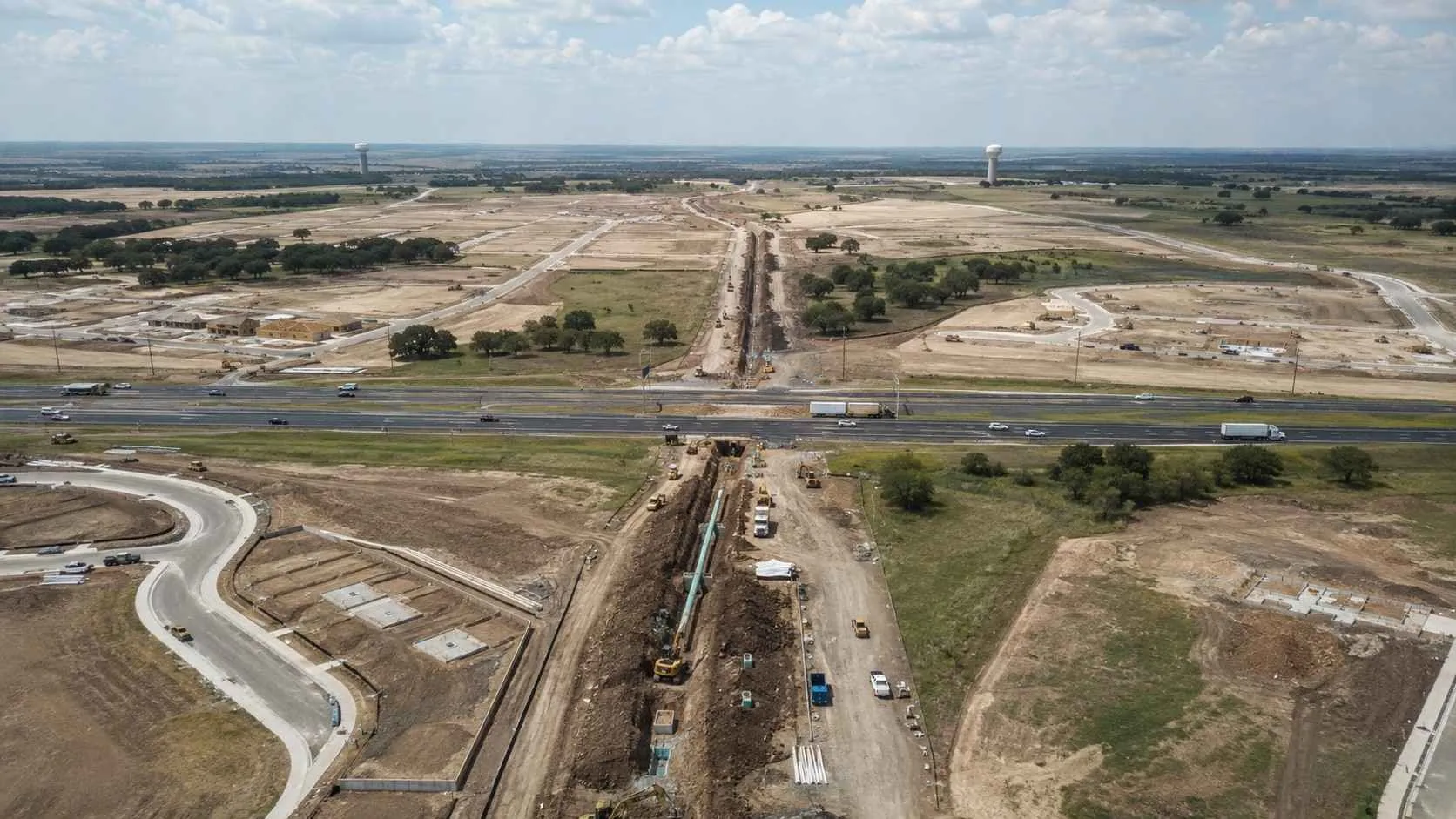
Each of these four communities sources and distributes water through its own combination of local wells, wholesale purchase agreements, and in some cases participation in broader regional supply arrangements, and confirming which specific supply and distribution arrangement serves your particular site, along with that arrangement’s current capacity margin, is a necessary early step that varies by community and, within each community, by specific location. Pressure zone and elevation considerations relevant to rolling North Texas terrain generally apply along significant portions of this corridor as well, meaning a site’s specific elevation relative to the serving pressure zone’s design range should be evaluated using the same hydraulic modeling principles relevant to McKinney-area rolling terrain, adapted to whatever specific topographic conditions exist at your corridor location.
Fire flow confirmation deserves the same specific attention here as in any other Texas development context, since a corridor community’s overall water system may have adequate volumetric capacity in aggregate while still presenting a fire flow constraint at a specific location depending on that location’s distance from adequately sized mains and its position within the local pressure zone structure.
Wastewater Capacity, Lift Stations, and Regional Interceptors
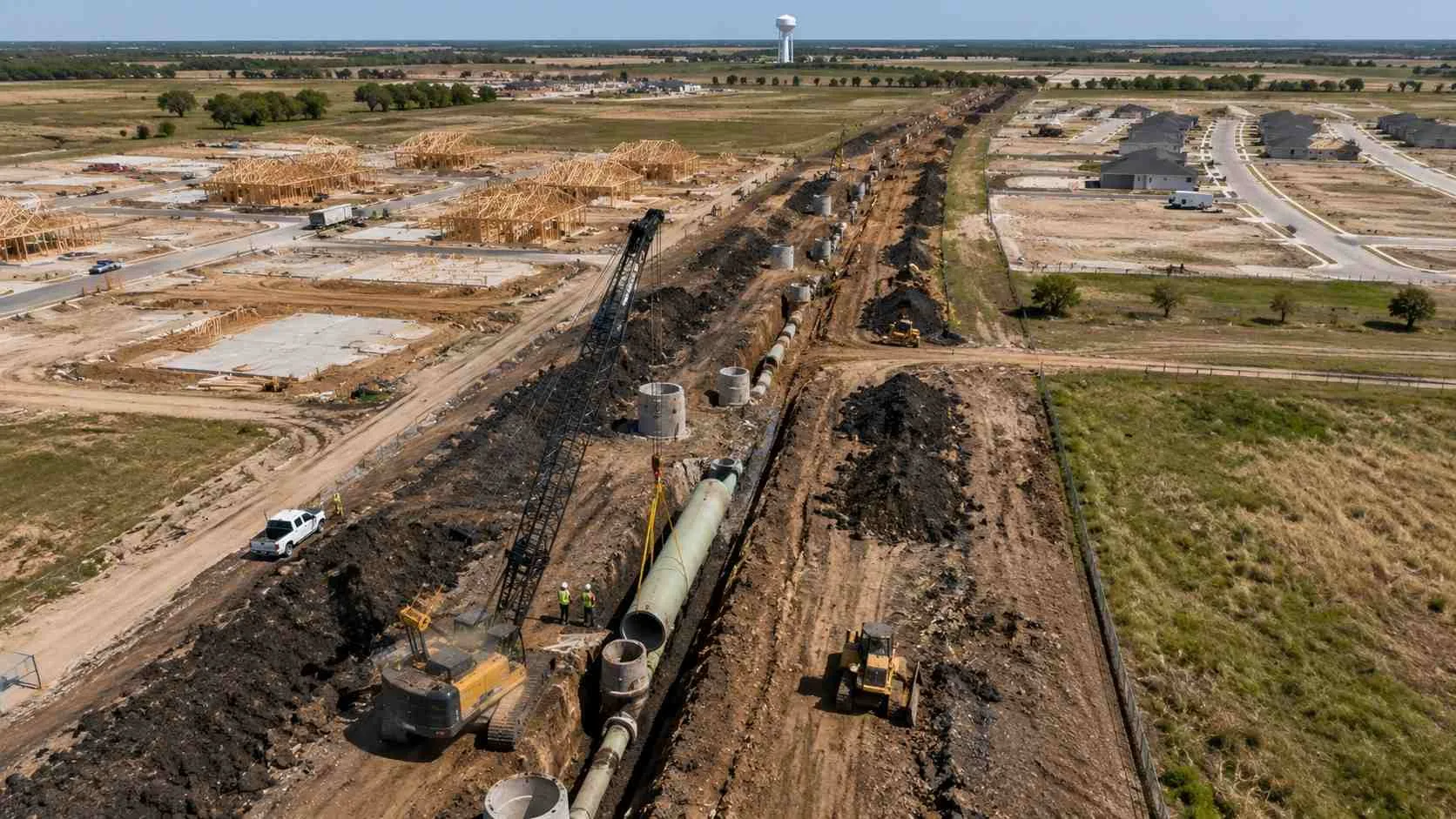
Wastewater capacity along the corridor depends heavily on each site’s specific position relative to gravity collection infrastructure, lift stations, and any regional interceptor system carrying flow toward treatment, whether that treatment is provided by the local municipality or through a regional arrangement such as an NTMWD connection. A site with straightforward gravity access to an adequately sized interceptor faces a meaningfully different capacity and cost picture than a site requiring a new lift station and force main to reach adequate capacity, following the same lift station and force main feasibility evaluation relevant to wastewater infrastructure planning generally.
Regional interceptor capacity specifically deserves early confirmation for larger projects along this corridor, since an interceptor system serving multiple communities’ growth can reach capacity constraints driven by cumulative development well beyond any single project’s own contribution, meaning your project’s specific capacity allocation within a shared regional system should be confirmed directly with the interceptor’s operating authority rather than assumed based on your project’s individual flow calculation alone.
CCN and Service Area Considerations Specific to This Corridor
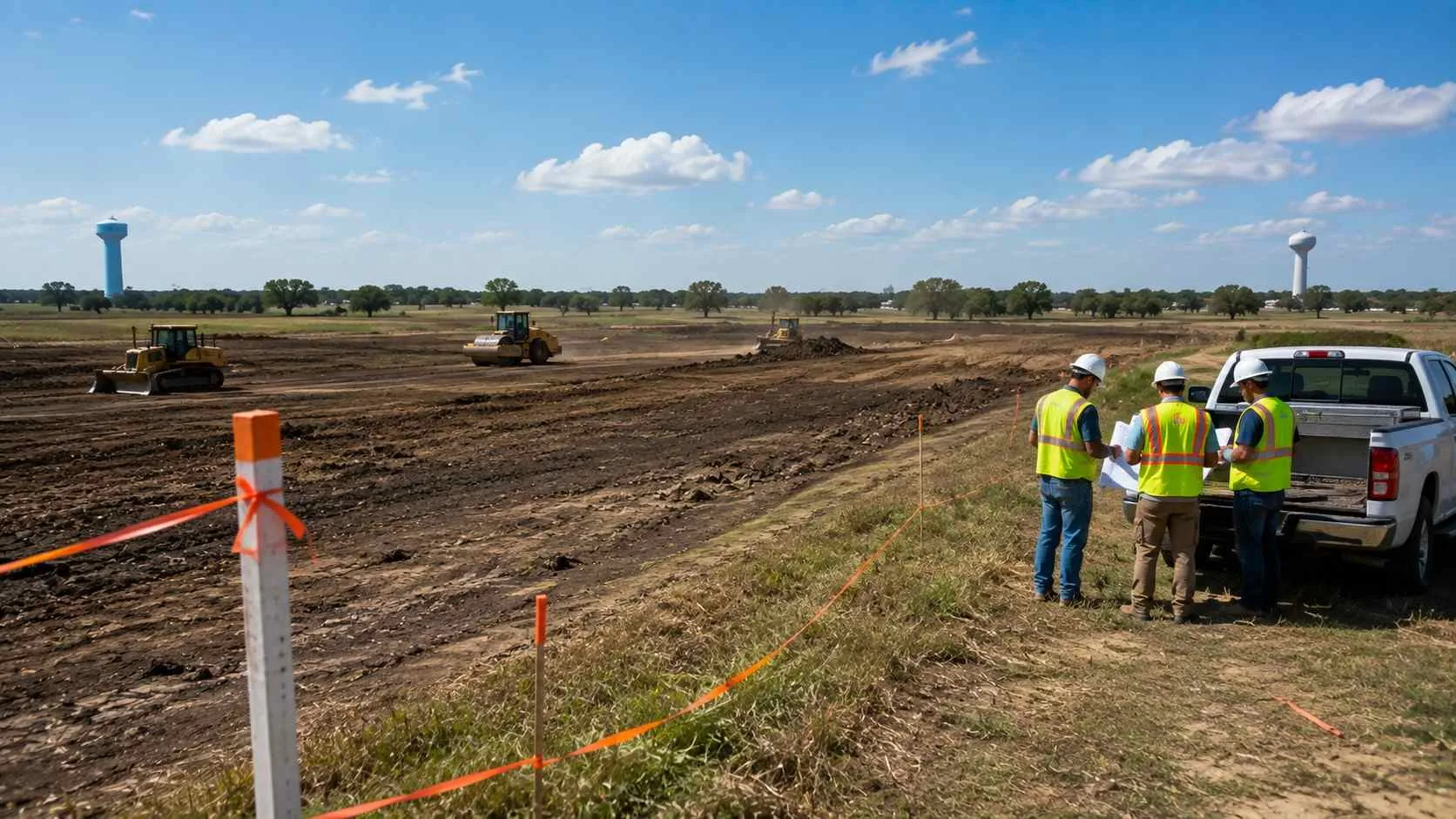
Certificate of Convenience and Necessity boundaries and utility service area designations matter significantly along the US-380 corridor because this area includes a mix of municipal utility service, utility district service, and in some locations, service territory held by a retail public utility that isn’t the municipality where the site is physically located. Confirming which specific entity holds CCN authority or service area rights for water and wastewater service at your specific parcel is a necessary early step, since a mismatch between the municipality where your project is entitled and the utility holding CCN rights over the site’s water or sewer service can create a coordination requirement that affects both your project’s utility strategy and its overall entitlement and permitting sequence.
This CCN confirmation is particularly relevant for sites near municipal boundaries or in areas of recent or ongoing annexation activity common to corridor communities experiencing this pace of growth, where CCN boundaries don’t always align neatly with current municipal boundaries, creating a specific due diligence item that a project team unfamiliar with this corridor’s particular CCN landscape could otherwise overlook.
Comparing Public Connection Against Private Treatment for Corridor Projects
Where a US-380 corridor site’s confirmed public water or wastewater capacity is inadequate, unavailable within the project’s timeline, or available only at a cost disproportionate to the project’s scale, evaluating a private wastewater treatment plant or other private infrastructure alternative follows the same comparative feasibility framework relevant to NTMWD versus private treatment decisions in the broader North Texas market, adapted to whichever specific municipality and CCN holder governs the corridor site in question. This comparison should weigh confirmed public capacity, cost, and timeline directly against private treatment plant permitting timeline, construction cost, and long-term operational responsibility, rather than defaulting to public connection simply because it’s the more familiar path.
For master planned communities and larger phased projects along this corridor, a hybrid strategy, private treatment addressing an initial phase’s near term needs while public capacity or a regional interceptor connection is pursued in parallel for later phases, can be a reasonable approach where a corridor community’s own infrastructure capital improvement timeline doesn’t yet align with a project’s full build-out schedule.
Phasing, Capital Improvement Timing, and Lot Yield Risk
A corridor project’s phasing plan should be evaluated against each relevant utility’s own capital improvement program timeline, since a project phased to bring rooftops online faster than the serving utility’s planned capacity expansion can support risks a gap between the project’s construction schedule and the utility’s actual service delivery capability, a gap that can force phasing delays, temporary capacity workarounds, or in some cases a reduction in the number of lots or units a given phase can actually be approved to connect within the utility’s currently available capacity.
This capacity driven lot yield risk is one of the more consequential ways utility capacity constraints affect a corridor project’s underlying economics, since a project’s pro forma built around an assumed total lot count or unit count can require revision if utility capacity confirmation later reveals that the full build out can’t be served on the assumed timeline, making early capacity confirmation directly relevant to the same pro forma assumptions that drove the original land acquisition and market feasibility analysis.
Easements, Offsite Extensions, and What Early Feasibility Should Actually Confirm
Where a corridor site requires an offsite utility extension to reach adequate water or sewer capacity, the extension’s easement requirements, routing feasibility across intervening parcels, and total cost should be evaluated with the same rigor relevant to any Collin County utility extension decision, since the specific extension distance, whether gravity or force main and lift station dependent, and easement acquisition complexity vary considerably from site to site even within the same general corridor area.
Early feasibility work for a US-380 corridor project should specifically confirm current water and wastewater capacity at the actual proposed connection point, not just general service availability in the surrounding area, current fire flow delivery capability, CCN and service area status for the specific parcel, the utility’s capital improvement timeline as it relates to your project’s phasing plan, and the cost and feasibility of any required offsite extension, lift station, or force main. Confirming each of these specifically, before land closing or plat submittal, is what separates a corridor project that stays on schedule from one that discovers a capacity or timing conflict during construction plan review, when the available options for responding are considerably more limited and more expensive.
Frequently Asked Questions
Does utility capacity vary significantly between Prosper, Celina, Anna, and Melissa, or is the corridor generally similar across these communities?
Capacity conditions vary meaningfully between these communities and even within different areas of the same community, depending on each area’s specific infrastructure age, recent capital improvement investment, and the pace and location of other approved development already drawing on that same infrastructure. This variability is exactly why a general sense of “the corridor is growing fast” isn’t a substitute for site specific capacity confirmation with the particular utility serving your parcel in whichever of these communities your project is located.
How far in advance of land closing should we start utility capacity due diligence for a US-380 corridor site?
This due diligence should begin as early as possible within your due diligence period, ideally as one of the first feasibility steps rather than one of the last, given this corridor’s fast moving capacity conditions and the schedule risk of discovering a constraint after other project commitments are already made. Starting this confirmation early also gives you time to evaluate alternative strategies, whether a different connection point, a private treatment alternative, or a phasing adjustment, while your project still has the flexibility to incorporate those alternatives into its overall plan.
If we find that a corridor community’s utility capacity is currently inadequate for our project, does that mean the site isn’t viable, or does it just require different planning?
An inadequate current capacity finding generally means your project requires different planning, not that the site is inherently unviable, since options such as coordinating with the utility on capital improvement timing, evaluating a private treatment or supply alternative, adjusting your phasing plan, or in some cases participating financially in an infrastructure improvement that expands available capacity can often resolve the constraint. The specific path forward depends on your project’s scale, timeline, and the nature of the capacity constraint, which is exactly the kind of project specific evaluation early utility due diligence is intended to inform.
Related Resources
- McKinney Utility Availability Study: What Developers Need Before Submitting a Plat in Collin County’s Fastest Growing City
- Water Storage and Pressure Zone Design for McKinney’s Rolling Terrain: Engineering for Collin County Topography
- NTMWD Connection vs. Private Treatment: The McKinney Developer’s Guide to Choosing the Right Wastewater Path
Evaluating Utility Capacity for a Development Along the US-380 Corridor?
MES works with developers, municipalities, and utility districts in Prosper, Celina, Anna, Melissa, and the broader US-380 growth corridor to confirm water and wastewater capacity, compare public and private infrastructure strategies, resolve CCN and service area questions, and coordinate phasing with each community’s capital improvement timeline before land closes or plats are submitted.
We specialize in:
- Site specific water and wastewater capacity confirmation for US-380 corridor development in Prosper, Celina, Anna, and Melissa
- Lift station, force main, and regional interceptor feasibility evaluation for fast growing North Texas communities
- CCN and service area coordination for corridor sites near municipal and utility district boundaries
- Public connection versus private treatment plant comparative feasibility analysis for corridor projects
- Phasing and capital improvement timing coordination to protect lot yield and project schedule
- Offsite utility extension, easement, and cost feasibility evaluation for Collin County growth corridor development
Modern Engineering Solutions, McKinney, Texas. Contact: (214) 833-6748 or mod-eng.com
Keep reading
More to read.
Talk to an engineer
Tell us about your project.
An engineer reads it
Not a salesperson. Someone who can tell you whether the pathway is real.
You get a first answer
Your options, the agencies involved and the questions that decide cost and schedule.
You decide
No commitment to have the first call.
Prefer the phone? (214) 833-6748