
Chapter 210 Reclaimed Water: What Texas Developers Need to Know About Water Reuse
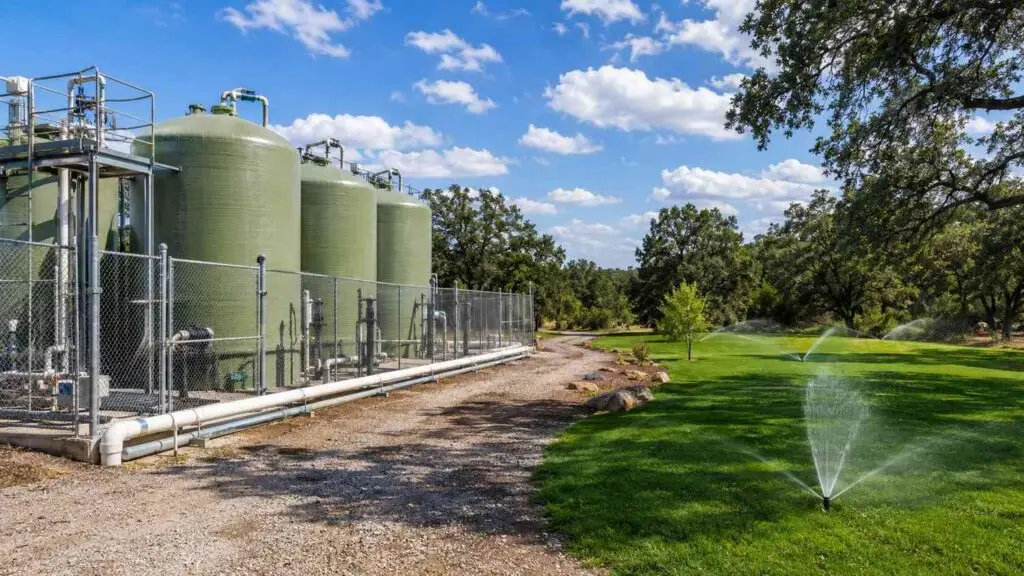
Water reuse in Texas is not a future trend. It is an active regulatory pathway that is already determining whether development projects move forward, what they cost to build, and how long they take to permit. Understanding what Chapter 210 reclaimed water actually requires before site plans, utility layouts, and amenity areas are locked in is one of the most practical things a Texas developer can do for their project.
Phase II MS4 Permits: What Small Texas Cities and Public Entities Need to Know
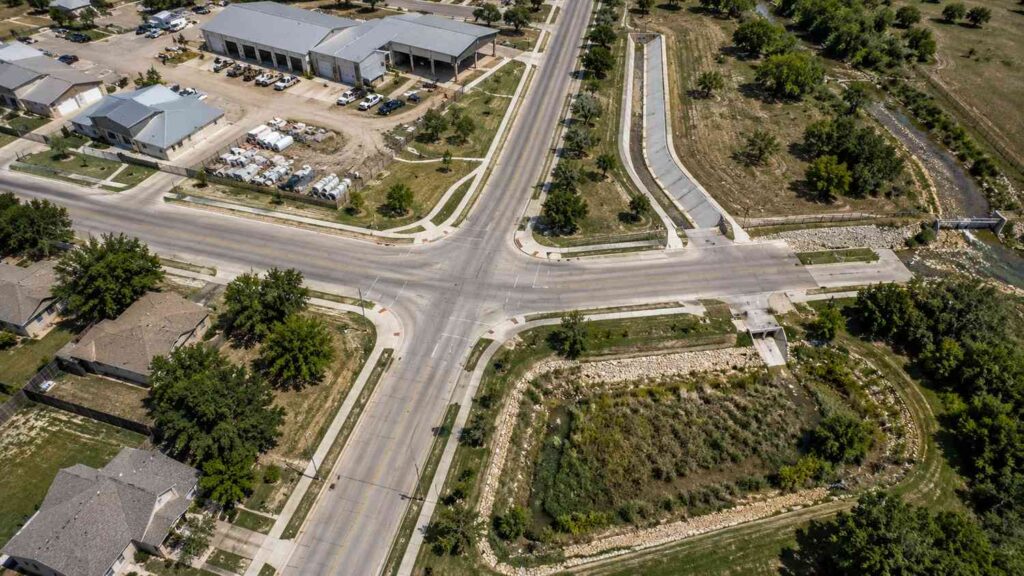
Most small Texas cities and public entities that hold a Phase II MS4 permit got it years ago, filed the initial paperwork, and moved on. Then the permit renewal cycle arrives, the annual report is due, and someone on staff is trying to reconstruct two years of stormwater program activity from a folder that does not have much in it. That is not a compliance program. It is a documentation problem that becomes an enforcement risk.
Capital Improvement Planning for Small Municipalities: Where to Start When You Don’t Know Where to Start
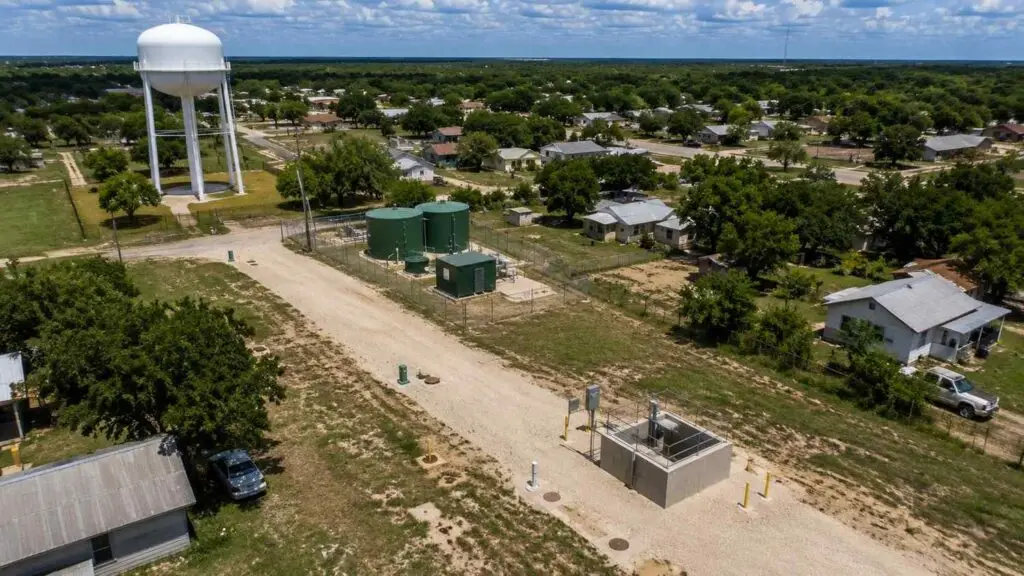
Every city manager and public works director reading this already knows their system has problems. The lift station that keeps failing. The water mains that were installed in 1965. The treatment plant that is one wet weather event away from a compliance violation. The board that wants a plan but has not allocated money for one. The question is not whether the problems exist. The question is where to begin turning them into something manageable.
How to Read a TCEQ Effluent Limit Table: What the Numbers Actually Mean for Your Development
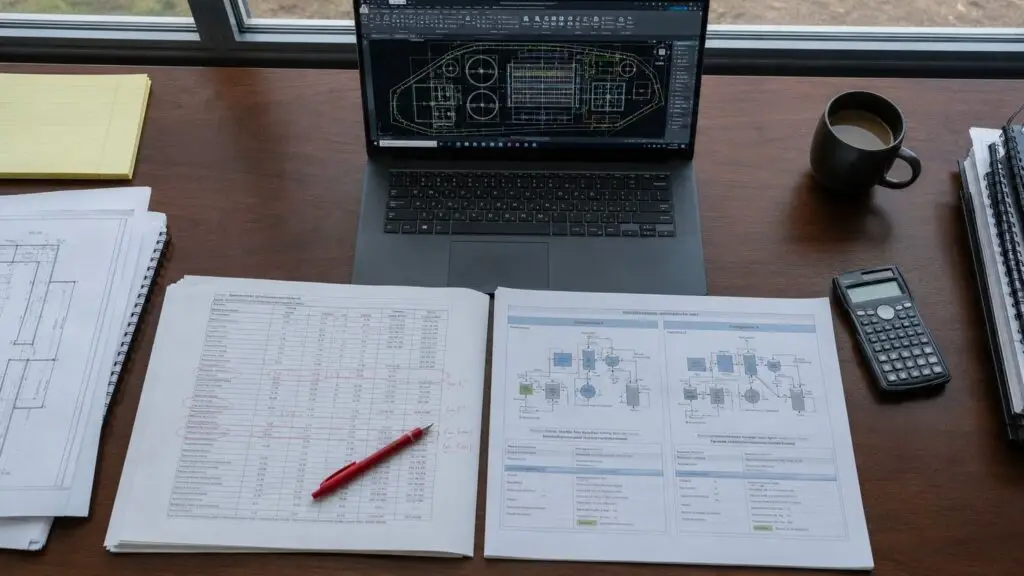
When a Texas developer receives a draft TCEQ wastewater permit, the effluent limit table is usually the part nobody reads carefully enough. That is a mistake. Every number in that table is a design specification, an operating obligation, and a long-term cost driver.
How I Built a Civil Engineering Firm That Doesn’t Follow Industry Norms
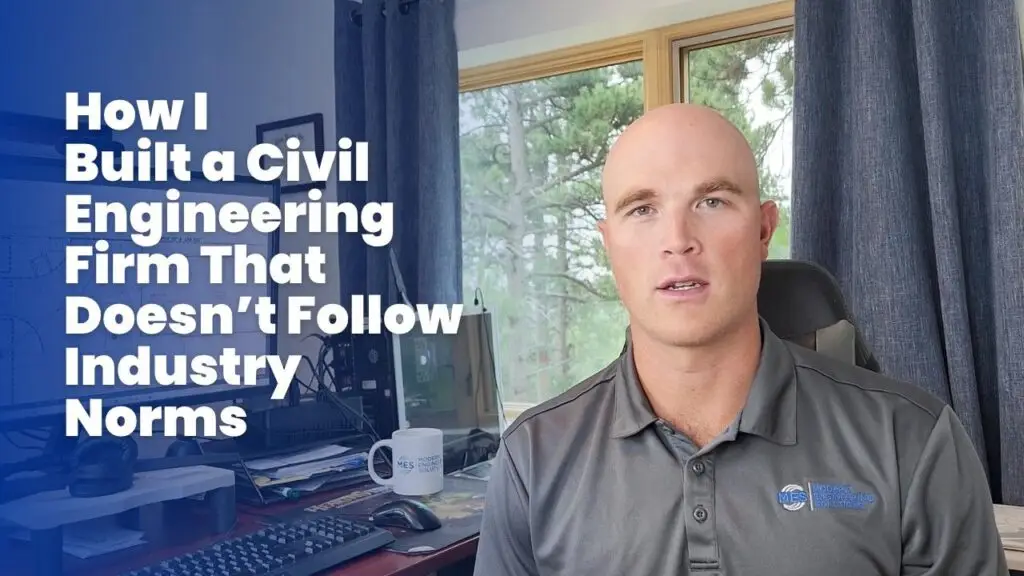
Modern Engineering Solutions was not built because there was a gap in the market for another civil engineering firm. It was built because the model most firms are running is broken for the people inside it and for the clients depending on it.
What Happens to Your 210E Permit When Your Industrial Tenant Leaves?
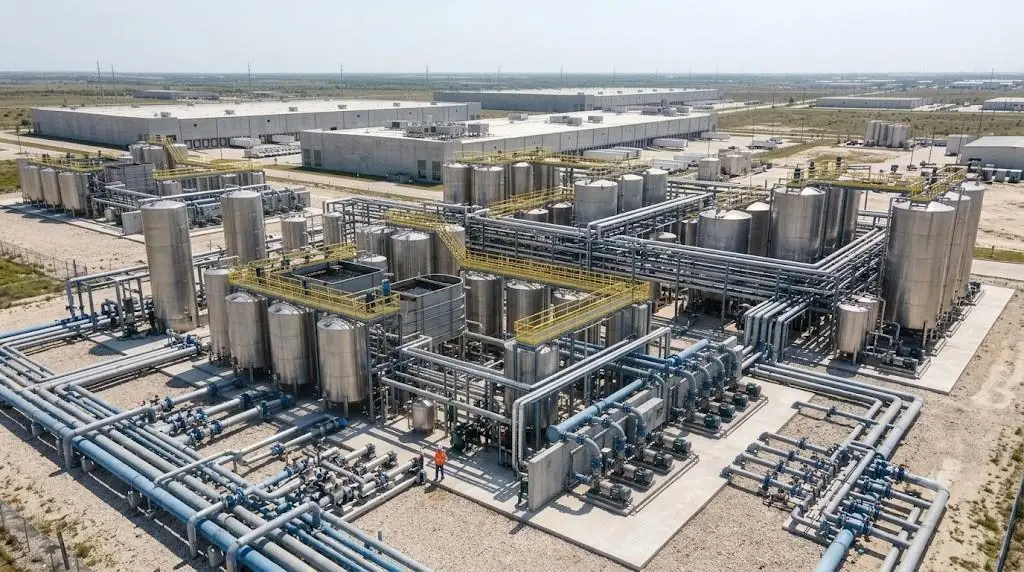
It is a question most developers do not ask until they are facing it. The industrial tenant who helped qualify the 210E authorization is leaving. The data center is shutting down. The concrete batch plant is relocating. Now what?
How Mixed-Use Developments Qualify for 210E Even When 90% of Their Flow Is Residential
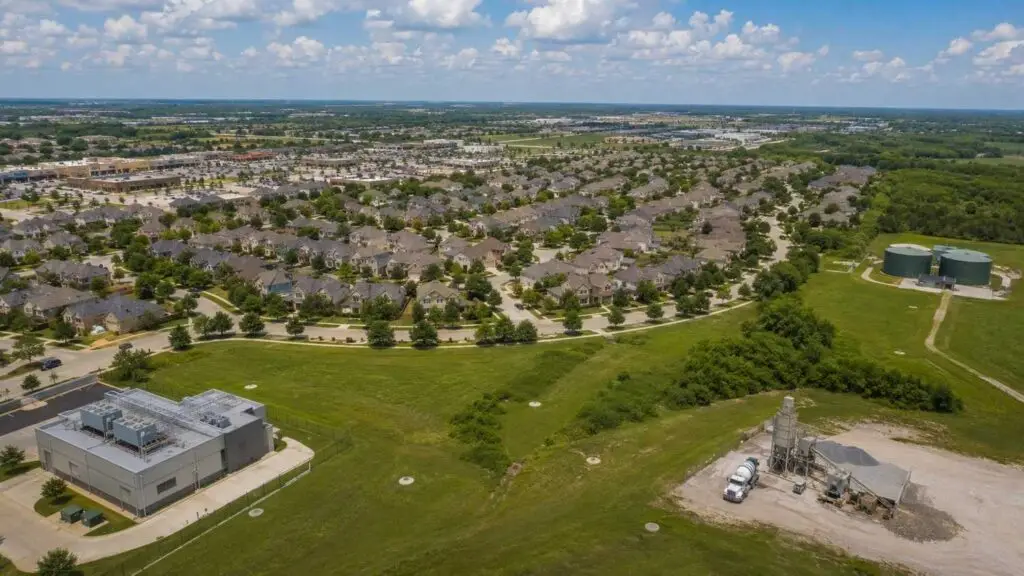
The most common reason developers assume they do not qualify for a 210E authorization is the one that is least supported by the regulation: they believe their project is not industrial enough. It almost always is.
Why Your Texas Development Needs a Wastewater Engineer Before the Architect Signs Off
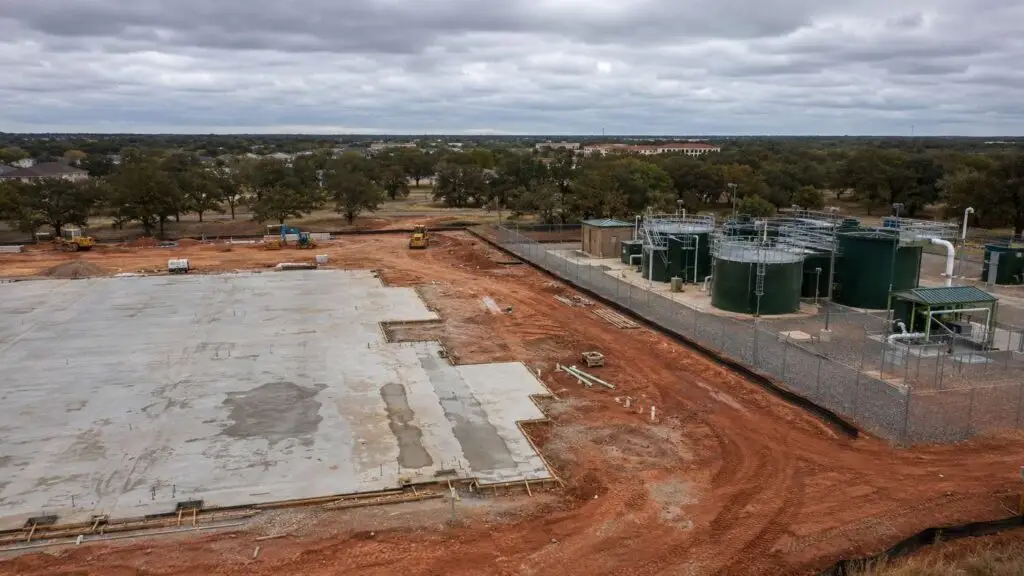
By the time an architect delivers a signed site plan, the decisions that determine your wastewater permitting pathway have already been made. Most of them were made wrong.
How to Evaluate Wastewater Utility Options Before You Close on Land (Connect, Build, or Wait)
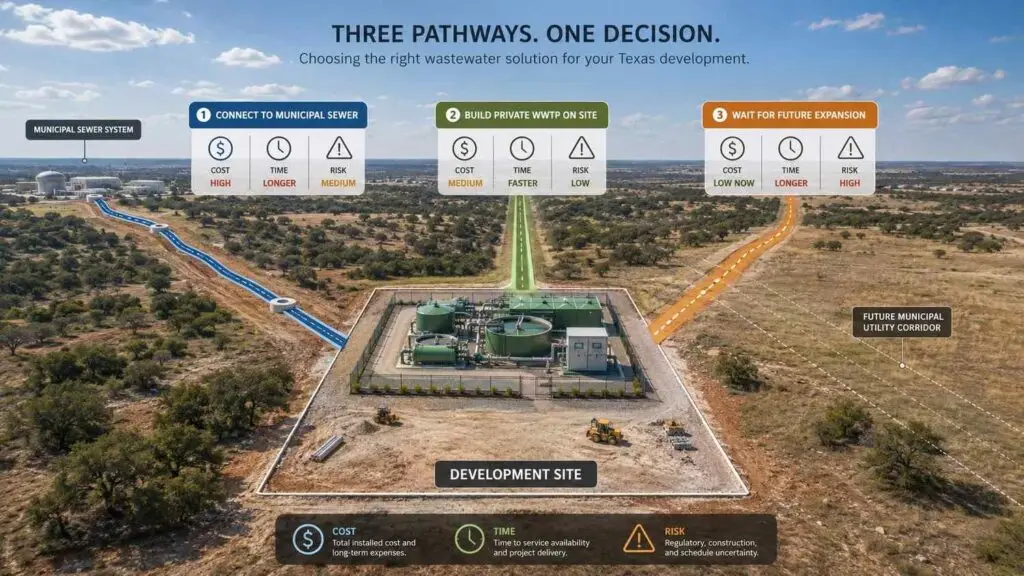
The wastewater utility question is the one most developers get to last. It should be the first question answered before a purchase agreement is signed.
Lift Stations and Collection Systems: What the Plant Needs Upstream to Function Properly
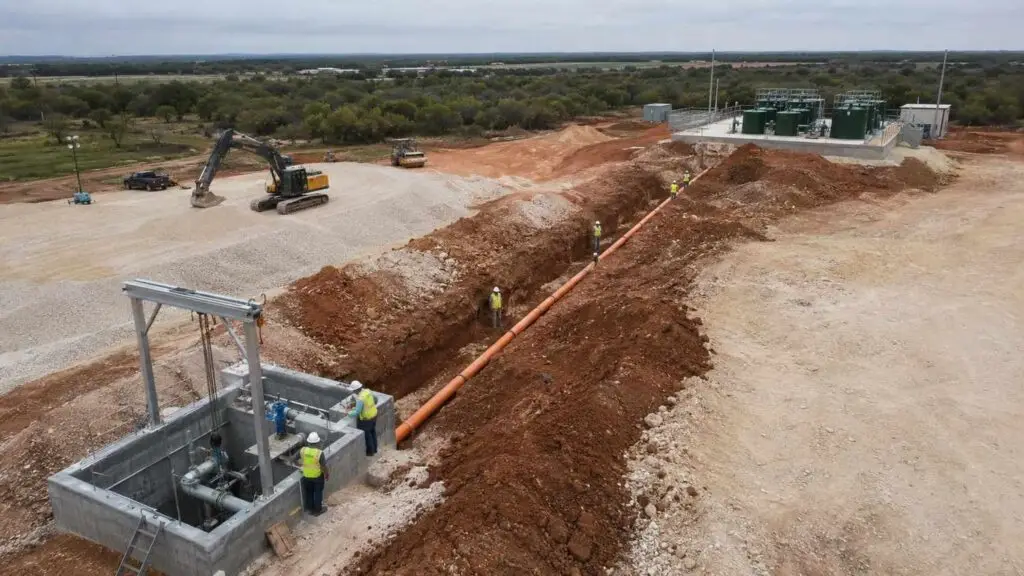
A wastewater treatment plant is only as reliable as the infrastructure feeding it. Most permit problems and operational failures on private developments trace back to upstream decisions that were made, or not made, before the plant was ever designed.
Why Your Site Civil Engineer Isn’t the Right Person to Lead TCEQ Permitting
This is not a criticism of site civil engineers. They are skilled professionals doing exactly what they were trained to do. The problem is that TCEQ wastewater permitting is not what they were trained to do, and on Texas development projects, routing that work through the wrong firm consistently produces the same outcome: deficiency notices, redesigns, and months of lost time.
How to Read a Hydraulic Grade Line
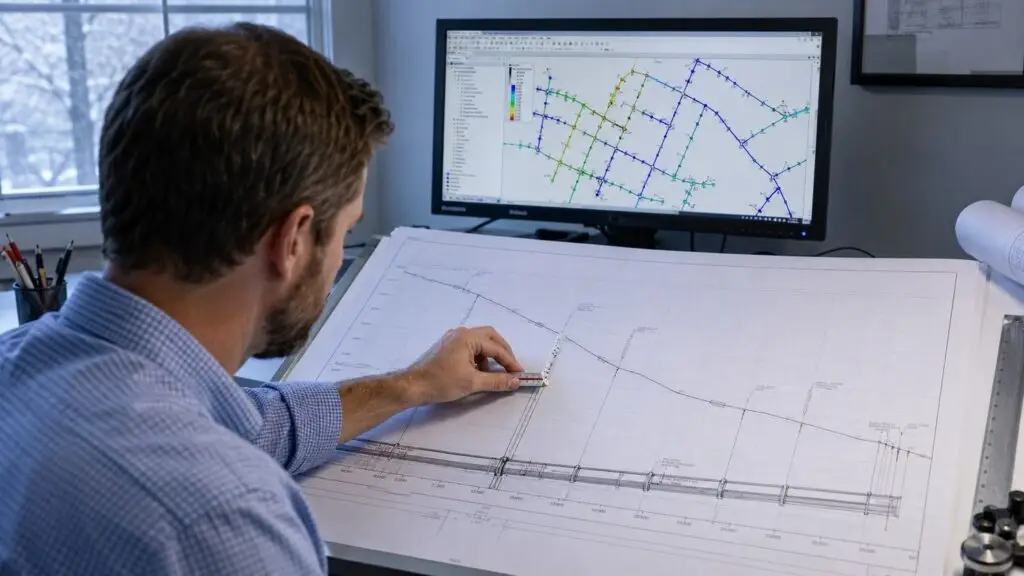
If you have ever reviewed a plan set for a water main, sewer collection system, or stormwater network and seen a sloped line running above or alongside the pipe, that line is the hydraulic grade line. Understanding what it tells you is one of the most practical skills anyone involved in infrastructure review can develop.
Capital Improvement Planning for Small Municipalities
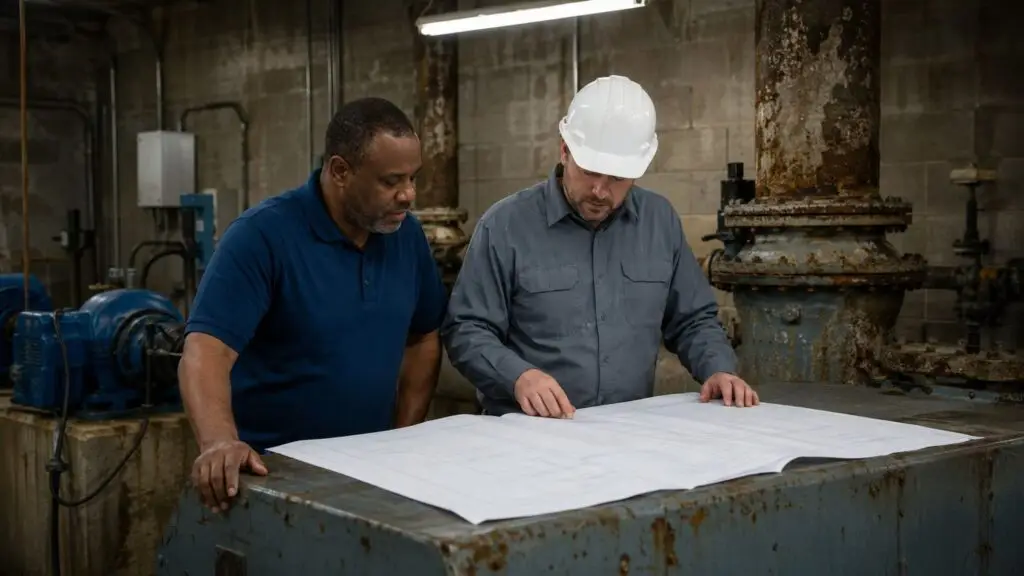
Most small communities do not fail their residents because they lack good people. They fail because they run from crisis to crisis without a plan that tells them what breaks next, what it will cost, and how to fund it before the emergency arrives.
How to Size a Wastewater Storage Reservoir for a Texas Reuse Project
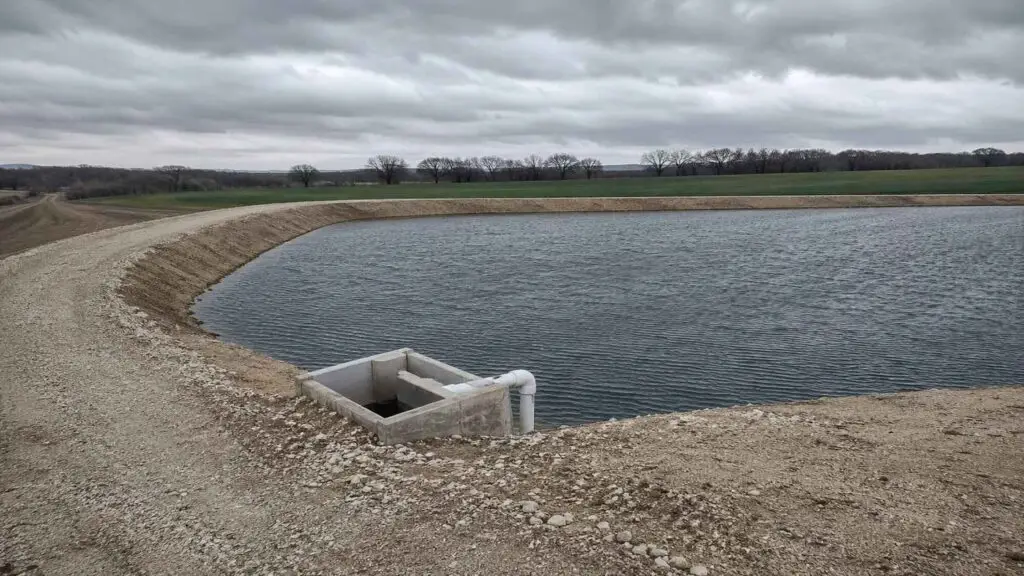
The storage reservoir on a Texas reuse project is not a nice-to-have. It is what keeps the facility in compliance during the months when the reuse site cannot accept all the effluent being produced. Size it wrong and the permit will not be approved. Size it right and the facility operates without a compliance gap through any seasonal condition the site will experience.
Ongoing Compliance After Permit Approval: What a Developer-Operator Needs to Track
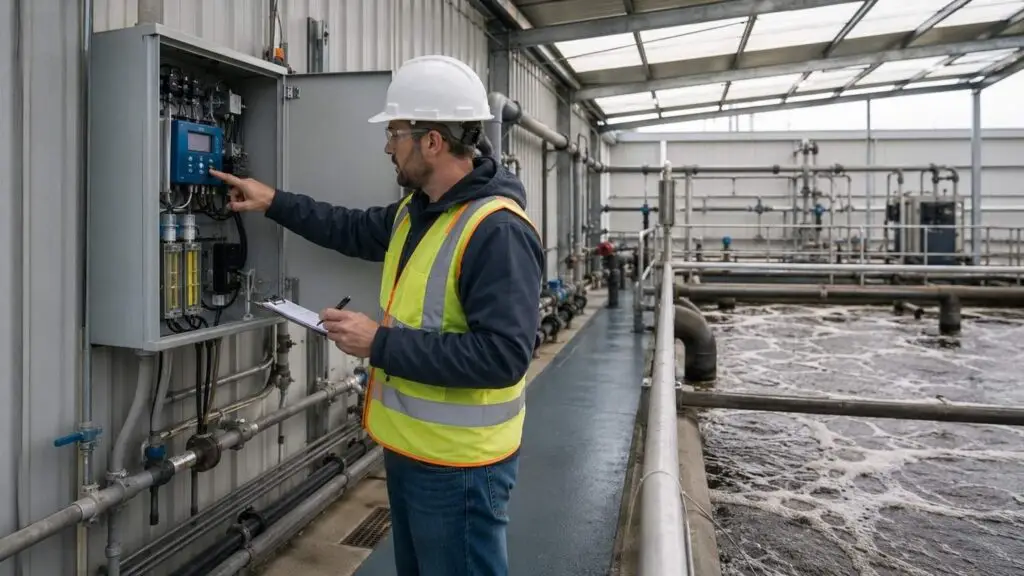
Getting the permit is the milestone most developers focus on. But the permit is not the end of the regulatory obligation: it is the beginning of it. If you now own and operate a private wastewater treatment facility in Texas, here is what that actually requires.
What a Utility Feasibility Study Actually Tells You, and When to Get One
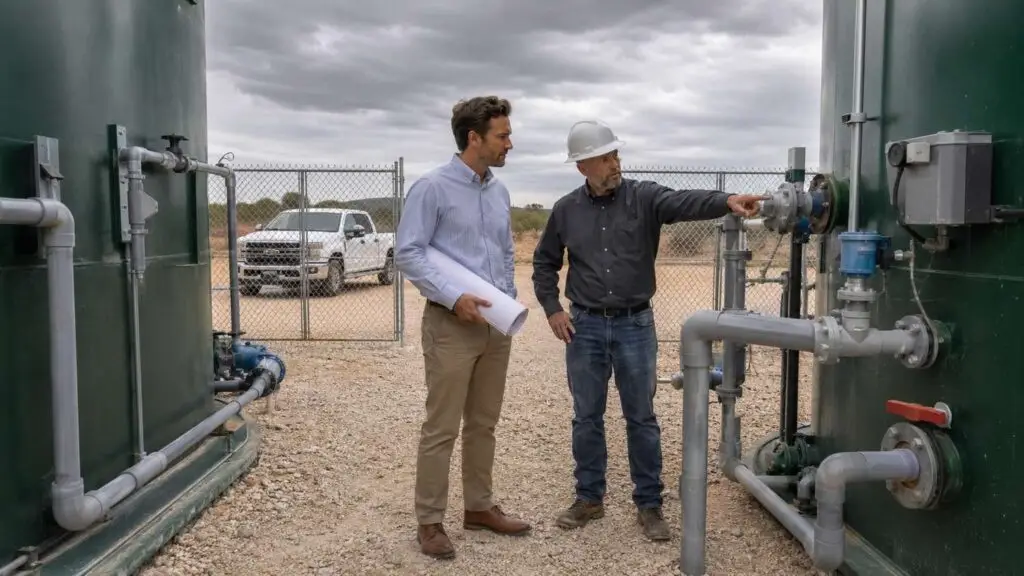
If you are reviewing site viability for a development acquisition and the utility section says “TBD,” you do not have a pro forma. You have an assumption with a price tag attached to it.
Getting a Discharge Permit as a Backup After Your 210E Is Operational
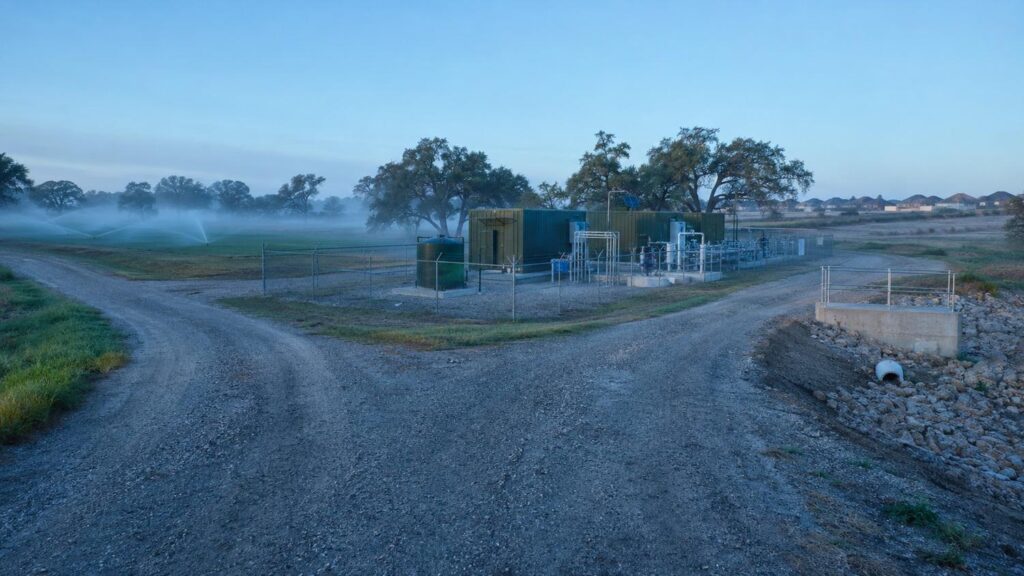
A 210E authorization gets your development operational in weeks instead of years. A backup discharge permit keeps it operational if the reuse arrangement changes. Running both is not redundancy for its own sake: it is a rational risk management strategy.
How Wastewater Infrastructure Affects Your Pro Forma: What Developers Often Miss
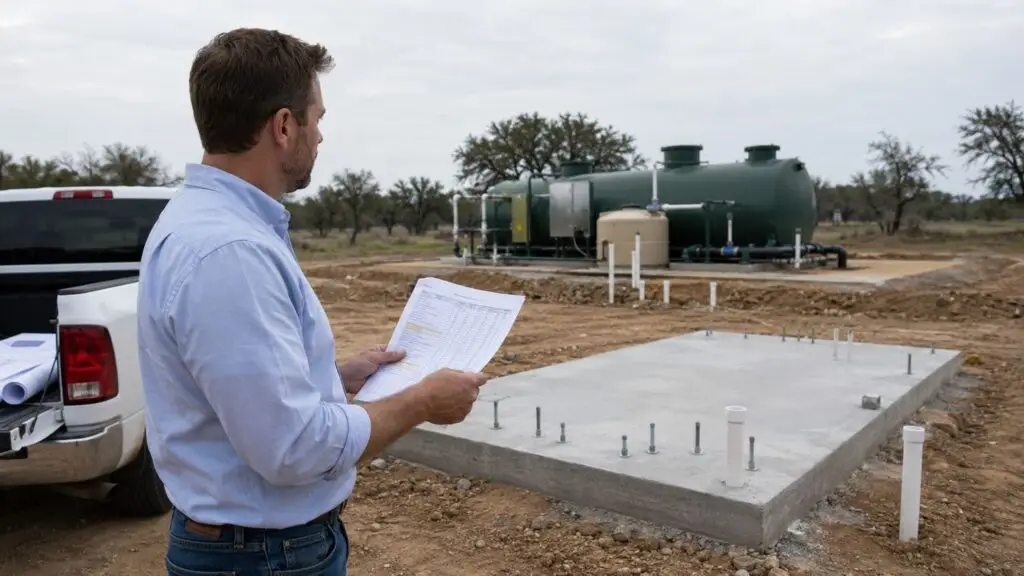
Wastewater infrastructure is not a regulatory line item. It is a financial variable. The developers who treat it as the former consistently find it showing up as a problem in the latter.
Package WWTP vs. Custom-Designed Plant: Which One Fits Your Project?
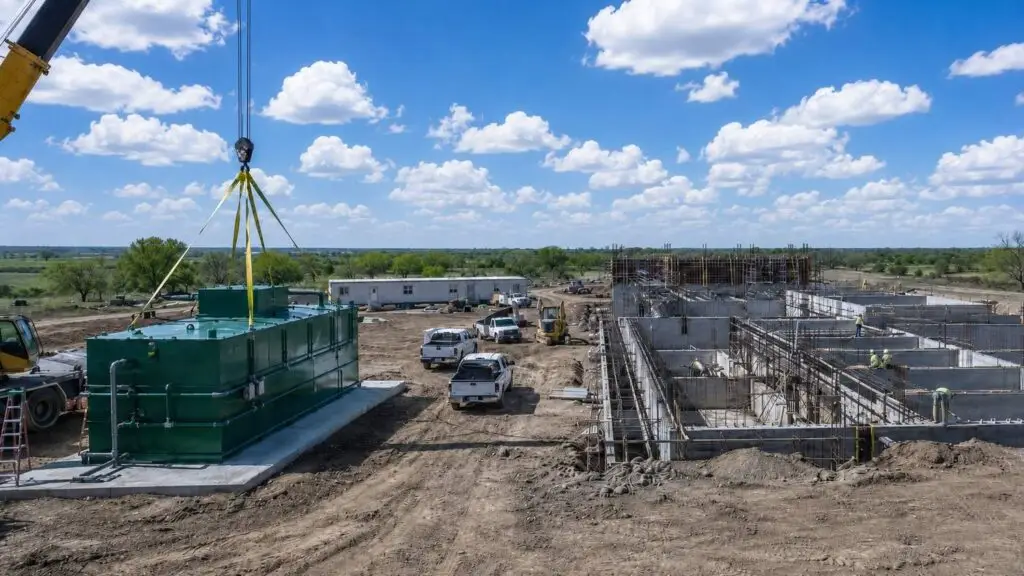
The question is not which option is better. The question is which option matches your project’s flow volume, discharge requirements, site constraints, budget, and timeline. Getting the answer wrong costs money on construction day and creates problems on permit day.
Your Three Wastewater Disposal Options in Texas: Discharge, Reuse, or Land Application
Every private wastewater treatment plant in Texas produces treated effluent that has to go somewhere. Where it goes and through which regulatory pathway determines your project timeline, your land requirements, and how much carrying cost exposure sits on your pro forma before construction starts.
210E vs. TPDES Discharge Permit: A Side-by-Side Comparison for Developers
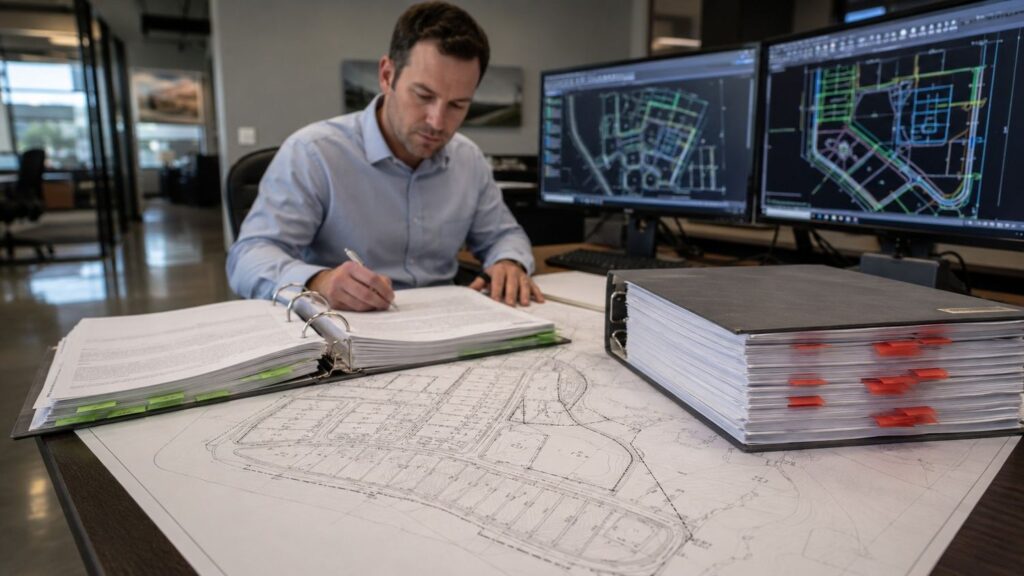
Most Texas developers ask the same question when they learn about the 210E authorization: why isn’t this what every qualifying project uses? The answer is that most engineers default to what they know. This article gives you the comparison to make the decision yourself.
Permit-by-Rule vs. Standard Permit: When Each Path Applies to Your Development
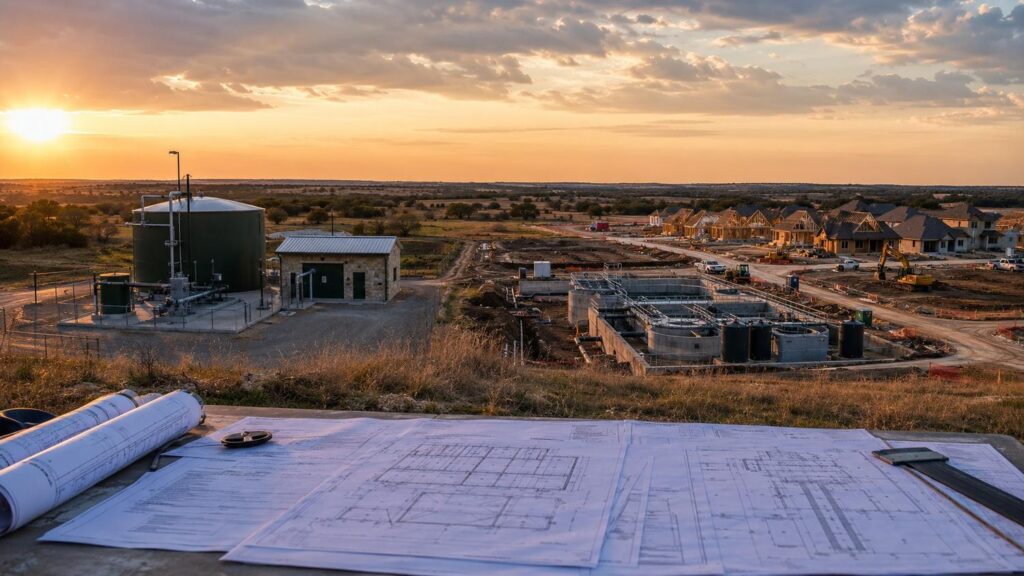
Before you engage a water and wastewater engineer for a Texas development project, it helps to understand which permitting pathway your project likely falls into. The difference between a permit-by-rule and a standard TCEQ permit is not a minor procedural distinction, it determines your timeline, your regulatory obligations, and in some cases whether construction can start before TCEQ issues any formal authorization at all.
How to Work With TCEQ Reviewers: What Slows Approvals and What Speeds Them Up
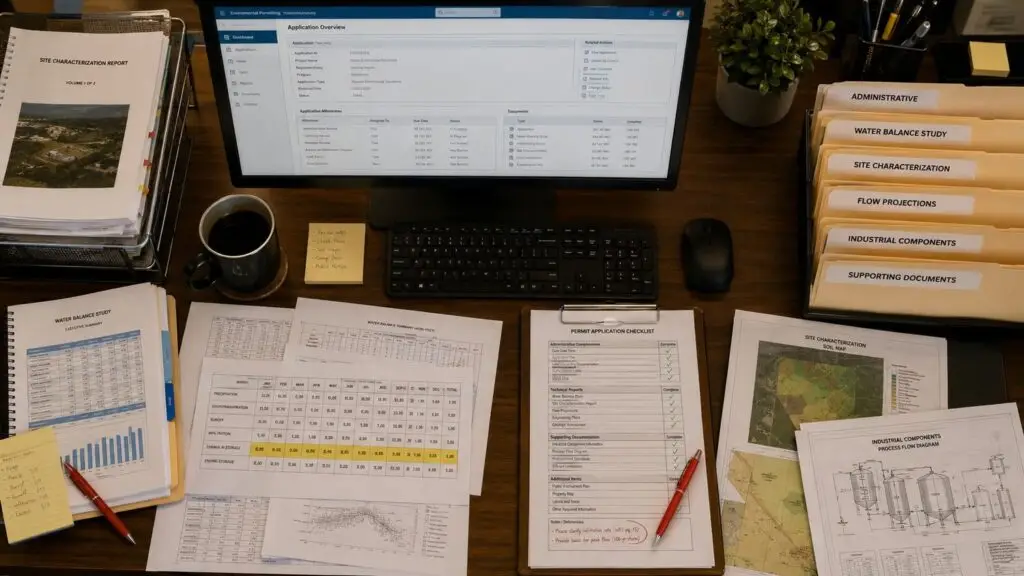
TCEQ reviewers are not the reason most permit applications take 24 months. Incomplete submittals are. Understanding what reviewers actually evaluate, and what triggers a deficiency notice, is the difference between a 4-week approval and an 18-month revision cycle.
Water Balance Studies Under 30 TAC §309.20: What They Require and Who Prepares Them
Every reuse-based wastewater permit in Texas depends on one engineering analysis to hold together: the water balance study. Get it right and the permit moves. Get it wrong and you will be answering TCEQ deficiency notices for months while your project carries costs it was never designed to absorb.
What Engineers Submit to TCEQ and Why Your Application Gets Rejected
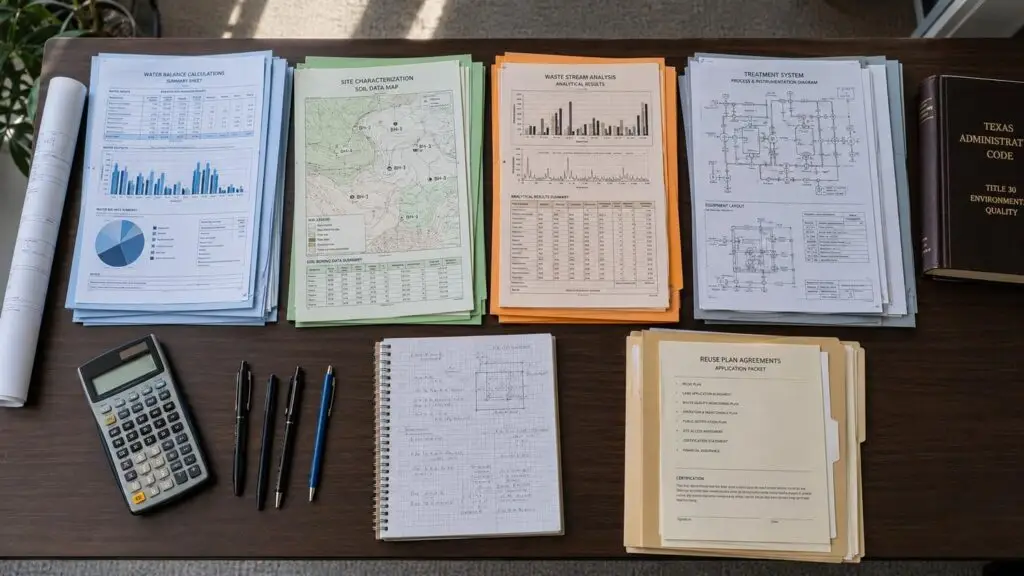
If your TCEQ wastewater permit application has been sitting in review for three months without an approval, the most likely explanation is not TCEQ’s workload. It is an incomplete submittal. Here is what a complete application actually contains and where most of them fall short.
Flow Rate Projections: How to Size a Wastewater Treatment Plant for Your Development Without Over-Building
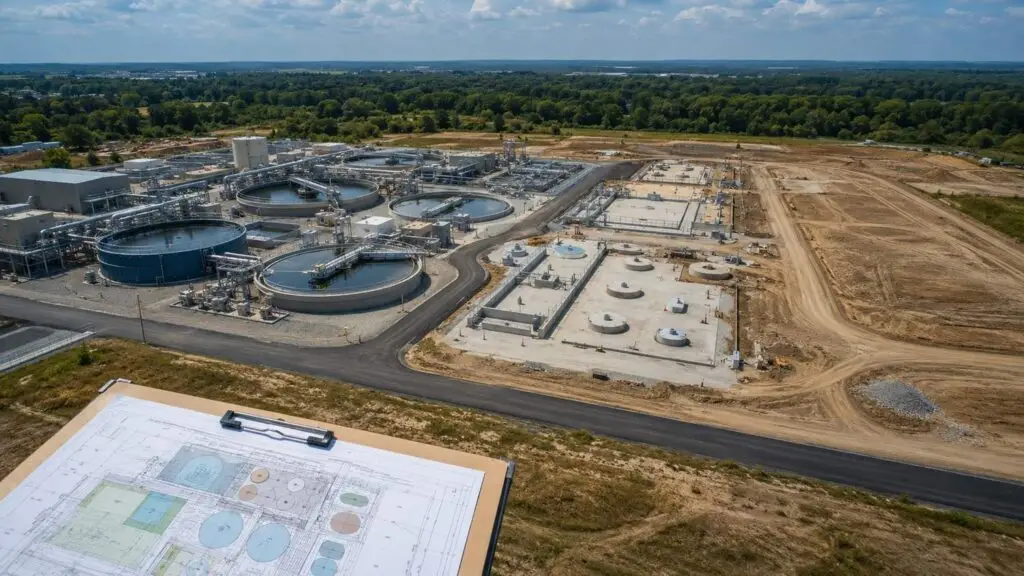
The single number that determines how much your wastewater treatment plant costs to build, permit, and operate is design flow. Get it wrong in either direction and you pay for it either in excess capital committed to capacity you do not need yet, or in compliance failures you cannot recover from without expensive redesign.
The Four Layers Under MES, Top Down
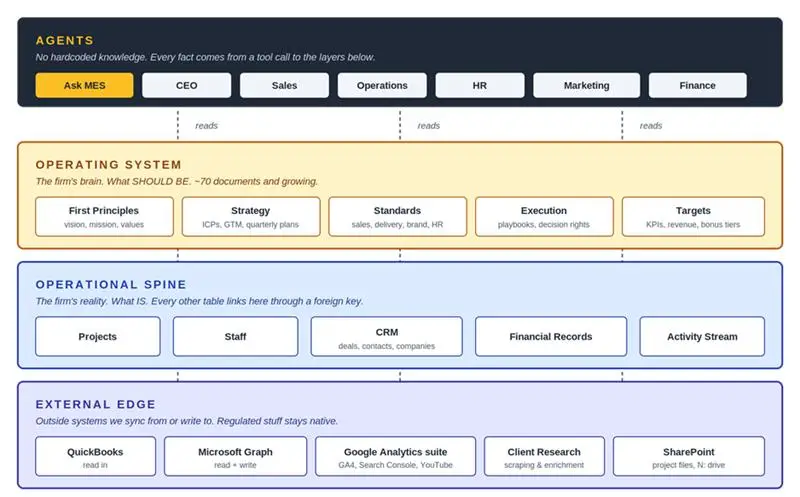
Last month I wrote that AI is architecture, not a feature, and showed you the project at the relational core. Several of you wrote back asking the next question.
What is actually inside the database, and how do the layers connect?
Top down, four of them. The rest of this article walks them in order.
How Did I Get to a Point Where Someone Else Has Complete Control Over My Career Trajectory?

The question I asked myself standing in a dusty field in Guernsey, Wyoming, moments after my boss told me “No” to a career-advancing opportunity.
Engineer Your Freedom is the practical roadmap from zero to $1M in revenue, covering when you’re truly ready, the business fundamentals engineers aren’t taught in school, finding your ideal clients, pricing for value, your first critical hires, systems that scale, and common traps that kill most practices before they start.
No fluff. No theory. Just honest, engineer-to-engineer guidance from someone who has built the exact business you are trying to create.
How Carrying Costs Are Killing Texas Development Projects (And the Permit Strategy That Fixes It)
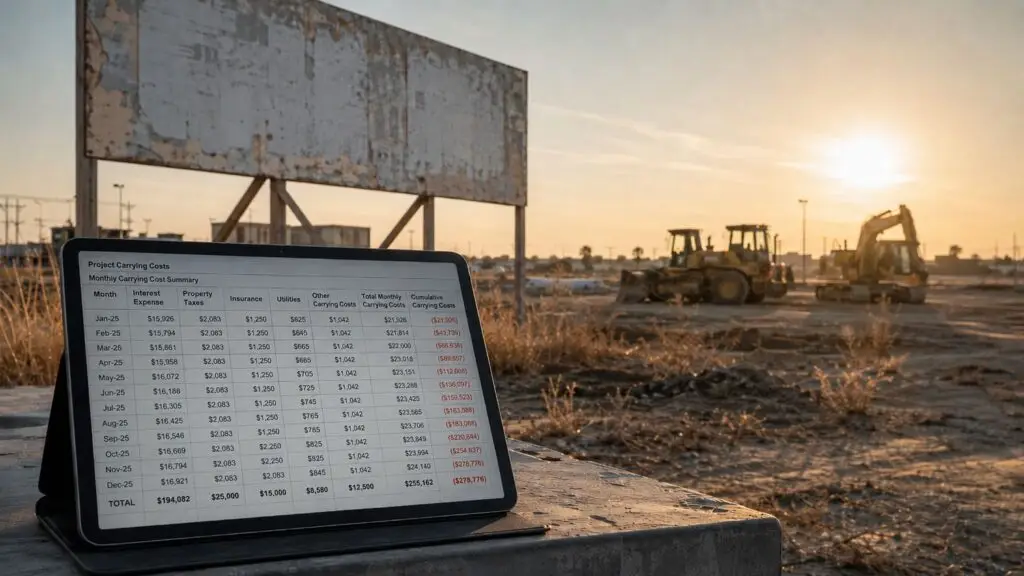
Every month your wastewater permit sits in TCEQ’s queue is a month your pro forma is bleeding. Here is what that actually costs and the permit strategy that eliminates the dependency entirely.
Building a Private WWTP in Texas: What Developers Need to Know Before They Commit
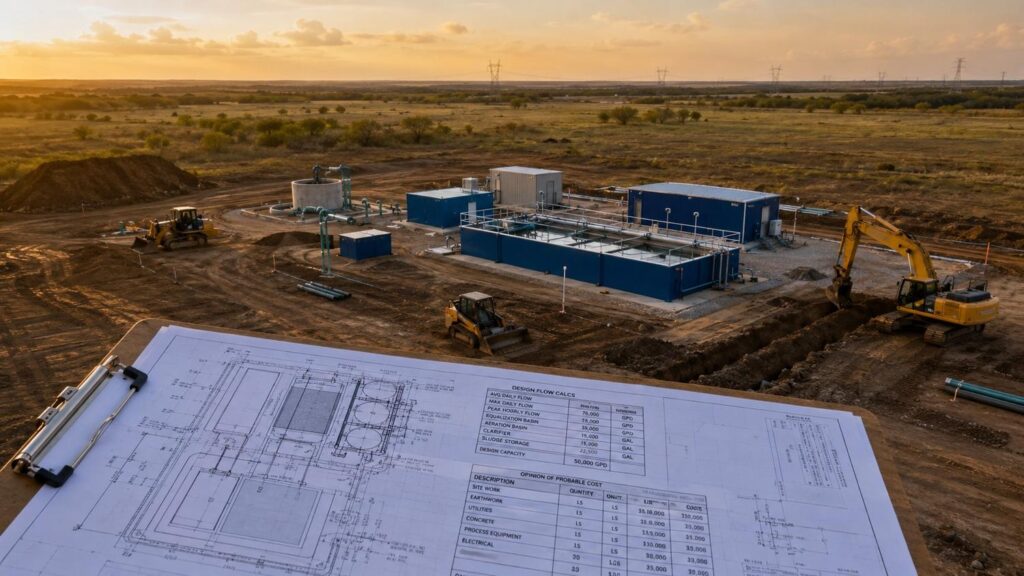
If your Texas development site cannot connect to municipal sewer, a private wastewater treatment plant may be your only path to breaking ground. Here is what that decision actually involves before you hire an engineer.
What Is a 210E Authorization and How Can It Save Your Texas Development Project?
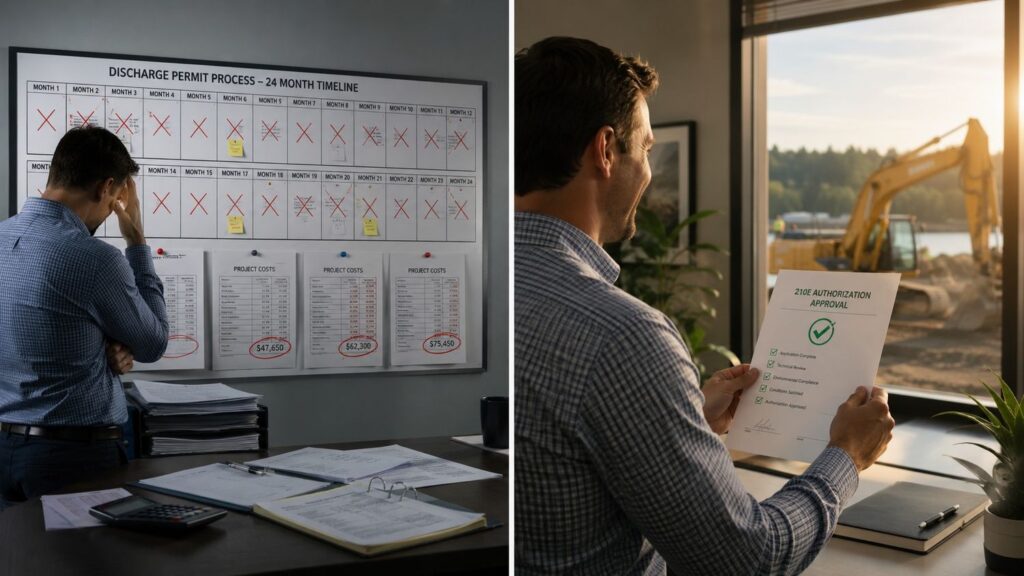
Most Texas developers waiting 24 months for a TCEQ discharge permit don’t know a faster pathway exists. If your project includes any industrial component, you may already qualify.
Building AI Infrastructure for an Engineering Firm: The Complete Data Architecture
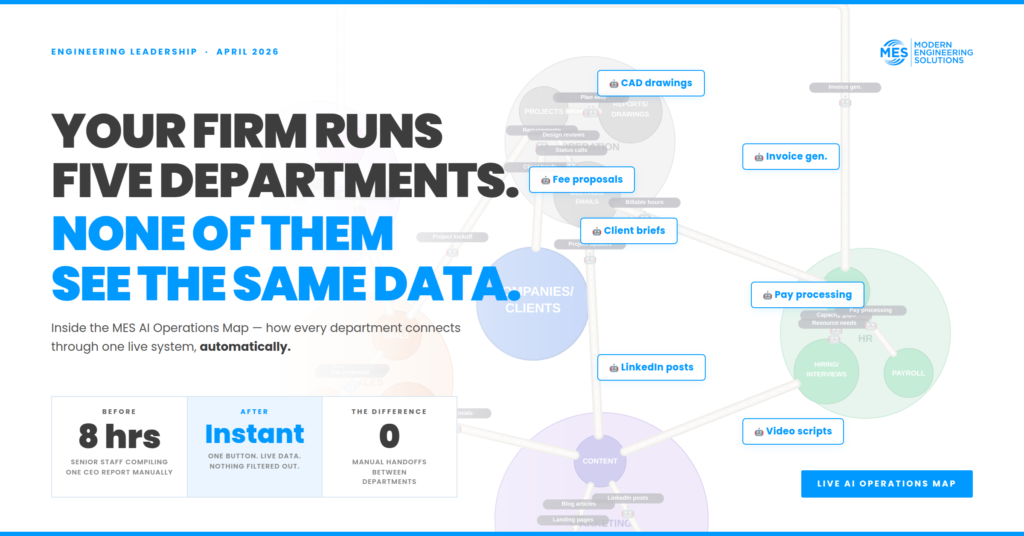
AI infrastructure for engineering firms requires a connected data layer linking all five core departments, Operations, Accounting, HR, Sales, and Marketing, so information flows automatically without manual handoffs between systems.
Wastewater Recycling for Commercial Developments: What Texas Developers Need to Know
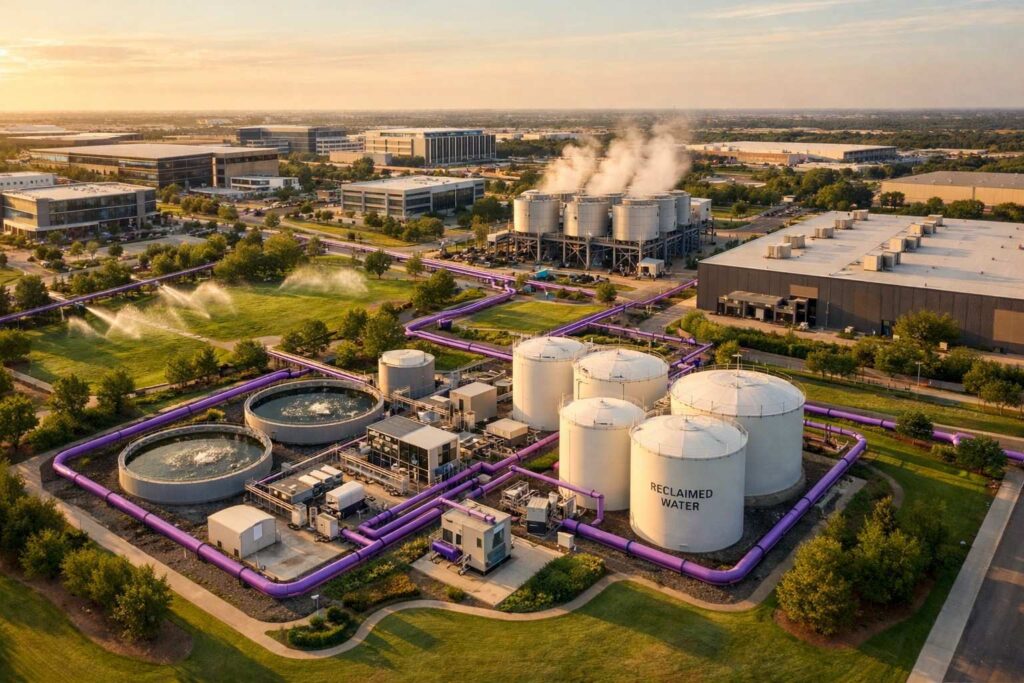
Treated wastewater is not waste. For Texas commercial developers who understand the regulatory landscape, it is a permitting asset and sometimes a revenue one.
Land Application Permits in Texas: A Faster Path to Wastewater Approval for Developers
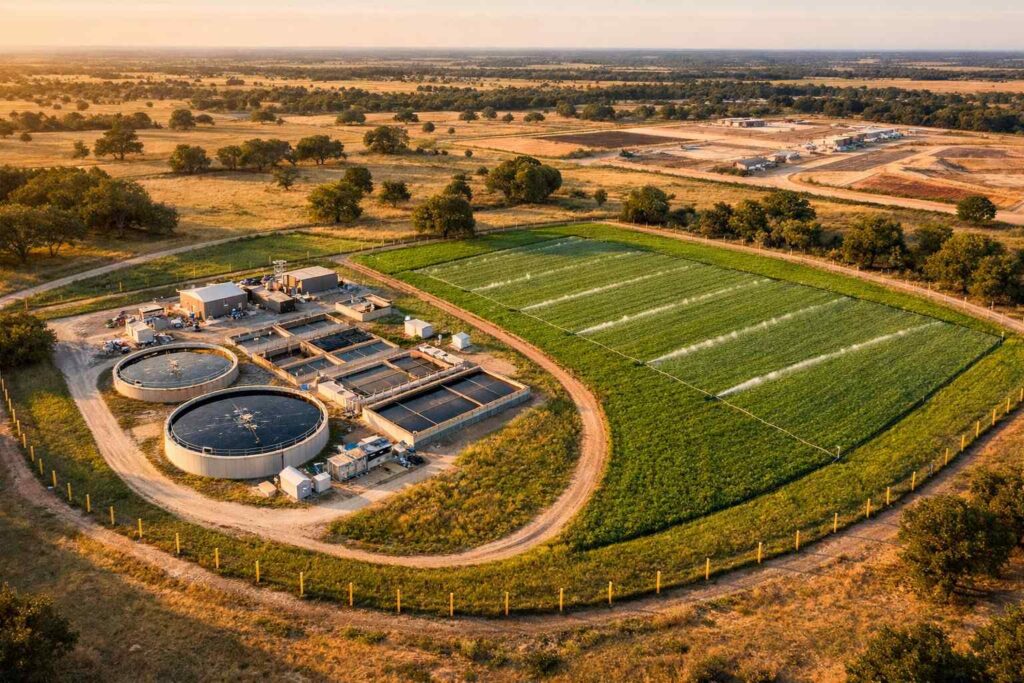
Private developers in Texas have a permitting option that avoids surface water discharge entirely. Here is what TCEQ evaluates for a TLAP, how long the process takes, and whether your site qualifies.
Why Speed Is a Design Constraint: How Modern Engineering Firms Deliver Infrastructure Faster

Traditional firms are organized around billing time. Modern firms are organized around delivering outcomes. That difference shows up as weeks, sometimes months, on every project.
When the Math Doesn’t Move: Water Pressure, Affordable Housing, and the Infrastructure Gap Nobody Wants to Pay For
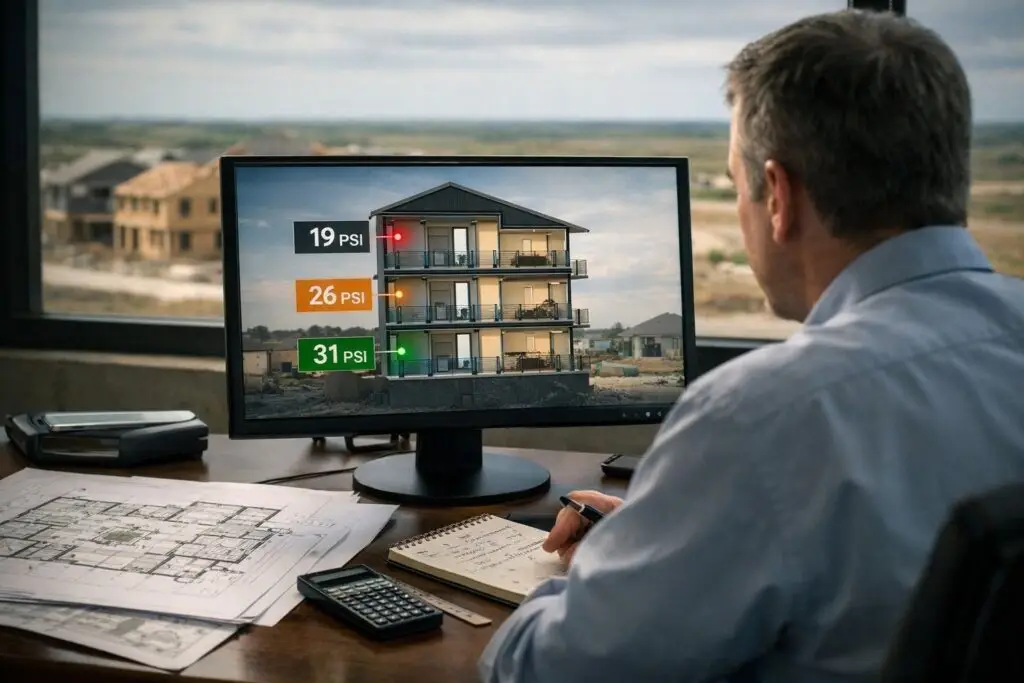
Texas needs $154 billion to fix its water infrastructure but committed only $20 billion. With 186 billion gallons lost annually and pipes dating to the 1890s, developers face serious project risks from aging municipal systems.
Approved Plans Aren’t Always Optimized Plans. The Difference Can Cost $1.5 Million

Texas needs $154 billion to fix its water infrastructure but committed only $20 billion. With 186 billion gallons lost annually and pipes dating to the 1890s, developers face serious project risks from aging municipal systems.
The Cheapest Engineering Decision on Your Texas Pro Forma Isn’t the Low Bid

Texas needs $154 billion to fix its water infrastructure but committed only $20 billion. With 186 billion gallons lost annually and pipes dating to the 1890s, developers face serious project risks from aging municipal systems.
A TCEQ Redesign Isn’t Just a Delay. It’s a Compounding Loss
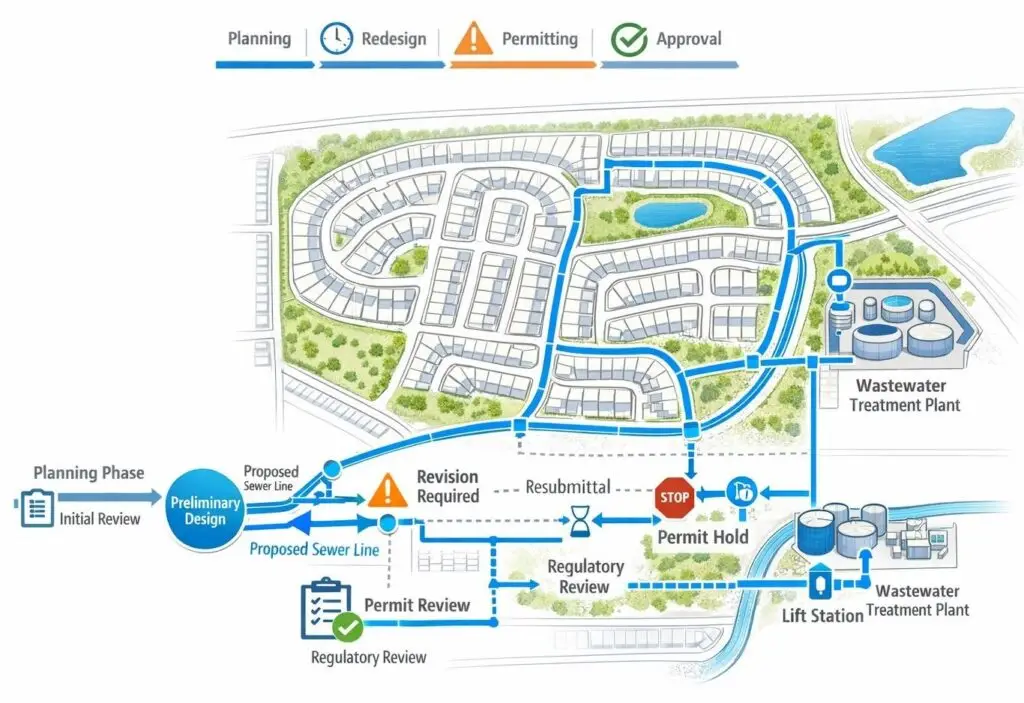
Texas needs $154 billion to fix its water infrastructure but committed only $20 billion. With 186 billion gallons lost annually and pipes dating to the 1890s, developers face serious project risks from aging municipal systems.
Texas Water Infrastructure Crisis: $134 Billion Funding Gap
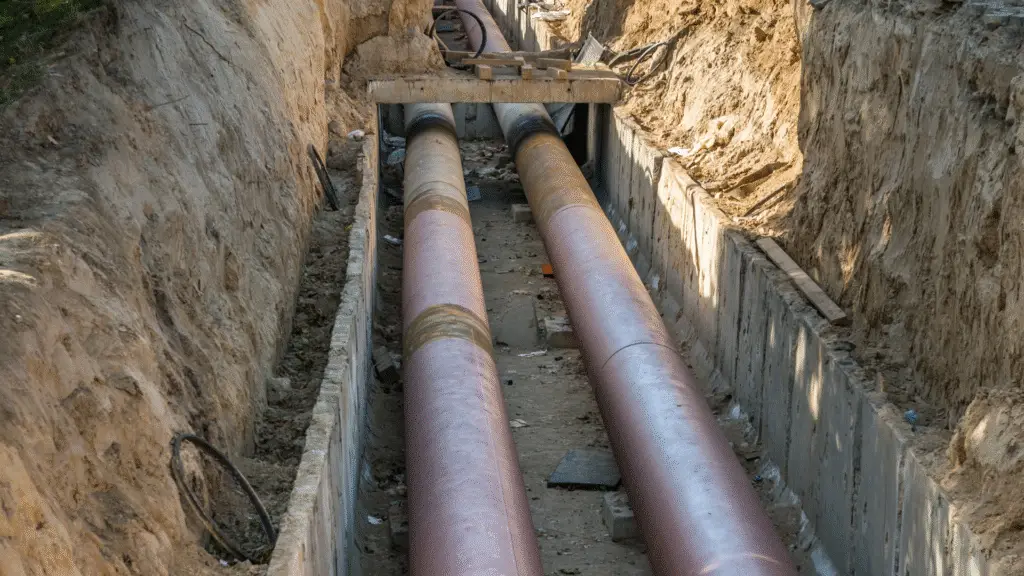
Texas needs $154 billion to fix its water infrastructure but committed only $20 billion. With 186 billion gallons lost annually and pipes dating to the 1890s, developers face serious project risks from aging municipal systems.
MUD Formation Costs Texas Developers $2.7M Before Breaking Ground: Faster Wastewater Alternatives Exist
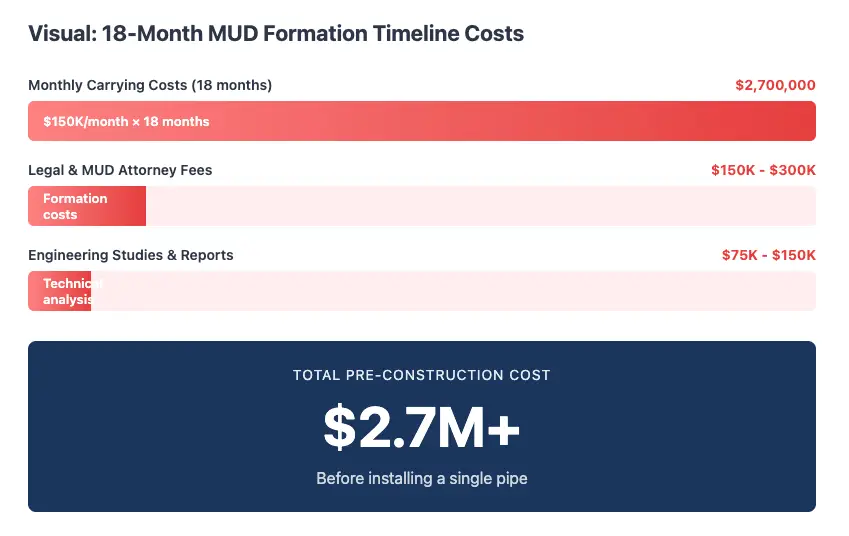
Municipal Utility District formation consumes 18-24 months and significant capital before developers install a single pipe. For Texas development projects in extraterritorial jurisdiction areas requiring wastewater infrastructure, the traditional MUD pathway creates timeline risk that increasingly threatens project viability.
How to Access $2 Billion in Senate Bill 7 Funding for Texas Water Reuse Projects

Senate Bill 7 (SB7) makes $2 billion available for Texas water reuse and new water supply projects over the next 22 years.
How to Cut TCEQ Wastewater Permit Timeline from 12 Months to 6-8 Weeks Using Reuse Authorization

Most Texas developers accept 12-month TCEQ permitting timelines as unavoidable, building substantial carrying costs into every project pro forma. The reality: this timeline is not a regulatory requirement. Strategic permit selection, particularly reuse authorizations instead of traditional discharge permits, can reduce approval timelines to 6-8 weeks.
Land Application Permits for Treated Wastewater: A Texas Developer’s Guide
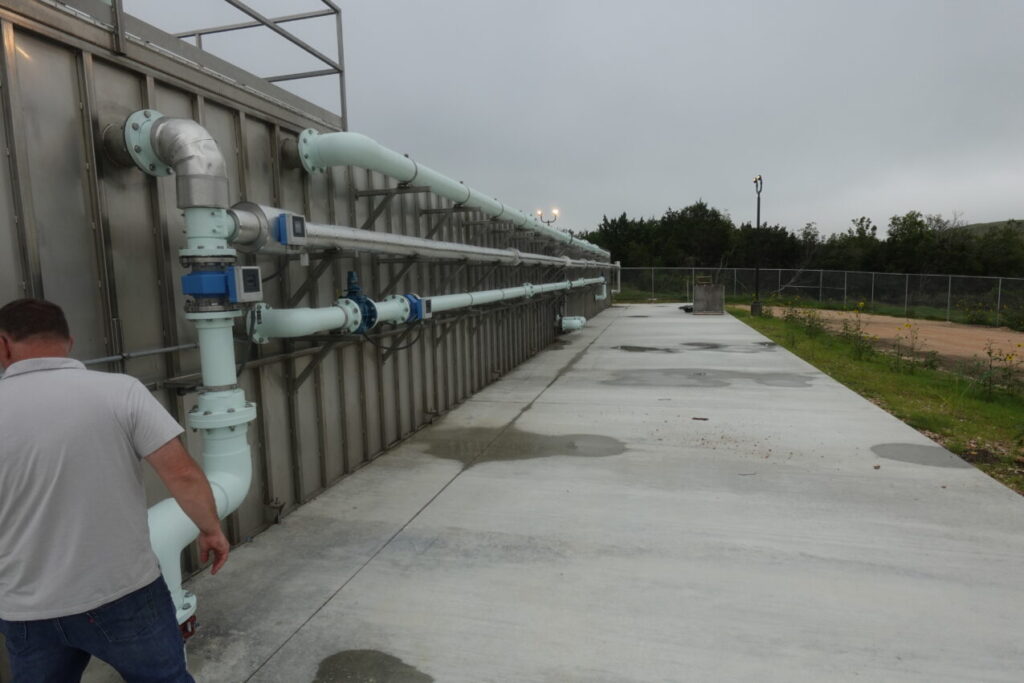
When your development project needs wastewater treatment but traditional discharge options are not available or practical, land application permits offer a proven alternative. For developers and engineering firms working in Texas, understanding when and how to pursue land application permits through TCEQ can save months of permitting time and open doors to projects that might otherwise stall.
We Just Told a Client Their $15,000 Project Wasn’t Worth Our Time – They Thanked Me for It
The uncomfortable truth about engineering firms: we are taught to be technically perfect but nobody teaches us to be strategically profitable. Last week a potential client approached us with a $15,000 project. The timeline was aggressive, the scope was unclear, and the red flags were everywhere. We said no. They thanked us for it.
TCEQ’s Power Reliability Requirements: Generator vs. Dual Feed Design
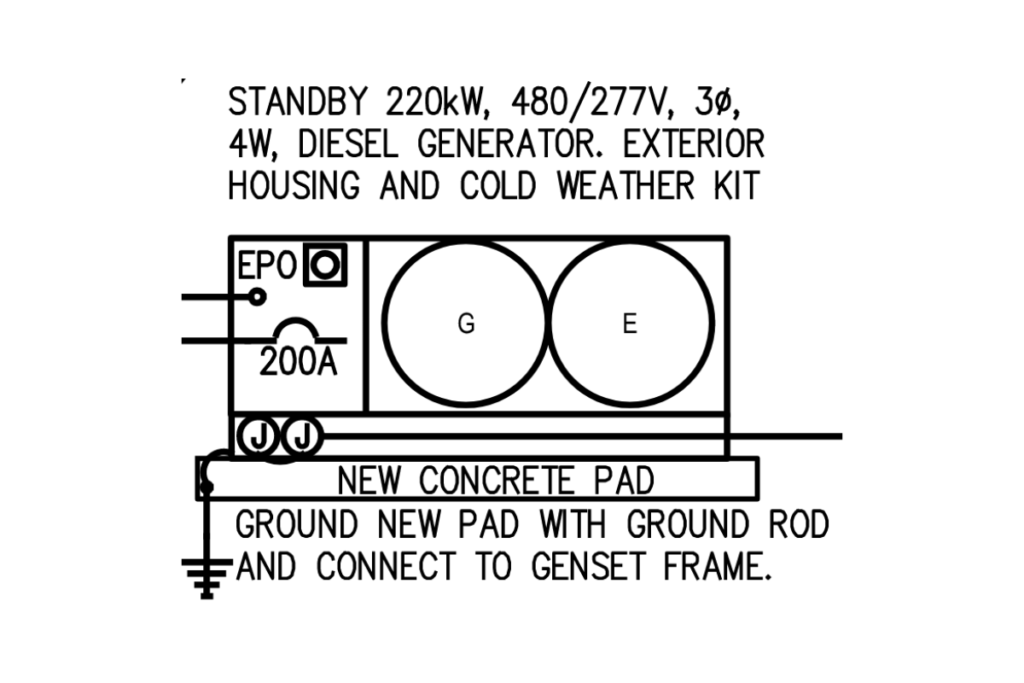
The Texas Commission on Environmental Quality (TCEQ) requires every regulated water and wastewater facility to demonstrate that essential systems will continue to operate during an electrical outage. This requirement is not just a formality; without backup power, a distribution system can lose pressure in a matter of minutes, disinfection can stop, and wastewater lift stations can overflow. Any of these conditions can create a direct public health hazard and, at the same time, put the utility in violation of its permit.
Reuse vs. Discharge: Which Wastewater Strategy Fits Your Texas Development?
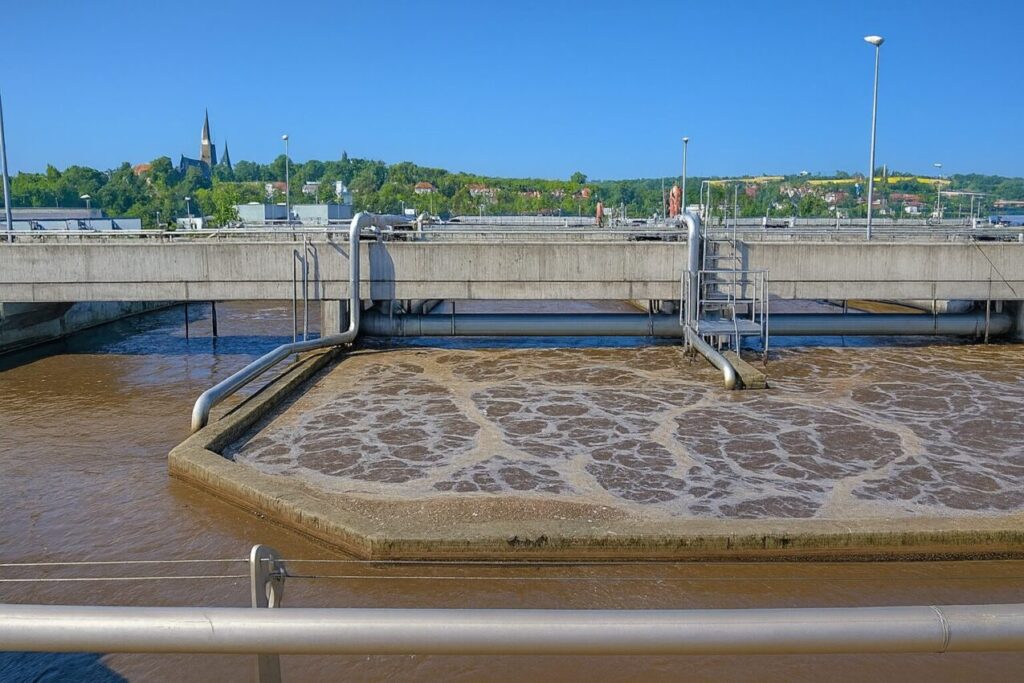
Every Texas developer faces the same critical decision: discharge treated wastewater into streams or set up reuse for local farms and businesses. This choice impacts everything from permit timelines to project costs. Getting it wrong can destroy your timeline and budget.
Cloacina’s Integrated Wastewater Solutions: How Developer-Focused Design Creates Better Treatment Systems
Cloacina joined our Engineers for Communities podcast to share insights about their approach to wastewater treatment systems, particularly for developers working on new projects. Troy brings years of operational experience to equipment design, and his company has built their reputation on understanding what developers actually need versus what they think they need. Our conversation revealed how Cloacina’s methodology addresses both the financial realities developers face and the long-term operational challenges that determine project success.
When Experience Isn’t Enough: Why Current Civil Engineering Standards Matter More Than Years of Practice

During a routine plan review for a California water infrastructure project last week, our team encountered something that made us pause. The cover sheet didn’t just have minor issues – it was fundamentally non-compliant with current California engineering standards.
These emergencies hit small Colorado communities particularly hard. Emergency repairs cost tens of thousands in contractor overtime and regulatory fines. Traditional solutions require upsizing collection systems or upgrading treatment plants that most communities can’t afford. The choice becomes impossible – face financial ruin or continue risking environmental disasters that bring state regulators to your door.
Real-Time Water Quality Monitoring Using Proteus Fluorescence Technology
In this episode, we engage with Michael Malone from Proteus, who provides comprehensive insights into advanced water quality monitoring solutions that transform environmental assessment and regulatory compliance. We explore how fluorescence-based sensor technology brings proven laboratory analysis capabilities directly to field applications, enabling real-time monitoring across diverse water systems. These innovations eliminate traditional sampling delays while providing continuous data streams essential for process control, regulatory reporting, and pollution source identification. Join us as we examine how Proteus technology addresses critical monitoring challenges facing municipal operators, environmental consultants, regulatory agencies, and industrial facility managers.